Let’s get real, Man

24 September OS 2015 – Wednesday of the Nineteenth Week after Pentecost/1st Week of St. Luke, Holy Protomartyr Thecla, St. Stephan (Simon) the First-Crowned King of Serbia
Temptations_of_Christ_(San_Marco)

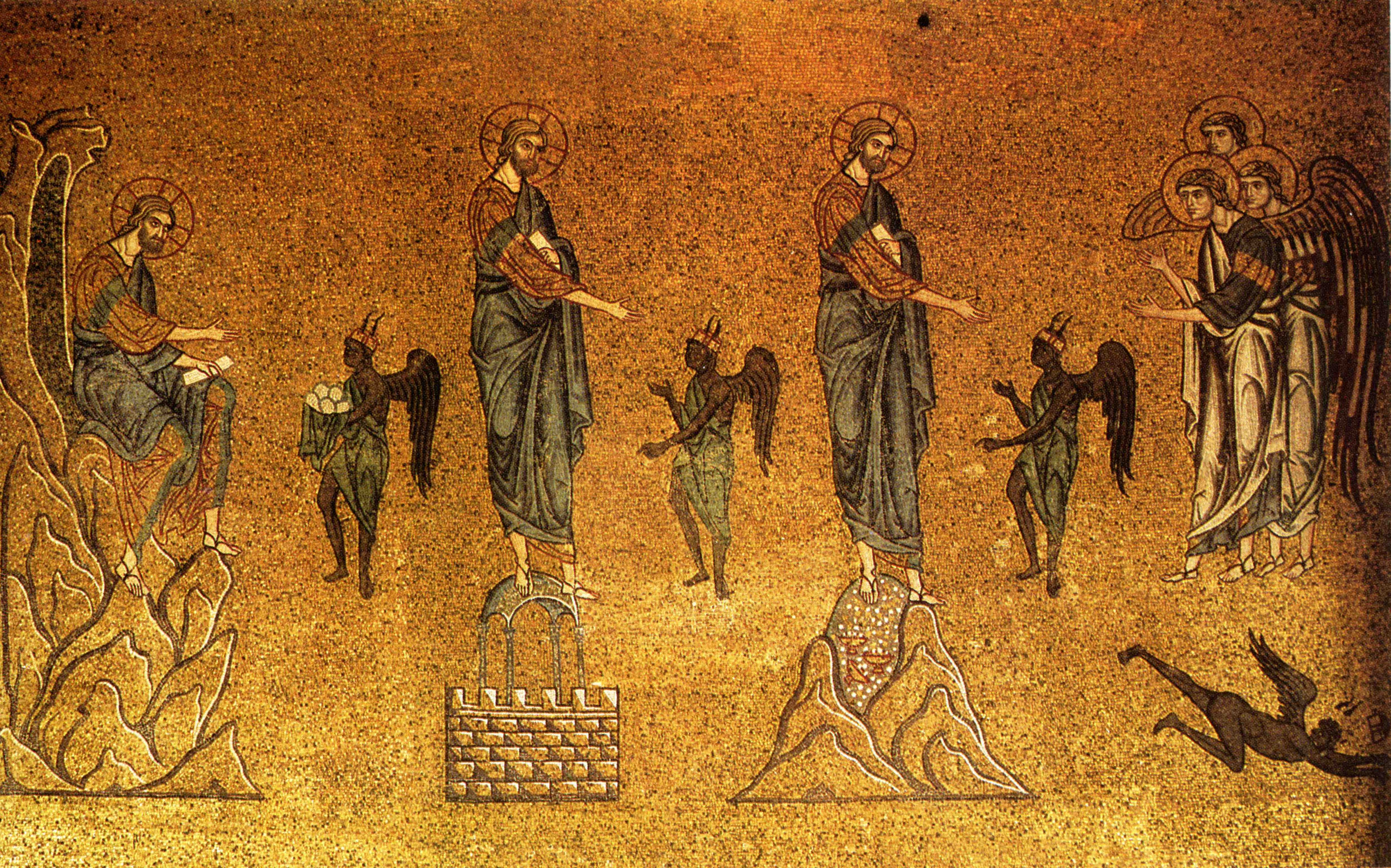
In today’s Gospel, we read of the Lord’s temptation by Satan:

At that time, Jesus being full of the Holy Ghost returned from Jordan, and was led by the Spirit into the wilderness, Being forty days tempted of the devil. And in those days he did eat nothing: and when they were ended, he afterward hungered. And the devil said unto him, If thou be the Son of God, command this stone that it be made bread. And Jesus answered him, saying, It is written, That man shall not live by bread alone, but by every word of God. And the devil, taking him up into an high mountain, shewed unto him all the kingdoms of the world in a moment of time. And the devil said unto him, All this power will I give thee, and the glory of them: for that is delivered unto me; and to whomsoever I will I give it. If thou therefore wilt worship me, all shall be thine. And Jesus answered and said unto him, Get thee behind me, Satan: for it is written, Thou shalt worship the Lord thy God, and him only shalt thou serve. And he brought him to Jerusalem, and set him on a pinnacle of the temple, and said unto him, If thou be the Son of God, cast thyself down from hence: For it is written, He shall give his angels charge over thee, to keep thee: And in their hands they shall bear thee up, lest at any time thou dash thy foot against a stone. And Jesus answering said unto him, It is said, Thou shalt not tempt the Lord thy God. And when the devil had ended all the temptation, he departed from him for a season. And Jesus returned in the power of the Spirit into Galilee: and there went out a fame of him through all the region round about. And he taught in their synagogues, being glorified of all. – Luke 4: 1-15

The Logos of God, the Second Person of the Holy Trinity, assumed our human nature completely and truly, but without sin. In His true human nature He did that which we had to do to be saved but could not do because of the Ancestral Sin. He fulfilled all righteousness. One of the ways in which He fulfilled the telos – goal, end, purpose – of our humanity was His completely defeating Satan.   He underwent temptation as a man, and He completely defeated the tempter.   In all generations, those who defeat Satan do so only in union with Him, and He gives them the divine power to do so, if only they will believe in Him and follow Him on His path to the Cross.

Look at the three temptations of Satan in this passage, and you will see three great delusions of mankind today: to turn stones into bread, to desire only this world, and to presume on God’s mercy.

Man revolts against God, nature, and common sense; he wants to turn stones into bread. He believes that he can violate every law of God and every moral and social tradition from the beginning of the world. He believes that he can dominate, distort, and re-make nature itself, to gratify his passions. He believes that he can call black white and white black, and declare that 2+2=5, and that nothing bad will happen to him.   He is in for a bad surprise.

Man desires only this world and its pleasures. He calls eternal life “pie in the sky,” and he calls eternal torment a trick invented by priests to control the masses.   He has gladly made the bargain of Faust with the devil: “All this will be yours if only you fall down and worship me.”   He is in for a bad surprise.

Man presumes on God’s mercy: “God is love, and therefore I can do whatever I want. I will throw myself off the moral cliff, and God will catch me. If you do not think so, that is only because you are full of hate and intolerance.”   He is in for a bad surprise.

Let us firmly resolve to confront reality, to accept it from the right hand of God, and to do penance in this life for our sins and the sins of the world. There is no other way; there is No Exit except the doorway of death, through which we will pass either into eternal joy or eternal torment. Let us take up our cross and follow the only One Who has defeated sin, the devil, death, and hell.   Let us kiss and embrace His holy commandments, sweeter than honey and the honeycomb, by obeying which we take His Cross upon our shoulders and follow Him to Golgotha and beyond, to the Resurrection and the Eternal Kingdom which will know no evening.

The time for lies is over.
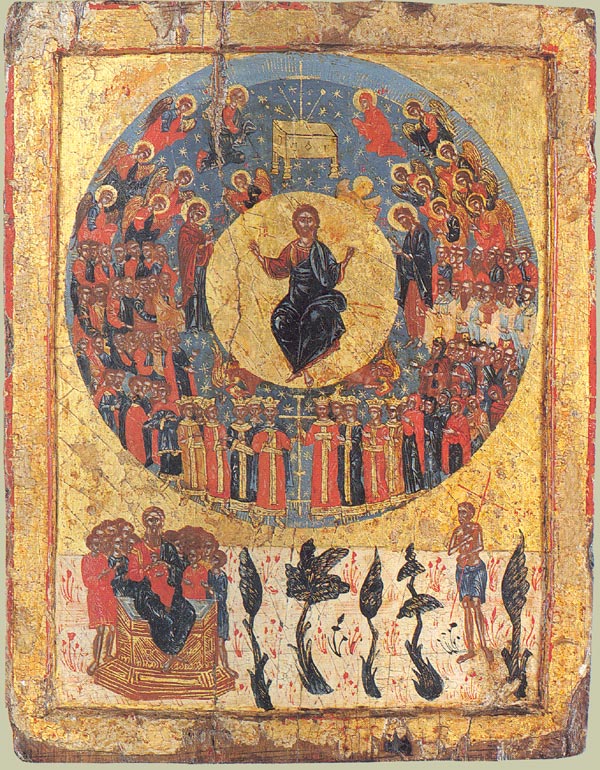
last-judgment-icon-st-elias-church-brampton-ontario (1)

Posted in Uncategorized | Comments Off on Let’s get real, Man

Sweeter than honey and the honeycomb

23 September OS 2015 – Tuesday of the Nineteenth Week after Pentecost/1st Week of St. Luke, Conception of the Holy Forerunner and Baptist John

Checking the lectionary of the Holy Scriptures for weekday Divine Liturgy, faithfully and accurately prepared by our beloved Hieromonk Savvas for the Holy Metropolis, I discovered this morning that I had commented on the 1st Week of St. Luke Gospels prematurely last week. This week is the 1st Week of St. Luke!   I always get mixed up this time of year…forgive me!  Last week, however, I did not write a post on Tuesday, and therefore I have not yet commented on the reading for the Tuesday of the 1st Week.   Here it is:

At that time: Jesus himself began to be about thirty years of age, being (as was supposed) the son of Joseph, which was the son of Heli, Which was the son of Matthat, which was the son of Levi, which was the son of Melchi, which was the son of Janna, which was the son of Joseph, Which was the son of Mattathias, which was the son of Amos, which was the son of Naum, which was the son of Esli, which was the son of Nagge,Which was the son of Maath, which was the son of Mattathias, which was the son of Semei, which was the son of Joseph, which was the son of Juda, Which was the son of Joanna, which was the son of Rhesa, which was the son of Zorobabel, which was the son of Salathiel, which was the son of Neri, Which was the son of Melchi, which was the son of Addi, which was the son of Cosam, which was the son of Elmodam, which was the son of Er, Which was the son of Jose, which was the son of Eliezer, which was the son of Jorim, which was the son of Matthat, which was the son of Levi, Which was the son of Simeon, which was the son of Juda, which was the son of Joseph, which was the son of Jonan, which was the son of Eliakim, Which was the son of Melea, which was the son of Menan, which was the son of Mattatha, which was the son of Nathan, which was the son of David, Which was the son of Jesse, which was the son of Obed, which was the son of Booz, which was the son of Salmon, which was the son of Naasson, Which was the son of Aminadab, which was the son of Aram, which was the son of Esrom, which was the son of Phares, which was the son of Juda, Which was the son of Jacob, which was the son of Isaac, which was the son of Abraham, which was the son of Thara, which was the son of Nachor, Which was the son of Saruch, which was the son of Ragau, which was the son of Phalec, which was the son of Heber, which was the son of Sala, Which was the son of Cainan, which was the son of Arphaxad, which was the son of Sem, which was the son of Noe, which was the son of Lamech, Which was the son of Mathusala, which was the son of Enoch, which was the son of Jared, which was the son of Maleleel, which was the son of Cainan, Which was the son of Enos, which was the son of Seth, which was the son of Adam, which was the son of God. And Jesus being full of the Holy Ghost returned from Jordan, and was led by the Spirit into the wilderness.   – Luke 3:23 – 4:1

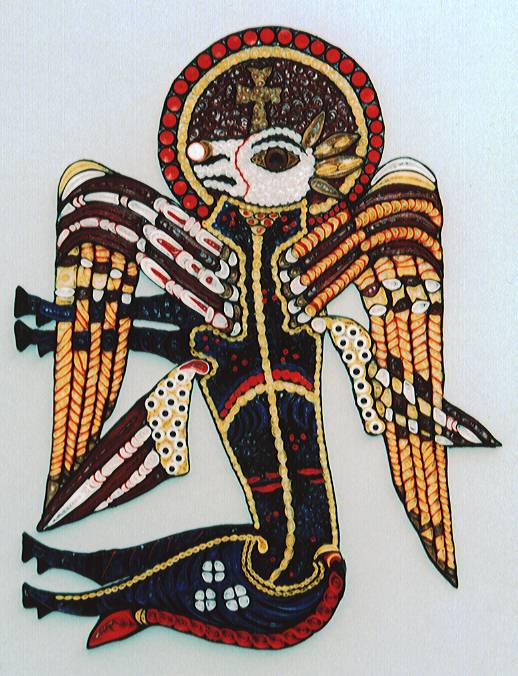
kells_stluke


When we get to the genealogies in Holy Scripture, either in Genesis or in the Gospels – the beginning of St. Matthew’s Gospel and here in St. Luke – we may be tempted just to skip over them, thinking, “These names are exotic and difficult, and I am not sure why they are here, anyway.” It may be difficult to derive a spiritual lesson of some sort, and we move on.   But this of course, we should not do. The Holy Spirit told the inspired writers to write down these genealogies, and the same Holy Spirit inspired the Church to appoint the genealogies in both St. Matthew and St. Luke to be read at the Divine Liturgy every year. There must be a reason.

One thing I would like to point out is that we acquire grace through reading Holy Scripture, and especially the Gospels, whether we think we are deriving a clear meaning from them or not. When we read Scripture, we should read aloud, at a measured pace – not too fast, not too slow – and let the words sink in.   Every word of Holy Scripture is invested with infinite divine power, and the very experience of reading it will change our hearts, confirm us in faith, and bring peace to our souls.

Another thing to remember is that when we read Holy Scripture piously and reverently, especially when we do not understand what we are reading (or why it is there), we are making an act of faith in God’s wisdom, which placed these very words before us, for our salvation.   This small effort, made in Church or made in our private prayers, is an act of quiet militancy against the skeptical and materialistic views of “scientific” Biblical critics, who are always reducing God’s Word to a random product of cultural evolution. There is nothing random or evolutionary about Holy Scripture. Every word was put there at a specific point in history by a specific man specifically inspired by God, Who determined this from all eternity in infinite wisdom. Compared to the measureless abyss of the fresh and pure ocean of God’s wisdom, the prattling of the critics is a cup of polluted water. From which do we wish to drink?

The genealogies, by the way, do have profound theological meaning.   Here St. Luke, by taking the genealogy of the Lord back to Adam, is saying that Jesus is the new Adam, Who in his sinless but actual human nature restores man to the communion with God that he lost in Paradise. Both evangelists who record the genealogy of Jesus – Matthew and Luke – are also demonstrating that Jesus Christ really is a man like us, with human ancestors. This was necessary to counter the Gnostic and Docetist myths that in various ways taught that Christ only appeared to be human but really was not.  By showing that Christ was descended from King David, they were demonstrating that He was of the line from which the Messiah was supposed to come.   And so forth. There is no end to the theology concealed in the Scriptures, even the most seemingly routine or obscure passages.

Let us resolve firmly to drink the pure water of God’s Holy Word every day!   May His Word, purer than gold and sweeter than the honeycomb, enliven us and strengthen us always!


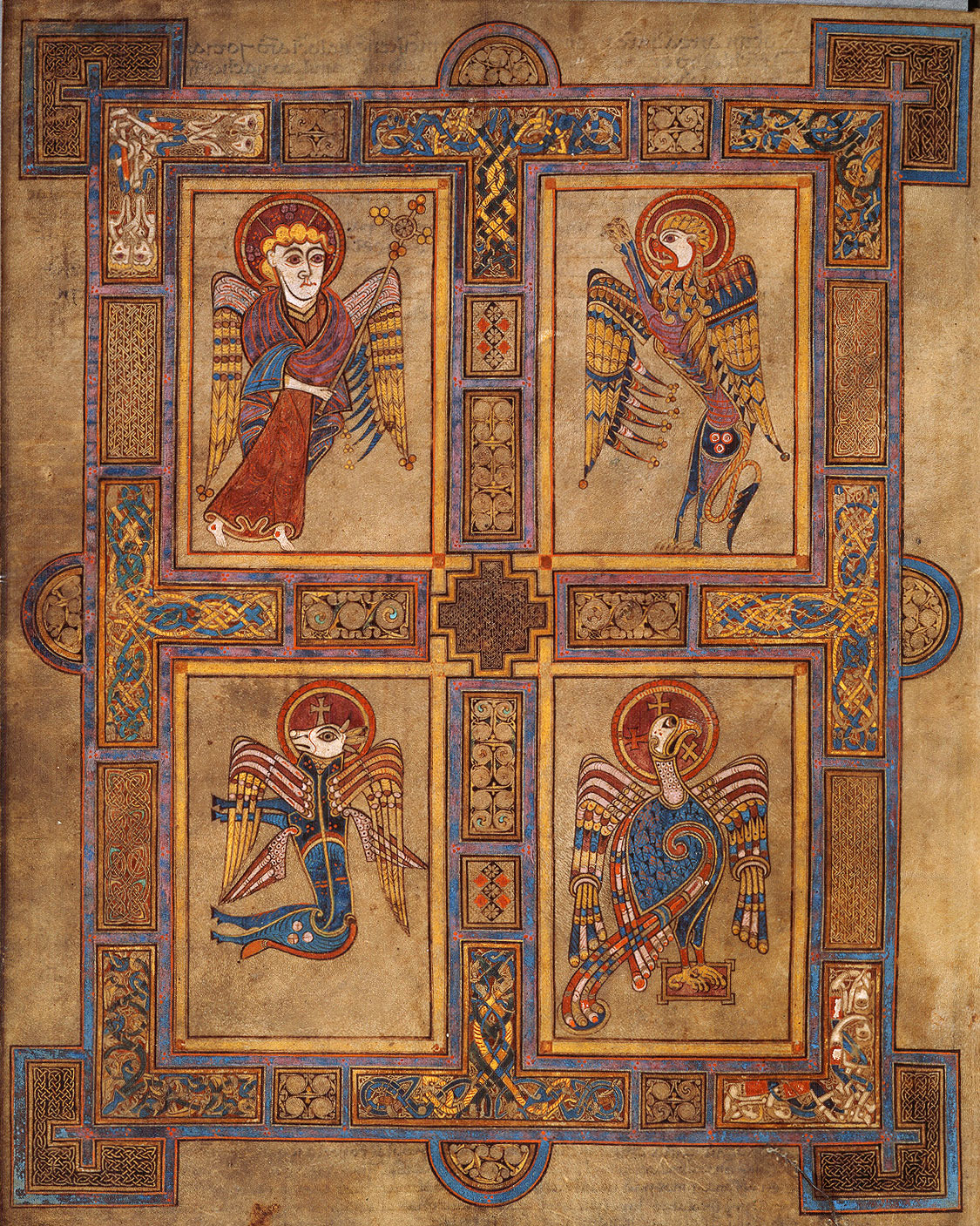
kells_four evangelists


Posted in Uncategorized | Comments Off on Sweeter than honey and the honeycomb

The mark of Cain

19 September OS 2015 – Friday of the Eighteenth Week after Pentecost/1st Week of St. Luke, Afterfeast of the Exaltation of the Precious Cross, Ss. Trophimos, Savvatios, and Dorymedon

In today’s Gospel, the Lord’s own relatives and townsmen reject Him out of envy:

At that time, the people wondered at the gracious words which proceeded out of Jesus’ mouth. And they said, Is not this Joseph’s son? And he said unto them, Ye will surely say unto me this proverb, Physician, heal thyself: whatsoever we have heard done in Capernaum, do also here in thy country. And he said, Verily I say unto you, No prophet is accepted in his own country. But I tell you of a truth, many widows were in Israel in the days of Elias, when the heaven was shut up three years and six months, when great famine was throughout all the land; But unto none of them was Elias sent, save unto Sarepta, a city of Sidon, unto a woman that was a widow. And many lepers were in Israel in the time of Eliseus the prophet; and none of them was cleansed, saving Naaman the Syrian. And all they in the synagogue, when they heard these things, were filled with wrath, And rose up, and thrust him out of the city, and led him unto the brow of the hill whereon their city was built, that they might cast him down headlong. But he passing through the midst of them went his way.   – Luke 4: 22-30

There is something inconsistent here: First they marvel at the Lord’s gracious words, but then they turn against Him.   First they think, “How marvelous, how beautiful, how true!” Then they think, “Wait a second: this is just some other ‘guy’ from our own town, not anyone important. Who does he think he is, anyway? He is not better than we are!” In other words, they were envious. They were so envious that they tried to murder Him.

It was envy that caused the Nazarenes to reject the Lord Jesus Christ.

It was envy that caused the high priests, Pharisees, scribes, and rulers of the people to hate Him.

It was envy that caused Judas to betray Him.

But this is not surprising, because it was envy, at the beginning of creation, which caused Satan to tempt our first parents. God had created man to take the place of the fallen angels, and they cannot rest until they destroy us.   Or, rather, they will never rest for all eternity, because the more they destroy, the more envious they become.  Their hunger grows the more it is satisfied, and they will be endlessly more and more tortured for all eternity.

In the same way, an envious person – and, sadly, such a person may be an Orthodox Christian – cannot rest until he destroys the person he envies. He is constantly thinking about him with anger: “Who does he think he is? Why does the think he is so great?   Why does he get to have such-and-such or be such-and-such?” And this hatred, this anger, this internal torture has no end. Even if he succeeds in utterly destroying the happiness of the other person, even murdering the other person: Far from having rest, he will grow even more tortured, constantly revolving in his mind how bad the other person was and justifying himself. And this torture continues after death and increases endlessly for all eternity.

Today, on a global scale, we are suffering from the consequences of envy.   Once the Christian nations lived under a legitimate and God-blessed hierarchy of Church, king, and aristocracy.   This hierarchy reflected the hierarchy in creation itself, in which God is the king, and the angels and saints in heaven are His ministers, and on earth all men are arranged in stations, ranks, and classes according to the divine constitution of the Church and according to the traditional laws of those nations whose laws reflect the Law of God, and according to their birth and ability. Some men are necessarily higher than others. Some cultures are higher and more beautiful than others.   There are men and cultures and traditions that are high and noble, and others that are low and ignoble.   This is reality.

For generations now, however, the formerly Christian nations have listened to the siren song of envy, and now they have handed themselves over to the power of wicked demagogues who promise “equality” and teach, “No one and nothing is better than or different from anyone or anything.” With all boundaries, all standards, all traditions, all true hierarchy abolished, we are now reduced to the law of the jungle: Power is all, and might makes right; Darwinism, utterly bankrupt as science, has certainly become a self-fulfilling prophecy as a religious and political ideology. We are ruled by a criminal class of demonized and envious predators.   This is the politics of envy: if I can destroy you, this is the only justification I need.   This is the “revolutionary justice” of Marxism, of “civil rights,” of the sexual revolution, of feminism, of homosexualism, and every other movement that overturns the Christian order of society. It is a revolt against reality itself, ultimately against God.   And – apart from a miracle of repentance by a critical mass of mankind – we are living in the final stages of it. This is the end game.

For our part, let us courageously refuse to be part of this demonic anti-hierarchy of envious pseudo-justice. The first step in refusing the politics of envy is to cleanse our own hearts of all envy of other people, the great and the small. We have no worldly control over the vast changes that are overturning normal life all around us. But we do have the kind of control that counts: We can choose to stay in the Faith, to pray, to obey the commandments, and to tell others the truth and obey our consciences in the choices that face us on a daily basis.   We do have control over our minds and wills, to turn away from evil and do good.

Let us ask ourselves, “Do I have envy in my heart against those who seem to prosper while I suffer? Do I wish evil to others?” And let us fall down and beg the Lord to cleanse our hearts, to give us that peace which He alone can give, which the world cannot give and the world cannot take away. Let us forgive our enemies, and like St. Stephen we will see the heavens opened and Christ standing at the right hand of God.

Amen. Come, Lord Jesus!

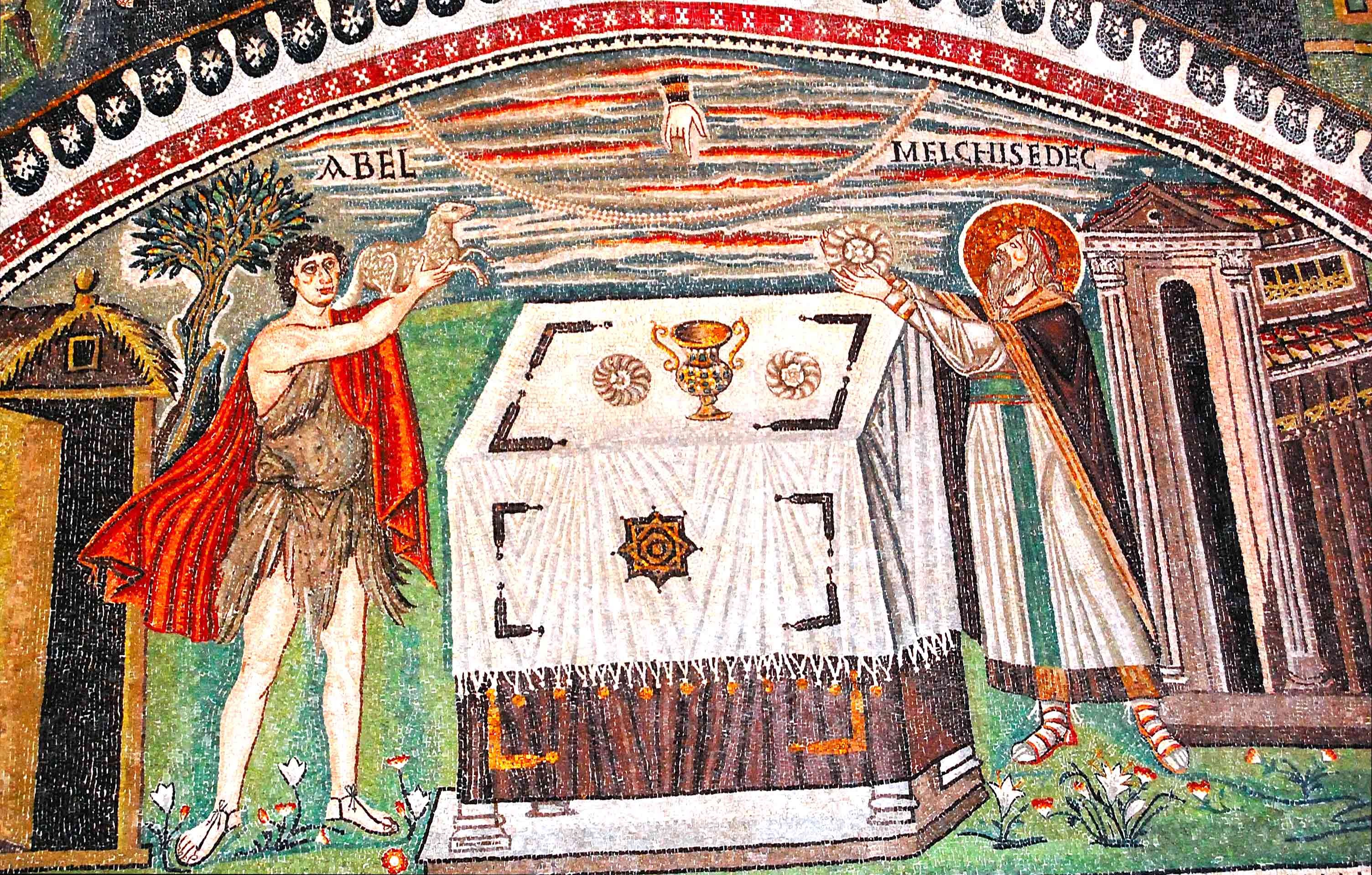
sacrifice of abel and melchisedec_ravenna


Posted in Uncategorized | Comments Off on The mark of Cain

Thy Kingdom come

18 September OS 2015 – Thursday of the Eighteenth Week after Pentecost/1st Week of St. Luke, Afterfeast of the Exaltation of the Precious Cross, St. Eumenius of Gortyna

 In today’s Gospel, the Lord inaugurates His public ministry in His hometown of Nazareth, announcing that the prophecies are fulfilled, and that He, the Savior, has come.

At that time, Jesus came to Nazareth, where he had been brought up: and, as his custom was, he went into the synagogue on the sabbath day, and stood up for to read. And there was delivered unto him the book of the prophet Esaias. And when he had opened the book, he found the place where it was written, The Spirit of the Lord is upon me, because he hath anointed me to preach the gospel to the poor; he hath sent me to heal the brokenhearted, to preach deliverance to the captives, and recovering of sight to the blind, to set at liberty them that are bruised, To preach the acceptable year of the Lord. And he closed the book, and he gave it again to the minister, and sat down. And the eyes of all them that were in the synagogue were fastened on him. And he began to say unto them, This day is this scripture fulfilled in your ears. And all bare him witness, and wondered at the gracious words which proceeded out of his mouth. – Luke 4: 16-22

 The Lord had come to inaugurate the Kingdom of Heaven promised by the prophets. But what kind of Kingdom is it? How can we on earth participate in it?   St. Theophan the Recluse says the following:

The Lord not only came “to preach the acceptable year,” but He brought it as well. Where is it? In the souls of believers. The earth will never become Paradise under the current state of affairs; but it is and will be an arena of preparation for the heavenly life. The rudiments of heavenly life are placed in the soul and the possibility for this lies in God’s grace, while grace was brought by our Lord Jesus Christ – Who brought, consequently, the acceptable year for souls. He who listens to the Lord and fulfills all that is commanded by Him receives grace, and with its power enjoys the acceptable year within himself. This truly occurs in all who sincerely believe and act according to faith. You will not fill your soul with the “acceptableness” by thinking; you must act, and it will enter in on its own. There might not be any outer peace whatever, just inner peace, yet it cannot be separated from Christ. But it always happens that as soon as inner peace is established, outer disturbances are neither bitter nor heavy. Consequently, the acceptable year is there even in this respect – it only seems like a cold winter on the outside. – Thoughts for Each Day of the Year, pp. 210-211

St. Theophan here presents a framework for understanding our entire situation, in a few weighty words, and his message is indeed “Good News.”   I would like to summarize his message point by point and apply it to our current situation:

  1. The Kingdom of heaven is not a Paradise on earth.   We must resist getting involved in any utopian dreams and schemes to create heaven on earth.  The messiah who promises such a thing is the false messiah, the Antichrist.   The entire revolt against God we see reaching a climax today is based on the idea that this world must become perfect, a paradise, and that man’s efforts will bring this about.   Christ and His Church preach the opposite: The only Paradise is in the next life, and this life will always be imperfect. It is an arena of struggle, a test, not a permanent resting place.
  1. In this life, the true Kingdom of God is experienced within, in the soul of the one who has Faith. This is a gift of grace and not anything man can possibly create.   Faith leads to grace, and grace establishes the Kingdom in the soul. This Kingdom of the soul, if it is real, will naturally manifest itself in family life, parish life, community life, and even national life, but this is not the same as some kind of Utopia, some kind of permanent heaven on earth. Outward results come and go, until the end of this world, but faith and grace must remain within the soul always.
  1. We must act, i.e., lead the Orthodox Christian life of prayer, fasting, and charity.   The life of grace is not an ideology, not a secret knowledge for insiders, and not a mere philosophy. It is not some “ah-hah!” moment we have while reading something on the Internet. It is not Peter Pan thinking happy thoughts. It is not sitting around and feeling pseudo-spiritual feelings. The life of grace is precisely that: life.   Do what the Faith teaches, and the Kingdom of God will warm you from within.
  1. Outer disturbances usually increase in proportion to the inner peace growing within, but they are felt less.   It is like living in a warm house and looking out at the bitter winter weather. The acceptable year of the Lord has been inaugurated in the soul, and it is a time of joy, regardless of outer circumstances.

Let us then resolve, with God enabling us – for we can do nothing of ourselves – to…

Be realistic about the times we live in, not getting caught up in the lies of the rapidly developing New Religion and New Order, while simultaneously…

Acting on our Faith, not just sitting around and wringing our hands: Daily prayer, worship at Church (you don’t know how much longer it will be available or even legal), keeping the holy fasts established by the Church (to keep us detached from earthly pleasures), confessing and preparing for Holy Communion, doing the good you can do, the good you have control over, for those for whom you are responsible, including speaking the truth in love to those around you, even if it seems uncomfortable, and …

Always being grateful to God and not feeling sorry for ourselves.

“Thy Kingdom come, Thy will be done, on earth as it is in heaven!”


last-judgment-icon-st-elias-church-brampton-ontario (1)

Posted in Uncategorized | Comments Off on Thy Kingdom come

Warfare until the last breath

17 September OS 2015 – Wednesday of the Eighteenth Week after Pentecost/1st Week of St. Luke, Afterfeast of the Exaltation of the Precious Cross, Holy Martyrs Sophia and Her Daughters Faith, Hope, and Charity

During this week after the Cross, we begin reading from the Gospel according to St. Luke.   Today’s reading is the awesome and sobering account of the Lord’s own temptation by Satan.

And Jesus being full of the Holy Ghost returned from Jordan, and was led by the Spirit into the wilderness, Being forty days tempted of the devil. And in those days he did eat nothing: and when they were ended, he afterward hungered. And the devil said unto him, If thou be the Son of God, command this stone that it be made bread. And Jesus answered him, saying, It is written, That man shall not live by bread alone, but by every word of God. And the devil, taking him up into an high mountain, shewed unto him all the kingdoms of the world in a moment of time. And the devil said unto him, All this power will I give thee, and the glory of them: for that is delivered unto me; and to whomsoever I will I give it. If thou therefore wilt worship me, all shall be thine.
And Jesus answered and said unto him, Get thee behind me, Satan: for it is written, Thou shalt worship the Lord thy God, and him only shalt thou serve. And he brought him to Jerusalem, and set him on a pinnacle of the temple, and said unto him, If thou be the Son of God, cast thyself down from hence: For it is written, He shall give his angels charge over thee, to keep thee: And in their hands they shall bear thee up, lest at any time thou dash thy foot against a stone. And Jesus answering said unto him, It is said, Thou shalt not tempt the Lord thy God. And when the devil had ended all the temptation, he departed from him for a season. And Jesus returned in the power of the Spirit into Galilee: and there went out a fame of him through all the region round about. And he taught in their synagogues, being glorified of all.
– Luke 4: 1-15

St. Theophan the Recluse comments on the Lord’s experience of temptation in order to teach us how to approach the demonic warfare endured by Orthodox Christians who are serious about spiritual life:

The devil approaches the God-man with temptations. Who among men is free of them? He who goes according to the will of the evil one does not experience attacks, but is simply turned more and more toward evil. As soon as one begins to come to oneself and intends to begin a new life according to God’s will, the entire satanic realm immediately enters into action.   They hasten to scatter the good thoughts and intentions of the penitent in any way they can. If they do not manage to turn him aside, they attempt to hinder his good repentance and confession. If they do not manage to do that, they contrive to sow tares amidst the fruits of repentance and disrupt his labors of cleansing the heart. If they do not succeed in suggesting evil, they attempt to distort the truth. If they are repulsed inwardly they attack outwardly, and so on, until the end of one’s life. They do not even let one die in peace, and even after death they pursue the soul, until it escapes the aerial expanse where they hover and have their haunts. You ask, “What should we do? It’s dismal and terrifying!” For a believer there is nothing frightening here, because demons only bustle around a God-fearing man, but do not have any power at all. A sober man of prayer shoots arrows against them, and they stay far away from him, not daring to approach, and fearing the defeat that they have already experienced. If they succeed in something, it is due to our blundering. We slacken our attention or allow ourselves to be distracted by their phantoms, and they are right there and disturb us more boldly. If you do not come to your senses in time, they will whirl you about; but if a soul does come to its senses, they again recoil and spy from afar to see whether it is possible to approach again somehow. So be sober, watch, and pray – and the enemies will do nothing to you. – from Thoughts for Each Day of the Year, pp. 209-210

All of this is critically important for us, a matter of life and death spiritually. Let us then summarize the wise bishop’s very clear exposition of this topic:

  1. The Lord Himself endured demonic temptation, which should demonstrate clearly to us that the demonic realm is real, and demonic warfare is real, and no believer is exempt from it.
  1. If you are serious about your salvation, you are going to experience this warfare, and the only Orthodox who do not experience it are those who are not serious about their salvation. Foolishly mistaking the psychological peace of non-struggle for a happy spiritual state, they already belong to Satan, and he leaves them alone…he has all eternity to torture them. For now, he will put his resources into attacking those others who are still fighting him.
  1. When a serious Orthodox person begins or renews a life of conscious spiritual struggle, all hell breaks loose. The demons employ every trick in the book to lead him away from the path of salvation. Their attacks continue right up to death and even beyond, when they attempt to hinder the soul of the newly departed Orthodox Christian in its ascent through the aerial realm in which they dwell.
  1. Knowing all this, a pious person, who knows and understands that all of this is real, may be frightened or become depressed, because a. He does not have enough hope in God, and b. He forgets that God’s Providence governs the demons too. The Almighty’s absolute sovereignty binds them in unbreakable chains.   By His infinite wisdom and infinite power, He has transformed their very rebellion into a means of working out the salvation of His elect. Having given up true freedom by the misuse of their will, they have reduced themselves to mere instruments of His will to save man, and they are certainly not the autonomous, terrifying, and uncontrollable forces feared by the superstitious Christians who lack hope.
  1. Therefore what we must do is to be sober, watch, and pray. If we but stay on the path laid out for us, victory is ours, through Christ Jesus our Lord.

The Lord desires our salvation more than we do, and He is all-powerful to bring it about. Let us place all of our trust in Him.

Temptations_of_Christ_(San_Marco) 

Posted in Uncategorized | Comments Off on Warfare until the last breath

Examine yourselves, whether ye be in the faith

11 September OS 2015 – Thursday of the Seventeenth Week after Pentecost (Fifteenth Week of Luke), Afterfeast of the Nativity of the Theotokos, Venerable Theodora of Alexandria

In today’s Gospel, the Lord silences the chief priests, the scribes, and elders, by challenging them with a question about St. John the Baptist

At that time, as Jesus was walking in the temple, there come to him the chief priests, and the scribes, and the elders, And say unto him, By what authority doest thou these things? and who gave thee this authority to do these things? And Jesus answered and said unto them, I will also ask of you one question, and answer me, and I will tell you by what authority I do these things. The baptism of John, was it from heaven, or of men? answer me. And they reasoned with themselves, saying, If we shall say, From heaven; he will say, Why then did ye not believe him? But if we shall say, Of men; they feared the people: for all men counted John, that he was a prophet indeed. And they answered and said unto Jesus, We cannot tell. And Jesus answering saith unto them, Neither do I tell you by what authority I do these things. – Mark 11: 27-33

These “leaders of the people” hated St. John the Baptist, and they wanted to say that he was not from God. But they dared not, since most of the believing people revered John, and therefore their attacking him would cause them to lose popularity. They were motivated by the desire for power, not by the desire for truth and God’s righteousness.   Essentially, they were in revolt against the God Whose servants they claimed to be, for they worshipped themselves.

This self-worship, this fundamental egotism, which goes by the name of pride, is the cause of the irrational blindness of unbelief.   If people are determined not to believe, you could raise the dead before their eyes, and they would find some materialistic explanation for it.   They prefer to live as though there were no God, no matter the consequences to themselves and to others, because anything for them is preferable to humility and obedience. Rather than serve in heaven, they prefer to rule in hell. This spirit of hatred for God and for Truth has, of course, its origin with the original anarchist, Satan. St. Theophan the Recluse puts it thus

…Thus unbelievers never believe, no matter what you tell them and how convincingly you prove the truth. They cannot say anything to the contrary, while they nevertheless do not believe. One might say that their mind is paralyzed; after all, they reason sensibly about other things. Only when the issue touches upon faith do they become confused in their concepts and words. They also become confused when they present their opinions as a substitute for the tenets of the Faith given by God. Here their doubt raises such a buttress that it is like a mighty cliff. If you hear their entire theory through, you will see that a child could figure out that this is a spider’s web; but they do not see it. What unfathomable blindness! One can explain the obstinacy of unbelievers as their not wanting to believe, but where does this lack of desire come from? Why in this case does it get such power that it makes a sensible man consciously cling to an illogical way of thinking? This is darkness. Is it not from the father of darkness? – Thoughts for Each Day of the Year, p. 205

Now let us apply these words to ourselves, for our purpose here is not simply to criticize atheists and agnostics, but to avoid becoming one of them.   “There but for the grace of God go I.

Most people lose their faith because of their sins. It is not as if the typical apostate is someone leading a pure life. Usually he is someone who has a known or secret passion that he cannot overcome, and instead of resolving to humble himself and keep struggling, he looks for some kind of “Get Out of Jail Free card” that will exempt him from the unpleasant prospect of a possibly lifelong struggle. “Ah, I know,” he says, “all of this Christianity stuff is repressive propaganda made up by priests in order to control people! Now I will be free!” Therefore he disposes his mind to believe any theory, no matter how foolish, which will provide a basis for a life without interior moral struggle.   And he feels much better!   “Ah, I feel good now, and therefore my new theory of life must be true.” This form of “reasoning” is absurd, dreary, and most ignoble, but it is the level on which most people operate nowadays

If you or I think we cannot lose our faith, we had better think again. St. Paul writes, “Examine yourselves, whether ye be in the faith; prove your own selves. Know ye not your own selves, how that Jesus Christ is in you, except ye be reprobates? (II Corinthians 13:5)” This is a daily contest, a daily wrestling match, with our fallen will – to turn away from evil and do good – and with our fallen mind – to turn away from falsehood and believe the truth. The two go together.   St. Nikon, Elder and New Martyr of Optina, writing at the time of the terrible antichrist revolution in Russia, says the following

“…A time of trial has now come; do we have faith? A person can maintain his faith who believes fervently and sincerely, to whom God is the dearest of all. Only he who guards himself from every sin can guard his faith, according to the Gospel: Light is come into the world, and men loved darkness rather than the light, because their deeds were evil. (John 3:19)” – from Living Without Hypocrisy, Spiritual Counsels of the Holy Elders of Optina; Holy Trinity Monastery, 2005

Elder-Nikon-the-Confessor


The same antichrist revolution has arrived now on our shores – actually it did some time ago, though perhaps we did not notice. Only a heroic struggle for virtue will enable us not to fall away.   Let us fall down before the God Who made us and Who saved us, and beg Him for the humility to know our true state, for complete belief in Him and total reliance on His mercy, in order to keep our consciences free of stain and thereby be able to stay in the Faith without which we cannot be saved.

Posted in Uncategorized | Comments Off on Examine yourselves, whether ye be in the faith

Forgiveness vs. approval or condemnation

10 September OS 2015 – Wednesday of the Seventeenth Week after Pentecost (Fifteenth Week of Luke), Afterfeast of the Nativity of the Theotokos, Holy Virgin Martyrs Menodora, Metrodora, and Nymphodora

In today’s Gospel, the Lord gives His command that we forgive our brother.

The Lord said: Have faith in God. For verily I say unto you, That whosoever shall say unto this mountain, Be thou removed, and be thou cast into the sea; and shall not doubt in his heart, but shall believe that those things which he saith shall come to pass; he shall have whatsoever he saith. Therefore I say unto you, What things soever ye desire, when ye pray, believe that ye receive them, and ye shall have them. And when ye stand praying, forgive, if ye have ought against any: that your Father also which is in heaven may forgive you your trespasses. But if ye do not forgive, neither will your Father which is in heaven forgive your trespasses. – Mark 11: 22-26    

St. Theophan the Recluse points out that self-righteous people do not forgive but only condemn. So he asks,

…so is it better to sin than to be self-righteous? No – be zealous for righteousness in every way; but with all of your righteousness, recognize that you are an unprofitable servant, and recognize this with undivided thought, that is, not with the thought of your unworthiness in the foreground, while the feeling of righteousness hides in the background.   Rather, preserve a full awareness and sense of yourself as unprofitable. When you attain this, (and it takes awhile to get there, for it is not acquired suddenly), then no matter how your brother trespasses against you, you will not call him to account, because your conscience will keep repeating, “You deserve more than this; this is not enough for you.” Then you will forgive him; and having forgiven, you yourself will be made worthy of forgiveness. So, for your whole life, let there be forgiveness after forgiveness, and at the Judgment all shall be forgiven you. – from Thoughts for Each Day of the Year, p. 204

Fallen human nature either approves or condemns. Only divine grace forgives.   Think about it: It is very hard to look at an evil, call it a real evil, and then forgive the person who did it. So what do we do? If we want to be “cool” and get along, we excuse the evil and say it really was not an evil, so that everyone will be “friends” again. This is what society is doing today with incredibly evil behavior like infanticide and sodomy (i.e., abortion and “gay rights”).   Or if we are in a fighting mood and do not care what people think (which can actually be a very good thing), but are full of sinful anger and fear (which is a bad thing), we condemn, call people names, and just decide, whether consciously or unconsciously, just to hate them. Either way, we have given up the spiritual struggle, and either way we go to hell.

Then there are the times someone in our family or at church or one of our friends has simply done us a wrong directly, not some huge societally catastrophic sin, just an injustice to us personally.   In this case, we have to recognize that perhaps our judgment that what they did was in fact a sin may be wrong, because our ego and sense of self-preservation may be interfering with our sense of justice, and it is even more obvious here that we “just have to let go.” Even if what they did to us was in fact a sin, there are sins we have committed that we did not get called on the carpet for, and that we have not paid for, and we have to suffer for them. Our purgatory is now, in this life: it is now or never. So, thank God that someone was unjust to us…maybe now we can be saved.

So, if we stick with trying to have a semblance of spiritual life, it is going to go like this: We are going to try hard to be “good” – say our prayers, fast, be kind, and so forth – and then because of our pride, we are going to develop a secret sense of self-righteousness, that we are not even aware of.   Then someone will do something to us – an insult, an injustice, something – and we are going to “lose it,” and then (one hopes!) we will see how bad we still really are. Then we have to repent, and humble ourselves, and realize that we needed that for our salvation. Then we will try hard to be good, and…the cycle will keep going, until finally some day we “get it.”   And, God willing, we will die with a firm hope in our salvation, having attained that measure of repentance and humility that the Lord has deigned in His grace to give us.

May He bring us all together to life everlasting.

christasgood-142C37B190536846B93

Posted in Uncategorized | Comments Off on Forgiveness vs. approval or condemnation

Swimming upstream

9 September OS 2015 – Tuesday of the Seventeenth Week after Pentecost (Seventeenth Week of Matthew), Afterfeast of the Nativity of the Theotokos, Synaxis of Ss. Joachim and Anna

 In today’s Gospel, the Lord curses the unfruitful fig tree as a symbol of the spiritual barrenness of the Old Israel and as a warning to us, that we must bear spiritual fruit:

And Jesus entered into Jerusalem, and into the temple: and when he had looked round about upon all things, and now the eventide was come, he went out unto Bethany with the twelve. And on the morrow, when they were come from Bethany, he was hungry:And seeing a fig tree afar off having leaves, he came, if haply he might find any thing thereon: and when he came to it, he found nothing but leaves; for the time of figs was not yet. And Jesus answered and said unto it, No man eat fruit of thee hereafter for ever. And his disciples heard it. And they come to Jerusalem: and Jesus went into the temple, and began to cast out them that sold and bought in the temple, and overthrew the tables of the moneychangers, and the seats of them that sold doves; And would not suffer that any man should carry any vessel through the temple. And he taught, saying unto them, Is it not written, My house shall be called of all nations the house of prayer? but ye have made it a den of thieves. And the scribes and chief priests heard it, and sought how they might destroy him: for they feared him, because all the people was astonished at his doctrine. And when even was come, he went out of the city. And in the morning, as they passed by, they saw the fig tree dried up from the roots. And Peter calling to remembrance saith unto him, Master, behold, the fig tree which thou cursedst is withered away. And Jesus answering saith unto them, Have faith in God. For verily I say unto you, That whosoever shall say unto this mountain, Be thou removed, and be thou cast into the sea; and shall not doubt in his heart, but shall believe that those things which he saith shall come to pass; he shall have whatsoever he saith. – Mark 11: 11-23  

Are we fruitful or barren fig trees? St. Theophan the Recluse gives this specific advice on discerning our true state:

The fig tree covered with leaves was splendid in appearance, but was not honored with approval by the Lord because there was no fruit on it, and there was no fruit because there was no inner fruit-bearing power. How many such fig trees there are in the moral sense! In appearance all is proper, but on the inside there is nothing. They are steady, honorable and fulfill all that is Christian, but they do not have the spirit of life in Christ Jesus. That is why they do not have living fruit. What is in them only seems to be fruit, but it is not. In what lies the spirit of life in Christ Jesus? To this we say: one part is from the Lord, and the other is from us. What is from the Lord is essentially a fruit-bearing spiritual power, but from us there is only a receiver for this power. Concern yourself more with the latter. The root of this is the felling that you are perishing, and that if it were not for the Lord, you would perish. From this you will have a heart that is broken and humbled, in everything you do throughout your life. Furthermore, since the future is unknown, since there are many enemies and you can stumble every moment, then salvation is effected in fear and trembling, along with the unceasing cry: “By the judgments which Thou knowest, save me!” Woe unto him who rests on something other than the Lord; woe unto him who has worked for something other than the Lord!   Ask yourself, you who labor in works which are considered God-pleasing: “For whom are you working?” If your conscience boldly answers, “Only for the Lord” – it is good; but if not, you are building a house upon sand. These are several indications of a fertile inner spirit. You can understand other things according to this.   – Thoughts for Each Day of the Year, p. 203

The saint is not speaking to those outside the Church. Nor is he speaking to those Orthodox who are apostate or excommunicate, either formally by the judgment of the Church or, as in the case of most of the baptized, practically by their way of life. His words are addressed to those who are validly baptized, right believing, regularly worshipping, and canonically eligible communicants of the real Orthodox Church.

Nowadays, since there are so few such people – catastrophically fewer than in St. Theophan’s time – we feel tempted to say, “Well, at least I have not abandoned my faith, and I am properly married in the Church (or celibate), and I do not practice or approve gross immorality, unlike most people I meet.” Yes, we are a microscopic minority of the human race, and our being in this remnant is a miracle in itself, but we must not be content to remain in merely a formally Christian state, or we will shortly, albeit imperceptibly, join the Gadarene majority. We have no ability to survive merely, but rather our nature is such that to survive we need the joy and warmth of real spiritual life. We have to grow in holiness. Little fishes born in the water of baptism, as Tertullian put it, we either keep swimming forward or we make a meal for the demonic sharks. We cannot tread water, by the design of God Who created us.

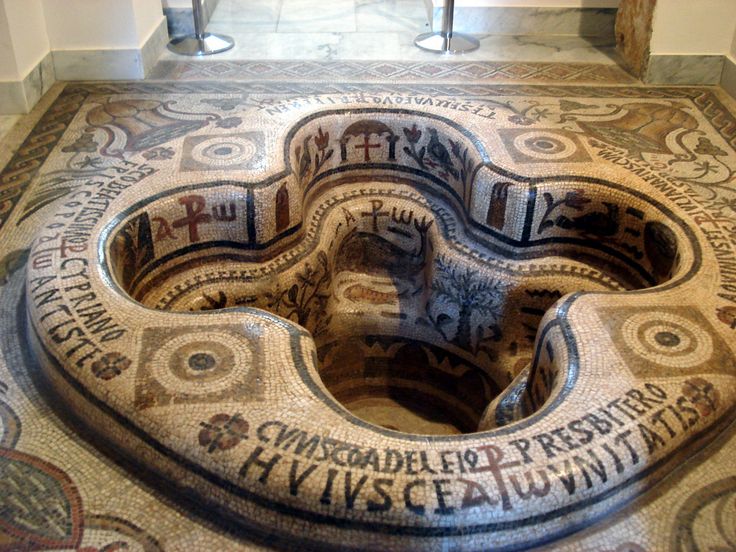
ancientfont_Tunis


So how do we do keep swimming? St. Theophan gives this starting point: “The root of [spiritual life] is the feeling that you are perishing, and that if it were not for the Lord, you would perish.” The great danger to spiritual life is insensibility – that lazy, hazy feeling that all is well with me and I need not fear God’s judgment. True spiritual life is characterized by a constant sense of urgency: “Make haste, quick, quick, for I perish!” If we are feeling sleepy and contented with our spiritual state, we are in great danger and must wake up.   How? Here are three items on a short to-do list:

First, we must force ourselves to pray and ask God to show us our actual state, to give us a constant remembrance of death and His judgment, and to restore our sense of urgency, giving us a repentant mind, which includes the ability to see our sins, to feel deeply grieved over them, and to weep for them.   All of this is a grace: Remember that to see one’s sins is a miracle.

Second, we must examine our conscience carefully and prepare for a good confession, make our confession, and prepare for Holy Communion as directed by our spiritual father.

Third, we must daily and hourly and continually cry, “Lord Jesus Christ, Son of God, have mercy on me the sinner!”

Let us begin with these things, and the Lord, Who is gracious and abundantly provides for those who love Him, will give us every spiritual gift needed to become fruit bearing trees in the orchard of Paradise.

treesofparadise


My most merciful and all-merciful God, Lord Jesus Christ, through Thy great love Thou didst come down and take flesh to save all. And again, O Savior, save me by Thy grace, I pray Thee, for if Thou shouldst save me for my works, this would not be grace or a gift, but rather a duty. Indeed, in Thine infinite compassion and unspeakable mercy, Thou O my Christ has said: Whoever believes in Me shall live and never see death. If faith in Thee saves the desperate, save me, for Thou art my God and Creator. Impute my faith instead of deeds, O my God, for Thou wilt find no deeds which could justify me, but may my faith suffice for all my deeds. May it answer for and acquit me, and may it make me a partaker of Thine eternal glory. And may Satan not seize me, O Word, and boast that he has torn me from Thy hand and fold. O Christ, my savior, make haste, quick, quick, for I perish. Thou art my God from my mother’s womb. Grant me, O Lord, to love Thee now as once I loved sin, and also to work for Thee without idleness, as I worked before for deceptive Satan. But supremely shall I work for Thee, my Lord and God, Jesus Christ, all the days of my life, now and ever, and unto the ages of ages. Amen. – Prayer to Our Lord Jesus Christ, from the Morning Prayers, English language Prayer Book, Holy Trinity Monastery, Jordanville, New York, 1960.

Posted in Uncategorized | Comments Off on Swimming upstream

A program for life

last-judgment-icon-st-elias-church-brampton-ontario (1)

6 September OS 2015 – Saturday of the Sixteenth Week after Pentecost (Sixteenth Week of Matthew), The Miracle of the Holy Archangel Michael at Chonae

In today’s Gospel, the Lord commands His disciples to be vigilant until His coming:

The Lord said to His disciples: Verily I say unto you, This generation shall not pass, till all these things be fulfilled. Heaven and earth shall pass away, but my words shall not pass away. But of that day and hour knoweth no man, no, not the angels of heaven, but my Father only. But as the days of Noe were, so shall also the coming of the Son of man be. For as in the days that were before the flood they were eating and drinking, marrying and giving in marriage, until the day that Noe entered into the ark, And knew not until the flood came, and took them all away; so shall also the coming of the Son of man be. Then shall two be in the field; the one shall be taken, and the other left. Two women shall be grinding at the mill; the one shall be taken, and the other left. Watch therefore: for ye know not what hour your Lord doth come. But know this, that if the goodman of the house had known in what watch the thief would come, he would have watched, and would not have suffered his house to be broken up. Therefore be ye also ready: for in such an hour as ye think not the Son of man cometh. Who then is a faithful and wise servant, whom his lord hath made ruler over his household, to give them meat in due season? Blessed is that servant, whom his lord when he cometh shall find so doing. Verily I say unto you, That he shall make him ruler over all his goods. But and if that evil servant shall say in his heart, My lord delayeth his coming; And shall begin to smite his fellow servants, and to eat and drink with the drunken; The lord of that servant shall come in a day when he looketh not for him, and in an hour that he is not aware of, And shall cut him asunder, and appoint him his portion with the hypocrites: there shall be weeping and gnashing of teeth. – Matthew 24: 34-44

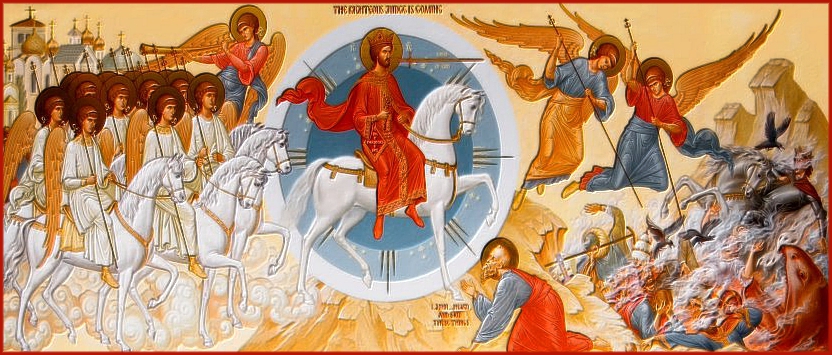
We await the coming of Christ in two senses: 1. He will come in glory at a time known to God alone, at the end of the world, to judge the living and the dead at the General Judgment.    2. If we die before His coming, we will face Him at the judgment seat of the Particular Judgment, when all of the deeds of our life will be laid bare, and He will place us in Paradise or Hades to await the General Resurrection and Dread Judgment. This brief life is given us to prepare for these encounters with our Judge.   How do we prepare?

St. Theophan the Recluse comments thus:

“Watch, therefore; for ye know not what hour your Lord doth come (Matthew 24:42). To be vigilant does not mean to sit with your arms folded, but rather to keep in mind that the Lord will come suddenly, and so to behave and conduct your affairs so as to be ready to meet Him at any instant, not fearing reproach and condemnation. How is one to do this? Very simply.   Walk in the commandments without breaking a single one. And if it happens that you break one, immediately cleanse yourself through repentance and by fulfilling what needs to be done. Then everything in you will be clean. Do not leave sin on your soul for even a minute: immediately repent, weep in your heart, and run to your spiritual father to confess and receive absolution, and then get down to business again, in accordance with God’s commandments. If you set out zealously to have your life in good order, it soon will be; just do not remain in a fall for long. In such a case, falls will become ever rarer and will eventually cease completely, with the help of the all-healing grace of God. Then the joyful assurance will dwell in you that you will not meet the Lord unprepared. – Thoughts for Each Day of the Year, pp. 200-201

Here we are, a program for life!   In short:

  1. Obey the commandments.
  1. If you fall, repent immediately.
  1. Get back to your spiritual work.

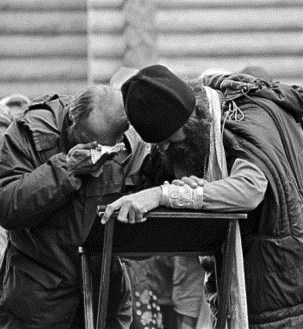
confession2

“…run to your spiritual father to confess and receive absolution.” Is this what we do? Or do we store up our sins in a great sack on our backs and trudge from year to year, performing a perfunctory and woefully incomplete confession during Holy Week and maybe before the Nativity or another feast, receiving Holy Communion as if it were a burdensome duty of some kind, and then going back to “business as usual” – not the “business” St. Theophan is speaking of above, the business of a conscious, daily spiritual effort, but the “business” of worldliness?

If one were to ask me why the world has gone so astray, I would answer, “Because Orthodox Christians do not frequently confess and receive Holy Communion.”   The Church is the charity of the world, the gate through which the grace of God flows to mankind, the pillar and foundation of the Truth, the place where man meets God, the means God has given for the salvation of man.   When the life of the Church in the world is strong, when vast numbers of Orthodox Christians are daily repenting, weeping over their sins, frequently confessing, receiving absolution, receiving the Body and Blood of Christ in Holy Communion – then evil is restrained, rulers and nations repent, thousands or millions of souls are saved.   When the life of the Church is weak, then God’s grace, though infinitely abundant and readily available, slows to a trickle in the life of the world, not because God is not all-powerful and all good, but because the men He has chosen out of the world to be His sons refuse to receive what He has to give.

Calculate the number of hours per week you read or watch the news on the Internet or television, seeking to know the latest evils in order to wring your hands and say how bad things are.   Organize next week so that you will spend the same number of hours in the combination of the following activities: attending Church services, saying daily prayers at home, doing spiritual reading, examining your conscience and going to confession, and receiving Holy Communion or undertaking the further preparation prescribed by your spiritual father.   Then do it.  By this, you will go from being a helpless victim (and worse, an addicted voyeur) of the world’s evils, to being a free child of God and, moreover, a spiritual warrior who has now begun to combat the evil rather than be hypnotized by it like the deer in the headlights. As they say, do not be part of the problem, be part of the solution.

Icon_second_coming

Posted in Uncategorized | Comments Off on A program for life

What reward do we seek?

5 September OS 2015 – Friday of the Sixteenth Week after Pentecost (Sixteenth Week of Matthew), Holy Righteous Zacharias, Father of the Forerunner 

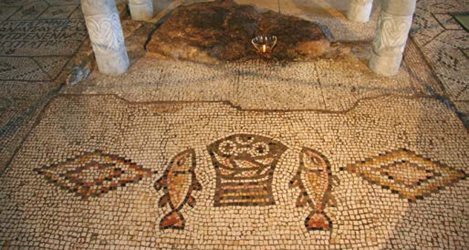
tabgah mosaic

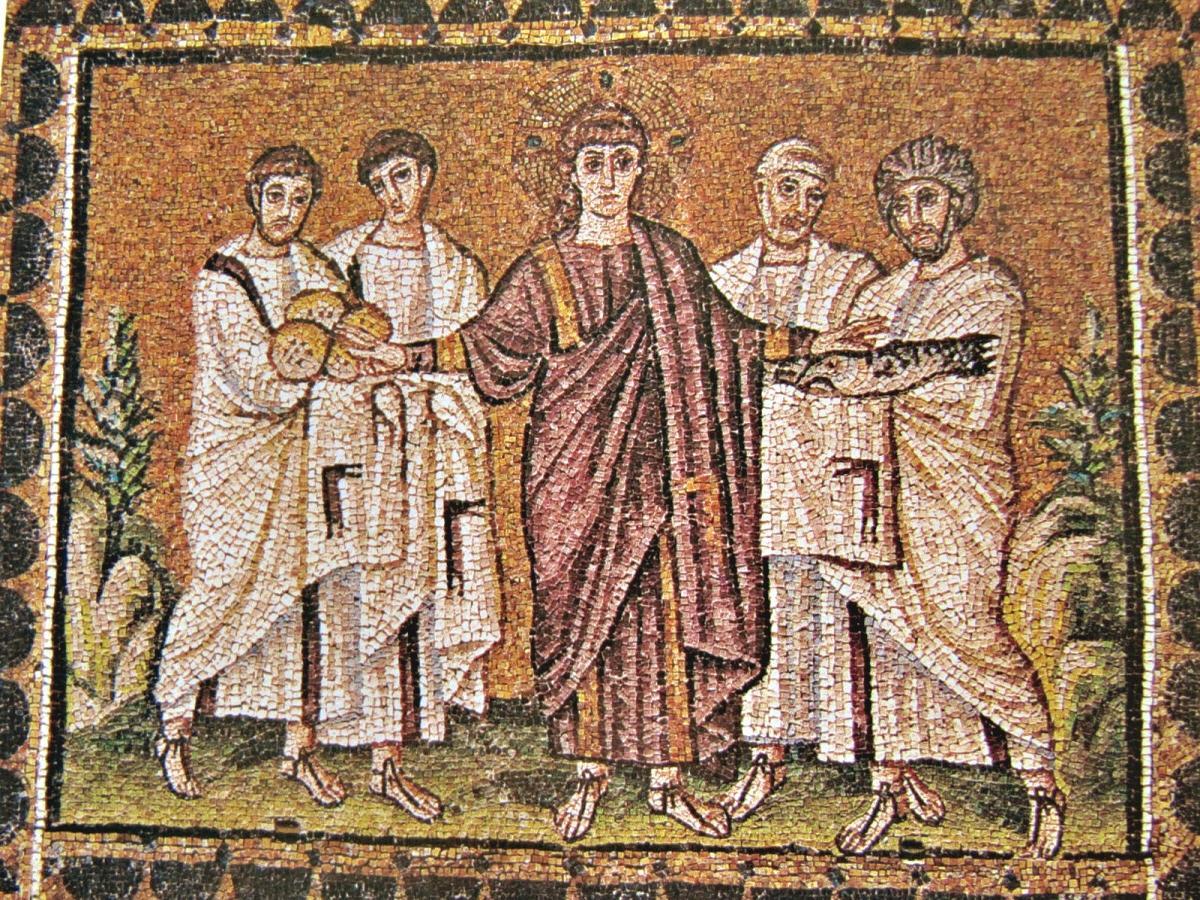
         In today’s Gospel, the Lord feeds the four thousand by a miracle, and then He departs quietly, as if nothing special had occurred:

In those days the multitude being very great, and having nothing to eat, Jesus called his disciples unto him, and saith unto them, I have compassion on the multitude, because they have now been with me three days, and have nothing to eat: And if I send them away fasting to their own houses, they will faint by the way: for divers of them came from far. And his disciples answered him, From whence can a man satisfy these men with bread here in the wilderness? And he asked them, How many loaves have ye? And they said, Seven. And he commanded the people to sit down on the ground: and he took the seven loaves, and gave thanks, and brake, and gave to his disciples to set before them; and they did set them before the people. And they had a few small fishes: and he blessed, and commanded to set them also before them. So they did eat, and were filled: and they took up of the broken meat that was left seven baskets. And they that had eaten were about four thousand: and he sent them away. And straightway he entered into a ship with his disciples, and came into the parts of Dalmanutha. – Mark 8:1-10

St. Theophan the Recluse points out how the Lord Jesus treated this as if it were a perfectly ordinary occurrence:

Having filled four thousand with seven loaves of bread, the lord “…straightway…entered into a ship, and came into the parts of Dalmanutha,” as if nothing special had been done. Such is the true doing of good – to do it continually, not paying attention to what has been done and, always forgetting what is past, to stretch forward to what is ahead. This comes naturally for those who are filled with goodness. Just as a strong man lifts heavy weights without noticing, while a weak man who has lifted a small weight cannot seem to forget it, so one who is strong in goodness does every good without strain, whenever the occasion arises, while one who is weak in goodness cannot manage without straining. The good is memorable to him, and he keeps glancing at it and looking back. A good heart craves to do good, and is not satisfied until he has eaten his fill.   While hunger is felt, dinner is remembered, but when the hunger has been satisfied, all is forgotten https://sildentadal.com/. So it is with a truly good person: a good deed is remembered before it is completed, but once it is done, it is forgotten.   – from Thoughts for Each Day of the Year, pp. 199-200

We are Christians, and we know that we are supposed to love our brother and to do good to him. Even when we do good, however, the demons work through our passions to rob us of the grace that we should receive when we perform acts of love.

For example: We do good to someone – give him some money, let him use our automobile or stay in our house, give him a job when he is out of work, take food over when the family is needy, etc.   Do we do it for Christ’s sake, because we see Christ in our brother, hoping to avoid the pains of hell and inherit Paradise, or, what is even higher, out of love for Christ, to please Him alone, because He is worthy of all love? Or do we write a red mark in the debit column of a calculating heart: “Ah, now so-and-so owes me something”? How many family and social relations which men regard as normal are actually fundamentally corrupt, because they are based on such a calculus! God designed family and friendship to lead us to heaven, but when they function as a marketplace of endless haggling over who owes what to whom, they drag us down to hell instead.

Of course, we on our part should always render due gratitude to our benefactors: of this there is no question. Ingratitude, whether to God or to man, is base and ignoble, a quintessentially Luciferian attitude. We must always show gratitude, and we must teach this essential virtue to those for whom we are responsible. When it is we, however, who are the benefactors, our only thought should be of pleasing Christ, Whom we see in our brother, and we should seek both praise and payment from Him alone.

Let us pray to escape the calculating heart of fallen nature by the grace of that good hunger of which St. Theophan writes above: the insatiable hunger of a loving soul to do good, to do good without measure and without calculation, striving forward towards the finish line of death and God’s judgment in the continual doing of good, thinking only of the reward and the Rewarder, Who shall render to each man according to his deeds.

loavesandfishes_Ravennamosaic

Posted in Uncategorized | Comments Off on What reward do we seek?