An island of saints

3 September OS 2015 – Wednesday of the Sixteenth Week after Pentecost (Sixteenth Week of Matthew), Holy Hieromartyr Anthimus of Nicomedia, Holy Righteous Theoctistus, the Translation of the Relics of the Holy Passion Bearer Edward King of England

The Holy Orthodox Church is not the property of this or that group of people. It is the One, Holy, Catholic, and Apostolic Church, into which Jesus Christ calls men of every nation, race, and tongue, unto their salvation. In recent centuries, Orthodoxy has been relegated – even, or rather especially, by many of its supposed adherents – to the mere status of this or that tribal religious tradition, a view eagerly agreed with by secular anthropologists and other less savory non-Christians.  But the truth is otherwise.
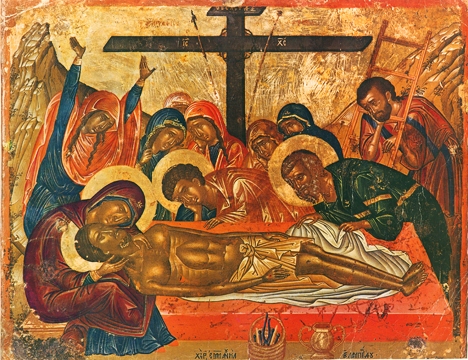
epitaphios

We know from Holy Tradition that the isle of Britain received the Gospel in the Apostolic generation, from no less a missionary than St. Joseph of Arimathea, along with St. Aristobulus the Apostle.   In other words, the Orthodox Church in Britain, though its existence was interrupted for a millennium, is as old as the great Orthodox Churches of the various Greek-speaking peoples, and far older than important national churches such as the Russian and Serbian. At the time of its founding, its people were Britons, Celts related to today’s Irish and highland Scots, but they were in the process of being Romanized. Today their descendants live in Wales, and in Brittany on the coast of France. Who drove them into the little corner of Britain we call Wales, and who chased them across the Channel to Gaul? Why, the English, of course.

During the fifth and sixth centuries, various groups from the north of Germany – people like the Angles, Saxons, Jutes, and Frisians – sailed over to Britain and gradually conquered most of what we call England, driving the provincial Roman Christians (for that is what the Britons had become) into the borderlands and setting up their own pagan societies. One of their groups, the Angles, eventually gave their name to them all, thus “England” and “the English.” Now and then a Roman nobleman (like King Arthur, if he really existed) would give them a beating and win the Christians a breathing space, but by the year 600 AD these pagan Germanic people had thoroughly taken over. They called the Roman provincials they had conquered wealas – “foreigners” – and thus our modern words “Wales” and “Welsh.” (Thus also, strangely enough, “Wallachia” and “Vlach,” because the Slavs who conquered the Romans in the eastern half of the Danube region had borrowed the same word from the Germans. Now, I am descended from Welsh people, and therefore my Romanian friends will be happy to know that I am a Vlach too!).
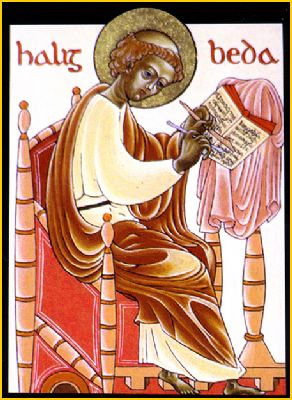
Icon-St.-Bede

Anyway, why did God let this happen? An Orthodox saint, Bede the Venerable, in his great Ecclesiatical History of the English People, says that it is because the Roman Christians in Britain 1. Were morally corrupt, and 2. Did not love the pagan invaders, but only dealt with them on the fallen human level, as enemies, and made no efforts to convert them to the Faith.   We various Orthodox of the 21st century should ponder their fate and why it came upon them.
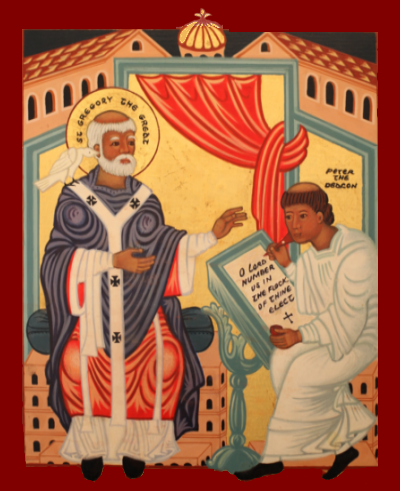
stgregorythegreat

Who, then, made the English into Christians?   Other Romans did it, Romans from Old Rome herself, directed by no less a person than St. Gregory the Great (whom we Easterners call “the Dialogist”), Pope of Rome, another Orthodox saint, who reposed in the year 604 AD.   One day in the 590’s, walking through the slave market in Rome, St. Gregory saw some handsome Old English youths up for sale.   He asked his companion, “Of what race are these men?” Upon hearing that they were Angli (Angles, i.e., English), the saint, struck by their innocent faces and noble bearing, replied, “Call them, rather, angeli (angels),” and he resolved to send missionaries to (what had become) England to convert their nation.   Not one to waste time (St. Gregory is one of those great “action men” of history), he sent one of his hieromonks, Augustine, to England with a group of priests and monks, to carry out this resolve.   They landed at Canterbury in Kent on the east coast of Britain and converted the local king, Ethelbert. Augustine became the first Archbishop of Canterbury, and thus began a new Orthodox local Church, which lasted until 1066, when Normans from France, carrying an authorization in writing from the by-then-heretical-and-schismatic pope of Rome, conquered the English and made them into what people today would call “Roman Catholics” (though Eastern Orthodox polemicists have usually preferred less polite, albeit more accurate terms like “filioquists, papists, rantizmates, azymites, etc.” It is actually we who function as the Catholics and the Romans when we are behaving ourselves, but that is another story).   Nearly 500 years after that, an evil king destroyed all the monasteries, desecrated the relics of the saints, and made the English Protestants. Today, it seems, his successors will be content to see them made Mohammedans. But let us return to the Old English.
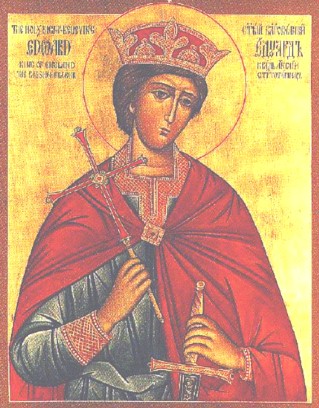
edward-king01

This Old English Orthodox Church produced many saints in its nearly 500 year history, one of whom we celebrate today, which is, to cut to the chase, why I have given this little history lesson: the young King Edward, the Passion-Bearer, a pious and Orthodox king who encouraged monastic reform and general spiritual renewal among his people. He was foully murdered by courtiers who hated his spiritual direction and wanted a king they could corrupt for their own ends, and so Holy Church regards him as a “Passion-Bearer,” a holy man who suffered in the Christian manner for the sake of piety. In other words, non-Christians did not kill him for being a Christian; bad Christians killed him for acting like a Christian.   He entered the heavenly kingdom in the year 979, and immediately he began to perform miracles for those who prayed to him and venerated his holy relics. In 2015, believe it or not, these same relics, through an amazingly providential history, lie enshrined in the beautiful little church of a monastic brotherhood that belongs to our True Orthodox Church of Greece, in Brookwood, Surrey, England.   You can read more about St. Edward at their website, at http://www.saintedwardbrotherhood.org/edward2.html.

God is wondrous in His saints, of every nation, race, and tongue. As we witness the building of a new global Tower of Babel by those who hate Christ, we who love Him will not defeat them by hating the true, Pentecostal global unity with our true Orthodox brethren of every nation, race, and tongue, but by loving them, and by loving, yes, even our enemies, and desiring their salvation.   Our God, the true God, is He “Who will have all men to be saved, and to come unto the knowledge of the truth (I Timothy 2:4).” It is a curious turn of God’s providence that the global language of the new Babel descends from the language spoken by those angelic invaders from north Germany.   There is no “chance” in life; there is only the working out of God’s plan in history.   Without putting aside the rich languages of our various national heritages, we must perforce use this English tongue to convert the nations. We have no choice, and let us therefore use it well.

Once, when He descended and confounded the tongues, the Most High divided the nations; but when He divided the tongues of fire, He called all men into unity; and with one accord we glorify the All-Holy Spirit.   

– The Kontakion of Pentecost, by St. Romanus the Melodist
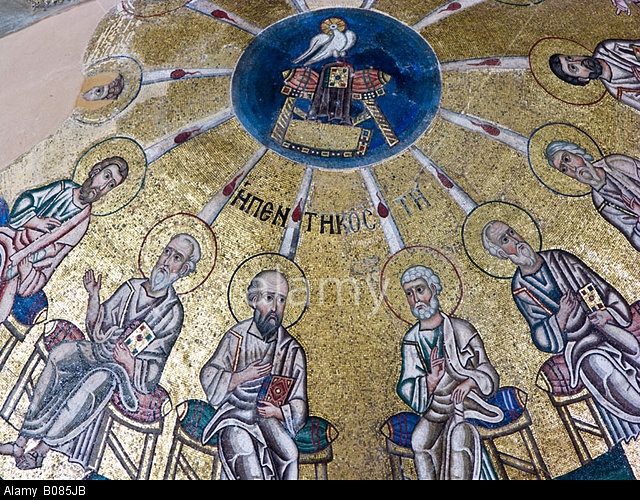
B085JB mosaic of the Pentecost, Katholikon church, Hosios Loukas monastery Greece
B085JB mosaic of the Pentecost, Katholikon church, Hosios Loukas monastery Greece


Posted in Uncategorized | Comments Off on An island of saints

God the King of the Ages

1 September OS 2015 – Monday of the Sixteenth Week after Pentecost (Sixteenth Week of Matthew), the Church New Year (the Indiction), St. Symeon the Stylite, St. Jesus Son of Navi (Joshua Son of Nun)

Today begins the Church’s New Year, and it is a good time to reflect on the use we make of our time.

Though we live amid great material abundance, most of us – perhaps all of us – still experience a great poverty, the poverty of anxiety. This is not simply a psychological problem, but a spiritual one, for it shows that we do not yet fulfill the Gospel commandment of Jesus Christ:

But seek ye first the kingdom of God, and his righteousness; and all these things shall be added unto you. Take therefore no thought for the morrow; for the morrow shall take thought for the things of itself. Sufficient unto the day is the evil thereof.   – Matthew 6: 33-34 

If we believed in the Lord’s words and fulfilled them, we would not worry so much. How can we truly believe in His words and fulfill them in the actual circumstances of our lives? What does the Church’s tradition have to teach us?

The month of September marks the beginning of the Church Year.  Today, September the first, is the Church New Year. In the entry for September 1st in his great collection of the Lives of the Saints, our holy hierarch father Demetrius of Rostov relates the following about the way of life commanded by God through Moses in the Old Testament:

            …Every seventh year was called a sabbath, a year of rest, as the Lord said through Moses to the sons of Israel: “Six years thou shalt prune thy vineyard, and gather in the fruit thereof; but in the seventh year shall there be a sabbath of rest unto the land; thou shalt neither sow thy field, nor prune thy vineyard. If ye shall say, What shall we eat the seventh year, if we sow not, neither gather in our grain? I will send My blessing upon you in the sixth years, and ye shall eat of the old stores (Leviticus 25: 3-4, 20-21).”

All those years in which the Lord ordained that man allow the land to rest began in the month of September. The Lord commanded: Do ye proclaim, saith the Lord, the year of repose in the seventh month, that is, in the month of September. This month is the seventh after March, which was the first month after the creation of the world. Not only did the year begin in September, according to the commandment given in the Old Testament, but the pagan indiction likewise began on the first day of the month of September.  – The Great Collection of the Lives of the Saints, Volume I (Available from Chrysostom Press, House Springs, Missouri)

             Thus speaking to Moses, 1500 years before His coming in the flesh, the Lord gives even His Church of the Old Testament a strict, liberating, evangelical command: Trust Me so much that every seventh year you will not even plant your fields. Every seventh year, like every seventh day, was a time of rest, so that man could experience once again, as he did in Paradise, that it is the Lord, and not he himself, Who provides for all of his needs. Instead of striving – repose. Instead of worry – peace of mind. Instead of constant activity – prayer, reflection, and gratitude.

Though we are not bound literally by this command of the Mosaic Law, and though our circumstances are different from those of ancient agricultural peoples, we are bound spiritually to fulfill this precept, and the needs of our souls are the same as the men of all generations. How can we fulfill this command of the Lord, and how will this heal and enlighten our souls?

  • We have to recognize that acquisitiveness, and its concomitant, “workaholism,” are very serious spiritual problems. They separate us from God. We have to subject our preconceptions about our material needs to ruthless scrutiny and consciously try to re-order our priorities to the point at which there is ample time for prayer, for Church, and for family.
  • We have to honor the Lord’s Day with gathering for the Divine Services and a prayerful atmosphere at home. Just as in the Old Testament, the Sabbath belonged to the Lord, so in the New Testament, the Day of the Resurrection belongs to the Risen Christ. This is not optional; when we use this day for something else, we are stealing from God. We do not think about it this way; we do not “mean” to do it. But it does have that effect on our lives.
  • We must stop running around like madmen in our leisure time. When one sees how people dash about from one activity to another in their “free” time, one wonders how they ever have time for quiet and peace at all. Do a calculation: what percentage of your leisure time is spent in prayer and spiritual reading, or even reading good literature and listening to good music, or just sitting down at real, leisurely meals with your family and talking to them? The constant desire for entertainment and distraction is a sickness of the soul, and when we keep feeding it, we get sicker.

The whole point of this is to create the pre-conditions in which prayer can take place, not simply prayer at the appointed times, but a constant atmosphere and mentality of prayer throughout the day. The constant dwelling of the mind in the heart, and the heart in God, is what heals man.

Here is one thing everyone can do: Before bed in the evening, let the whole household sit down quietly before the icons and listen as one family member says the Jesus Prayer for five minutes. This sounds simple, does it not? Try it: Lord Jesus Christ, Son of God, have mercy on us!

Let us use this Church New Year to start afresh, to re-order our priorities and our lives. We cannot change everything all at once, of course, but we can take at least one step and then stick to it. May God, the King of the Ages and Creator of time itself, enlighten us to use our time as He intends, during the year about to begin.

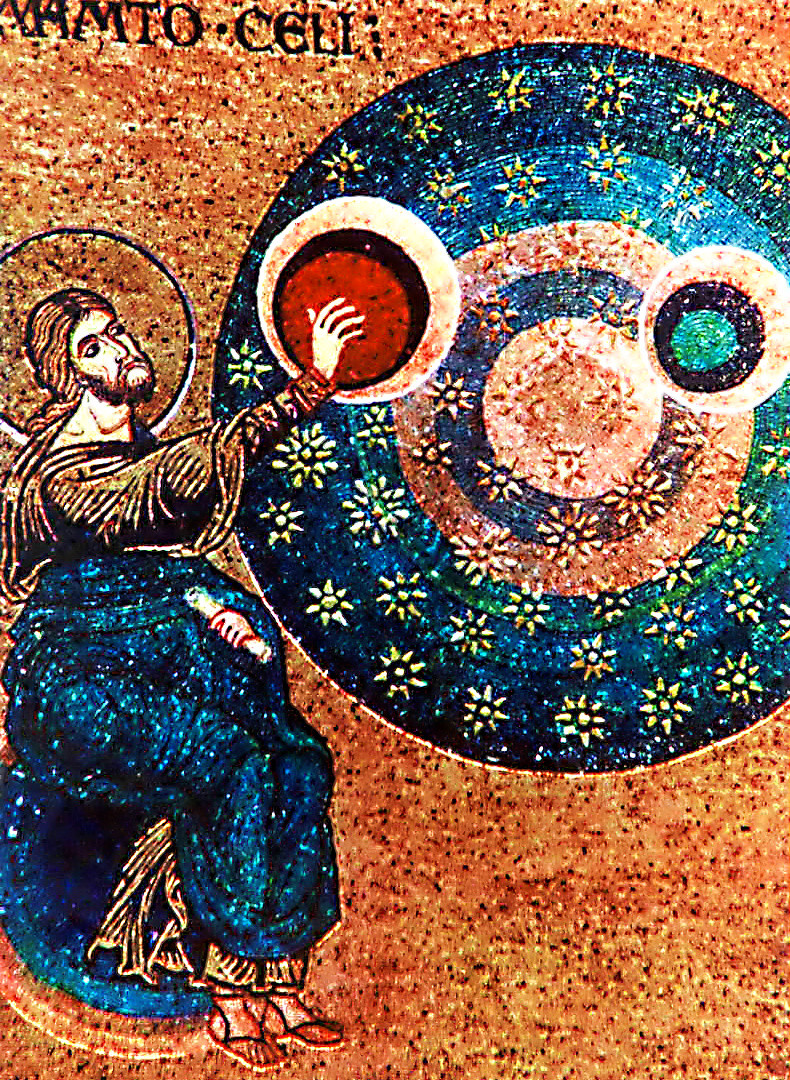
God creates the heavens mosaic


Posted in Uncategorized | Comments Off on God the King of the Ages

The love of many has grown cold

30 August OS 2015 – Saturday of the 15th Week after Pentecost (15th week of Matthew), Ss. Alexander and John, Patriarchs of Constantinople, Righteous Prince Alexander Nevsky

Today’s Gospel reading is the beginning of the Lord’s great eschatological discourse towards the end of the Gospel according to St. Matthew. Here it is:

          And Jesus went out, and departed from the temple: and his disciples came to him for to shew him the buildings of the temple. And Jesus said unto them, See ye not all these things? verily I say unto you, There shall not be left here one stone upon another, that shall not be thrown down. And as he sat upon the mount of Olives, the disciples came unto him privately, saying, Tell us, when shall these things be? and what shall be the sign of thy coming, and of the end of the world? And Jesus answered and said unto them, Take heed that no man deceive you. For many shall come in my name, saying, I am Christ; and shall deceive many. And ye shall hear of wars and rumours of wars: see that ye be not troubled: for all these things must come to pass, but the end is not yet. For nation shall rise against nation, and kingdom against kingdom: and there shall be famines, and pestilences, and earthquakes, in divers places. All these are the beginning of sorrows. Then shall they deliver you up to be afflicted, and shall kill you: and ye shall be hated of all nations for my name’s sake. And then shall many be offended, and shall betray one another, and shall hate one another. And many false prophets shall rise, and shall deceive many. And because iniquity shall abound, the love of many shall wax cold. But he that shall endure unto the end, the same shall be saved. – Matthew 24: 1-13  

         The Lord states very clearly why the love of the many will grow cold in those days: “…because iniquity shall abound.” Here the Lord directly contradicts the preachers of the new “love” we hear about everywhere today, “love” that “blesses” every manner of evil and perversion: infanticide, sodomy, adultery, fornication, atheism, devil worship, false religions, usury, the endless pursuit of mindless vanity in the entertainment industry, the ever-spreading cancer of gambling, and on and on. The only “sin” today is to denounce evil, which proves that “you have no love.”

Today materialists call themselves “humanists” and state that they condone sin because they “love people,” and that the Church is “anti-human.” The Lord states otherwise. The true humanist, that is, the person who truly loves other human beings, is not the person who condones their self-destructive sin, but he who points it out and tries to fight it. St. Theophan the Recluse, in his commentary on this verse, says the following:

…Love is destroyed by transgressions; the more sins there are, the less love there is. Where all is sin, do not look for love. Therefore, he who seeks the spread of love and the diminishing of he lack of love ought to be concerned with decreasing sin and curtailing the love of sin. This is the true foundation of humanism! Having taken up this work, one must use all means to oppose sin. Outward sins are the fruit of inner sinfulness. Inner sinfulness is rooted in egoism and its offspring. Consequently humanists need to make it a rule for themselves to suppress egoism by all means. Egoism is suppressed most forcefully by not allowing one’s own will. Do not allow yourself to have your own will, and soon you will overcome egoism. On the other hand, no matter what means you want to use against egoism, you will not be able to do anything if you give freedom to your will. Hence it follows that wherever people seek their own little will in all things, they are seeking an expansion of egoism and the drying up of love, and they are seeking greater evil. Yet such is the spirit of the current time – and evil is growing. – Thoughts for Each Day of the Year, p. 194

By re-defining what love is and what sin is, today’s “wisdom” is destroying man.   “Love” = condoning the other person’s selfishness. “Sin” = calling it like it is. The only sin is “intolerance.”   The only permitted intolerance is intolerance of the truth.

The most obvious sins condoned today by the new “love” advocates are the sins involving sexual immorality.   Not only the Church, however, but even honest secular psychologists and physicians can tell you that the more – and the more varied -“partners” someone has, the more fragmented and ruined a person he becomes.   This is common sense. Illicit sexual behavior hardens the heart, darkens the mind, and ruins the person.   Such a person cannot love. After awhile, such a person cannot even think. All the “love” they believe they feel with this or that “partner” (another ruined word!) is simply the delusive warmth arising from the mutual approval of sensuality and self-worship.   It is a diabolic shadow play, a hellish dance of destruction.

True love is seen above all in the Sacrifice of Christ on the Cross.   This love is made manifest in the world in the lives of the Saints, who crucified the flesh with its passions and lusts, and arrived at purity of heart, at holiness, apart from which no man will see God. The only path to true love is the path to Golgotha. There is no other way.

Now how do we, in 2015, fight the evil that St. Theophan said was growing in his time (1881!)? First of all, we must reject the least concession to any new definitions of what love is, what good is, what evil is, and what sin is.  We must give wholehearted and absolute adherence to the teachings of the Church, which have not changed in thousands of years. “We do not serve the times, but God,” as St. Athanasius once said. Simultaneously we must apply ourselves wholeheartedly to rooting out the egoism in our own hearts, by heartfelt prayer to God, by repentance, by crying to Him with tears for our sins and the sins of the world.   God promised Abraham that He would not destroy Sodom for the sake of ten righteous men. Let us try, by the grace of God, to be one of the ten righteous men. And if there are not even ten, let us imitate the Righteous Lot and flee up to Zoar in time.

There is no use pretending that the love of the many has not grown cold. It has.   We must recognize our situation and deal with it.   But we cannot dwell on the evil in the world. The world will go its way, and we will go our way, and the two ways have always diverged; today it is simply more obvious. We must dwell in our minds there, where our true life is. Face it – if we are really Christians, we are already dead men: “For ye are dead, and your life is hid with Christ in God (Colossians 3:3).” Whatever short span of life is given to man after Baptism is simply a working out of the implications of that reality. Let us, then, rejoice, for the Lord is nigh, even at the door.

     He that is unjust, let him be unjust still: and he which is filthy, let him be filthy still: and he that is righteous, let him be righteous still: and he that is holy, let him be holy still. And, behold, I come quickly; and my reward is with me, to give every man according as his work shall be. I am Alpha and Omega, the beginning and the end, the first and the last. Blessed are they that do his commandments, that they may have right to the tree of life, and may enter in through the gates into the city. For without are dogs, and sorcerers, and whoremongers, and murderers, and idolaters, and whosoever loveth and maketh a lie. I Jesus have sent mine angel to testify unto you these things in the churches. I am the root and the offspring of David, and the bright and morning star. And the Spirit and the bride say, Come. And let him that heareth say, Come. And let him that is athirst come. And whosoever will, let him take the water of life freely. For I testify unto every man that heareth the words of the prophecy of this book, If any man shall add unto these things, God shall add unto him the plagues that are written in this book: And if any man shall take away from the words of the book of this prophecy, God shall take away his part out of the book of life, and out of the holy city, and from the things which are written in this book. He which testifieth these things saith, Surely I come quickly. Amen. Even so, come, Lord Jesus. The grace of our Lord Jesus Christ be with you all. Amen. 

Amen.

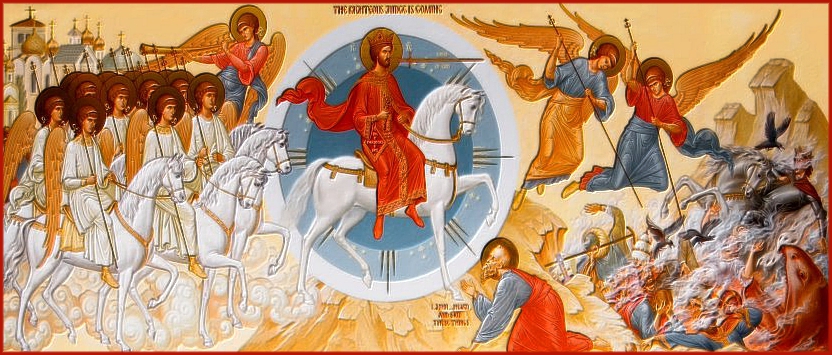
  last-judgment-icon-st-elias-church-brampton-ontario (1)


Posted in Uncategorized | Comments Off on The love of many has grown cold

Thirst for God

28 August OS 2015 – Thursday of the 15th Week after Pentecost (15th week of Matthew), St. Moses the Ethiopian

Today’s reading from the Holy Gospel is Mark 6:30-45, which is St. Mark’s account of the miraculous feeding of the five thousand. In his commentary on this passage in Thoughts for Each Day of the Year, St. Theophan the Recluse does not comment on the text recounting the miracle itself, but on verse 33: “And the people saw them departing, and many knew him, and ran afoot thither out of all cities, and outwent them, and came together unto him.”   St. Theophan reflects thus:

What drew the people to the Lord? A feeling for the Divine. The Divinity of he Lord, hidden under the cover of human nature, revealed itself in word, deed, gaze, and in all that was visible in the Lord. The manifestations of the Godhead awakened a feeling for the Divine hidden in the heart of the people, and through it drew them to the Lord… A small sign of the Divine draws people to itself. What can one conclude from this universal experience of our spirit’s aspiration for the Divine, which takes place at all times? One can conclude that the source of this experience is the Divine, the supernatural, the Godhead. This aspiration lies at the foundation of our spirit, and constitutes its nature, as anyone can see from our intellectual, aesthetic, and practical concerns. – Thoughts for Each Day of the Year, pp. 192-193

This “feeling for the Divine” is a mark of the presence of spirit in man. The spirit is not a separate thing from the soul, but the highest faculty of the soul, by means of which the baptized soul has direct communion with the energies of the Godhead. Every human being is born with spirit, which is characterized by this “feeling for the Divine,” this thirst for God, and God’s grace uses this natural function of the spirit in order to draw man to Faith and Holy Baptism, which enable the spirit to house the indwelling grace of God.   Archbishop Averky, in an article quoted in The Law of God (English edition, p. 100-103), notes three aspects of human psychology that point to the existence of spirit: Fear of God, Conscience, and the Thirst for God.   It is this Thirst for God that Bishop Theophan is referring to above.   Archbishop Averky writes:

It is inherent in the nature of our soul to seek God. Our spirit cannot be satisfied with anything created and earthly. No matter how many and how varied the earthly goods we might have, still we long for something more. This eternal human dissatisfaction, this constant insatiableness, this truly unquenchable thirst demonstrates that our spirit possesses a striving for something higher than all that surrounds it in earthly life, for something ideal, as it is often said. Since nothing earthly can quench this thirst in man, the spirit of man is restless, not finding any rest for itself until it finds complete satisfaction in God, with Whom the human spirit is always striving consciously or unconsciously, to have living communion.  

          How, then, do we draw people to the Church? Only by manifesting the holiness of God, the divine beauty for which the human soul thirsts.   Preaching, teaching, articles, argumentation, etc. – all have their proper place, but the “clincher” is always that the spirit of the man thirsts for the actual divine grace present in the real Church, and he is not satisfied until he drinks from that fountain.   Our job is to do our little part in making this present to him.   We do this in several ways, including the following:

  1. We must all make sacrifices in order to make possible the regular celebration of the Orthodox Divine Services in fitting churches, oratories, and chapels. This includes the building of the church, outfitting it, and supporting the clergy, so that they are free to serve God daily and not only on Sundays and a few feast days.
  1. We must so order and adorn our homes and our family life, so that the distinct fragrance, the “feel” of Orthodoxy permeates them.
  1. We must manifest in our speech and personal bearing that we are indeed different, citizens not of this world but of the heavenly kingdom. This comes about only when we are faithful to the life of prayer and to prayerful and moral attentiveness throughout the day.

When an honest, thirsting soul encounters these things – the Orthodox divine worship, Orthodox home life, and Orthodox personal behavior – it senses the presence of grace.   A person may be seeking the true Faith and discovering Orthodoxy through books (or, as is likely nowadays, websites), but he needs to encounter the reality in the flesh. This is where real conversion to the Faith begins.

Let us resolve today to take steps in doing our part to help these thirsting souls.   We need to pick one of the three activities above and make a short to-do list in order to pursue it. We should tell the Lord that we are weak and unable to do it, and that we beg Him to help us, for His glory and for the salvation of souls.

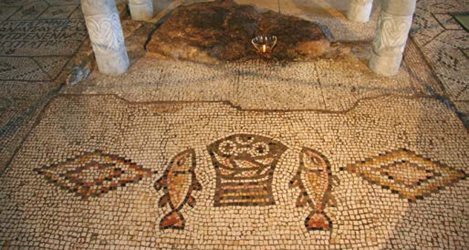
tabgah mosaic


Posted in Uncategorized | Comments Off on Thirst for God

And His own received Him not

26 August OS 2015 – Tuesday of the 15th Week after Pentecost (15th week of Matthew), Holy Martyrs Adrian and Natalia

In today’s Gospel, the Lord’s fellow townsmen are offended because of His teaching them in the synagogue:

At that time, Jesus came into his own country; and his disciples follow him. And when the sabbath day was come, he began to teach in the synagogue: and many hearing him were astonished, saying, From whence hath this man these things? and what wisdom is this which is given unto him, that even such mighty works are wrought by his hands? Is not this the carpenter, the son of Mary, the brother of James, and Joses, and of Juda, and Simon? and are not his sisters here with us? And they were offended at him. But Jesus said unto them, A prophet is not without honour, but in his own country, and among his own kin, and in his own house. And he could there do no mighty work, save that he laid his hands upon a few sick folk, and healed them. And he marvelled because of their unbelief. And he went round about the villages, teaching.
And he called unto him the twelve, and began to send them forth by two and two; and gave them power over unclean spirits.
– Mark 6: 1-7

         We may often become discouraged, because it seems that even those nearest and dearest to us are not interested in our Faith, or, if they are Orthodox nominally, are not interested in deepening their understanding and practice of the Faith.   If even the Lord Himself was ignored, even derided, by His own (He came unto his own, and his own received him not – John 1:11), who are we to think that we will convert or inspire those close to us? The servant is not greater than his lord…(John 15:20).   We must always be concerned for the salvation of our neighbor, but we must also be humble enough to realize that not everything we say or do to show our concern will be effective.   There are several reasons for this:

  1. Ultimately, the salvation of the other person is in the hands of God. He alone knows what the other person really needs at this or that point. We do our best and put the rest in God’s hands.
  1. The other person has his own mind and his own will. “One man can lead a horse to water, but a thousand men cannot make him drink.” What is in the other person’s heart is, in the final analysis, a mystery known to God alone.
  1. We are but the least of God’s servants. Perhaps we lack something in our own wisdom, or in the example that we give. Let us repent and pray for that wisdom and to become the good example the other person needs.

May the Lord always give us loving hearts which desire the salvation of our neighbor, and may He at the same time give us the desire to seek only His holy will, and to leave all things in His hands.   He loves our neighbor and desires his salvation infinitely more than we do. May He save and have mercy upon us all.


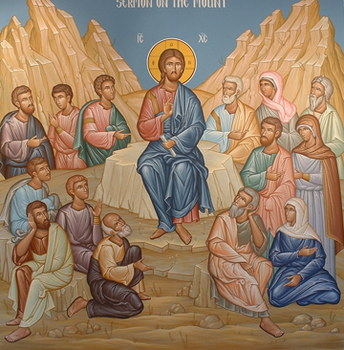
 Sermon on the Mount


Posted in Uncategorized | Comments Off on And His own received Him not

Only Christ can purify our minds

25 August OS 2015 – Monday of the 15th Week after Pentecost (15th week of Matthew), Holy Apostles Bartholomew and Titus

In today’s Gospel, the Lord rewards the faith of the woman who had suffered with a flow of blood for twelve years:

At that time much people followed Jesus, and thronged him. And a certain woman, which had an issue of blood twelve years, And had suffered many things of many physicians, and had spent all that she had, and was nothing bettered, but rather grew worse, When she had heard of Jesus, came in the press behind, and touched his garment. For she said, If I may touch but his clothes, I shall be whole. And straightway the fountain of her blood was dried up; and she felt in her body that she was healed of that plague. And Jesus, immediately knowing in himself that virtue had gone out of him, turned him about in the press, and said, Who touched my clothes? And his disciples said unto him, Thou seest the multitude thronging thee, and sayest thou, Who touched me? And he looked round about to see her that had done this thing. But the woman fearing and trembling, knowing what was done in her, came and fell down before him, and told him all the truth. And he said unto her, Daughter, thy faith hath made thee whole; go in peace, and be whole of thy plague. – Mark 5: 24-34

St. Theophan the Recluse relates this to our struggle for the healing of our thoughts:

The issue of blood is an image of the passionate thoughts and intentions that incessantly spring forth from the heart, if it has not yet been cleansed from all sympathy to sin – this is our sinful disease. It is sensed by those who have repented and zealously strive to keep themselves pure not only outwardly, but inwardly as well.   Such people see that evil thoughts incessantly proceed from the heart, and they grieve over this and seek healing. But it is not possible to find such healing in oneself or others. It comes from the Lord, or, more precisely, it comes when the soul touches the Lord and power goes out of the Lord into the soul.   – from Thoughts for Each Day of the Year, p. 190

How do we baptized Orthodox Christians know that we are not Christians in name only but that we are actually on the path to salvation?   There are various indicators, but here St. Theophan points to one of them: “Such people see that evil thoughts incessantly proceed from the heart, and they grieve over this and seek healing.” Inner struggle, constant grieving over the lack of inner perfection, striving towards Christ in our minds, and begging Him constantly to cleanse our heart – this habit of mind marks a true Christian.

Outward works are indeed necessary as well (“I was hungry and you gave Me to eat; I was thirsty and you gave Me to drink…”).   But outward works without the inner struggle, without the inner voice accusing oneself of impurity of heart, do not save. When the Lord commands, “Be ye therefore perfect, even as your Father which is in heaven is perfect (Matthew 5: 48),” He commands the perfection of the inner and the outer self, for we are soul and body, not just body, and the soul is the higher part of man, that which gives life and should govern life.

Try this: For one day, keep track of your thoughts and feelings throughout the day, as much as you can – what you thought about; how you reacted inwardly to people, news, and events; what objects the energy of your mind was spent upon. When given a moment’s freedom from work, what did you attach your mind to?   At the end of the day, as part of your evening prayers, review the mental content of your day.   What was it like, really? Do you think it was much different from a non-Orthodox or even a non-Christian living or working next to you? Was your mind frequently turned to prayer, to thoughts of gratitude to God, to the beauties of our Faith, to weeping over your sins and the sins of the world, to intentions of well-doing towards others, to the forgiveness of those who have wronged you, to death and God’s judgment? Or was it fragmented, distracted, and alternatively entertained and depressed by the same junk that everyone else thinks about?

Try this: Take a prayer rope to work, in your pocket or purse.   On the hour, take it out (if possible) and say the Jesus Prayer 33 times. It will take less than five minutes, less than two minutes. Ask the Lord to give you a mental “re-set” for the next hour, to clean out all the bad things you may have thought and felt for the last hour, and to give your heart and mind a spirit of lightness and of prayer. Then go back to your work.

These “little” exercises can become not-so-little. They can grow into a constant habit of mind, a constant striving towards the Lord, as the ailing woman strove towards Him in the crowd on that day in Galilee long ago. He will not ignore our striving, for it was He Who inspired us and gave us the strength to do it.   Power will go out of Him, and it will dry up the flow of our evil thoughts, as on that day it dried up the woman’s hemorrhage. He will replace the evil with the good and give us the abiding sense of His presence, which is a foretaste of Paradise.


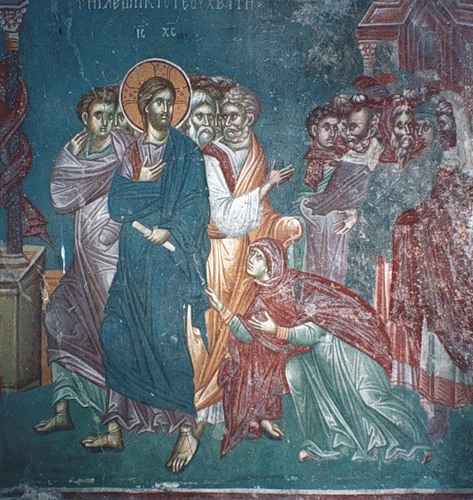
                     xp_heals_womanwithflowofblood


Posted in Uncategorized | Comments Off on Only Christ can purify our minds

True greatness

23 August OS 2015 – Saturday of the 14th Week after Pentecost (14th week of Matthew), Leave-taking of the Dormition, Holy Martyr Lupus, Holy Hieromartyrs Pothinus and Irenaeus of Lyons  

In today’s Gospel, the Lord instructs his disciples concerning the humility and service that are the hallmarks of a true Christian:

Then spake Jesus to the multitude, and to his disciples, Saying, The scribes and the Pharisees sit in Moses’ seat: All therefore whatsoever they bid you observe, that observe and do; but do not ye after their works: for they say, and do not. For they bind heavy burdens and grievous to be borne, and lay them on men’s shoulders; but they themselves will not move them with one of their fingers. But all their works they do for to be seen of men: they make broad their phylacteries, and enlarge the borders of their garments, And love the uppermost rooms at feasts, and the chief seats in the synagogues, And greetings in the markets, and to be called of men, Rabbi, Rabbi. But be not ye called Rabbi: for one is your Master, even Christ; and all ye are brethren. And call no man your father upon the earth: for one is your Father, which is in heaven. Neither be ye called masters: for one is your Master, even Christ. But he that is greatest among you shall be your servant. And whosoever shall exalt himself shall be abased; and he that shall humble himself shall be exalted. – Matthew 23: 1-12

St. Theophan the Recluse comments, “As the Lord tells us, greatness is measured not by birth, not by power, not by the measure of abilities and resources, but by the ability to provide good for others.” Paradoxically, when we forget about ourselves and are concerned only about pleasing God and about the welfare of others, we become our true selves. This is true greatness: to become that which God intended one to be. Most truly great people are known only to God and a few others.   Most well-known people are not truly great.   The exception is the saints. And today how many people even know about them?

How do we attain to this kind of greatness: the greatness of love and self-forgetfulness?   Let us begin by admitting that we often are not seeking God’s will but our own corrupt will.   Let us begin each day by praying, “O Lord, today let me do Thy holy will.”   Then we must admit that we do not see ourselves as we truly are. Let us pray, “O Lord, reveal to me my sins and failings; show me how ego-centric I really am.”   Let us practice self-forgetfulness through two great activities: gratitude to God and service to others. Ingratitude, the mark of an immature and selfish soul, leads inevitably to despondency, depression, and even despair.   Let us force ourselves to thank God constantly for all that He is, for all that He has done for us, and for every single circumstance of our lives, especially the unpleasant ones.   Let us seek the guidance of the Holy Spirit as to what service we must render to others and how we should render it, beginning with our obvious duties according to our state of life, and proceeding to service to the Church and to those in some kind of need, as God inspires us and our spiritual father blesses us.

The ultimate goal of every Christian is to dwell in the light of the Holy Trinity. Complete self-giving, self-emptying, is an essential characteristic of the Persons of the Holy Trinity in Their relations with each other; thus God is Love.   If we desire to belong to God, we have to empty ourselves, too.

washingofthefeet_osiosloukas


Posted in Uncategorized | Comments Off on True greatness

Flee the praise of men

22 August OS 2015 – Friday of the 14th Week after Pentecost (14th week of Matthew), Afterfeast of the Dormition, Holy Martyrs Agathonicus and Luppus

In today’s Gospel, the Lord commands the disciples to be silent about the most astounding miracle: the raising of the dead.

And, behold, there cometh one of the rulers of the synagogue, Jairus by name; and when he saw him, he fell at his feet, And besought him greatly, saying, My little daughter lieth at the point of death: I pray thee, come and lay thy hands on her, that she may be healed; and she shall live. And Jesus went with him; and much people followed him, and thronged him. While he yet spake, there came from the ruler of the synagogue’s house certain which said, Thy daughter is dead: why troublest thou the Master any further? As soon as Jesus heard the word that was spoken, he saith unto the ruler of the synagogue, Be not afraid, only believe. And he suffered no man to follow him, save Peter, and James, and John the brother of James. And he cometh to the house of the ruler of the synagogue, and seeth the tumult, and them that wept and wailed greatly.

And when he was come in, he saith unto them, Why make ye this ado, and weep? the damsel is not dead, but sleepeth. And they laughed him to scorn. But when he had put them all out, he taketh the father and the mother of the damsel, and them that were with him, and entereth in where the damsel was lying. And he took the damsel by the hand, and said unto her, Talitha cumi; which is, being interpreted, Damsel, I say unto thee, arise. And straightway the damsel arose, and walked; for she was of the age of twelve years. And they were astonished with a great astonishment. And he charged them straitly that no man should know it; and commanded that something should be given her to eat. And he went out from thence, and came into his own country; and his disciples follow him. – Mark 5:22-24, 5:35 – 6:1

          “And he charged them straitly that no man should know it; and commanded that something should be given her to eat.”   You can imagine the scene when that young woman stood up and walked out of the room.  Here is the crowded home of a great personage in a Middle Eastern village, packed with emotional relatives, friends, and dependents, many of them no doubt women. The formerly dead girl walks out the door of the death chamber into this crowd. In the middle of the indescribable hubbub that must have ensued, only the Lord Himself retains complete composure.   He thinks of the child’s simple needs: give her something to eat!   He commands it, just as He commanded her soul to return to her body.   For Him, both are equally easy.

Why did He tell the disciples to tell no one what had happened? Obviously the word would get out: First century Galilee must have been a very small world, indeed. No doubt even the bigwigs down in Jerusalem must have gotten word through the invisible telegraph of gossip within the week. Of course, the Lord had His reasons: He always did and always does. One of them was to give us an example of humility, that we should not seek the praise of men.

St. Theophan the Recluse comments as follows:

Having resurrected the daughter of Jairus, the Lord commanded her parents strictly, that no man should know it. Thus are we commanded: do not seek glory, and do not train your ear for human praise, even if your deeds are of such a nature that it is impossible to hide them. Do what the fear of God and your conscience urge you to do, and as to what people say, act as though it had never been said. – Thoughts for Each Day of the Year, p. 187

We may often ask ourselves why we do not feel more peaceful, why we feel agitated or anxious so much of the time.   One reason is that we are always unsure of the approval of other people: “What do they think about me? Do they really love me? Do they think well of me? Are they saying bad things about me?” and so forth.   Because of our vanity – our false image of ourselves based on our own delusions and the opinions of other people – we have a restless, ceaseless hunger for praise, for approval, for the pat on the back, for the assurance that “I’m OK, You’re OK.”   Life turns into the endless search for that perfect mutual admiration society of “friends” who approve of each other and look down on those outside the group.

Peace comes only when we put aside all such concerns and follow those two completely reliable guides to action mentioned by St. Theophan: the fear of God and conscience.   One of the Desert Fathers said that one will have no peace until one realizes that in all the universe there is only one’s soul standing before God.   If we walk always in His presence, what need have we of the praise of men?   If we were really conscious of His presence, and really understood Who He is, and who we are, we would flee praise like fire.

Let us then, daily and frequently, beg the Lord, “Deliver me from vanity! Let me seek Thine approval alone!”   The generous Lord, Who is waiting to give the truly good things to those who ask Him, will no doubt hear our prayer in good time, and He will deliver us from this passion of vanity.   The world will look much different then, and we will begin to understand things as they really are. Losing one’s illusions is like pulling out a rotten tooth: it hurts while it is going on, but there is great relief afterwards.

O Lord, deliver us from vanity and all delusion! Grant us to know ourselves as we really are, to be grateful to Thee, and desire to please Thee alone! Give us the peace which Thou alone can give, and which the world cannot take away! Amen.

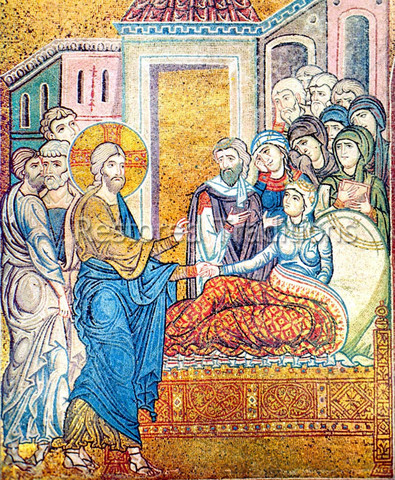
raising-daughter-jairus-12c-byzantine-mosaic_large

Posted in Uncategorized | Comments Off on Flee the praise of men

Renouncing satan

21 August OS 2015 – Thursday of the 14th Week after Pentecost (14th week of Matthew), Afterfeast of the Dormition, Holy Apostle Thaddaeus, Holy Martyr Bassa

In today’s Gospel, the Lord casts a legion of demons out of the Gadarene demoniac.

And they came over unto the other side of the sea, into the country of the Gadarenes.  And when he was come out of the ship, immediately there met him out of the tombs a man with an unclean spirit, Who had his dwelling among the tombs; and no man could bind him, no, not with chains: Because that he had been often bound with fetters and chains, and the chains had been plucked asunder by him, and the fetters broken in pieces: neither could any man tame him. And always, night and day, he was in the mountains, and in the tombs, crying, and cutting himself with stones. But when he saw Jesus afar off, he ran and worshipped him, And cried with a loud voice, and said, What have I to do with thee, Jesus, thou Son of the most high God? I adjure thee by God, that thou torment me not. For he said unto him, Come out of the man, thou unclean spirit. And he asked him, What is thy name? And he answered, saying, My name is Legion: for we are many. And he besought him much that he would not send them away out of the country. Now there was there nigh unto the mountains a great herd of swine feeding. And all the devils besought him, saying, Send us into the swine, that we may enter into them. And forthwith Jesus gave them leave. And the unclean spirits went out, and entered into the swine: and the herd ran violently down a steep place into the sea, (they were about two thousand;) and were choked in the sea. And they that fed the swine fled, and told it in the city, and in the country. And they went out to see what it was that was done. And they come to Jesus, and see him that was possessed with the devil, and had the legion, sitting, and clothed, and in his right mind: and they were afraid. And they that saw it told them how it befell to him that was possessed with the devil, and also concerning the swine. And they began to pray him to depart out of their coasts. And when he was come into the ship, he that had been possessed with the devil prayed him that he might be with him. Howbeit Jesus suffered him not, but saith unto him, Go home to thy friends, and tell them how great things the Lord hath done for thee, and hath had compassion on thee. And he departed, and began to publish in Decapolis how great things Jesus had done for him: and all men did marvel. – Mark 5: 1-20

 A legion in the Roman army at full strength numbered 6,000 men.   This man’s being possessed by a “legion” of demons means, therefore, that there were thousands of demons inside of him.  How could this be?   St. Theophan the Recluse explains:

“My name is Legion: for we are many (Mark 5:9).”  Spirits are bodiless, and therefore they do not fill or take up space like bodies.  This explains why it is physically possible for many spirits to reside in one person.  That it is possible morally for spirits to do this is understandable from their amorality or their absence of all moral principles.  That it is possible for people is understandable from their many-sided contact with the dark realm of the unclean powers, due to the way people’s souls are ordered.  But this only explains what is possible; the reality of demonic possession is subject to conditions which we do not have the ability to determine.  We can only say that spirits do not always enter in a visible way, and possession is not always demonstrated through the possessed person’s actions.  There is an unseen, hidden demonic possession.  There is also a power of spirits over minds, apart from the body, when the demons lead them wherever they wish, through the passions working in them.  People think that they are acting themselves, but they are actually the laughingstocks of unclean powers.  What can we do?  Be a true Christian, and no enemy power shall overcome you.     

–      Thoughts for Each Day of the Year, pp. 186-187

On a regular basis now, acts of demonic evil invade our minds through the news media:  mass shootings, parents’ murdering their children, bizarre ritual murders of celebrities, etc., not to mention the ho-hum, everyday, “legal” demonic rituals of abortion and sodomy.   Apart from the power of true Faith and Baptism, man has always been prey to his passions and to demonic influence working through his passions and sometimes even possessing him bodily.    During the long period of the Church’s direct or indirect influence on society, however, the demonic influence was kept in check.   Now, at the end of over 200 years of open apostasy by the formerly Christian nations, all the world is engulfed in a tide of demonism, and, humanly speaking, there is no end in sight.   We need not fear it, for we belong to Christ.  But we need to be vigilant and to take action.   We do not throw ourselves off a cliff and ask angels to catch us.

It is critical, indeed a matter of spiritual (and perhaps physical) life and death, to cut out demonic influences in our lives and the lives of those for whom we are responsible, chiefly our children.   It is not an exaggeration to say that demonic mental programming, either overt or hidden, pervades contemporary movies, television (including what is called “the news,” which in fact is simply the propaganda of the anti-Christian elite), and video games in the form of hypnotically powerful imagery, words, and ritual actions.  That there may be “innocent” productions coming out today is a possibility – I hope a probability – but sifting through the pile of toxic waste to find something that will not kill you is a time-consuming and risky process.   Are there not better things to do with our time? If something is not obviously helpful or at least harmless, then just cut it out.

And what about the Internet?  Here I am, using it, to get this message across.  The answer is simple – use it as a tool, for a limited time each day, but do not live in it as an alternate universe.  If it gives you access to good things – good books, good articles, good videos – great!   Thank God we now have such access to many good things that were previously unavailable. But, as we all know, one has to practice enormous discipline and discernment.   Keep track of your time on the Internet for a few days:  How many hours did you spend on useless activity, when you could have been doing something else?   How many temptations arose?   If there were x number of obvious temptations, how many subliminal or unnoticed ones also entered your mind?   Who knows?  Be careful.  I suggest keeping an icon right there in front of you while you are on your “device” (of whatever kind), and always saying a prayer before you turn it on.   I have not yet seen an Euchologion prayer for blessing computers, but we certainly should have one which includes an overt exorcism.   I shall ask the bishop about it.

As for children:  Children do not need and most often will be harmed by video games, television, the computer, and the advanced forms of the cell-phone.   Be strict.  You will save their minds.  They will probably have to use computers when they grow older, of course.   They can learn what they need to know to get started when they are teenagers, in about fifteen minutes.  If your children go to the “public” (i.e., government) schools, or even private schools, that are replacing the book with the screen, take them out.   They are being programmed, not educated.

As for living inside one’s I-Phone all day – this is psychic, not to mention spiritual, suicide.

The good news is that, apart from what our job forces us to, we simply do not need all this stuff.   There are precious and few hours in the day.   The time we do not have to spend at income-producing work should be spent in wholesome activity:  prayer with the family, reading good books both spiritual and secular, singing good songs both spiritual and secular, taking walks, growing vegetables and taking care of animals, working around the house, and on and on.   There was a long list of good things our very recent ancestors spent their time on, that had nothing whatsoever to do with television, radio, video games, professional sports, or the popular music industry.  Nearly all of these “old” activities, in some form, are still available to us.   As they say, “Just do it.”

The further and ultimate Good News is that we are not the hopeless, helpless slaves of this dystopian anti-Paradise, this prison of the mind, this mindless hive of contented monkey-descended sensualists, being put into place before our very eyes at this very moment in history by the visible and invisible rulers of the satanic world-state.   We are children of God, citizens of the Heavenly Jerusalem, and members of the Body of Christ.   By Faith and Baptism, we have been freed forever from service to Satan, whom we renounced at Holy Baptism, along with “…all his works, all his service, and all his pride.”

“Alright, Father Steven, I agree with you,” you might be thinking.  “But what can I do?  I am already enmeshed in x, y, or z you have just described.”

I shall respond with what St. Theophan says above: “What can we do?  Be a true Christian, and no enemy power can overcome you.”  If we are really orthodox Christians (and not just “Orthodox Christians” as a brand name), and we live it, we will spend a lot of time in prayer, in good works for others, and useful occupations.    We will prefer to use our leisure time in wholesome reading and wholesome hobbies, or driving old ladies to the grocery store, or teaching a child to read, or visiting the sick, or helping a priest start a new mission, or teaching catechism at our parish, or starting a spiritual book discussion group for our friends…or…or – you know the list is endless.  If you do not have the strength to give up this or that, or to re-order your priorities, confess it with tears and do not justify it, and keep praying for the strength to change.  The Lord desires our conversion and salvation more than we do.

As they say, “Just do it.”  Let us make the Sign of the Cross and charge ahead.


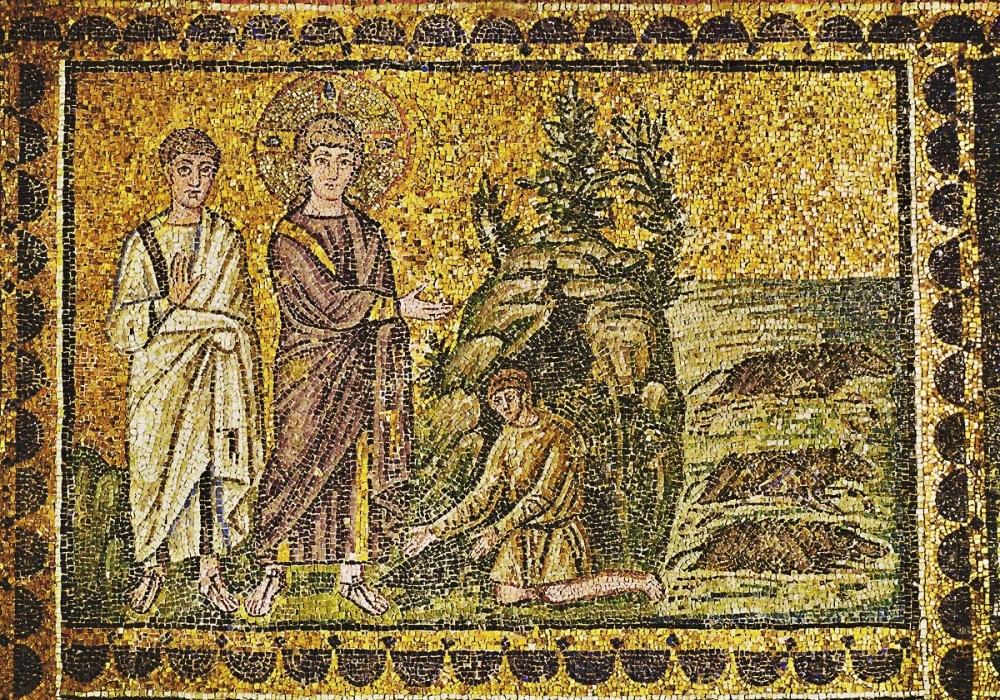
Gadarene_swine_santapollinare

Posted in Uncategorized | Comments Off on Renouncing satan

Thy face, O Lord, do I seek; hide not Thy face

16 August OS 2015 – Saturday of the 13th Week after Pentecost (13th week of Matthew), Afterfeast of the Dormition, Feast of the Icon of the Lord “Not Made by Hands”

Today, the sixteenth of August, we honor the Holy Mandylion, the icon “Not Made by Hands.” Here is the account of the icon’s origin taken from the Prologue from Ochrid:

     At the time when our Lord preached the Good News and healed every illness and infirmity of men, there lived in the city of Edessa on the shore of the Euphrates Prince Abgar who was completely infected with leprosy. He heard of Christ, the Healer of every pain and disease and sent an artist, Ananias, to Palestine with a letter to Christ in which he begged the Lord to come to Edessa and to cure him of leprosy. In the event that the Lord was unable to come, the prince ordered Ananias to portray His likeness and to bring it to him, believing that this likeness would be able to restore his health. The Lord answered that He was unable to come, for the time of His passion was approaching took a towel, wiped His face and, on the towel, His All-pure face was perfectly pictured. The Lord gave this towel to Ananias with the message that the prince will be healed by it, but not entirely, and later on, He would send him a messenger who would erase the remainder of his disease. Receiving the towel, Prince Abgar kissed it and the leprosy completely fell from his body but a little of it remained on his face. Later, the Apostle Thaddaeus, preaching the Gospel, came to Abgar and secretly healed and baptized him. The prince then destroyed the idols which stood before the gates of the city and above the gates he placed the towel with the likeness of Christ attached to wood, framed in a gold frame and adorned with pearls. Also, the prince wrote beneath the icon on the gates: “O Christ God, no one will be ashamed who hopes in You.” Later, one of Abgar’s great grandsons restored idolatry and the bishop of Edessa came by night and walled up that icon over the gates. Centuries then passed. During the reign of Emperor Justinian, the Persian King Chozroes attacked Edessa and the city was in great hardship. It happened that Eulabius, the Bishop of Edessa, had a vision of the All-Holy Theotokos who revealed to him the mystery of the sealed wall and the forgotten icon. The icon was discovered and, by its power, the Persian army was defeated.

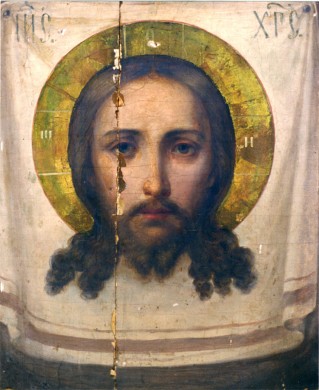
Holy Mandilion

This miraculous image undoubtedly served as the model for all subsequent icons of the sacred face of the Lord. Thus our iconographic tradition is based on an accurate image that Christ Himself gave us: this is what Jesus Christ looks like. This is the face of the God-Man.

When Moses spoke with God on Mt. Sinai, he asked to see God’s glory. Here is God’s answer:

And [Moses] said, I beseech thee, shew me thy glory. And [God] said, I will make all my goodness pass before thee, and I will proclaim the name of the LORD before thee; and will be gracious to whom I will be gracious, and will shew mercy on whom I will shew mercy. And he said, Thou canst not see my face: for there shall no man see me, and live. And the LORD said, Behold, there is a place by me, and thou shalt stand upon a rock: And it shall come to pass, while my glory passeth by, that I will put thee in a clift of the rock, and will cover thee with my hand while I pass by: And I will take away mine hand, and thou shalt see my back parts: but my face shall not be seen. – Exodus 33: 18-23

      “…for there shall no man see me, and live.” “…but my face shall not be seen.”   In the Old Testament, a chosen few, such as Moses and Elias, were graced with seeing God indistinctly, His “back parts.” If they had encountered God directly, they would have been struck dead.   In the Gospel, we see a multitude of sinful men not only enabled to see God’s face, but to touch Him, to hear Him, to eat with Him and speak with Him. According to His human nature, they were even allowed to murder Him. What more can God do to show that He loves us?

Whenever our faith is weak, whenever the circumstances of life press upon us and we feel alone and helpless, whenever our spiritual life has become something theoretical and abstract, without inner warmth, without life-giving power: Let us go before the Icon of the Face of the Lord and read the Akathist to Our Lord Jesus Christ with attention.   Let us ask God Who became Incarnate for us to renew in us holy zeal and the desire to do His will.   “If you love Me,” says the Lord, “keep my commandments.” And what is the first commandment? “Thou shalt love the Lord thy God with all thy heart.”

Christ gave us this most accurate image of His Holy Face as a lasting pledge of His love for us. May it be a means of our growing in love for Him.

Posted in Uncategorized | Comments Off on Thy face, O Lord, do I seek; hide not Thy face