Checking out of the rat race

14 October OS 2015 – Tuesday of the Twenty Second Week after Pentecost/4th Week of St. Luke, Holy Martyrs Nazarius, Gervasius, and Protasius, Venerable Mother Paraskeva

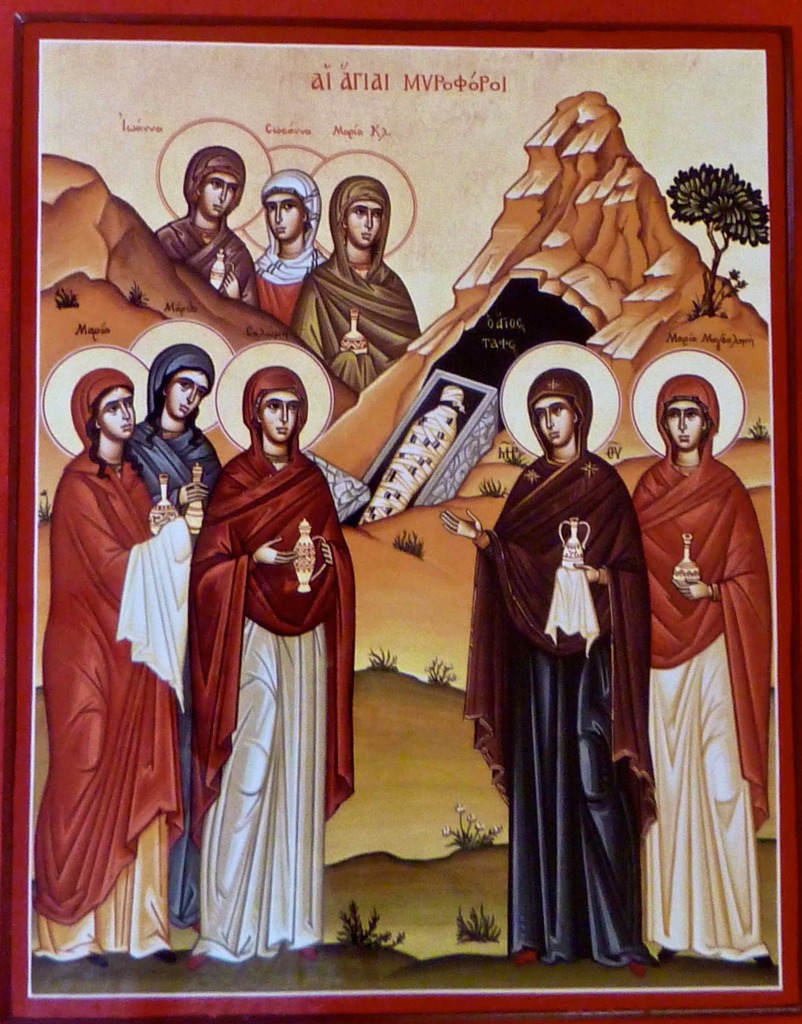
In today’s Gospel, we see the holy women who accompanied the Lord in His preaching journeys ministering to Him “…of their substance.”

And it came to pass afterward, that he went throughout every city and village, preaching and showing the glad tidings of the kingdom of God: and the twelve were with him, And certain women, which had been healed of evil spirits and infirmities, Mary called Magdalene, out of whom went seven devils, And Joanna the wife of Chuza Herod’s steward, and Susanna, and many others, which ministered unto him of their substance. Luke 8: 1-3

“…of their substance” means that the material resources they helped Christ with – time and work, food, clothing, money, etc. – were things that they themselves really needed for their families and for themselves, not surplus, not what was left over after their needs were met.   They were making real sacrifices. After they had met Christ, their priorities became radically different from before, and they put caring for Him and enabling Him to spread the Gospel over other priorities.

The Lord Jesus was of the tribe of Judah, not of the tribe of Levi, who, being the priests of the Mosaic covenant, were supported by tithes from the other tribes, which freed them to perform the complex and time-consuming duties of the Old Testament worship. Until His Baptism in the Jordan and beginning His preaching at age 30, the Lord had had to earn His living like everyone else, probably working in the family trade – recall, the people in Nazareth knew Him as “Joseph the carpenter’s son.” When He began preaching, however, He left all earthly work behind completely and dedicated Himself entirely to announcing the Gospel, the coming of the Kingdom of God. When He called His disciples, both men and women, it compelled them so powerfully that they realized that they either had to drop everything and preach the Gospel, like the Apostles, or support those who were doing so “…of their substance.” By their material sacrifice, they were enabling the spread of the Kingdom of God and would thereby inherit that Kingdom.

Today’s economy is tough on people who are honest and not buying into the corruption at the top of the “food chain” or the welfare dependency at the bottom.   The government and corporate crooks who run the rigged game of contemporary society are making sure that it will be increasingly difficult to get ahead or even tread water without prostituting yourself to something inherently evil, so that honest and God-fearing people will be tempted to despair.   In this setting, it is tempting to give up making material sacrifices for the mission of the Church, because we feel that we face an uncertain material future and therefore cannot spend on anything extra.

The reality, however, is that the Church is not the extra thing – it is the most essential thing. It is obvious to anyone half-awake that from now on serious Christians will be increasingly marginalized in the rat race.   So, who wants to be a rat, anyway?   We may as well radicalize our priorities and life choices, and go for the crown of a pure confession and a Gospel life.   St. Paul says in Philippians 3:14: ” I press toward the mark for the prize of the high calling of God in Christ Jesus.”   Let us press forward with him, through the prayers of the Holy Myrrhbearing Women who served the Lord and of all the saints.

 myrrhbearers

Posted in Uncategorized | Comments Off on Checking out of the rat race

The light yoke

10 October OS 2015 – Friday of the Twenty First Week after Pentecost/3rd Week of St. Luke, Holy Martyrs Evlampios and Evlampia, Venerable Fathers of Optina

Today, the tenth of October on the Orthodox calendar, is the feast of the Venerable Fathers of Optina, a golden chain of God-bearing elders who flourished in Optina Monastery in Russia from the early 19th century until the monastery was closed by the atheist revolutionaries in 1928.   They are saints newly revealed for the consolation and edification of the universal Church of the latter times, and by their prayers and holy teaching we can learn to travel the path of humility and the hidden life in Christ, in order to tread the extremely narrow way, difficult to discern, leading to salvation in these times of widespread, indeed ubiquitous, spiritual delusion.

The reading from the Holy Gospel for Matins of a monastic saint, read today in those churches celebrating services for the Optina fathers, is Matthew 11: 27-30.

The Lord said to His disciples: All things are given unto Me by My Father. And no man knoweth the Son, but the Father; neither knoweth any man the Father, save the Son, and he to whomsoever the Son willeth to reveal Him. Come unto Me, all ye that labor and are heavy laden, and I will give you rest. Take my yoke upon you, and learn from Me that I am meek and lowly in heart; and ye shall find rest unto your souls. For My yoke is easy, and My burden is light.

St. Theophylaktos of Ochrid, in his commentary on St. Matthew, answers the question, “What is the yoke of Christ?” thus:

The yoke of Christ is humility and meekness. For he who humbles himself before all men has rest and remains untroubled; but he who is vainglorious and arrogant is ever encompassed by troubles as he does not wish to be less than anyone but is always thinking how to be esteemed more highly and how to defeat his enemies. Therefore the yoke of Christ, which is humility, is light, for it is easier for our lowly nature to be humbled than to be exalted. But all the commandments of Christ are also called a yoke, and they are light because of the reward to come, even though for a time they appear heavy. The Explanation of the Holy Gospel According to St. Matthew, by Blessed Theophylact (Chrysostom Press 1992)

The yoke of Christ, then, can be understood as being humility and can also be understood as being the commandments of the Gospel.   The two, of course, are intimately related: We attempt to carry out the Gospel commands, and we find that by our own power we cannot. This realization brings on a deeper understanding of ourselves – that we are dust and ashes, that all is given by God and we have nothing of ourselves – and thereby to humility. Once we give up the heavy burden of the illusion of self-sufficiency and take on ourselves the light yoke of humility, all goes well.   There will be many external trials and temptations – indeed these normally increase for those who attempt to follow the Gospel – but within we are at peace.

When reading the counsels of the Optina elders, one is struck by the constantly recurring themes of humbling oneself, giving up one’s self-will, and total reliance on God. These men had the prophetic spirit, and they knew that terrible times lay ahead for the Church.   They knew that only the most profound humility would carry the faithful through the trials that were shortly to befall. Their entire century-long ministry can be seen as a catechesis preparing an entire people for martyrdom.

Here is one of my favorite quotes from the Optina fathers, a word of counsel from the Elder Nikon, who was a confessor for the Faith under the Bolsheviks as well as a monastic saint (he died prematurely from the sufferings of imprisonment and exile, in 1931, at the age of 43):

One must always pray that the Lord will show him the way…Let us pray to the Lord that He will save us and will come to our aid in times of sorrow and need. I see no other refuge or hope. Human solutions are vain and mistaken. When you have to endure something which is very difficult, but you know that it is not of your own will, you receive moral relief and peace of soul. May God’s will be done! May the Lord not discredit our faith and devotion to His will. Our only hope is in God. He is our firm foundation, for everything else is unsure. You absolutely do not know where it might be better, where it might be worse, or what to expect. May God’s will be done! Our work is to preserve ourselves in the faith, and to keep ourselves from every sin, and entrust everything else to God.   Living Without Hypocrisy, Spiritual Counsels of the Holy Elders of Optina (Holy Trinity Monastery 2005)

“Our work is to preserve ourselves in the faith, and to keep ourselves from every sin, and entrust everything else to God.”

Amen.

The Lives of the Elders Moses and Joseph of Optina in English are published by Holy Transfiguration Monastery.  The Lives of the other Elders are available in English from St. Herman Press.  

Posted in Uncategorized | Comments Off on The light yoke

And that Rock was Christ

8 October OS 2015 – Wednesday of the Twenty First Week after Pentecost/3rd Week of St. Luke, Venerable Mother Pelagia, Venerable Mother Thais, Virgin Martyr Pelagia  

In today’s Gospel, the Lord exhorts us to match our actions to our confession of Faith in Him:

The Lord said: And why call ye me, Lord, Lord, and do not the things which I say? Whosoever cometh to me, and heareth my sayings, and doeth them, I will shew you to whom he is like: He is like a man which built an house, and digged deep, and laid the foundation on a rock: and when the flood arose, the stream beat vehemently upon that house, and could not shake it: for it was founded upon a rock. But he that heareth, and doeth not, is like a man that without a foundation built an house upon the earth; against which the stream did beat vehemently, and immediately it fell; and the ruin of that house was great. Now when he had ended all his sayings in the audience of the people, he entered into Capernaum. Luke 6:46-7:1

If you are a sincere Orthodox Christian trying somehow to have a conscious spiritual life, these words are always hovering around you, and there is always (at least a slight) twinge of conscience.   We know we do not fulfill Our Lord’s commandments, and yet we continue to say, “Lord, Lord.”   How can we place the house of our soul more firmly on the rock of His commandments?

The first thing to remember is that we must not stop saying, “Lord, Lord,” even if we look silly doing it. We have to keep confessing our Faith in Jesus as our Lord and God. If you say, “Well, I do not want to be a hypocrite; I cannot fulfill the Lord’s commandments and therefore I give up calling Him my Lord,” you will still be a hypocrite (who is not a hypocrite?) and will have also become a coward and traitor as well.

So here we are, still crying out “Lord, Lord,” and yet imperfectly and unsteadily fulfilling His commandments. What to do? St. Theophan the Recluse, with his unerring sense of the essential, zeroes in on the problem, which is the conversion of the heart:

“Why call ye Me, Lord, Lord, and do not the things which I say?” Why do they call Him Lord, but do not do the Lord’s will – that is, why do they not acknowledge His lordship in their works? Because they only call with their tongue, and not with their heart. If their heart were to utter, “Lord, Thou art my Lord,” then complete readiness would abide therein to submit to the One Whom they confess as their Lord. But since this is not the case, their deeds do not match their tongues; whereas, deeds always match the heart. Well, what then – is there no use in calling “Lord, Lord”? No, that’s not it. But it is necessary to make the external word match the inner word, which is the feeling and disposition of the heart. Sit and reflect upon the Lord and upon yourself; what is the Lord and what are you? Think about what the Lord has done and still does for you, why you live, and how it will end. You will immediately come to the conviction that there is no other way than steadfastly to fulfill the Lord’s entire will. There is no other path for us. This conviction gives birth to a readiness to fulfill in deed what is expressed by the word “Lord.” With such readiness a need for help from above will be awakened, and from it the prayer: “Lord, Lord! Help me and give me strength to walk in Thy will.” And this call will be pleasing to the Lord.” Thoughts for Each Day of the Year, p. 221

St. Theophan here lays out a simple plan:

  1. Sit for a bit and reflect on Who God is and who you are. Think about all that He has done for you: He brought you into existence; without Him you would not exist.   He became a man and died for you.
  1. You will realize quickly that you depend on Him for everything, that you owe Him everything, and that you must do exactly what He wants at all times, or you will perish.
  1. Cry out to Him and beg Him for help to know and to do His will.

The saint concludes, “And this call will be pleasing to the Lord.” In other words, by the very act of asking Him to help us do His will, we are already doing His will. We are acknowledging His lordship over our lives, admitting our inability to do His will, showing our utter dependence on Him, and fulfilling His commandment to pray and ask Him for that which we need. We have begun to pray from the heart, which is man’s essential function, and therefore at one stroke we have begun to do God’s will in the most essential way.

If we keep at it, then little by little our actions will match our words, because now our words will be coming from the heart and therefore our own created energies are focused on what needs to be done instead of being scattered in the pursuit of myriad inessentials, and we will simultaneously and directly be invoking the power of God, and therefore His divine and uncreated energies will accomplish what our poor strength cannot do.

Here indeed is in brief a program for the Christian life.


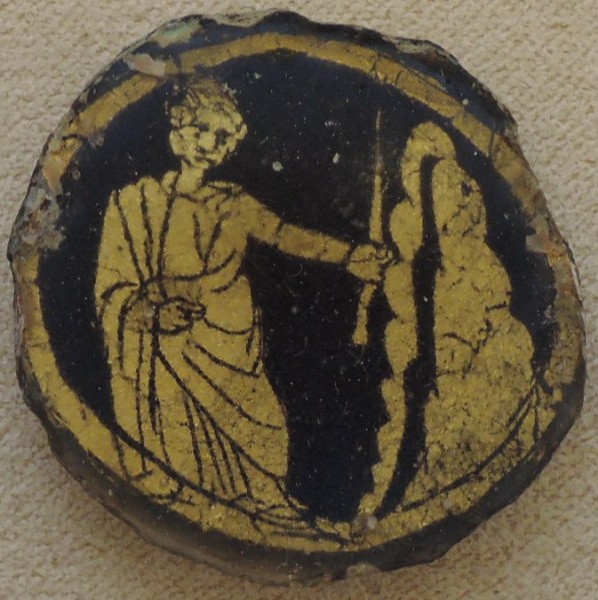
moseswaterfromtherockRomanglass

And did all drink the same spiritual drink: for they drank of that spiritual Rock that followed them: and that Rock was Christ.

I Corinthians 10:4

Posted in Uncategorized | Comments Off on And that Rock was Christ

On the road

6 October OS 2015 – Monday of the Twenty First Week after Pentecost/3rd Week of St. Luke, Holy Apostle Thomas

 In today’s Gospel, the Lord turns worldly reasoning upside down, and He commands His followers to do that which is above nature:

The Lord said to the Jews which came to Him: woe unto you that are rich! for ye have received your consolation. Woe unto you that are full! for ye shall hunger. Woe unto you that laugh now! for ye shall mourn and weep. Woe unto you, when all men shall speak well of you! for so did their fathers to the false prophets. But I say unto you which hear, Love your enemies, do good to them which hate you, Bless them that curse you, and pray for them which despitefully use you. And unto him that smiteth thee on the one cheek offer also the other; and him that taketh away thy cloke forbid not to take thy coat also. Luke 6: 24-30

St. Theophan the Recluse, in his commentary on these verses, points out that Our Lord is painting a picture of the entire Christian life as a time of exile and pilgrimage, not security and rest:

Woe to those who are rich, who are full, who laugh, and who are praised. But good shall come to those who endure every wrongful accusation, beating, robbery, or imposed hardship. This is completely opposite to what people usually think and feel! The thoughts of God are as far from human thoughts as heaven is from the earth. How else could it be? We are in exile, and it is not remarkable for those in exile to be offended and insulted. We are under a penance, and the penance consists of deprivations and labors. We are sick, and bitter medicines are most useful for the sick. The Savior Himself did not have a place to lay His head for His whole life, and He finished His life on the Cross. Why should His followers have a better lot? The spirit of Christ is the spirit of preparedness to suffer and good-naturedly bear all that is sorrowful. Comfort, conceit, splendor, and ease are all foreign to its strivings and tastes. Its path lies in the fruitless, cheerless desert. Its model is the forty-year wandering of the Israelites in the desert. Who follows this path? Anyone who sees Canaan beyond the desert, overflowing with milk and honey. During his wandering he too receives manna – however, not from the earth, but from heaven; not bodily, but spiritually. All glory is within.   Thoughts for Each Day of the Year, pp. 219-220

We all agree with the truth of this of course, but if we are honest, we admit that we do not feel the truth of it.   Think about it: When is the last time you were filled with unspeakable joy because someone took away your stuff or called you a disgusting name? See what I mean? Today I propose to address how not to be hypocrites (or at least not total hypocrites) when we claim to believe this Gospel.

Before going on to the “how” of doing this, however, I would like to clear up one important thing: In today’s brainwashed mindset, “forgiving your enemies” has been twisted to mean being metrosexual, emasculated wimps who identify love with cowardice and refuse to fight for God and for what is right. This is totally false. If the people preaching (and legislating and imposing) evil and falsehood are not really enemies, then what is there to forgive?   The Church in this world is the Church Militant, and that includes all of her members with all their faults, not just calm, loving elders sitting in a cave somewhere. We cannot wait until we are passionless holy saints with only pure, righteous anger, to call out the liars, perverts, and creeps who now dominate our government, media, financial system, corporate structures, and educational establishment. We have to fight them with all our strength, even at the cost of losing our temper, showing our weaknesses, and being called “haters” because we show justifiable anger at their demonic lies and soul-destroying system of sexual perversion, worship of money, and mindless distraction masquerading as human existence.

So we have to fight these monsters, these undead zombie post-humans who are coming after us to suck the souls out of our bodies, with all our strength, yet not hate them.   It is easy to curse the people you fight, or do the opposite and throw in the towel in order to have that warm fuzzy feeling of getting along with everybody, even while they destroy your faith, your morals, and your children’s souls. It is easy to be an angry jihadist on the one hand or to love Big Brother on the other hand – all the tension goes away and we feel good again (and what could be better than feeling good, right? Can you hear that sound of thumbs being sucked?). What is hard is to be a Christian. It is not only hard, but also embarrassing, because we never live up to our Faith. It is the only Faith designed on purpose so that one cannot live up to it, which only goes to prove its divine origin.

So how do we do this – rejoice in hardship, love our enemies, and so forth? How do we follow the divine charter for Christian living as found in the Sermon on the Mount in St. Matthew, or today’s Gospel, the Sermon on the Plain in St. Luke? Here is a short to-do list:

Admit that we cannot live the Gospel. Admit that to the end of our lives we will fail. As St. Ignatius Brianchaninov says in The Arena, even the greatest saints fall short of the Gospel. It is beyond the power of human nature; it is “above nature,” as the Fathers say. When people call us hypocrites, say, “Yes, you are right, I am a worthless hypocrite. But my Faith is still true, whether I live up to it or not, and whether you like it or not. Deal with it.”

Pray daily with all our hearts that God forgive us for not living the Gospel, that He give us the grace to live it better, and that He give us the grace daily to admit our failure and to ask for more grace.

Force ourselves to thank God when bad things happen.

Pray for those who harm us, the great and the small (for example, the mainstream media on the one hand and the guy at work who stabs us in the back on the other hand).

Remember, as St. Theophan points out, that we are exiles and pilgrims in this life. We are on a journey going to our true home. One expects discomfort while on a trip. The warm fire, fuzzy slippers, and comfy armchair are at the end of the journey, not on the road.   All of our problems arise from delusions, and all of our delusions start with the idea that we are little gods creating a nice little world here in this life.   But our true home is in the heavens; our life is hid with Christ in God. This life is an arena, a contest, a struggle, and a trial.   Our Judge awaits us, with the crown of life in His hand for those who do not give up.

It is always later than we think. Death is always at the door.

Whether that last thought is consoling or depressing is up to us.


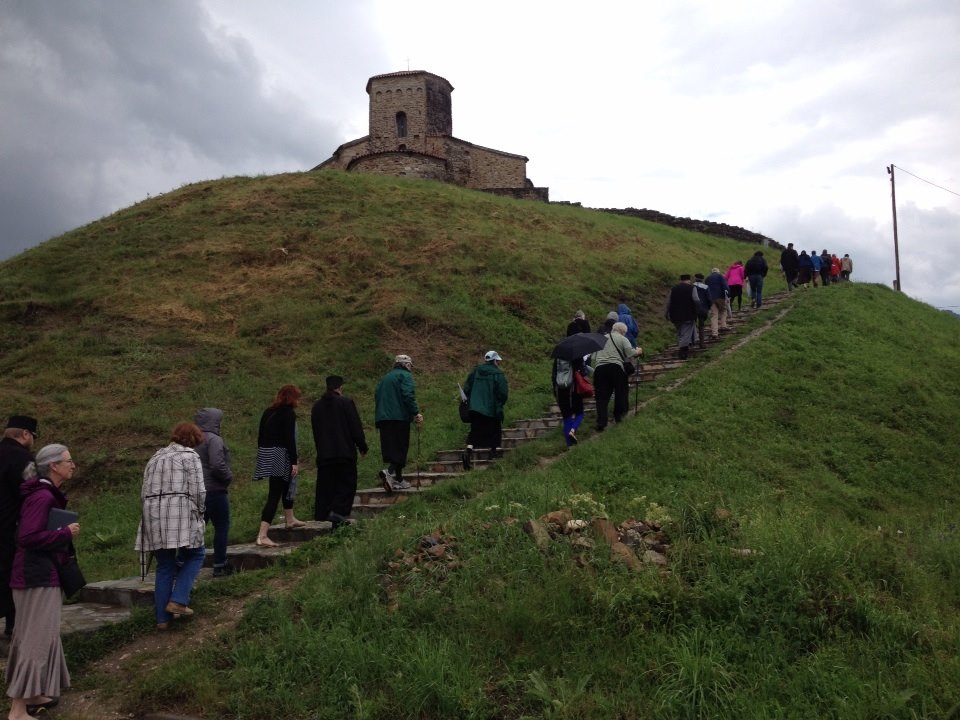
pilgrims walking up a hill to a church in Serbia

Posted in Uncategorized | Comments Off on On the road

Building our house on the Rock

4 October OS 2015 – Saturday of the Twentieth Week after Pentecost/2nd Week of St. Luke, Holy Hieromartyr Hierotheos of Athens

In today’s reading from the Apostolos, St. Paul speaks of his helplessness in the face of opposition to the Gospel, and his complete reliance on the grace of Christ:

For we would not, brethren, have you ignorant of our trouble which came to us in Asia, that we were pressed out of measure, above strength, insomuch that we despaired even of life: But we had the sentence of death in ourselves, that we should not trust in ourselves, but in God which raiseth the dead: Who delivered us from so great a death, and doth deliver: in whom we trust that he will yet deliver us; Ye also helping together by prayer for us, that for the gift bestowed upon us by the means of many persons thanks may be given by many on our behalf.II Corinthians 1: 8-11

In the Acts of the Apostles and in the Lives of the Apostles, we see demonstrated over and over again the power of God to deliver His servants from what are, in human terms, simply impossible situations.   Here St. Paul is speaking of one of the numerous encounters with imminent death that he endured in the course of his tireless missionary work. He states the reason why God allowed this to happen to him: “But we had the sentence of death in ourselves, that we should not trust in ourselves, but in God which raiseth the dead.”

We never stop learning how much we trust in ourselves and how little we trust in God, both because the depths of our pride are so deep (though not infinitely deep, for we are finite beings – there is an end to it, as we see demonstrated in the lives of saints) and, more importantly, because the power of God is infinitely great to work in us – “Great is our God, and great is His strength, and of His understanding there is no measure.” Look, here is the pre-eminent Apostle, Paul, and you would think that, well, after awhile he would “have it all down.” No, to the end of his life, the Lord is teaching Him: Trust in Me.

Our Christian life can be seen through the image of the woman in labor. She has greater and greater contractions, more and more pain, until the child is born.   Between contractions, she can rest, but then…here it comes…and it is greater than the previous one.   In our lives, the Lord trains us for greater trials by means of lesser ones.   When the waves of crisis subside, we say, “Whew, I am glad that that is over!” But how can we benefit from each crisis, in order to grow closer to God and to be prepared for the next wave?   There are at least three things to do:

  1. In the midst of every difficulty, and after it ends, thank God for all things.   Force yourself to glorify Him in every difficulty and cry out to Him for help.
  1. When the problem begins to recede, start reflecting on what has happened. Ask God to show you how He was holding your hand at every moment and how He delivered you from sorrow.
  1. Resolve in your mind to accept the reality that equal and greater crises are yet to come, whether exterior, in outward difficulties, or interior, within the soul.   Beg the Lord to deepen your trust in Him, so that, strengthened by each successive crisis and gradually growing in faith and in hope, you will become a stronger and stronger Christian, able to endure the demonic winds and the worldly waves that will inevitably beat against the house of the soul right up to the moment of death. If the house of the soul is founded on the Rock that is Christ, you have nothing to fear.

Therefore whosoever heareth these sayings of mine, and doeth them, I will liken him unto a wise man, which built his house upon a rock: And the rain descended, and the floods came, and the winds blew, and beat upon that house; and it fell not: for it was founded upon a rock. And every one that heareth these sayings of mine, and doeth them not, shall be likened unto a foolish man, which built his house upon the sand:
And the rain descended, and the floods came, and the winds blew, and beat upon that house; and it fell: and great was the fall of it.
Matthew 7: 24-27

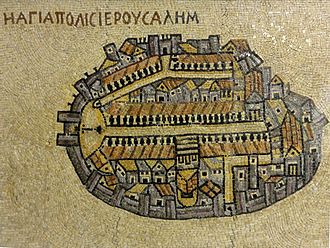
madabamap

Posted in Uncategorized | Comments Off on Building our house on the Rock

Return to Paradise

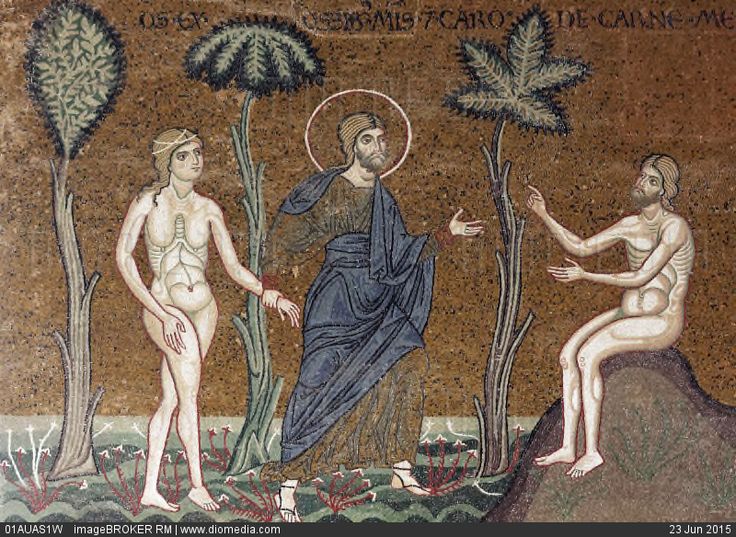
adam&eveinparadisemosaic

3 October OS 2015 – Friday of the Twentieth Week after Pentecost/2nd Week of St. Luke, St. Dionysios the Areopagite

In today’s reading from the Apostolos, St. Paul declares his desire to know Christ alone and the power of His resurrection:

Brethren: I count all things but loss for the excellency of the knowledge of Christ Jesus my Lord: for whom I have suffered the loss of all things, and do count them but dung, that I may win Christ, And be found in him, not having mine own righteousness, which is of the law, but that which is through the faith of Christ, the righteousness which is of God by faith: That I may know him, and the power of his resurrection, and the fellowship of his sufferings, being made conformable unto his death; If by any means I might attain unto the resurrection of the dead. Not as though I had already attained, either were already perfect: but I follow after, if that I may apprehend that for which also I am apprehended of Christ Jesus. Brethren, I count not myself to have apprehended: but this one thing I do, forgetting those things which are behind, and reaching forth unto those things which are before, I press toward the mark for the prize of the high calling of God in Christ Jesus. Let us therefore, as many as be perfect, be thus minded: and if in any thing ye be otherwise minded, God shall reveal even this unto you. Nevertheless, whereto we have already attained, let us walk by the same rule, let us mind the same thing. Brethren, be followers together of me, and mark them which walk so as ye have us for an ensample. (For many walk, of whom I have told you often, and now tell you even weeping, that they are the enemies of the cross of Christ: Whose end is destruction, whose God is their belly, and whose glory is in their shame, who mind earthly things.) Philippians 3: 8-19

“I count all things but loss for the excellency of the knowledge of Christ Jesus my Lord.”   What a noble soul, enflamed with total love for Christ, with the desire to know Him and please Him alone!   We must pray always to have such single-mindedness, such wholeheartedness. Our chief problem is that, to the contrary, our minds are fragmented and our hearts not whole.

Where does this come from, the fragmentation of the mind, which causes us so much distress, which disables us for useful spiritual, intellectual, practical, and social behavior? It is both an old problem – one might say the oldest problem – and in some ways a new problem, relating to our peculiar circumstances in time and place.

The oldest problem is the Ancestral Sin. God created the minds of our First Parents to be whole – pure mirrors reflecting perfectly the Divine Truth, shining continually with the pure-hearted contemplation of the endless perfections of the Divine Nature and the beauties of creation. With the Fall, man broke this mirror into thousands of little pieces, each of which reflects some part of the divine light of truth, whether relating to God or to creation, but in a distorted way, and disconnected from all the other parts.

This mirror of the intellect regains its primal wholeness and clarity by the grace of Baptism, but the impressions of the fallen world and fallen society break it and smudge it again. It experiences the Christian life as a continuous struggle to restore this brokenness.   It experiences prayer and spiritual reading as the struggle for attention.

Our circumstances today aggravate the problem.   Countless demands on and enticements for our attention surround us, and very few people today can go through the day without being exhausted by thousands of competing impressions and without being drawn into a virtual world of unreality.  For our sanity – much less our salvation – it is urgent and imperative that we cut out the distractions that are in our power to avoid.

Try this: Make a list of the distractions you are forced to deal with by your real duties, whether at work or in your family, and then make a second list of the unnecessary distractions you choose, because you cannot resist turning on this or clicking on that, looking at this and listening to that. Make a resolve and ask God to help you to carry it out: Go through one day without paying any attention to the items on the second list.   At the end of the day, note how you think and feel.   It will likely be a change from your state of mind and feelings on most days, and the change will be for the better.   Say your prayers, and then next morning wake up and say your prayers, and then…do it all over again.   Being calm and focused may actually become habit-forming.

The purpose of all this is not to “improve oneself” and “become a more efficient person.” Life is not a self-improvement project, and the saints often do not strike people as being very efficient. The purpose is for the mind to be able to pray during the day, for the heart to be attracted to what the mind is thinking about, and for us thereby to become whole again, as our First Parents were in Paradise.

O Holy Apostle Paul, whose mind was given over completely to the thought of Christ, pray for us!

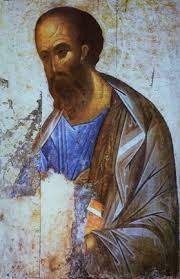
rublev st paul


Posted in Uncategorized | Comments Off on Return to Paradise

Transfigured while at prayer

30 September OS 2015 – Tuesday of the Twentieth Week after Pentecost/2nd Week of St. Luke, St. Gregory the Illuminator of Armenia  

In today’s Gospel, the Lord works an astonishing miracle – the healing of a leper – and then immediately withdraws into the wilderness for prayer:

At that time, when Jesus was in a certain city, behold a man full of leprosy: who seeing Jesus fell on his face, and besought him, saying, Lord, if thou wilt, thou canst make me clean. And he put forth his hand, and touched him, saying, I will: be thou clean. And immediately the leprosy departed from him. And he charged him to tell no man: but go, and shew thyself to the priest, and offer for thy cleansing, according as Moses commanded, for a testimony unto them. But so much the more went there a fame abroad of him: and great multitudes came together to hear, and to be healed by him of their infirmities.
And he withdrew himself into the wilderness, and prayed.
Luke 5: 12-16

A wonderful thing about the four Gospels is their diversity in unity.   They are all testifying to the same reality – the coming of the God-Man into the world, His real historical presence, His miracles, His teaching, His death, resurrection, and ascension – but each Gospel has its own emphases and peculiarities. Divinely inspired, each one is yet intensely human, reflecting the peculiar gifts of soul of the real man who wrote it.   St. John’s Gospel, of course, is really different – it soars above the other three in its sublime theology and mystical content. The other three are called the Synoptic Gospels, because they see the events described with “one eye” or a “shared vision,” a “seeing together with” (synopsis); they are quite similar.   Yet each one of them has its own beauties and identifying characteristics.

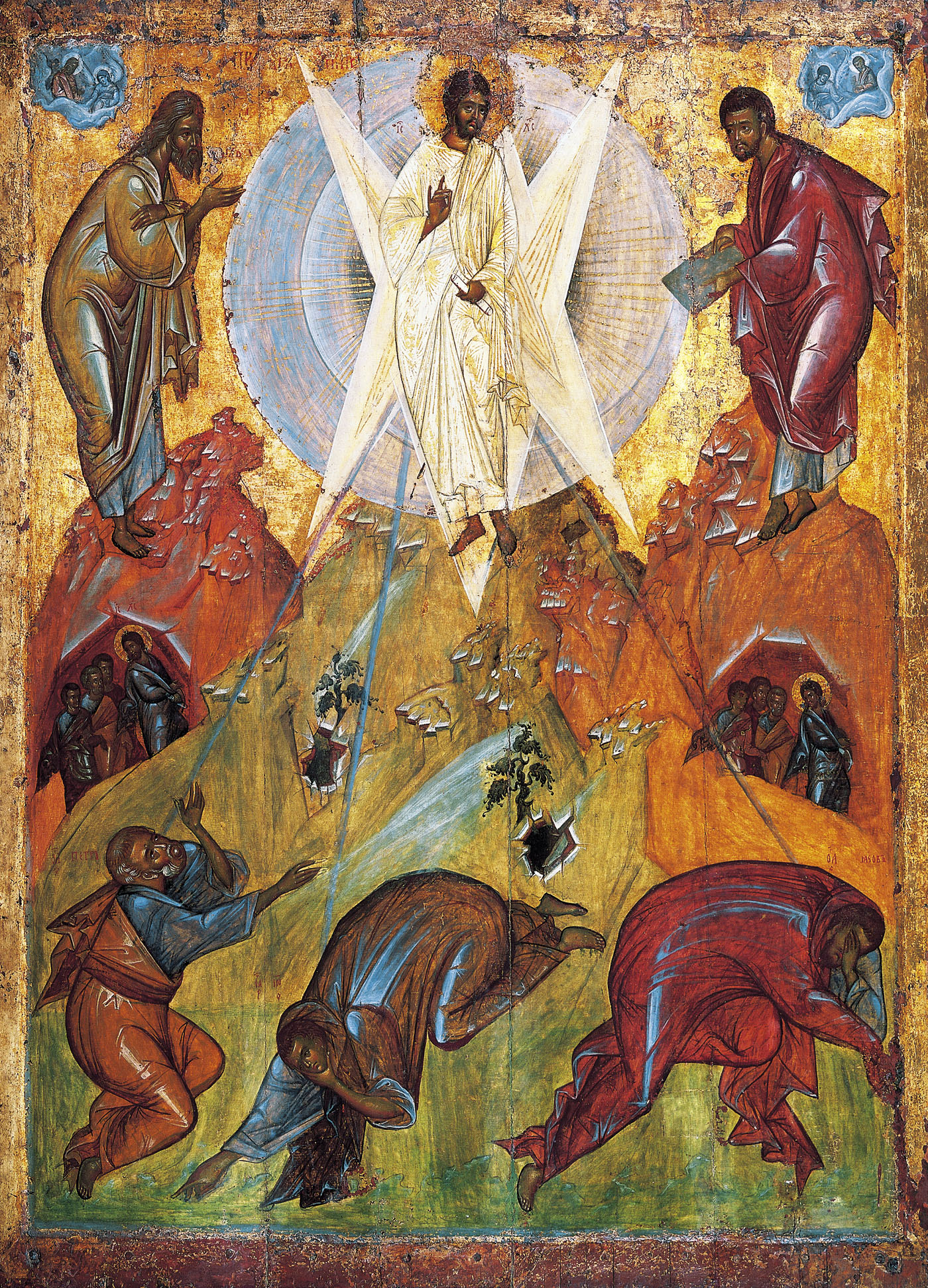
St. Luke delights to record the memory of the Lord Jesus at prayer, as at the end of today’s reading.   There are several places in his Gospel where he mentions Jesus’ praying, while St. Matthew and St. Mark omit this detail. The most striking instance occurs in his account of the Transfiguration: “And it came to pass about eight days after these sayings, he took Peter and John and James, and went up into a mountain to pray. And as he prayed, the fashion of his countenance was altered, and his raiment was white and glistering (Luke 9: 28-29).” As God, Jesus opens the eyes of Peter, James, and John to see the uncreated light of His Divinity shining through His holy Humanity. As a man, as the Man, so to speak, as the New Adam, this occurs while He is really and truly praying, praying as no man ever did before or since.

Christ really did pray while He was on earth. He prayed because He was really a man, and human beings pray. As a matter of fact, it is the pre-eminent and most important thing we do; it is what God made us for. As the New Adam, Our Lord is praying as a man, for He came not only to show us Who God really is, but He also came to show us what a human being really is. He made our First Parents to talk with Him in Paradise.   He came as a man to restore us to Paradise, so we could talk with Him forever.   What could be better than that?

The upshot of all this is that we need to take our prayer life seriously, more seriously than any other activity of our lives. How can we start or re-start our habit of daily prayer, if we have fallen off?   There are numerous good books out there: I heartily recommend the chapters on prayer in The Arena by St. Ignatius Brianchaninov and the chapters on prayer in Unseen Warfare, which St. Theophan the Recluse wrote and put in the book in place of those written by the original Roman Catholic author.   In the shadow of these spiritual giants, I make bold to offer a little story from my own experience, given below. It is especially intended for people like me, who do not pray very well, who have a hard time praying at all:

HOW DO WE ACQUIRE THE HABIT OF DAILY PRAYER?

 Prayer is the Essence of Christian Life

Prayer is the single most important activity of the Christian’s daily life, and it is also the one we neglect or resist the most. This is why:

Prayer is what God created us for; that is, He created us to be always in loving communion and communication with Him. The fundamental capacity for this prayerful communion was disabled by the sin of our first parents and it is passed on to every human being. Now, by means of Holy Baptism and the other Holy Mysteries, we receive the grace of God to acquire this saving, ongoing relationship with God. But the fallen nature is still fighting us, and the demons fight us; prayer is the last thing they want us to do. So we struggle, even to pray for a short time.

We must, however, establish a daily habit of prayer, in order to have any kind of real relationship with God. But how? I wish to present a story from my own experience, in order to explain the simple yet powerful means to acquire the daily habit of prayer:

An Instructive Story: Learning How to Pray

I will never forget the night I learned how to establish a daily habit of prayer. It seems odd that it should come only after six years of being a priest, but there you are.

My spiritual father then was an elderly and very austere Russian bishop who had the reputation for eating priests for dinner. I had decided that I needed whipping into shape and therefore asked him to take me on. Since he lived several states away, we agreed that I would write him my confessions in letters, and, after reading them, he would call me. What follows is the story of his response to my first confession.

Several troubling sins had never ceased bothering me, despite being confessed here and there to various priests. I had never actually laid them all out to a single confessor at one time and therefore thought it worth the try to tell them all to Vladika. I wrote the letter with great trepidation – I knew his scary reputation and expected a great reaming out, either for the sins themselves or for not trusting in God’s forgiveness and thus confessing anew previously confessed sins. When the phone rang that night and my wife called down, “Dear, it’s Vladika ________!” I trudged to the receiver like a condemned man to the scaffold.

His voice came on, very soft. I will not attempt to reproduce his actual speech here, only the content of what he said. Imagine a calm, grandfatherly voice with a soft Russian accent, speaking with the precision of an Oxford don.

“ Ah, is this Fr. Steven?”

“ Yes, Vladika. Bless.”

“ Fr. Steven, I have read your letter very carefully,” (He would! I thought), “and I want to teach you something.”

Teach me something? What? I thought he was calling to strip me naked, crush me, and throw the remains to the beasts of the field and the birds of the air.

“ I want to teach you how to find consolation in prayer.”

At the time, my only feeling was one of overwhelming relief. Later, I realized that it was one of the chief moments in my life. This was a man who meant business. He did not moralize, did not criticize, did not justify this and condemn that. He taught me what I needed to do in order not only not to sin, but also not even want to sin. If the Lord Jesus dwells in the heart through prayer, we are in Paradise, and we do not want to leave.

What did he teach me?

“ The Holy Fathers, and most recently the Optina Elders, teach us that the secret to consolation in prayer is regularity and the struggle for attention. How long is your evening prayer rule?”

“ A half-hour, Vladika.”

“ Too long.”

Too long! I thought, astounded. What kind of a bishop is this?

“ You wander in your thoughts and finish your rule only with difficulty. You actually omit it many evenings and go to bed without prayer. You make no progress. Is this not so?”

“ Yes, Vladika.”

“ I want you to do exactly what I say and do not deviate.”

“ Yes, Vladika.”

“ The important thing is not how many prayers you read or which prayers you read, but the amount of time that you pray every day, that you always devote this amount of time every day without fail, and that you struggle for attention. I want you to start with ten minutes – no more, no less. Set an alarm clock or timer for ten minutes, so that you do not have to look at the clock. Read the appointed evening prayers or the Psalter or an akathist. When the timer goes off, stop. While you are reading, your mind will wander, perhaps five to ten times per minute. Each time, you must force your mind back to the words of the prayers. You must do this without fail.”

“ Yes, Vladika.”

“ As time goes on, if you are regular in performing this rule, and if you struggle for attention, you will naturally gain stability in performing it, and you will gradually desire to add time to your prayer. When you desire to keep praying, keep praying as long as you wish that day, but do not yet add the time to your rule. When you feel this desire daily for several weeks, then you may add another five minutes to your rule. Once you add time, however, you must never subtract it. This is why the desire must be tested, not obeyed immediately. After awhile, your prayer time will grow, you will perceive that this prayer is a great consolation, and you will never want to give it up. Do you understand?”

“Yes, Vladika.”

That was it.

My experience before and after this great event in my life is that people who are wavering and confused in their faith are not praying regularly or properly. Their souls are confused because the light of the soul, the noetic mirror of the spiritual intellect, is darkened, and this darkness is darkness indeed. A person in this state will wander forever in the labyrinth of opinion, attraction, and emotion, never finding rest. He will eventually compromise, distort, or lose his faith, because he has no inner experience corresponding to that faith’s dogmatic and moral teachings. On the other hand, one who is praying regularly and in the right manner receives great firmness in his faith, stability of life, and inner calmness. He has a firm foundation for the activities of daily life and for the struggle for salvation.

If prayer is going right, everything is right, for prayer will let nothing go wrong.
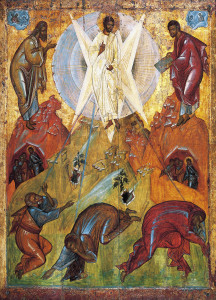
 

Transfiguration_by_Feofan_Grek_from_Spaso-Preobrazhensky_Cathedral_in_Pereslavl-Zalessky_(15th_c,_Tretyakov_gallery)


Posted in Uncategorized | Comments Off on Transfigured while at prayer

In season, out of season

25 September OS 2018 – Monday of the 2nd Week of St. Luke;  S. Euphrosyne, S. Sergius of Radonezh

In today’s Gospel, the Lord states that the purpose of His ministry is to preach the Kingdom of God:

At that time, Jesus came into Simon’s house, and Simon’s wife’s mother was taken with a great fever; and they besought him for her. And he stood over her, and rebuked the fever; and it left her: and immediately she arose and ministered unto them. Now when the sun was setting, all they that had any sick with divers diseases brought them unto him; and he laid his hands on every one of them, and healed them. And devils also came out of many, crying out, and saying, Thou art Christ the Son of God. And he rebuking them suffered them not to speak: for they knew that he was Christ. And when it was day, he departed and went into a desert place: and the people sought him, and came unto him, and stayed him, that he should not depart from them. And he said unto them, I must preach the kingdom of God to other cities also: for therefore am I sent. And he preached in the synagogues of Galilee. – Luke 4: 38-44

St. Theophan the Recluse relates the Lord’s words, “…I must preach the kingdom of God…for therefore am I sent,” to the vocation of the Christian priesthood:

“I must preach the Kingdom of God to other cities also: for therefore am I sent (Luke 4:43).”   Our priesthood needs to take “for therefore am I sent” as an immutable law. The Apostle commanded them, in the person of St. Timothy, to be “instant in season, out of season; reprove, rebuke, exhort (II Timothy 4:2).” The Lord and the Holy Spirit, Who filled the Apostles on the day of Pentecost, brought the truth to the earth, and the truth walks the earth. Its transmitters are the mouths of God’s priests. If any priest closes his mouth, he blocks off the path to the truth, which demands to enter the souls of believers. That is why the souls of believers grow weary, when they do not receive the truth. The priests themselves must feel weariness, since the truth, not receiving an exit, burdens them. Relieve yourself of this weight, priest of God. Pour forth streams of Divine words unto your own joy and to the enlivening of the souls entrusted to you. If you see that you yourself do not have the truth, get it: it is in the Holy Scriptures. Then, filling yourself with it, pass it on to your spiritual children. Just do not be silent. Preach, for it is unto this that you have been called. Thoughts for Each Day of the Year, p. 214

Is this not the state of affairs today, that the souls of the believers have grown weary, indeed have simply gone to sleep, because the priests are not preaching the truth?   This has happened in the two directions a believer faces: within, in the Orthodox world, and without, towards the surrounding culture.

  1.   In the Orthodox world: All of the “official” bishops have apostatized either actively or passively.  Most are active apostates simply in virtue of being organic members of the neo-pagan World Council of Churches and promoting union with the daily-evolving Catholic Lite religion of the post-Vatican II papacy.  A few are passively apostate by remaining in communion with the explicit Ecumenists.   Perhaps one’s local bishop or priest says, “Oh, I disagree with this Ecumenism.” Fine, but by persisting in communing with the patriarchs or synods that promote it, he brings the evil of the heresy into his own soul, especially if he openly teaches against it and then openly communes with it by communing with those who preach it. The anti-ecumenist communing with the ecumenist: the ultimate vindication of Ecumenism! What could be worse than that?

What, then, can he offer the faithful?   He is split within: He has created a fundamental lack of integrity at the very basis of his priesthood – his confession of faith. He is teaching the faithful, “Yes the patriarch (or synod) is in heresy, and furthermore, to remain in the Church I must go on commemorating them.” Besides being ahistorical and unprecedented, such a teaching is simply madness – it creates cognitive dissonance within the soul, which day by day and year by year, as it grows stronger, destroys the capacity for rational thought, much less faith. Into such a spiritual and rational wasteland of a ruined soul, since nature abhors a vacuum, the next step is to accept the current mass delusion (plani, prelest) of being “super-spiritual”:   we now see weeping icons, signs and wonders, and the supposed visions of “elders” replacing the Church’s dogmas, canons, and example of the saints (old, undoubted saints, not newly minted ones promoted by this or that party to advance their agenda). In the midst of the greatest apostasy in history, we are asked to believe that the Holy Spirit is pouring out grace abundantly in amazing signs and wonders worked by “holy elders” who endorse (nay, enforce) the commemoration of heretics.  “Yes, the patriarch is a heretic, and yes, if you do not submit to him you are outside the Church.” Thus spake the “Holy Elder.”  Can you hear the soundtrack from Twilight Zone at this point: dah-dah-dah-dah, dah-dah-dah-dah…?

  1. Looking at the outside world, facing the surrounding culture, the believer is confronted by so many lies and so many pressures to conform to anti-Christian, indeed anti-human behaviors, that it is mind-boggling. Well, priest, sorry, you are not allowed to be boggled. If you do not keep your head on straight, who will? For example, you have to preach the same old-fashioned sexual morality the Church has always taught: Sexual union is blessed only within matrimony, married people may not prevent themselves from having children except through living as brother and sister, abortion is murder, homosexual behavior is an abomination, couples should not live together before marriage, Christians should wear modest clothing, watching dirty movies and TV (which means nearly all movies and TV today) is a sin, etc., etc.   All of this is still true. Nothing has changed, except that the world around us has gone mad and expects us to go mad with it, since misery loves company.

In the “Culture War,” the “True Orthodox” clergy are often no better than the “World Orthodox,” and, to be honest, the World Orthodox are often better.   Yes, they have that Ecumenism thing all wrong, as I have bluntly explained above. Yet we see some of their priests bravely preaching old-fashioned cultural and moral standards, and actually doing something about it, like founding K-12, full-time parish schools to rescue their parishioners’ children from the kiddie Gulag called “public education,” and teaching the practices of a strict family life, while True Orthodox clergy may be letting their people jive with the zeitgeist in their family lives.  They remain complacently aloof from the “evil Ecumenists” yet make the fatal mistake of thinking that this is enough to punch their ticket to Paradise. So you are a True Orthodox? Congratulations. Living like a neo-pagan, therefore, will be for you a greater condemnation than that of the heretical Ecumenist. If you indeed still have the grace of the Holy Mysteries through your confession of the Faith, what are you doing with it?

Let us all, priest and layman alike, take courage, stand up and be counted, and just tell the truth, and – here is the hard part – act on it. It will be a great relief! We know perfectly well that the task before us is impossible, and that we are the weakest Christians in history, and therefore only God can save us. We also know that with Him all things are possible.

We having nothing to lose that is a permanent good, and we have everything to gain – namely eternal life.

Fear none of those things which thou shalt suffer: behold, the devil shall cast some of you into prison, that ye may be tried; and ye shall have tribulation ten days: be thou faithful unto death, and I will give thee a crown of life. He that hath an ear, let him hear what the Spirit saith unto the churches; He that overcometh shall not be hurt of the second death. Revelation 2: 10-11


john_visionoftheapocalypse

Posted in Uncategorized | Comments Off on In season, out of season

How to make a good start

27 September OS 2015 – Saturday of the Nineteenth Week after Pentecost/1st Week of St. Luke, Holy Martyr Kallistratos

Tomorrow is the first Sunday on which we shall read the Gospel according to St. Luke.   We shall begin, appropriately, with a reminder that without the Lord’s help we can do nothing: 

At that time, as the people pressed upon Jesus to hear the word of God, he stood by the lake of Gennesaret, And saw two ships standing by the lake: but the fishermen were gone out of them, and were washing their nets. And he entered into one of the ships, which was Simon’s, and prayed him that he would thrust out a little from the land. And he sat down, and taught the people out of the ship. Now when he had left speaking, he said unto Simon, Launch out into the deep, and let down your nets for a draught. And Simon answering said unto him, Master, we have toiled all the night, and have taken nothing: nevertheless at thy word I will let down the net. And when they had this done, they inclosed a great multitude of fishes: and their net brake. And they beckoned unto their partners, which were in the other ship, that they should come and help them. And they came, and filled both the ships, so that they began to sink. When Simon Peter saw it, he fell down at Jesus’ knees, saying, Depart from me; for I am a sinful man, O Lord. For he was astonished, and all that were with him, at the draught of the fishes which they had taken: And so was also James, and John, the sons of Zebedee, which were partners with Simon. And Jesus said unto Simon, Fear not; from henceforth thou shalt catch men. And when they had brought their ships to land, they forsook all, and followed him. Luke 5: 1-11

Here in miniature is a model for the whole struggle of our Christian life!   We toil and toil, trying to do our own will – or even what we imagine to be God’s will – our own way on our own steam, and nothing comes of it. Then we finally decide to seek and do God’s will, and to rely on Him, and suddenly all things are possible – things start falling into place. But when good things start to happen, do we fall down like Peter and say, “I am not worthy of all these mercies of the Lord! This is entirely His work and His grace!”? Or, rather, do we secretly become puffed up and think, “Ah, look at what a good Christian life I am leading, and therefore God is blessing me!”?   All too often it is the latter.

The author of that wonderful classic of spiritual life Unseen Warfare, lays out a simple formula for beginning the spiritual life. At the very foundation is distrust in ourselves and all-daring trust in God.  

Finally, after learning what constitutes Christian perfection and realising that to achieve it you must wage a constant cruel war with yourself, if you really desire to be victorious in this unseen warfare and be rewarded with a crown, you must plant in your heart the following four dispositions and spiritual activities, as it were arming yourself with invisible weapons, the most trustworthy and unconquerable of all, namely: (a) never rely on yourself in anything; (b) bear always in your heart a perfect and all-daring trust in God alone; (c) strive without ceasing; and (d) remain constantly in prayer. Unseen Warfare, Chapter One, “What is Christian Perfection?”

How do we acquire this gift of not relying on ourselves? It is very difficult, since the deepest delusion, the last stronghold of Satan in the human heart, is the illusion that we are the source of our own existence – that we keep ourselves in existence. The author of Unseen Warfare (assisted by St. Nikodimos of the Holy Mountain and St. Theophan the Recluse) gives this advice:

(a) realise your nothingness and constantly keep in your mind the fact that by yourself you can do nothing good which is worthy of the kingdom of heaven. Listen to the words of the wise fathers: Peter of Damascus assures us that “nothing is better than to realise one’s weakness and ignorance, and nothing is worse than not to be aware of them” (Philokalia). St. Maximus the Confessor teaches: “The foundation of every virtue is the realisation of human weakness’ (Philokalia). St. John Chrysostom says: ‘He alone knows himself in the best way possible who thinks of himself as being nothing.’ (b) Ask for God’s help in this with warm and humble prayers; for this is His gift. And if you wish to receive it, you must first implant in yourself the conviction that not only have you no such consciousness of yourself, but that you cannot acquire it by your own efforts; then standing daringly before the Almighty God, in firm belief that in His great loving kindness He will grant you this knowledge of yourself when and how He Himself knows, do not let the slightest doubt creep in that you will actually receive it. (c) Accustom yourself to be wary and to fear your innumerable enemies whom you cannot resist even for a short time,. Fear their long experience in fighting us, their cunning and ambushes, their power to assume the guise of angels of light, their countless wiles and nets, which they secretly spread on the path of your life of virtues. (d) If you fall into some transgression, quickly turn to the realisation of your weakness and be aware of it. For God allows you to fall for the very purpose of making you more aware of your weakness, so that you may thus not only yourself learn to despise yourself, but because of your great weakness may wish to be despised also by others. Know that without such desire it is impossible for this beneficent self-disbelief to be born and take root in you. This is the foundation and beginning of true humility, since it is based on realisation, by experience, of your impotence and unreliability.  – Chapter Two, “One should never believe oneself or trust oneself in anything”

“Ask for God’s help…” We have to ask God to help us realize that we have to ask God to help us! In other words, our pride is so deep we do not even see how deep it is. We have to say, “O Lord, I do not even see how deep my self-reliance goes in my heart. Help me to see and hate my pride and false sense of self-sufficiency. Help me to rely on Thee alone!”

The Lord loves prayers like these. He is waiting to give us abundant spiritual gifts, and we usually do not ask for them.   The first gift we should ask for is this gift which is the foundation of spiritual life: A complete conviction that we are nothing and He is everything, a complete conviction that of ourselves we can do nothing, but with Him all things are possible.   And with this realization, when good things do come our way from the right hand of the Lord, may we also have the sense to say with Peter, “O Lord, I am a sinful man.”

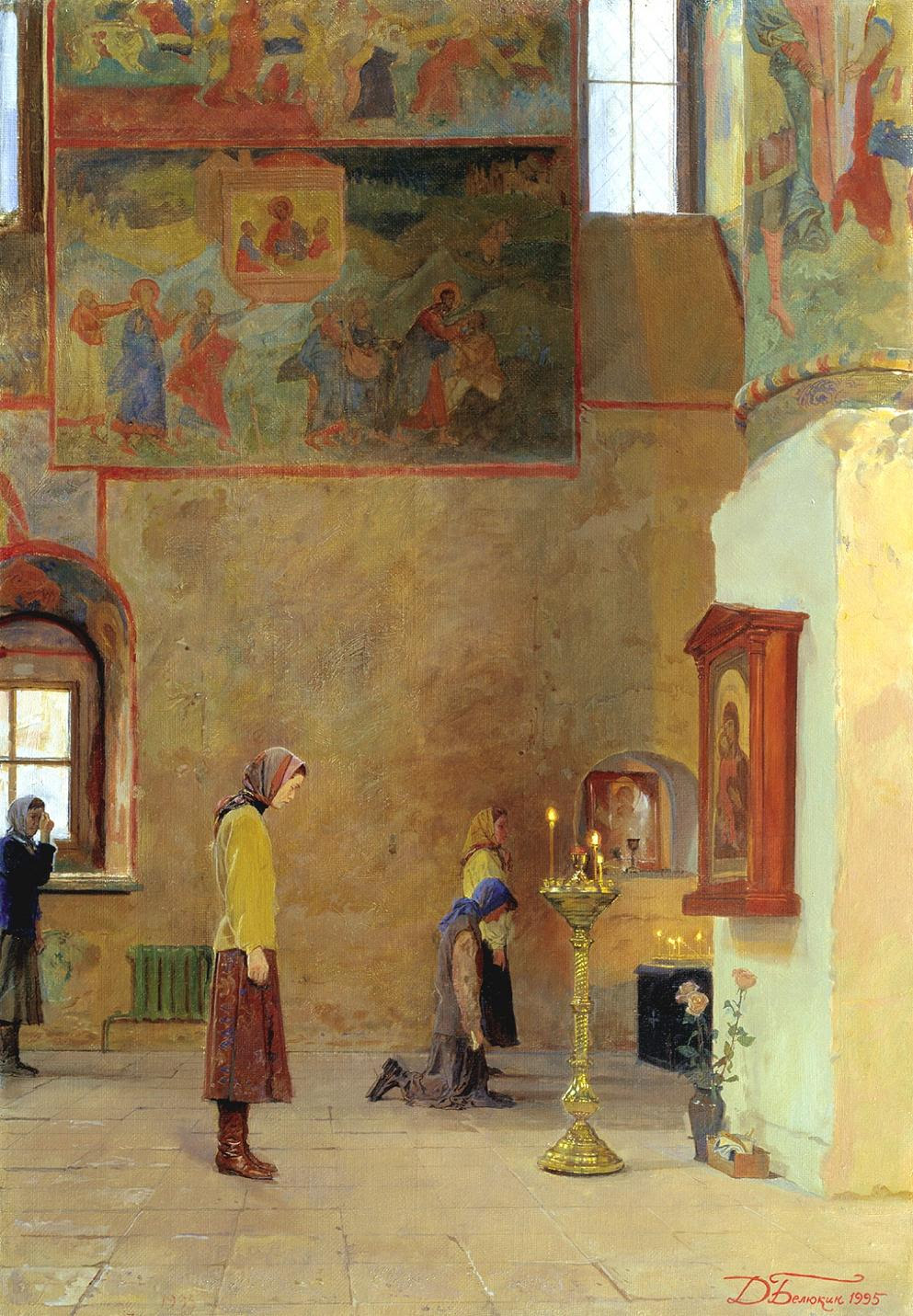
May all the holy Gospel readings during this time of St. Luke sink deep into our ears, our minds, and our hearts. Let us fall down before the Lord Who made us and proclaim from the depths of our hearts: “Thou art our God, and we know none other beside Thee; we call upon Thy Name.”

piousyoungwomeninarealchurchinthebalkanssomwhere

Posted in Uncategorized | Comments Off on How to make a good start

The beloved disciple

26 September OS 2015 – Friday of the Nineteenth Week after Pentecost/1st Week of St. Luke, St. John the Theologian

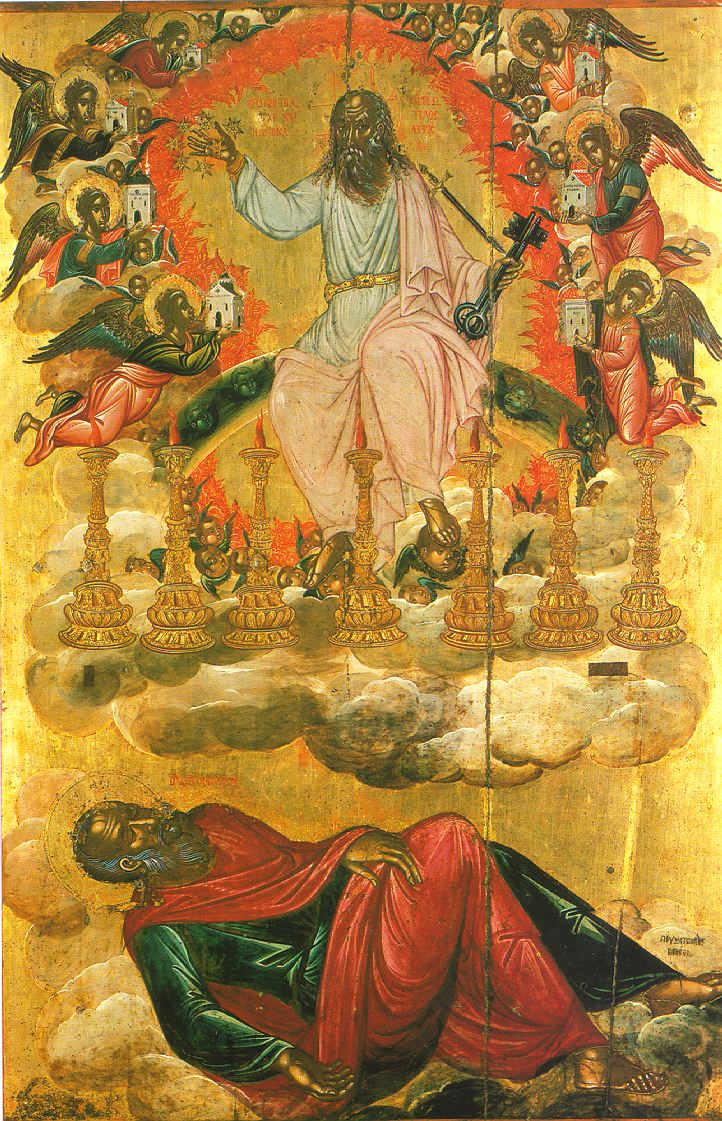
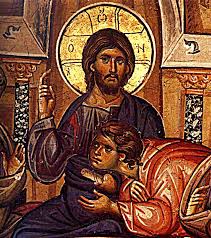
 Today is the feast of the Beloved Disciple, the Holy Apostle and Evangelist John the Theologian. St. John is called “Theologian” because the theology of the Fourth Gospel that he authored flies far above earthly things, like the eagle that is his symbol.   Pre-eminently among the Apostles, he was given the vision of divine things, culminating in his old age with the awesome visions he saw while exiled on the isle of Patmos, which he set down in the Book of the Apocalypse.

Why did the Lord Jesus choose John as His best friend, and why did the Holy Spirit reveal to him the highest mysteries? The answer lies in St. John’s great purity of body and of soul. As well as being the Beloved Disciple, he is also the Virgin Disciple; that is, alone among the Twelve, he was a lifelong celibate. This is not to say that the married state of the other Apostles was in some way against the will of God; no, marriage is blessed, as Our Lord demonstrated at the marriage in Cana of Galilee. Marriage is precious, like silver.   But virginity is precious like gold.

We have two great needs in the Church today, for our salvation and for the salvation of the world: to raise up godly children to be stalwart and faithful married people, and to raise up godly children to enter the monastic life. We must firmly resolve to shield children from the earliest infancy from impure images, words, and music, and to keep their souls pure.

There are two excellent books that every Orthodox parent, prospective parent, grandparent, and godparent should read and put into practice: Raising Them Right, which is composed of the early chapters of The Path to Salvation by Theophan the Recluse, the chapters on infancy, childhood, and adolescence; and Orthodox Christian Parenting, a book recently published by Zoe Press consisting of a collection of short passages from the Fathers and from recent Orthodox writers. I encourage everyone to obtain them, read them, and provide them to those you know who are in any way involved in rearing children.

May the Savior of the world, Our Most Pure Lord, preserve us in the purity of consecrated virginity and sacramental marriage, so that our bodies and souls may be preserved unto the resurrection and eternal life.

detail_mysticalsupper_johnonLord's breast

Posted in Uncategorized | Comments Off on The beloved disciple