The sin that cannot be forgiven

14 August OS 2015 – Thursday of the 13th Week after Pentecost (13th week of Matthew), Forefeast of the Dormition, Holy Prophet Micheas (Micah)

In today’s Gospel, the Lord teaches about the sin that cannot be forgiven:

Verily I say unto you, All sins shall be forgiven unto the sons of men, and blasphemies wherewith soever they shall blaspheme: But he that shall blaspheme against the Holy Ghost hath never forgiveness, but is in danger of eternal damnation: Because they said, He hath an unclean spirit. There came then his brethren and his mother, and, standing without, sent unto him, calling him. And the multitude sat about him, and they said unto him, Behold, thy mother and thy brethren without seek for thee. And he answered them, saying, Who is my mother, or my brethren? And he looked round about on them which sat about him, and said, Behold my mother and my brethren! For whosoever shall do the will of God, the same is my brother, and my sister, and mother.  – Mark 3: 28-35

What is the blasphemy against the Holy Spirit? Since it is the sin that cannot be forgiven, we should be very eager to find out what it is and to flee it by all means.

St. Theophan the Recluse, quoting a standard Orthodox catechism of his day, relates the following answers: “Great or excessive hope in God’s grace; despair or lack of hope in God’s compassion; contradicting manifest and confirmed truth, and rejection of the Orthodox Christian Faith… (Orthodox Confession, part 3, question 38).”   – Thoughts for Each Day of the Year, p. 181

Let us examine these one by one.

The first two ways of sinning against the Holy Spirit are related: they are the opposites of each other.   A Christian lives between hope and fear: hope in God’s mercy and fear of God’s judgment. If we lose the fear of God, we will say, “Oh, God forgives, God forgives” carelessly, assuming that anything we do will be forgiven no matter what, and we will live as if God’s judgment does not exist. This is excessive hope in His mercy, taking it for granted. This attitude is typical among certain Protestant sects as part of their teaching, but each of us can consciously or unconsciously adopt this attitude and thereby give up any efforts at repentance.   “The fear of God is the beginning of wisdom,” says the Scripture. We must live in Godly fear and have an intense hatred of sin, revulsion to sin. To adopt a careless attitude about one’s sins and to presume on God’s forgiveness makes forgiveness impossible, because one is not repenting. This is a form of the sin against the Holy Spirit. To combat this, we must ask God for a healthy hatred of sin, for the desire to please Him and do His holy will, and for constant remembrance of death and God’s judgment.

The opposite of this excessive hope is excessive grief over sin, as if God cannot forgive us. To fall into despair and give up all hope is spiritual suicide. It comes from intense pride, a pride so great that we believe that our sin is greater than God Himself.   We must pray daily for true humility, in order to accept completely, with all our hearts, that God alone is the source of our life, while everything that is from us, including sin, is something finite and subject to God’s sovereignty and omnipotence.  There is nothing more powerful than God’s love. There is nothing He cannot overcome. Despair is a denial of God’s love, of His omnipotence, and of His sovereignty over His creation.   It is the ultimate fruit of listening to the lies of the master accuser and liar, Satan. When dark thoughts of hopelessness assail us, we must go into action immediately with prayer, reading psalms, prostrations, and thanksgiving and praise to God.   We should chant Church hymns and psalms that we know, since singing spiritual songs is a great help against despondency. We must run to confession and carefully confess all of our sins in detail, with compunction, since usually depression and despair arise from unconfessed sins.  We should also apply ourselves assiduously to productive work, and manual labor especially, which acts very powerfully to drive away despondency.

“Contradicting manifest and confirmed truth” leads ultimately to “…rejection of the Orthodox Christian Faith.” If one stubbornly rejects the teaching of the Church, one loses the saving effect of one’s baptism, even if one does not formally renounce one’s identity as an Orthodox Christian. How many times do we hear, “Oh, yes, I am Orthodox, but, you know, I think the Church is wrong about such-and-such,” or “I just cannot accept such-and-such that the Church teaches because it just does not seem right to me,” and so forth.   To deny Truth is to separate the soul from grace, to kill the soul. If one chooses to kill one’s own soul, God does not force us to “be forgiven.” Holy Tradition is not a cafeteria from which we choose the items we like, in order to make up our own lunch tray of tasty religious beliefs, leaving off the “dishes” we find unpalatable. We must wholeheartedly embrace all that the Church teaches.

Let us open our minds and hearts to the Faith. One does not have to understand everything…we cannot understand everything levitra generico prezzo! One certainly may and should ask questions, in order to deepen one’s knowledge and strengthen one’s commitment to the Faith. But one must do this with the disposition to be obedient and docile to the Church, to be her child, not her critic, accuser, and judge.

May the All-Holy Spirit, sent by the Lord Jesus Christ to lead us into all truth, open our minds and hearts to all the saving truths of our Holy Faith, give us the grace of the fear of God coupled with all-daring hope in His mercy, and guide us securely on the path of salvation, right up to our last hour.   Believing wholeheartedly, repenting humbly, and hoping in God with childlike trust, may we find Paradise. May He bring us all together to life everlasting.
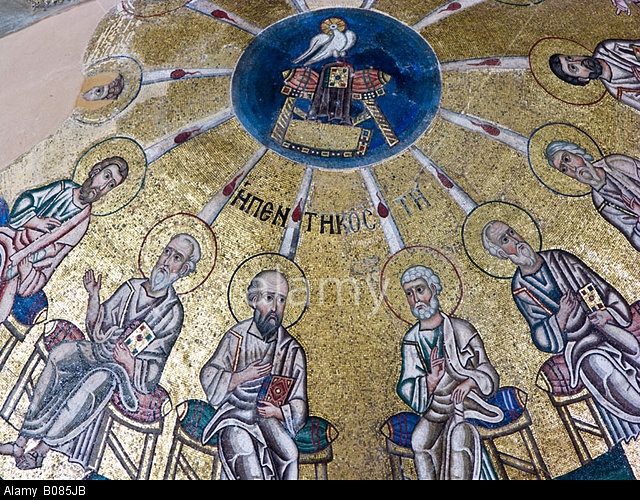
B085JB mosaic of the Pentecost, Katholikon church, Hosios Loukas monastery Greece
B085JB mosaic of the Pentecost, Katholikon church, Hosios Loukas monastery Greece

Posted in Uncategorized | Comments Off on The sin that cannot be forgiven

Beside ourselves

13 August OS 2015 – Wednesday of the 13th Week after Pentecost (13th week of Matthew), Leavetaking of the Transfiguration, Holy Martyr Hippolytus, St. Tikhon of Zadonsk, Translation of the Relics of St. Maximus

In today’s Gospel, we see both the Lord’s friends and His enemies stating that He is possessed.

      And the multitude cometh together again, so that they could not so much as eat bread. And when his friends heard of it, they went out to lay hold on him: for they said, He is beside himself. And the scribes which came down from Jerusalem said, He hath Beelzebub, and by the prince of the devils casteth he out devils. And he called them unto him, and said unto them in parables, How can Satan cast out Satan? And if a kingdom be divided against itself, that kingdom cannot stand. And if a house be divided against itself, that house cannot stand. And if Satan rise up against himself, and be divided, he cannot stand, but hath an end. No man can enter into a strong man’s house, and spoil his goods, except he will first bind the strong man; and then he will spoil his house. – Mark 3: 20-27

This passage reveals that during His earthly ministry, the Lord Jesus Christ had friends who were not His disciples.   They were simply His friends, the relatives and neighbors among whom He had lived during the time before His three-year mission for the salvation of the human race. Perhaps these friends were among the people who, in another place, the Evangelist records as saying, “Is this not the carpenter’s son?” or, in other words, “Is this not just another ordinary fellow like ourselves?” Their saying that “he is beside Himself” means, according to St. Theophylact, that they believed He was possessed with a demon.   Being His friends, though uncomprehending ones, they say this out of concern for His welfare. They think Him a victim of evil. Being His enemies, the scribes from Jerusalem say the same thing out of malice. They call Him a servant of evil.

Does not the same thing occur to us Orthodox Christians?   We have friends and relatives, both non-Orthodox and nominal Orthodox (or even those who claim to be pious!), who try to dissuade us from a Gospel mindset, an otherworldly life, because they believe that it is bad for us, something evil.   It interferes with having a “good life,” and being our friends they want us to have a “good life.”   They think that we are victims of evil. We have enemies who hate the Faith and claim that we are not mere victims but active servants of evil.   Which kind of person, one wonders, does us greater harm? Often, perhaps, it is the former kind, because we are more inclined to listen to them.

Here is a rule of thumb you can count on: Most human beings – the overwhelming majority (99%?), including the overwhelming majority of baptized Orthodox – are, to a greater or lesser extent, in delusion (plani in Greek, prelest in Slavonic). Most are not seeing strange visions or doing obviously crazy things. Most have garden-variety prelest; that is, they are fundamentally mistaken most of the time about what is really going on outside of them and inside of them.   This includes us. The difference between them and us, if there is a difference, is that we know we are mistaken but are working on it. We are crying out day and night, “O Lord, deliver me from delusion!”

If we, who are Orthodox and moreover trying to do something about it (however feebly), are frequently in delusion, what about all the other people out there? In other words, why should we listen to them?   I do not mean that they cannot teach us how to grow vegetables or drive a car or do algebra. I mean that they cannot give us our life orientation. They cannot advise us as to “what it is all about.” Let us not be swayed when they claim that we are out of our minds.   Of course we are, but we know the way back into our minds, and we are trying to go there.   They too are out of their minds, but they do not know the way, and they cannot show it to us.

O Lord, only Truth and only Way, deliver us from delusion, heal our fragmented minds and divided wills, and keep us on the straight path to Thee our Life! Amen.


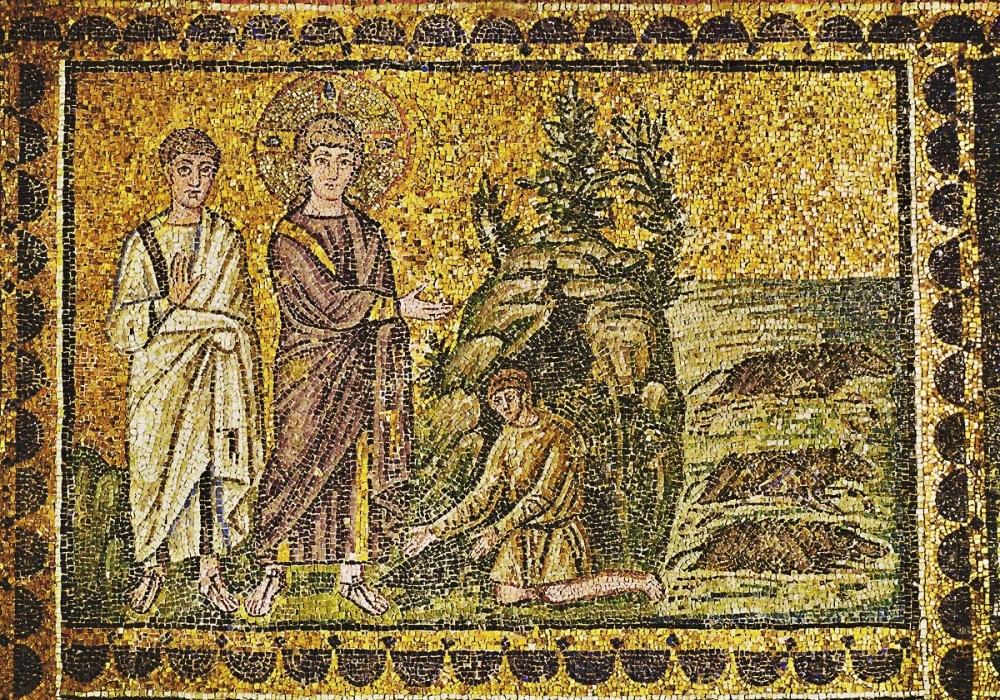
Gadarene_swine_santapollinare

Posted in Uncategorized | Comments Off on Beside ourselves

Prayer in the Name of Jesus

15/28 May 2015:  Thursday of the Seventh Week of Pascha; Afterfeast of the Ascension; S. Pachomius the Great 

In today’s Gospel, Our Lord gives the most precious and all-conquering gift to His disciples, prayer in His name, the Name of Jesus:

And in that day ye shall ask me nothing. Verily, verily, I say unto you, Whatsoever ye shall ask the Father in my name, he will give it you. Hitherto have ye asked nothing in my name: ask, and ye shall receive, that your joy may be full. (John 16: 23-24)

Our experience, however, is that often we do not receive what we ask for. Why is this? St. Theophan the Recluse, in commenting on today’s Gospel, says the following:

“…What a shame for us that we do not know how to make use of such a true promise! And it would be good if only this would cause shame, otherwise a shadow would be cast over the promise itself, as though it were too great and impossible. No, the guilt lies entirely on us, mainly because we recognize that we are not faithful servants of Christ, and our conscience does not allow us to expect mercy from the Lord. In addition, it happens that when someone starts asking God about something, he does it with a divided soul. He mentions that thing in his prayer once or twice, as if in passing, and then drops it, and says later, ‘God does not hear.’ No, when asking for something in particular, one must be persistent and indefatigable in prayer, like the widow who forced even the heartless judge to satisfy her petition by simply not giving him any peace. When true men of prayer ask for something in prayer, they unite it with fasting, vigil, all sorts of deprivation, and charity. Furthermore, they ask not for a day or two, but for months and years, and thus they receive what they ask for. Imitate them, if you desire to have success in prayer.” – from Thoughts for Each Day of the Year

We may add that we would experience more success in prayer if we were to ask for those good gifts which we know the Lord wants to give us, that is, spiritual gifts. We do not know if it would be good for us to receive this or that material thing, this or that relief from want or anxiety regarding our circumstances, the needs of our family, etc. Perhaps it would be good for us, perhaps not, though we must ask, and ask in the way that St. Theophan describes above, for all of our life, material and spiritual, depends utterly on the Lord, and He wants us to ask Him for all of our needs. But we know that He is waiting to give us spiritual good things. What should we ask for?

Well, we are not great men of prayer. It is certainly premature to ask for high spiritual states: continuous prayer, freedom from all passions, spiritual insight, etc. If you were in a position to ask for these things, you would probably not be reading something written by me. But one could start with these:

  1. Let us ask the Lord to help us see our sins and at the same time have a correspondingly great hope in His mercy.
  1. Let us ask for a constant remembrance of death, God’s judgment, heaven, and hell.
  1. Let us ask for a constant spirit of reverence and the fear of God, a constant desire to know and to fulfill His Holy Law in all of its commandments.

When we start, even a little bit, to receive these good things, which we know God wants to give us, we will know the power of prayer through experience.

“O taste and see that the Lord is good; blessed is the man that hopeth in Him (Psalm 33: 8)”

Posted in Uncategorized | Comments Off on Prayer in the Name of Jesus