Wisdom Incarnate

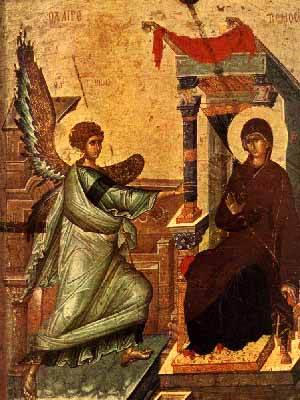
25 March OS 2016 – The Annunciation

The Holy Fathers are a never-ending source of illumination and delight.   This morning, I was studying the commentary of Blessed Theophylact on today’s Gospel reading (Luke 2:26-38), and the saint offered so much insight in so few pages that it was hard to pick out which highlights to discuss with you.   But here are three:

Regarding the angel’s greeting, Rejoice (Luke 1:28):

“Because the Lord had once said to Eve, In sorrow thou shalt bring forth children (Genesis 3:17), that sorrow is now removed by the joy which the angel offers to the woman, saying to her, Rejoice, thou who art full of grace. Since Eve had been cursed, now Mary hears herself blessed .” – from The Explanation by Blessed Theophylact of the Holy Gospel According to St. Luke, trans. Rev. Christopher Stade, Chrysostom Press, House Springs, Missouri, 1997, p. 15.

The one word, Rejoice, proclaims that Mary is the New Eve, whose obedience cancelled the sentence God passed upon our race for Eve’s disobedience.   Because of sin, the biological mechanism of procreation – which should be one of our more godlike traits, for it makes us co-creators of the human race with God – became the source of endless sorrows in this life and damnation in the next, as all history and literature, as well as the current disaster of insane sexual mores, teaches us. By absolute purity and chastity, Mary gives us the way out of this dreary cycle of personal destruction. She becomes the model for two new ways of life God brings into the world through the New Testament: Christian virginity and Christian motherhood.   Her holy and perpetual virginity is not barren, but endlessly fruitful, and the millions of consecrated Christian virgins who followed in her footsteps have multiplied and are multiplying this fruitfulness “one hundred fold” in prayer, in good deeds, in all the works of the Gospel, giving spiritual rebirth to countless souls. Her divine motherhood is in no way associated with lust or corruption – she remains Ever-Virgin before, during, and after giving birth.   Tens and hundreds of millions of Christian mothers, faithful to the Church’s laws of pre-marital virginity, marital fidelity, and the Church’s laws for the marriage bed, whose physical union with their husbands the Church has blessed and elevated by the Divine Mystery of Orthodox Matrimony, have had their fallen-Eve-experience of both pleasure and pain given proper context, corrected, healed, and sanctified by grace and by the orthopraxis of the Church’s discipline; and they have reared up vast armies of pious children who have struggled valiantly for Orthodoxy and for salvation.   Generation after generation, they have justified the amazed exclamation of the pagans in the first centuries of the Church: “What women there are among these Christians!” And I think that, even in these sad times, every one of us still knows someone who merits this praise.

Regarding the Virgin’s question, How shall this be, seeing that I know not a man? (Luke 1:34):

“It was not because the Virgin did not believe that she said, How shall this be? Rather, it was because she was wise and astute, and sought to understand the manner in which this would take place. For nothing like this had ever happened before, nor would again. This is why the angel forgives her, and does not chastise her as he did Zacharias [see Luke 1:18-20], but instead explains to her how it would come about. It was fitting that Zacharias was chastised, for he knew many examples of barren women who had given birth. But for the Virgin, there was no precedent.” – The Explanation, p. 17

The Holy Virgin, then, is the model for Orthodox theologians. She begins with faith, though not “blind faith,” but faith in union with logos, with rational understanding. She questions, not because she doubts God’s word, but in order to exercise her nous (her spiritual intellect) and her dianoia (her discursive intellect) to understand more deeply, both intuitively and rationally, the mystery God is revealing to her. How sad, indeed how disastrous, is the spectacle we see today, when there are “Orthodox” seminaries whose professors not only use the methods of “scientific criticism” (a euphemism for atheistic reductionism blasphemously applied to sacred texts) but also encourage in their students a sophomoric arrogance based on having a knowledge supposedly superior to that of our fathers in the faith! Truly, in the words of the Apostle, Professing themselves wise, they became fools (Romans 1:22). How utterly different is the example of Panagia, who spent her entire youth from earliest childhood in asceticism and contemplation of the divine mysteries in the Temple of God, pondering in her heart with faith and the fear of God all the great deeds the Lord had wrought for His people, and begging God with tears day and night to send His salvation to the sad children of Eve! In response to her contemplation and her supplication, He came to dwell in her womb! How different the example of our Fathers, who struggled in martyric witness, in feats of ascetic greatness, in bold confession in the face of heresy backed by worldly power, in the power of that pure Faith found only in pure hearts!   And, moreover, these Fathers were far more educated than our present day “wise men,” who cannot hold an intellectual much less a spiritual candle to their greatness.   How blessed are we to inherit this vast treasury of wisdom! Let us exercise our God-given and God-beloved intellects in imbibing this wisdom, asking good questions indeed, as did Panagia, but always humbly, and based on Faith.

Regarding the angel’s words, The Holy Spirit shall come upon thee, and the power of the Most High shall overshadow thee: therefore also that Holy Thing Which is begotten of thee shall be called the Son of God (Luke 1:35):

“Here the mouth of Nestorius is sealed. For that man said that the Son of God did not take flesh by dwelling in the womb of the Virgin, but that a mere man was born of Mary, and only later was this man ‘accompanied’ by God. Let Nestorius hear, therefore, that that Holy Thing Which is being begotten [the Greek present passive participle to gennomenon, “that which is being begotten,” “that which is being brought forth”] in the womb is the Son of God. That which was carried in the womb and the Son of God are not two separate entities, but one and the same, the Son of the Virgin and the Son of God. See how the angel revealed the Holy Trinity by naming the Holy Spirit, the Power which is the Son, and the Most High which is the Father.” – The Explanation, pp. 17-18

How wonderful. All of the vast ecclesiastical and geopolitical turmoil, as well as the spiritual and intellectual struggles, and the physical sufferings, of the Orthodox Fathers of the first four Ecumenical Councils, are vindicated by these simple words penned by Luke, which express in evangelical simplicity and purity those two great dogmas of our pure Faith: the Trinity and the Incarnation. All true theology, all true life, begins and ends with the Gospel. How motivated should we Orthodox Christians be to read the Holy Gospel daily, diligently, with open hearts and searching minds!   We will be rewarded ten thousand-fold in this life and in the Age to Come.

May the Incarnate Word, Our Lord Jesus Christ, Who today became flesh in the womb of the Virgin, enlighten us always by His holy commandments, through the intercessions of the Most Pure Theotokos, of Blessed Theophylact, and all the Saints. Amen.

PS: Pascha approaches, and have you thought about giving Orthodox gifts to those you love? If your family and friends do not yet own them, I cannot think of a better present than the four volumes of Blessed Theophylact’s Gospel commentary. And, besides the commentaries of Blessed Theophylact, Chrysostom Press also publishes the Great Collection of the Lives of the Saints by St. Dimitri of Rostov, translated by our own GOC priest, Fr. Thomas Marretta, rector of St. Maximus Church in Owego, New York. Take a look at Chrysostom Press’s website at http://www.chrysostompress.org/.

By supporting Chrysostom Press, you are not only acquiring bedrock basic needs for your family Orthodox bookshelf, you are also supporting a vitally needed ministry which is currently much short on funds.   The English-speaking Orthodox people badly need these texts to be completed, both Bl. Theophylact’s commentaries on the entire New Testament and the Lives of the Saints. The Bl. Theophylact translators have barely started the Apostolos, and Fr. Thomas still needs support to get out the last four months of the Lives. The work is going on, but financial problems seriously threaten it. So your buying these books is a “win-win” – you benefit directly from reading them and you benefit the Church by giving to an invaluable cause. You will be benefactors for all future generations of Orthodox people who read these books, they will bless your memory, and their prayers will help your souls.   You are in at the ground floor of an historic undertaking! How cool is that?
annunciationicon

Posted in Uncategorized | Comments Off on Wisdom Incarnate

For sin shall not have dominion over you

23 March OS 2016 – Fourth Tuesday of Great Lent, Holy Monk-Martyr Nikon and His 199 Disciples in Sicily

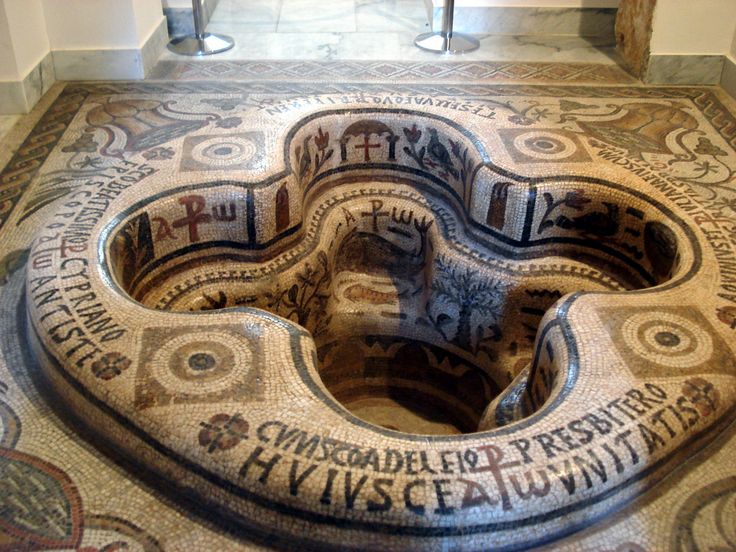
One of the great theological themes of the Triodion and Pentecostarion is the Mystery of Holy Baptism, which, in the early years of the Church, was performed pre-eminently on Great and Holy Saturday.   Great Lent was devoted to the daily instruction of the φωτιζόμενοι (“those about to be illumined,” called in the Latin-speaking part of the Church the electi – “the chosen” – or competentes –  those “competent” to live as Christians), that group of catechumens who had been approved for Baptism. The Pentecost (the 50 days from Pascha to Pentecost) was devoted to post-baptismal instruction, called “mystagogy,” for the newly-baptized.  There is a wonderful “travelogue” of a nun from Spain named Egeria (or Aetheria), which, along with many other fascinating and edifying things, describes this process as she witnessed it taking place in the Church of Jerusalem in the last decade of the fourth century.  (For those interested, you can read an English translation of this text at http://www.ccel.org/m/mcclure/etheria/etheria.htm.)

Following in this tradition, St. Theophan the Recluse devotes his thoughts for today to the meaning of our Baptism:

Baptism according to Apostle Peter is “the answer of a good conscience toward God (I Peter 3:21).”   He who has been baptized gives a vow to live the rest of his time according to a pure conscience, according to the whole breadth of the Lord’s commandments, accepted in his conscience. Moral purity is a characteristic of one who is baptized. The Apostle Paul compares the brightness of this life with the brightness of the resurrected Lord. “That like as Christ was raised up from the dead by the glory of the Father, even so we also should walk in newness of life (Romans 6:4).” In Baptism, the old sin-loving man dies and a new man arises, zealous to do good works. “Likewise reckon ye yourselves [ye who are baptized] to be dead indeed unto sin but alive unto God through Jesus Christ our Lord. Let not sin therefore reign in your mortal body, that ye should obey it in the lusts thereof. Neither yield ye your members as instruments of unrighteousness unto sin: but yield yourselves unto God, as those that are alive from the dead, and your members as instruments of righteousness unto God. For sin shall not have dominion over you (Romans 6:11-14).”  – Thoughts for Each Day of the Year, p. 70

When we were baptized, we – or our sponsors for us – made a vow to God, to renounce Satan and to unite ourselves unto Christ.   When we are tempted to sin, one basic thought we should have is, “I must not sin, because I have made a promise to God not to sin.”   By constantly making this choice, we strengthen our will to turn from evil and do good, and by the grace of God we become stronger and stronger in our fight against sin.  The baptismal grace, which is uncreated, truly divine, and infinitely strong, unites with our nature to make us invincible conquerors of sin.

The “culture” of victimhood and self-pity so prevalent today militates against this basic thought, which even our noble pagan ancestors understood, that we have the ability to strengthen our will to fight evil and to do good.   Everyone wants to be a whiny-baby who is “entitled” to give in to his weaknesses and passions and not be “judged” by others.   And this narcissistic, infantile approach to social relationships is called “love”!   “Let’s all just be self-indulgent together!”  In other words, “love” is a pact of mutually accepted (not to say enforced) moral suicide.  Obviously all this, if continued, can have only one outcome, which is the utter destruction of the family and of the civil society of free, moral, and thinking human beings.

The Church, however, is by no means doomed to follow this path.   She is the Ark of Salvation, in which we can find spiritual safety for our families and ourselves. And She is the leaven in the mass of humanity, which by the grace of God can leaven the whole, turning things around very radically, because it is the grace of God at work here and not blind, impersonal forces of historical evolution.   We cannot control vast historical movements. We can, however, control ourselves, and God will do the rest.

Let us, then, use the second half of Great Lent to embrace our Baptismal grace and Baptismal vows joyfully.   We belong to the Lord! This thought alone should give us courage to fight the good fight. Our hope is invincible, because we have placed our hope in the invincible Conqueror of death, Our Lord Jesus Christ.

ancientfont_Tunis

An ancient baptismal font from West Roman North Africa. 

Posted in Uncategorized | Comments Off on For sin shall not have dominion over you

Staying on track

11 March OS 2016 – Second Thursday of Great Lent, St. Sophronios of Jerusalem

The second reading at Vespers today is Proverbs 6: 3-20.

 My son, do that which I command thee, and save thyself; for on thy friend’s account thou art come into the power of evil. Go, faint not; but stir up even thy friend for whom thou art become surety. Give not sleep to thine eyes, nor slumber to thine eyelids, that thou mayest deliver thyself as a roe out of a noose, and as a bird out of a snare. Go to the ant, thou sluggard, and be zealous to consider its ways, and be wiser than it. For though it hath no husbandry, nor any to compel it, and is under no master, it prepareth its food in the summer, and maketh its provision abundant in the winter. Or go to the bee, and learn how diligent she is, and how earnestly she doeth her work; whose labours kings and private men use for health; she also is desired by all, and honoured. Though she be weak in strength, she is advanced by honouring wisdom. How long wilt thou lie, O sluggard, and when wilt thou arise out of sleep? Thou sleepest a little, and thou restest a little, and thou slumberest a short time, and thou foldest thine arms over thy breast a little. Then poverty cometh upon thee as an evil traveller, and want as a swift runner. But if thou be diligent, thine harvest shall come to thee as a fountain, and poverty as an evil runner shall desert thee. A foolish man and transgressor goeth in ways that are not good. And he winketh with the eye, and maketh a sign with his foot, and teacheth with the movement of his fingers. And with a froward heart he deviseth mischiefs continually; such a man maketh troubles in a city. Therefore his destruction cometh suddenly, calamity and ruin without remedy. For he rejoiceth in every thing which God hateth, and is ruined by reason of his soul’s uncleanness. A proud eye, an unjust tongue, hands that shed righteous blood, and a heart that deviseth wicked imaginations, and feet that be swift to do evil. A false witness kindleth falsehoods, and soweth discord among brethren. My son, keep thy father’s laws, and reject not the precepts of thy mother.

 In the first five verses of this passage, the wise Solomon exhorts his son not to be ensnared in other people’s financial problems (not to “go surety for a friend”), and to be attentive and diligent to get out of and stay out of all such arrangements.   St. Theophan the Recluse applies this advice to the subject of attentiveness in the spiritual life:

“Give not sleep to thine eyes, nor slumber to thine eyelids, that thou mayest deliver thyself as a doe out of the toils, and as a bird out of a snare (Proverbs 4-5).” Everyone who in his heart has set out now, before the face of the Lord, to live according to His commandments, should take this rule as his guide. He must not give sleep to his eyes – not these outer eyes, but the inner eyes of his mind – that they might gaze into his heart and faithfully observe all that occurs there, and thus he who is zealous will be able to find the enemy’s snares and avoid danger from them. The heart now becomes an arena for struggle against the enemy.   There the enemy unceasingly sows his own [seed], which is in turn reflected in one’s thoughts. Such thoughts, however, are not always outrageously bad, but are for the most part disguised by false goodness and correctness. The chain of all thoughts is just like an intricate net! He who heedlessly sets out after them will not escape entanglement and, consequently, the danger of a fall. This is why, brother, you must keep the eye of your mind sharp-sighted by means of strict attention toward everything that occurs in you and around you. Take note of what your relentless “advisor” proposes to you on the left side and investigate the reason it was proposed to you and where it will lead, and you will never fall into his snares. Only, do not forget that attentiveness alone is not effective. It must be joined with abstinence, wakefulness, and unceasing prayer to the Lord. Combine all these, and it will be difficult to catch you.   Thoughts for Each Day of the Year, pp. 60-61

One of the great insights of Orthodox spiritual wisdom is that you must pay attention to your thoughts and not accept them uncritically, much less unconsciously, as corresponding to reality.   There is a constant commotion going on “in our heads,” and most of it is at best useless and at worst a trap. Some of it comes from the outside world, some of it from within our minds – memories, images, arguments, worries, etc. – and some of it from that “advisor” St. Theophan is talking about, the demon assigned to battle our guardian angel for possession of the soul. One of the great pleasures of having a real prayer life is that a great deal of this static gets tuned out, and we can actually start understanding ourselves and the world around us, and be at peace.

Notice that St. Theophan points out that many destructive thoughts are not obviously bad but rather seem good and correct. They destroy by deception rather than frontal assault. These seemingly good thoughts may be sent by the devil, or may arise from our fallen nature – from ignorance, from mental confusion, from lack of discernment, from immaturity in self-understanding, etc. But what they all have in common is that they get us off the track, distracted from our particular path, our particular duties, and our particular calling. What we need to know and need to think in order to save our souls and help others do the same is actually a rather limited range of knowable things and a limited range of necessary thoughts. A good prayer life – both prayer at set times and the habit of the Jesus Prayer through the day – a moderate but persistent habit of spiritual reading, and frequent confession, will keep us on track. We do not have to solve all the world’s problems, and – amazing to recall – we do not even have to solve all of our own. The Lord says to us, as He says to Peter in John 21, “You just follow Me.”

There are various ways of getting off the track, including one that most of us today wander off on. It is extremely common now for religious and well-intentioned people to spend a great deal of time on the Internet or listening to talk shows because they are (rightly) concerned about falsehood and evil, and they are trying to keep track of it all and understand somehow what is going on “out there,” and perhaps even convince a group of fellow worriers that their insights, and not those of others, are the accurate ones. They feel the need to be “connected” somehow to the wide world and its manifold problems, and they even feel a bit guilty if they lose track of what is supposedly going on.   The problem, however, with trying to get to the bottom of the evil in the world is that there is no bottom to evil in this life, because the bottom is in hell, where the damned will spend all eternity sinking deeper and never hitting bottom. You could spend your whole life trying to figure it out, and on your deathbed realize you have spent all your energy chasing the chimera of grasping the essence of evil, a task by nature impossible because evil possesses no essence to be grasped.

Of course, we have to be informed to a prudent extent about what is going on out there in order to make wise choices for ourselves and those in our charge. One can have too much information, however, and far too little wisdom. Let us spend more time repairing our equipment for understanding – that is, the mind and the heart – through prayer, spiritual reading, frequent confession, and a prayerful approach to our actual daily duties, and less time acquiring grist for a mill breaking down daily due to deferred maintenance.

O Lord, only true and trustworthy Guide, keep us on the straight path to Thy heavenly kingdom!

pathindarkwoods

Posted in Uncategorized | Comments Off on Staying on track

Hope amid the ruins

10 March OS 2016 – Second Wednesday of Great Lent, Holy Martyr Quadratus and Companions

 Today’s first reading at Vespers is Genesis 4:16-26.

 And Cain went out from the presence of God, and dwelt in the land of Nod, over against Eden. And Cain knew his wife, and she conceived and bare Enoch. And he builded a city, and he called the city after the name of his son, Enoch. And unto Enoch was born Irad; and Irad begat Mehujael, and Mehujael begat Methusael, and Methusael begat Lamech. And Lamech took unto him two wives; the name of the one was Adah, and the name of the second Zillah. And Adah bare Jabal; he was the father of such as dwell in tents, feeding cattle. And the name of his brother was Jubal; he it was that made known the psaltery and harp. And Zillah, she also bare Tubal-cain; he was a smith, a forger of brass and iron; and the sister of Tubal-cain was Naamah. And Lamech said unto his wives, Adah and Zillah, ‘Hear my voice, ye wives of Lamech, hearken unto my words, for I have slain a man to my wounding, and a young man to my hurt. For vengeance sevenfold is taken for Cain, but for Lamech seventy and sevenfold.’ Now Adam knew Eve his wife, and she conceived and bare a son, and called his name Seth, saying, ‘For God hath raised up to me another seed instead of Abel, whom Cain slew’. And to Seth there was born a son, and he called his name Enos; he hoped to call upon the name of the LORD God.

 The unrepentant Cain, after he had murdered his brother, refused to repent and ask God’s forgiveness. Yesterday at Vespers we read his chilling words: “And Cain said to the Lord God, My crime is too great for me to be forgiven (Gen. 4:13).” His pride was so deep that he preferred to cling to his sin rather than to admit that God was God and could do all things, including forgiving fratricide. Perhaps he did not know it, but he was living in despair. Yet he did not commit suicide like Judas but just went his way, had a family, and, as they say, “had a life.”   His descendants were obviously very gifted people, for it was they, and not the children of the blessed Seth, who laid the material foundation of the antediluvian (Pre-Flood) civilization. But they were not God’s people; they were of the world. Lamech’s promise of dreadful revenge reveals their mindset. And they ended up in the way such people eventually do: their entire race was to perish in the great Deluge.

What did the children of Seth have to set against the great achievements of the Cainites? There is no mention of their creating the arts of civilization, unlike the high-achieving descendants of Cain. They had one thing going for them. It says that Enos, the son of Seth, “…hoped to call upon the name of the LORD God.” Their hope was in prayer, the all-powerful prayer in the name of the Lord. And the method worked: One of their number, Noe (Noah), became the second father of the human race.  They planted the seed, and it bore fruit.

We, God’s chosen remnant of the latter days, have not the worldly power to overcome all the forces arrayed against us.   The Bad People currently have control of finance, industry, government, the media, medicine, education…you name it. We are living on the fringes, in the “dens and caves of the earth.” But, unlike the powerful of the earth and their slaves, we are not living in despair, but in hope, for our hope is to call upon the Name of the Lord.

The Cainite technological/money Matrix of our time has made people crazy, trapping them in constant stress, unending distraction, and perpetually tantalizing, unfulfilled, desperate desire for Something Good that never happens. They keep hearing that they live in a beautiful utopia, but they know that their lives are in ruins. Here is an article from a secular source that suggests the obvious – we have to sacrifice our demand for unreal worldly happiness if we want to find peace:

http://www.intellectualtakeout.org/blog/psychologist-modern-life-not-good-mental-health

We cannot completely check out of the Matrix, of course (or at least most of us cannot). But we can make our churches, our homes, and our hearts a refuge from the Luciferian insanity of the whole thing.   We still have much more power over various areas of our life than we are led to (or want to!) believe.   Let us create quiet and stillness in the home, the right old order in Church, and peace in our hearts through prayer.

Let us call upon the name of the Lord as did Enos. That is, let us say the Jesus Prayer as much and as fervently as we can.   The great and only Good that man needs will be always ours, constantly springing up in great abundance in the heart and overflowing to others.

“[Jesus said:]If any man thirst, let him come unto me, and drink. He that believeth on me, as the scripture hath said, out of his belly shall flow rivers of living water (John 7:37-38).”

“For whosoever shall call upon the name of the Lord shall be saved (Romans 10:13).”

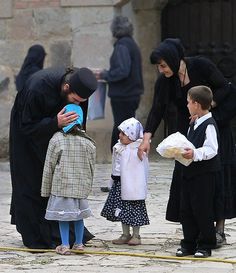
priestblessingchildren

Posted in Uncategorized | Comments Off on Hope amid the ruins

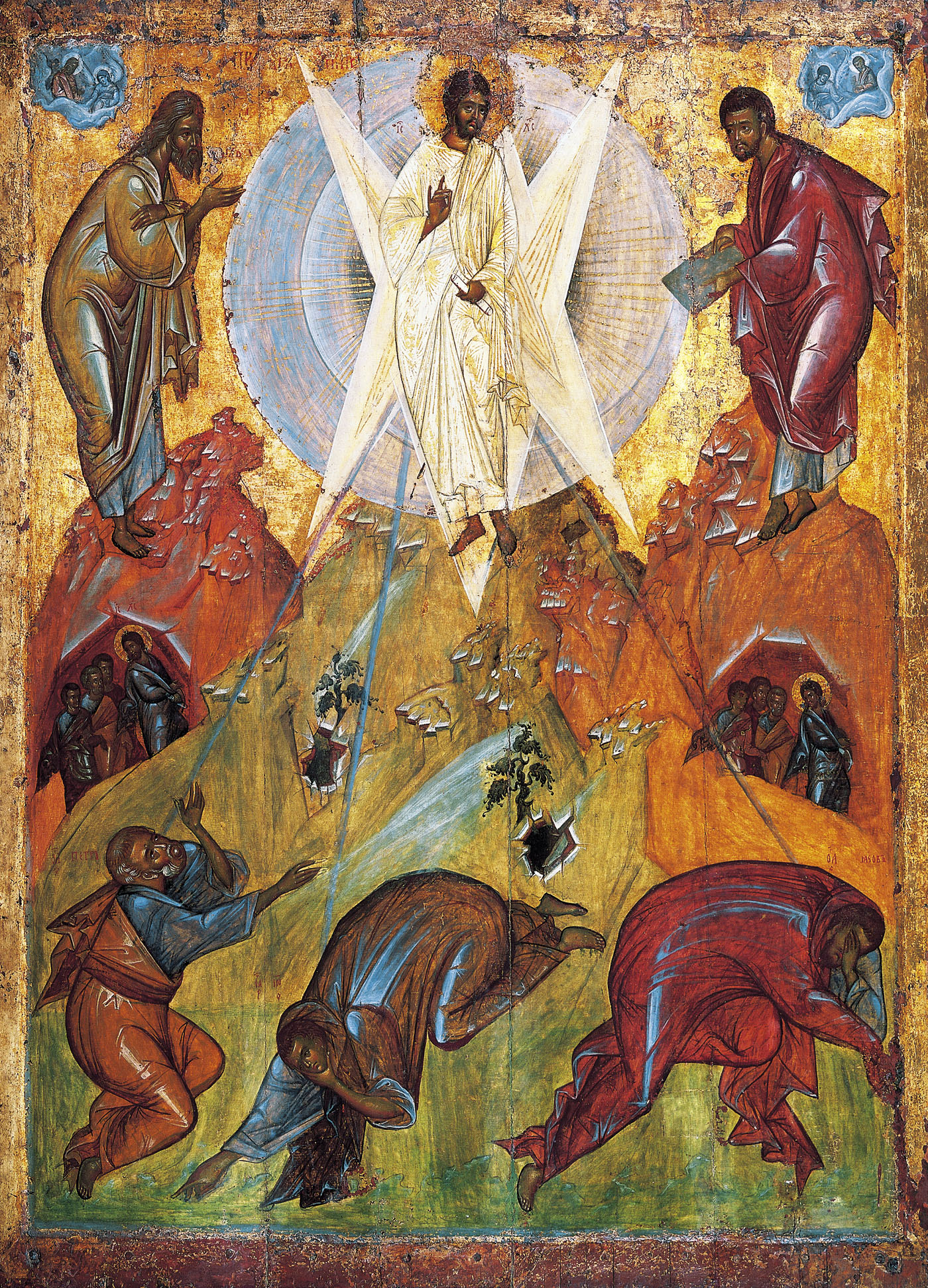
He Who spoke to Moses and Elias became man for our sake

3 March OS 2016 – First Wednesday of Great Lent, Holy Martyrs Eutropios, Cleonicus and Basiliskos

A few more thoughts on why it is important to read the Orthodox Old Testament, as we enter Great Lent and immerse ourselves in the Old Testament readings of the daily services:

This question, “Which is the real Old Testament?” is central to the understanding and defense of the Faith, because only the Septuagint contains the fullness of the prophetic witness to Jesus Christ. Look at the table in this article by Fr. Joseph Gleason which lays out key passages in the OT that refer to central Christian doctrines, their fulfillment in the NT, and their complete absence or disfigurement by the Masoretic text compiled by anti-Christian Jewish scholars long after the time of Christ: https://theorthodoxlife.wordpress.com/2012/03/12/masoretic-text-vs-original-hebrew/ Yet it is this Masoretic text that was embraced by the Protestant Reformation and forms the basis of almost all modern translations! Is it little wonder that so many Protestant sects have Judaizing tendencies, or that modern scholarship denies the Incarnation and saving Passion of the Lord?

We should keep in mind several realities:

  1. When the Lord Himself or the Holy Apostles quote the OT, they are quoting the Septuagint almost every time.   Thus the Septuagint is the Old Testament endorsed by Jesus Christ Himself. Since the Septuagint is therefore divinely attested, is it surprising that the Orthodox Church considers it to be divinely inspired?
  1. What is called “Judaism” today is not the religion of the Old Testament. “Judaism” is a post-Old Testament heresy, a denial of the entire meaning of the Old Testament. It is a heresy created by the rabbinical authorities who deny the divinity, the messiahship, and the saving death and resurrection of Jesus Christ, which is the core of the message of the entire Old Testament! The authoritative book of “Judaism” is not the Bible, but the Talmud, a vast collection of rabbinical commentaries and arguments about the 613 laws in the books of Moses, written after the time of Christ.   Where the Talmud disagrees with the Bible, Judaism always sides with the Talmud. It is precisely the originators of the Talmudic tradition who were arguing with the Lord in those marvelous Gospel passages we read at the Bridegroom Services during Holy Week, and who were a key part of the power structure that engineered His judicial murder.   Their spiritual descendants created what became known as the Masoretic text precisely to deny the truth about Jesus Christ.   How can a Christian ascribe authority to this text?
  1. The religion of the Old Testament is Orthodox Christianity. The Church is the New Israel; She is the organic continuation and fulfillment of the Church of the Old Testament. Since She alone preaches the true meaning of the Old Testament, She alone can claim the title of the preserver of the religion of the Old Testament, not in its ritual details, but in its spiritual essence.
  1. The Fathers of the early centuries based their arguments for the divinity and messiahship of Jesus to a great extent on the Old Testament!   Both the Hellenized Jewish Christians of the early centuries of the Church and educated “Greek” (i.e. non-Jewish) inquirers and proselytes were intimately acquainted with the Greek text of the Old Testament.   Way back in the 3rd century BC, one of the reasons that Ptolemy Philadelphus sponsored the Septuagint translation was that not only did his Jewish subjects need it, but that also pagan wise men were very interested in it. The early Apologists, such as St. Justin Martyr, assumed that educated people in their milieu were familiar with the Old Testament. Later, a great deal of the polemic involved in the great dogmatic controversies of the 4th and 5th centuries, especially Arianism, centered precisely around key Old Testament passages.   To acquire the mind of the Fathers, we have to acquire a Scriptural mind, and this includes an immersion in the Old Testament.  

Holy Prophet Moses, and all ye Holy, Righteous Ones of the Old Testament, pray to God for us!

Transfiguration_by_Feofan_Grek_from_Spaso-Preobrazhensky_Cathedral_in_Pereslavl-Zalessky_(15th_c,_Tretyakov_gallery)

Posted in Uncategorized | Comments Off on He Who spoke to Moses and Elias became man for our sake

The root of a God-pleasing life is fear of the Lord

3 March OS 2016 – First Wednesday of Great Lent, Holy Martyrs Eutropios, Cleonicus and Basiliskos

On the weekdays of Great Lent, we do not read from the New Testament at weekday services, but rather from the Old Testament.   There is a reading at the Sixth Hour from the Prophet Esaias (Isaiah), and there are two readings daily at Vespers, from Genesis and from Proverbs. In the inspired words of Esaias, we hear the Lord’s call to repentance and the prophecies of the saving Passion of the Savior.   In Genesis, we hear of God’s creation of the world, man’s fall into sin and the need for a Savior, and the Lord’s providential preparation of His people for the Savior’s coming. From Proverbs, we learn the wisdom of a Godly life. A perfect reading program for Lent, according to the Church’s divine wisdom and motherly care for us!

Which Old Testament translation into English should we read?   For the New Testament, one can confidently turn to the Authorized Version (the King James), which is translated from the received Byzantine text and only needs to be “tweaked” a little bit here and there to be conducive to an Orthodox understanding. But the King James Old Testament is translated not from the Church’s 2200-year-old canonical, trustworthy (indeed, inspired) Old Testament – the Greek translation called the Septuagint (the “LXX”), which is the version quoted by Jesus Christ Himself in the Gospels – but from a consciously anti-Christian, rabbinical edition from the Middle Ages called the Masoretic text. There are many places – and certain key places – in which these two texts vary quite a bit, and it would be better to steer clear of the AV/KJV and in fact almost all the usual English translations, which are nearly all from the Masoretic text, and stick with the Septuagint.

So…assuming one cannot read the Greek of the Septuagint (though if you want to learn, please let me know!), what English translations are available? The “old reliable” of English-speaking Orthodox till recently has always been Sir Lancelot Brenton’s 19th century translation, which you can find on Amazon as an actual, real-live-book-you-can-hug for under twenty dollars, and in a Kindle version for as little as two dollars.   I am an old Brenton man myself, but lately I have been switching to Michael Asser’s new translation. Mr. Asser is an Orthodox Christian and approaches the translation with Orthodox sensibilities. Old Sir Lancelot was an English gentleman of vague religious convictions who did his translation for personal enjoyment. (If you do read Greek, however, keep your Brenton handy, because, unlike the Asser, it has the original in the margins). The only place I can find any of the Asser OT in hard copy is a psalter from CTOS (Center for Traditionalist Orthodox Studies).   The entire text, however, is available online at http://orthodoxengland.org.uk/zot.htm. I recommend reading the introductory material at this link as well, for an explanation of what the Septuagint is and why it is important. This is a worthy study project for Great Lent, to go along with our spiritual reading!

Today’s reading from Proverbs is chapter two in its entirety (Proverbs 2: 1-22). St. Theophan the Recluse selects verses 3 – 5 for his daily commentary. (By the way, the English translation of Thoughts for Each Day of the Year always quotes the OT from the Brenton LXX translation).

“Thou shalt call to wisdom, and utter thy voice for understanding; and if you shalt seek it as silver, and search diligently for it as for treasures; then shalt thou understand the fear of the Lord, and find the knowledge of God (Prov. 2:3-5).” The root of a God-pleasing life is fear of the Lord. When it comes, then, as a creative force, it will re-structure everything within you and re-create in you a beautiful order – a spiritual cosmos. How can you acquire the fear of God? It is in you, only it is smothered. Resurrect it. Give voice to your mind, and open your heart to accept the influence of truth. Until now, your mind was not given a voice; it was enslaved, and did not dare to speak sensibly. Let it now speak. It will begin to speak about God’s omnipotence, which upholds you and could abandon you at any instant; about God’s omnipresence and omniscience, which sees everything within you and is angered with you for all that is bad within you; about God’s justice, which is ready to punish you now, but is restrained until the [foreordained] time by His mercy; about death, which at every instant is ready to catch you and give you over to judgment and retribution. Listen and bring your heart to a feeling of these truths. Awaken this feeling – and the fear of God will come together with it. This is the dawn of life. Thoughts for Each Day of the Year, pp. 55-56.

This is an amazing passage from Theophan the Recluse. It lays out a very simple way to start Lent by going back to the starting point of spiritual life: the fear of the Lord, which includes, 1. awareness that God is God and we are His creatures; 2. that our sins separate us from God and make us liable to His judgment, and 3. that His mercy awaits our repentance.   As St. Theophan says, all this is already inside of us (he is writing for baptized and spiritually sensitive Orthodox Christians, the kind of people who used to read him “hot off the press” when he was writing in the 19th century, not for hardened types opposed to the Church’s teaching).   But it gets smothered by our worldly concerns, distractions, and falling into a worldly mindset through our weakness and lack of dedication.   So we just have to put all this junk aside and let our mind speak to us once again, and the heart will follow. This is how we bring the heart to a feeling of these truths – not by trying to manipulate our feelings, which is useless and misleading, but by focusing the mind on the great truths of our Faith. The heart will follow the mind spontaneously, if we are persistent, both because 1. the Lord will give us the grace of understanding, heartfelt feeling, and true repentance, and 2. this is how the mind and heart work according to their nature, as created by God.

Let us then, simply ask the Lord to remind us of these basic truths, humble ourselves, and “…walk circumspectly, not as fools, but as wise, redeeming the time, for the days are evil (Ephesians 5: 15-16).” He loves this prayer, and He will give us His grace to have a good Lent in which we really repent and turn to Him with all our hearts.

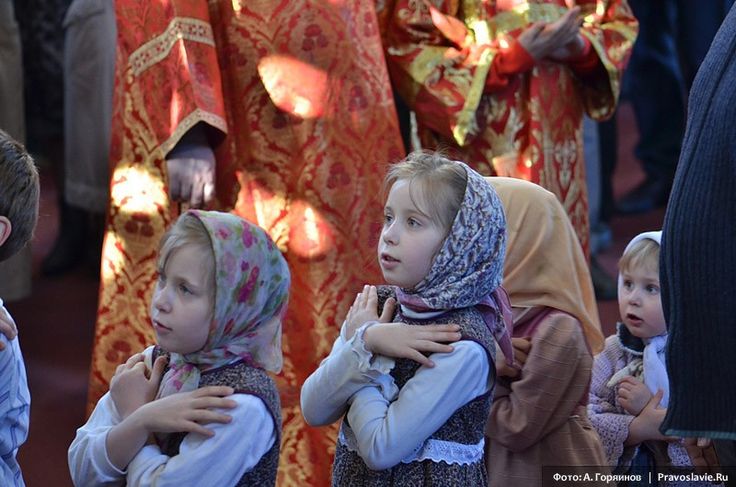
russianchildrengoingtocommunion

Posted in Uncategorized | Comments Off on The root of a God-pleasing life is fear of the Lord

So will I save you

27 February OS 2016 – Friday of Cheesefare Week; St. Procopius of Decapolis

The two Old Testament readings in the services today are from the Prophet Zacharias – at the Sixth Hour, chapter eight, verses seven to seventeen, at Vespers chapter eight, verses nineteen to 23.   The Lord speaks to the prophet telling him to announce God’s mercy to those who repent. Not only will God forgive and bless His people, but other nations will come and turn to the Lord, as well.

Commenting on these passages, St. Theophan the Recluse has this to say:

“So will I save you, and ye shall be a blessing,” promises the Lord through the prophet Zachariah (Zach. 8:13). But under what condition? Under the condition that every man will speak the truth to his neighbor, that men will righteously sort out their affairs amongst themselves, that men will not remember wrongs in their hearts against their neighbor, that they will love no false oath, and will love truth and peace. If these conditions are met, says the Lord, “they shall be to me a people, and I will be to them a God, in truth and in righteousness (Zach 8:8),” and His blessing shall spread among them. Then all strangers shall hear and say, “Let us go speedily to them to pray before the Lord, for we have heard that the Lord is with them (cf. Zach. 8: 21-23). “And many peoples and many nations shall come to seek earnestly the face of the Lord Almighty (Zach. 8:22).”

 Thus did the high moral purity of the first Christians attract people and nations to the Lord. Those who live always according to the spirit of Christ are, without the use of words, the best preachers of Christ and the most convincing apostles of Christianity. – Thoughts for Each Day of the Year, p. 52

“Thus did the high moral purity of the first Christians attract people and nations to the Lord.” God had prepared the pagan world of that time to accept the Gospel, and the pagan world was exhausted spiritually, looking for answers. They were ready for the new Faith. And when they not only heard the divinely inspired preaching of the Apostles and other holy teachers of the Faith, and beheld so many healings and other miracles, but also saw how differently the Christians lived from everyone else – the extreme purity and stability of their family lives, their generosity to the poor, their forgiveness and meekness in the face of persecution – they were overwhelmed: this, in deed, as well as in word, was the Truth.

Our situation is different today, in that we are not dealing with pre-Christians who are hungering and thirsting for the truth but with post-Christians who do not care about truth or who believe that it is true that there is no truth and cannot even see that such a position is senseless. We are dealing with people who already think they know who Christ is and what the Church is, and either overtly reject both, or embrace some distorted version of the Faith, or – which is most common – are indifferent, satisfied with a vague religious feeling and satisfied with themselves.   To get people to admit there is One, True Faith, much less that Orthodoxy – something still unknown to the vast majority of Americans – is that Faith, is a tall order. Our task, however, remains the same, which is repentance, with constant re-commitment, daily renewed efforts to lead our lives according to the Orthodox Faith. Great Lent is the pre-eminent time to do this.

Because we live in this post-Christian age, however, we must be content to labor in isolation, not expecting great outward results.   This is our cross, the particular struggle the Lord has assigned to us, in His wisdom and providence from all eternity. We will have the courage to go on with this struggle if we do two things: if we have an intense life of prayer and if we constantly strive to communicate with like-minded fellow Orthodox. The life of prayer, nourished by spiritual reading, will console us inwardly, and talking to spiritual friends will console us from without. Conversely, two great dangers that threaten us are giving up on developing a life of prayer and living only outwardly, and isolating ourselves from our priest, our parish, and from Orthodox friends.

As part of our plan for Lent, then, let us look honestly at our practice of daily prayer and spiritual reading, and re-dedicate ourselves to a daily discipline. Let us plan to go to confession as soon as possible, and also to re-connect with fellow parishioners or other Orthodox friends whose encouragement has helped us in the past. “A brother helped by a brother is a strong city.”

Καλή Σαρακοστή! A blessed Great Lent to all!
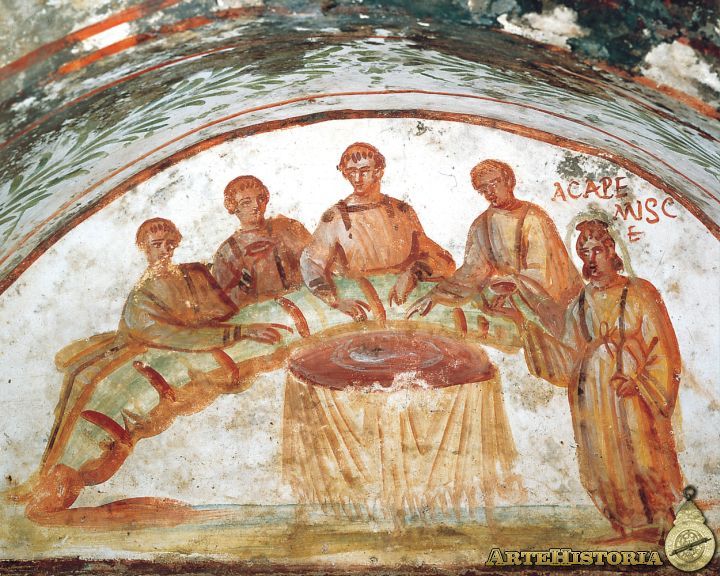
agapecatacombpainting

Posted in Uncategorized | Comments Off on So will I save you

Turning our hearts to the Lord

25 February OS 2016 – Wednesday of Cheesefare Week; St. Tarasios of Constantinople

At the Sixth Hour today, we hear the first Old Testament reading from the Triodion, Joel 2: 12-26. St. Theophan the Recluse selects verses 12 to 17 for his commentary:

Therefore also now, saith the LORD, turn ye even to me with all your heart, and with fasting, and with weeping, and with mourning: And rend your heart, and not your garments, and turn unto the LORD your God: for he is gracious and merciful, slow to anger, and of great kindness, and repenteth him of the evil.
Who knoweth if he will return and repent, and leave a blessing behind him; even a meat offering and a drink offering unto the LORD your God? Blow the trumpet in Zion, sanctify a fast, call a solemn assembly: Gather the people, sanctify the congregation, assemble the elders, gather the children, and those that suck the breasts: let the bridegroom go forth of his chamber, and the bride out of her closet. Let the priests, the ministers of the LORD, weep between the porch and the altar, and let them say, Spare thy people, O LORD, and give not thine heritage to reproach, that the heathen should rule over them: wherefore should they say among the people, Where is their God?

 St. Theophan writes,

Who now hearkens unto this voice, resounding in the Church? If on the city squares a thunderous voice should resound from heaven, saying, “Spare yourselves, O people, so that the Lord will spare you!” – perhaps someone would hear it and awake from his ecstasy of pleasures, lusts, and wine. The priests do not cease to plead, “Spare us, O Lord!” But from the Lord comes the just yet terrible answer, “I will not spare, for there are none seeking to be spared.” All are standing with their backs to the Lord; they have turned from Him and forgotten Him. Thoughts for Each Day of the Year, p. 51

This judgment may seem severe to us, and yet we know from the life and letters of Theophan the Recluse that he was not a harsh or fanatical religious figure, quite the contrary.   He is speaking here not from passionate anger but from pain of heart. In his time, in Russia, there were thousands of churches, hundreds of monasteries, and abundant opportunities for people to learn and practice the Orthodox Faith.   There was a minority seeking genuine spiritual life. But the vast majority of the country’s leadership, and a critical mass of its ordinary people, had settled into an external, perfunctory performance of their religious duties masking either outright unbelief (in the case of the educated classes) or pagan superstition (in the case of the peasants).   These were the spiritual conditions that prepared the way for the satanic Bolshevik revolution of 1917.

Though we do not live in an Orthodox society, much is still given us. We have abundant Orthodox literature now in English. Even though we may not have a parish near us, or our parish has a very limited liturgical schedule, we can learn to read services at home. Though we may be physically isolated, we providentially have convenient means to correspond and converse with our father confessor and like-minded Orthodox friends. We can carry our prayer rope, say the Jesus Prayer as much as possible, and constantly ponder on death and God’s judgment.   Though non-Orthodox people surround us, we can practice our Faith among them by praying for them and by praying the Lord to send into our lives people whose hearts are open to Him. Despite all of America’s problems, it is providentially a land where we now have the freedom to educate our children as we see fit. And we have before our eyes, thanks to communication technology, the spectacle of the entire confused and suffering world, the results of the terrible apostasy lamented by St. Theophan that occurred not only in Russia but also throughout the Orthodox world. We have all the written, audio-recorded, and photographic historical testimony needed to understand our true situation and how we got into this mess.   We should be highly motivated to get out.

Let us therefore rend our hearts and not our garments (though, frankly, some garment rending would not be out of order as well), and turn to the Lord our God. In the few days left before Great Lent begins, let us set aside some time to ponder on our spiritual state, examine honestly the way we conduct our daily lives at home and at work, and make a firm resolution to stick to a daily routine of prayer and spiritual reading. Every Great Lent, every Holy Week, every Pascha, may be our last. Now is the acceptable time. Now is the day of our salvation.

Καλή Σαρακοστή! A blessed Forty Days to all!

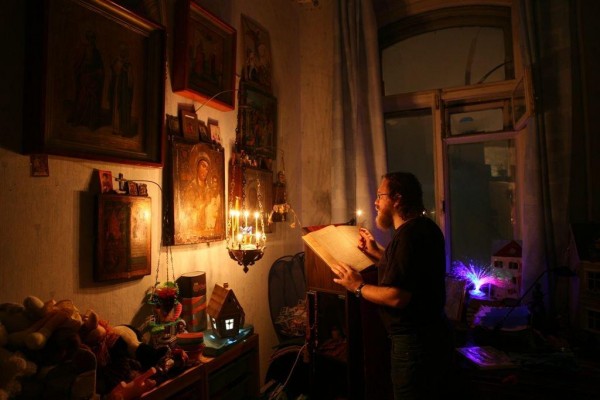
homeprayer

Posted in Uncategorized | Comments Off on Turning our hearts to the Lord

Overcoming the world

19 February OS 2016 – Thursday of Meatfare Week; Holy Apostles Archippus and Philemon, Holy Martyr Apphia

Today’s reading from the Apostolos is I John 4:20 – 5:21.   At one point, the Beloved Disciple writes as follows:

For this is the love of God, that we keep his commandments: and his commandments are not grievous. For whatsoever is born of God overcometh the world: and this is the victory that overcometh the world, even our faith. Who is he that overcometh the world, but he that believeth that Jesus is the Son of God (I John 5: 3-5)?  

St. Theophan the Recluse, in commenting on this passage, speaks of the victory of Faith in overcoming the love of the world:

“This is the victory that overcometh the world, even our Faith (I John 5:4) – the Christian Faith – To overcome the world – what does this mean? Not to exterminate all those who love the world, or to annihilate and destroy all which is loved by the world. It means rather that while living amidst those who love the world and moving amidst customs loved by the world, we should live as ones alien to everyone and everything. As soon as you have rejected the world and everything worldly, you have by this very action overcome the world. But what teaches you to reject the world and what gives you strength for this? Our [i.e., the Orthodox] Faith. It discloses the destructiveness of the delusions of the world and inspires the desire to free oneself of their nets. Then, when one resolves to break these bonds, when one repents and approaches the Mysteries of Renewal – Baptism or Repentance – faith allows him to mystically feel the sweetness of a life opposed to the world, a sweetness with which all the pleasures of the world cannot in any way enter into comparison.   As a result, a loathing for everything worldly dwells in the heart, which is actually victory over the world. But in this mystical action, as a result of which loathing for the world is born, the power to abide steadfastly in this loathing and alienation from the world is also granted; and this is a decisive and lasting victory. – Thoughts for Each Day of the Year, pp. 46-47

Most Orthodox Christians, though formally adherents of an otherworldly Faith, turn to an otherworldly frame of mind only when they have been disappointed in this life. Things are not going their way – family problems, health problems, financial worries, etc. – and they begin to think, “Well, perhaps this life is not all there is. I need to look elsewhere for some kind of happiness that won’t go away.” This thought, that one’s real life is elsewhere, should console one greatly, for it implies that life’s troubles have an end, and that one does not have to solve them all, which is, after all, humanly impossible. This thought gives one hope, and one begins to realize that otherworldliness is a normal and happy frame of mind. It is the only way of looking at life that makes sense.

When we have this realization, however, we have to seize on it and do something about it, for the love of this world usually comes back strong as soon as worldly matters begin to go even a little bit well for us.   We must establish a prayerful and vigilant life. We must, as St. Theophan says, abide steadfastly in this loathing and alienation from the world; we have to live as exiles and pilgrims passing through a foreign land.  We acquire this mental abiding through doing God’s commandments, which hurts at first, because we are so worldly,  but become very sweet to us after awhile, so that we cannot imagine living without them.  As the Theologian says, “…His commandments are not grievous.”

As Great Lent approaches, let us ask the Lord to give us just a little whiff of the fragrance of Paradise, our true home, to motivate us to undertake the struggle of prayer and fasting.   Orthodoxy is so beautiful, and we make the effort to enjoy so little of it!   We need to ask fervently for the grace of the divine eros, the love and longing for that which is most lovable, that which is infinitely lovable, which is God Himself. Human beings were made to love, and the need to do so is insatiable, until it is satiated with God. When we put Him first, then all of our lesser loves make sense; they become transfigured by the love of God and are transformed from idols into means of grace.

detail_mysticalsupper_johnonLord's breast

Posted in Uncategorized | Comments Off on Overcoming the world

The foundation of all spiritual life

28 January OS 2016 – Ss. Ephraim and Isaac the Syrians

The reading from the Gospel for our saints of today is the usual passage read for a monastic saint.

The Lord said to His disciples: All things are delivered unto me of my Father: and no man knoweth the Son, but the Father; neither knoweth any man the Father, save the Son, and he to whomsoever the Son will reveal him. Come unto me, all ye that labor and are heavy laden, and I will give you rest. Take my yoke upon you, and learn of me; for I am meek and lowly in heart: and ye shall find rest unto your souls. For my yoke is easy, and my burden is light. –Matthew 11: 27-30

 In commenting on this passage, St. Theophylact says the following about verses 29 and 30, regarding the easy yoke and light burden laid upon Christ’s disciples:

The yoke of Christ is humility and meekness. For he who humbles himself before all men has rest and remains untroubled; but he who is vainglorious and arrogant is ever encompassed by troubles as he does not wish to be less than anyone but is always thinking how to be esteemed more highly and how to defeat his enemies. Therefore the yoke of Christ, which is humility, is light, for it is easier for our lowly nature to be humbled than to be exalted. But all the commandments of Christ are also called a yoke, and they are light because of the reward to come, even though for a time they appear heavy. The Explanation by Blessed Theophylact of the Holy Gospel According to St. Matthew, p. 99 (Chrysostom Press, House Springs, MO 1992)

We normally do not think of ourselves as vainglorious and arrogant people strutting through life, constantly seeking praise and scheming against our enemies.   The passion of vanity, however, is in fact a deep-seated problem for nearly everyone; it simply comes with the human condition.   Most if not all our irrational fears and anxiety are related to this passion.

Pride is the most deep-seated of the passions. It is the dumb conviction of the heart that the heart is the source of its own life. Vanity is a secondary or derivative aspect of pride, operating in the faculties of the mind, especially memory and imagination: it is the false image, the collection of erroneous ideas we have about ourselves, whether positive or negative. It is the mental idol of the ego on the basis of the deep-seated pride in the heart, formed by misuse of the mind. You might think of the ego as a grotesque pagan statue on a grim iron pedestal: the pedestal is pride of heart, and the statue is the false self, the ego, the portrait of oneself formed by the mind according to vanity. When others throw stones at the statue, we are enraged, because it is our god.   We cannot help throwing stones at it ourselves, because it is indeed hateful, and this is what leads to depression and despair.   If one’s god is hateful, what is the point of life?

If one wants to conduct an active and conscious spiritual life rather than treating the duties of faith only outwardly, it is essential to recognize that everyone, including oneself, suffers from pride and vanity.   We Orthodox Christians, however, if we have not de-activated the grace of baptism through sin (we never lose it, except by apostasy, but we can render it non-functioning – not dynamic though retaining its potency – through serious and un-repented sins which separate us from Holy Communion), have the energy of God within us to become aware of these passions, to take steps by God’s grace to heal them, and, by God’s grace, to transform them – to transform pride into complete, final, spontaneous confession from the depths of the heart that God is God and we are not, and to transform vanity into accurate self-knowledge in our daily lives. Taken together, this is called humility, and with humility come joy, gratitude, meekness, courage, patience, and all the radiant ensemble of the virtues.

What is step one?   To get rid of pride and vainglory, we have to undertake a difficult spiritual struggle, and the minute we make the resolve to do so, our pride and vainglory are jumping up and saying, “I’ll do it! I’ll struggle and get rid of pride and vainglory!”   A real puzzle, is it not? How do we get rid of the problem that we are unconsciously and instinctively convinced is the power that solves our problems? So the first step in spiritual life is to renounce reliance on oneself and to place all-daring trust and complete reliance on God. This is the subject of chapters two, three, and four of a book we should all have on our shelves, Unseen Warfare, as edited by St. Nicodemus of the Holy Mountain and St. Theophan the Recluse.   Always better to obtain and read the book, of course (I found used copies of the St. Vladimir Seminary Press paperback available online just now for as little as fourteen dollars), but one could also read it on the screen here:  http://www.stnicholasdc.org/files/Orthodoxy/Unseen-Warfare.pdf

Here is the beginning of chapter two. Please do read, and join me in trying to do what the author says:

“Not to rely on oneself is so necessary in our struggle, my beloved brother, that without this, be assured, not only will you fail to gain the desired victory, but you will be unable to resist the smallest attack of the enemy. Engrave this deeply in your mind and heart. Since the time of the transgression of our forefather, despite the weakening of our spiritual and moral powers, we are wont to think very highly of ourselves. Although our daily experience very effectively proves to us the falseness of this opinion of ourselves, in our incomprehensible self-deception we do not cease to believe that we are something, and something not unimportant. Yet this spiritual disease of ours, so hard to perceive and acknowledge, is more abhorrent to God than alt else in us, as being the first offspring of our self-hood and self-love, and the source, root and cause of all passions and of all our downfalls and wrong-doing. It closes the very door of our mind or spirit, through which alone Divine grace can enter, and gives this grace no way to come and dwell in a man. And so it withdraws from him. For how can grace, which comes to help and enlighten us, enter that man, who thinks of himself that he is something great, that he himself knows everything and needs no outside help?—May God preserve us from this disease and passion of Lucifer!—God severely reprimands those who are stricken with this passion of vainglory and self-esteem, saving through the prophet: Woe unto them that arc wise in their own eyes, and prudent in their own sight” (Isaiah v. 21). And the Apostle tells us: ‘Be not wise in your own conceits’ (Rom. xii. 16).

“While God abhors this evil conceit in us, there is nothing He loves and desires to see in us more than a sincere consciousness of our nothingness and a firm and deep-felt conviction that any good we may have in. our nature and our life comes from Him alone, since He is the source of all good, and that nothing truly good can ever come from ourselves, whether a good thought or a good action. Therefore He takes care to plant this heavenly seed in the hearts of His beloved friends, urging them not to value themselves and not to rely on themselves. Sometimes He does this through the action of grace and inner illumination, or sometimes through external blows and tribulations’ sometimes through unexpected and almost unconquerable temptations, and sometimes by other means, not always comprehensible to us. Yet, although expecting no good from ourselves and not relying on ourselves is the work of God in us, we on our side must make every effort to acquire this disposition, doing all we can, all within our power. And so, my brother, I offer you here four activities, by means of which, with God’s help, you may end by acquiring disbelief in yourself, and learn never to rely on yourself in anything.

“(a) realise your nothingness and constantly keep in your mind the fact that by yourself you can do nothing good which is worthy of the kingdom of heaven. Listen to the words of the wise fathers: Peter of Damascus assures us that ‘nothing is better than to realise one’s weakness and ignorance, and nothing is worse than not to be aware of them’ (Philokalia). St. Maximus the Confessor teaches: ‘The foundation of every virtue is the realisation of human weakness’ (Philokalia). St. John Chrysostom says: ‘He alone knows himself in the best way possible who thinks of himself as being nothing.’

“(b) Ask for God’s help in this with warm and humble prayers; for this is His gift. And if you wish to receive it, you must first implant in yourself the conviction that not only have you no such consciousness of yourself, but that you cannot acquire it by your own efforts; then standing daringly before the Almighty God, in firm belief that in His great loving kindness He will grant you this knowledge of yourself when and how He Himself knows, do not let the slightest doubt creep in that you will actually receive it.

“(c) Accustom yourself to be wary and to fear your innumerable enemies whom you cannot resist even for a short time. Fear their long experience in fighting us, their cunning and ambushes, their power to assume the guise of angels of light, their countless wiles and nets, which they secretly spread on the path of your life of virtues.

“(d) If you fall into some transgression, quickly turn to the realisation of your weakness and be aware of it. For God allows you to fall for the very purpose of making you more aware of your weakness, so that you may thus not only yourself learn to despise yourself, but because of your great weakness may wish to be despised also by others. Know that without such desire it is impossible for this beneficent self-disbelief to be born and take root in you. This is the foundation and beginning of true humility, since it is based on realisation, by experience, of your impotence and unreliability.”

By the prayers of Ss. Ephraim and Isaac, of Ss. Nicodemus and Theophan, and all the saints,  may we begin the blessed path towards saving humility.  Amen.

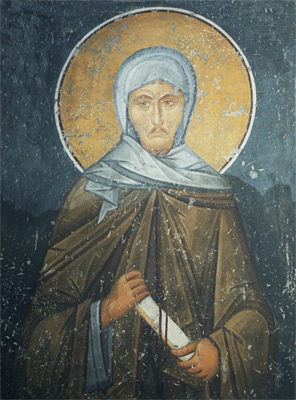
ephremsyrus

Posted in Uncategorized | Comments Off on The foundation of all spiritual life