Manipulative religion vs the True Faith

4 May OS 2016 – Third Tuesday of Pascha; Holy Virgin Martyr Pelagia of Tarsus

Christ is Risen!

In today’s reading from the Acts of the Apostles (Acts 8:5-17), we meet Simon Magus for the first time, as he receives baptism from the Apostle Philip:

Then Philip went down to the city of Samaria, and preached Christ unto them.And the people with one accord gave heed unto those things which Philip spake, hearing and seeing the miracles which he did. For unclean spirits, crying with loud voice, came out of many that were possessed with them: and many taken with palsies, and that were lame, were healed. And there was great joy in that city. But there was a certain man, called Simon, which beforetime in the same city used sorcery, and bewitched the people of Samaria, giving out that himself was some great one: To whom they all gave heed, from the least to the greatest, saying, This man is the great power of God. And to him they had regard, because that of long time he had bewitched them with sorceries. But when they believed Philip preaching the things concerning the kingdom of God, and the name of Jesus Christ, they were baptized, both men and women. Then Simon himself believed also: and when he was baptized, he continued with Philip, and wondered, beholding the miracles and signs which were done. Now when the apostles which were at Jerusalem heard that Samaria had received the word of God, they sent unto them Peter and John: Who, when they were come down, prayed for them, that they might receive the Holy Ghost. (For as yet he was fallen upon none of them: only they were baptized in the name of the Lord Jesus.) Then laid they their hands on them, and they received the Holy Ghost.

It was a great triumph for St. Philip, at the time, to convert so great a sorcerer as Simon.   Yet the triumph proved short-lived, for, as we shall read tomorrow, Simon immediately proposed to St. Peter that he purchase the Holy Spirit from the Apostles. (Thus our word “simony,” the buying of priestly ordination or of the Mysteries in general). Simon went on, with Nicholas of Antioch (Nicholas the Proselyte, one of the seven deacons, who fell away and founded the sect of “Nicolaitans” condemned by the Lord in the Apocalypse), to become one of the fathers of many of the early heresies associated with Gnosticism and described by St. Irenaeus of Lyons (+180, the disciple of St. Polycarp, who in turn had been the disciple of St. John the Theologian) in his great work Against Heresies.

What happened? Was Simon’s conversion totally hypocritical?   St. Theophan opines that it was not cynicism, not conscious spiritual criminality or hucksterism involved here, but that Simon carried too much “baggage” with him, and he could not give it up, and so he fell into delusion:

“Then Simon himself believed also: and when he was baptized, he continued with Philip (Acts 8:13).” He both believed and was baptized, but nothing came of him. One must think that there was something not quite right in the formation of his faith. Sincere faith is the renunciation of your mind. You must bare your mind and present it to faith as a clean slate, so that faith might inscribe itself on the mind as it is, without any admixture of alien phrases and statutes. When one’s former beliefs remain in the mind, then a mixture occurs after the tenets of the Faith are written there. The consciousness will be confused between the mind’s sophism and the operations of faith. Simon was therefore a model for all heretics, and such are all who enter the realm of faith with their own sophistries – both then and now. They are confused in faith and nothing comes of them other than harm: for themselves, when they remain silent; for others, when this confusion is not kept within themselves alone, but breaks out, due to their thirst to be teachers. Hence there always turns out to be a party of people more or less in error about the Faith, with a wretched surety of their infallibility, and with a dangerous drive to remake everyone their own way. Thoughts for Each Day of the Year, p. 95.

When St. Theophan writes, “Sincere faith is the renunciation of your mind,” he does not mean that our Faith is something irrational (recall his comments last Wednesday on the reasonableness of the Resurrection claims and the lack of common sense on the part of those who deny them). What he means is that we have to learn real rationality and give up our delusions and twisted ideas. Prudently, cautiously, we must distrust fallen reason, with its endless capacity for creating false paths and dead ends by false logic, and come with childlike love and trust to the Church, to have our reason healed by grace and taught the truth by Holy Tradition. Thus the mind becomes what it was meant to be – a pure mirror of God’s Truth.

When we semi-convert to Orthodoxy (either as adult converts or as “cradle Orthodox” who are trying to make the transition from nominal to heartfelt faith), mixing it with our own fallen ideas (which are really not our own but are “programming” from the world and from demons), we run the real danger of ending up like Simon, who became like the wretched man described by Our Lord in the Gospel, freed from one demon only to have seven come back to possess him, all of them worse than the first.

Simon Magus could not give up his magical way of thinking about religion.   It seemed perfectly normal to him to buy the power of the Holy Spirit, which apparently he regarded simply as a spirit more powerful than the ones he had manipulated previously to work demonic miracles.   Previously he had only the “Chevys and Fords” to work with. Now he was going to buy the top of the line, the “Cadillac and Lincoln” of the spirit world (yes, I’m writing this from Detroit!). He had not, then really converted, really given his heart to Christ. He was just looking for a better platform for his career of magical arts.   It is quite possible, even probable, that he believed that the Apostles saw matters much the same way. He was probably surprised when they were indignant at his proposal to buy into what he saw as their magicians’ club.

None of us is embarked on a conscious career of sorcery (I hope!). But all of us, because we are human beings, carry a certain piece of baggage common to fallen nature: Deep down, somewhere, is that pride and vanity that says that we can make a deal with God, manipulate Him somehow to give us an independent franchise with His seal of approval, so that we can have the Orthodox brand but really go off and do our own thing while invoking His power and authority to do so. This is openly manifest in the epidemic we see all around us today, of entire fallen synods of “Orthodox” bishops and their natural fellow travelers, modernist academics on the left and false elders on the right – all alike on a disastrous “power trip” making them heirs of Simon Magus. Each of us, however, in the depths of his heart, has to fight the urge to use God rather than to submit to Him; each of us has to crucify his fallen reason and his rebellious will, in order to remain in the Church of the Apostles and to retain the grace of the Holy Spirit.

Let us, with fear and trembling, remind ourselves daily of our endless capacity for self-deception and the ceaseless temptation to demand control over our lives independent of God’s holy will and providence for us. By God’s grace, un-bought and un-buyable, may we always remain in the true confession of Faith, free of all admixture of error, and may we always obey His holy, pleasing, and perfect will.
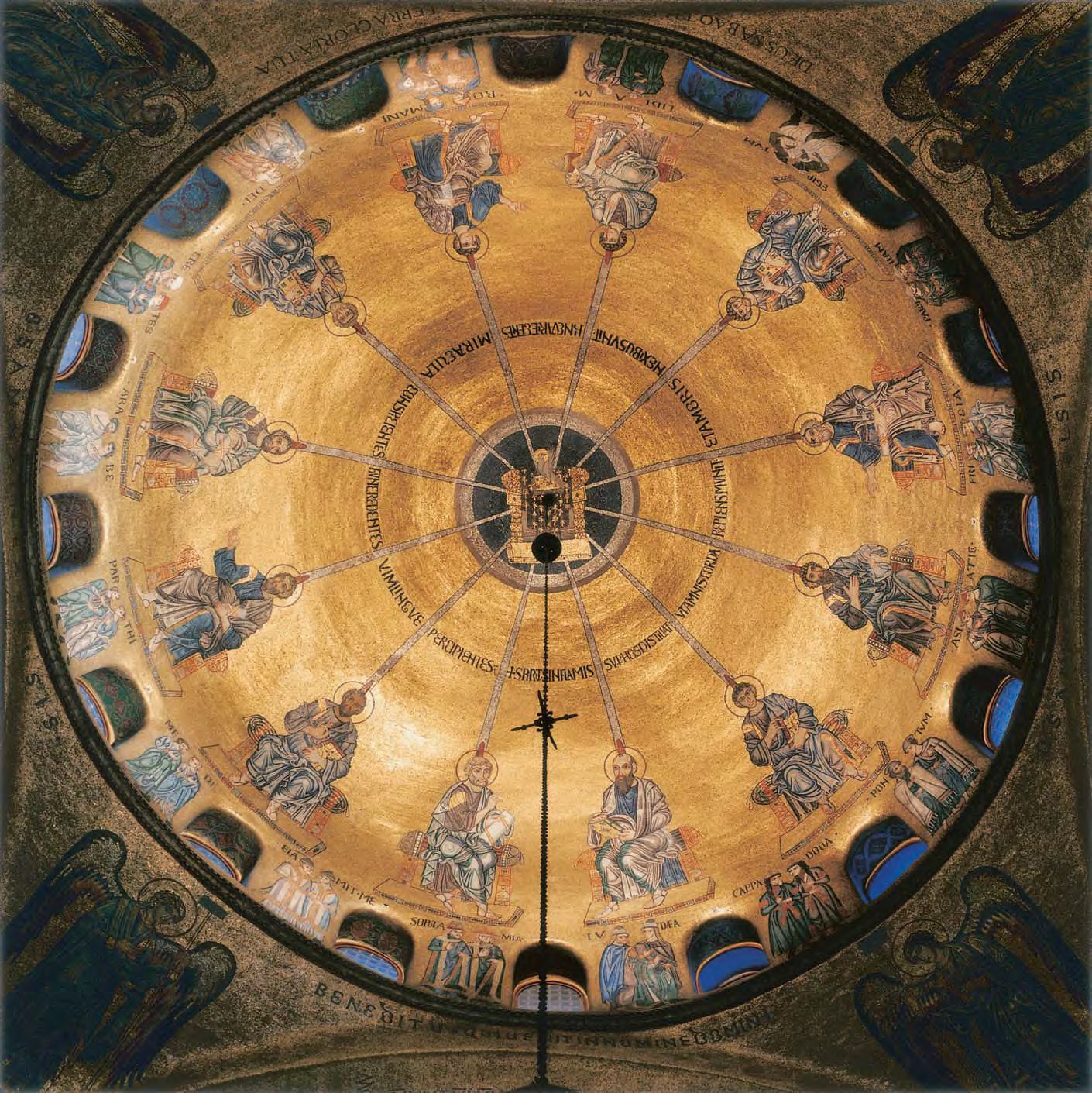
pentecost-dome-st-marks_nationsunderfeet

Posted in Uncategorized | Comments Off on Manipulative religion vs the True Faith

Life-giving works

29 April OS 2016 – Thursday of Thomas Week; Holy Apostle Jason, St. Basil of Ostrog

Christ is Risen!

Today’s Gospel reading, John 5:24-30, is the passage we read at the funeral service:

The Lord said to the Jews which came to Him, Verily, verily, I say unto you, He that heareth my word, and believeth on him that sent me, hath everlasting life, and shall not come into condemnation; but is passed from death unto life. Verily, verily, I say unto you, The hour is coming, and now is, when the dead shall hear the voice of the Son of God: and they that hear shall live. For as the Father hath life in himself; so hath he given to the Son to have life in himself; And hath given him authority to execute judgment also, because he is the Son of man. Marvel not at this: for the hour is coming, in the which all that are in the graves shall hear his voice, And shall come forth; they that have done good, unto the resurrection of life; and they that have done evil, unto the resurrection of damnation. I can of mine own self do nothing: as I hear, I judge: and my judgment is just; because I seek not mine own will, but the will of the Father which hath sent me.

 St. Theophan the Recluse, commenting on the Lord’s words, elucidates the nature of the Dread Judgment:

“And they shall come forth: they that have done good, unto the resurrection of life; and they that have done evil, unto the resurrection of damnation (John 5:29).” This is how everything ends! As each river flows into its own sea, so the flow of each of our lives comes, at last, to a place in accordance with its nature. Those who will be resurrected unto life will also be at the Judgment; but the Judgment will only seal their justification and the fact that they are appointed to life, while the others will be resurrected only to hear their condemnation to eternal death. Their life and death are characterized even now – because some perform living works, while others perform dead and deadening works. Living works are those which are done according to the commandments, with joy of spirit, unto the glory of God. Dead works are those which are done in opposition to the commandments, with forgetfulness of God, to please oneself and one’s passions. Dead works are all those which, although, in form they may not oppose the commandments, are done without any thought about God and eternal salvation, according to some aspect of self-love. God is life; only what contains part of Him is alive. And so whoever has only dead and deadening works is bound directly for death, and on the last day will come out into the condemnation of death; but whoever has all living works is bound for eternal life, and on the last day will come and receive it. Thoughts for Each Day of the Year, pp. 91-92

Neither God nor man needs our works. Works are only a means to an end, a spiritual workout routine, designed to bring about a certain state of soul, but only when used properly. God wants our hearts.

The foundation of our salvation is Faith in the Son of God, from which flow living and life-giving works, characterized by forgetfulness of self, complete dependence on God’s grace, and the determination to do His holy will.   Apart from the true Faith in the Son of God, there is no salvation.   A man who spends his life building a thousand hospitals for the poor and gives everything he has to help others, but who does it not in obedience to God’s Word and without Faith in the Son of God, but based on some humanistic code of ethics, has only dead works, and on the Last Day he will end up where dead works lead. Every good deed he does is another nail in his coffin, because it increases his pride. A man who has led a selfish life but awakens to his spiritual peril, has a profound conversion to the Orthodox Faith, and manages to do a little something for others, in the name of Jesus and for His glory alone, all the while thinking himself utterly unworthy and unable to do anything worthwhile…this one has a firm hope of salvation.

If you are ever tempted to believe that you have “made it,” and that your works make you pleasing to God, pick up St. Matthew, chapters five through seven, and read the Sermon on the Mount. Based on the measuring stick described there – love of enemies, absolute absence of impure thoughts, absolute absence of anger, complete non-possessiveness, absolute forgiveness of those who have wronged you, complete love of neighbor and forgetfulness of self – ask yourself, Do you live up to the Lord’s command to be perfect as the heavenly Father is perfect?   No? Well, join the club: St. Ignaty Brianchaninov points out that even the greatest saints are imperfect in regards to the commands of the Gospel. He also points out, however, that Orthodox Christians will be judged by Christ at the Dread Judgment, based on these same commands of the Gospel. Where does that leave us? It leaves us utterly dependent on the grace and mercy of God.

Now juxtapose all of this with the Lord’s description of His Second Coming at the Dread Judgment in St. Matthew, chapter 25. The blessed are oblivious to having done any good; the damned are oblivious to their failure. As it turns out, the blessed have accomplished a great deal, but they did not notice. They did not think they were doing anything special. They have acquired humility.

Let us this day, this hour, this minute, resolve to love God above all, and to do His holy will.   It is impossible to exaggerate the great power we acquire when we are determined to do God’s will.   With this determination comes that forgetfulness of self, that humility, which characterizes all works that are truly pleasing to God. With it comes the power of His infinite, divine grace, which alone saves man.

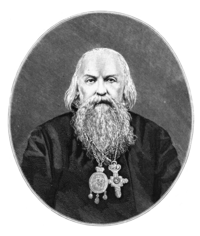
Ignatius_Brianchaninov

Posted in Uncategorized | Comments Off on Life-giving works

Be like the Apostles – just go for it!

28 April OS 2016 – Wednesday of Thomas Week; Holy Nine Martyrs of Cyzicus

Christ is Risen!

In today’s reading from Acts, the Holy Apostles Peter and John tell the Sanhedrin that they will not remain silent about the Resurrection of the Lord Jesus in order to stay out of trouble:

In those days, [when the Sanhedrin] saw the boldness of Peter and John, and perceived that they were unlearned and ignorant men, they marvelled; and they took knowledge of them, that they had been with Jesus. And beholding the man which was healed standing with them, they could say nothing against it.  But when they had commanded them to go aside out of the council, they conferred among themselves, Saying, What shall we do to these men? for that indeed a notable miracle hath been done by them is manifest to all them that dwell in Jerusalem; and we cannot deny it. But that it spread no further among the people, let us straitly threaten them, that they speak henceforth to no man in this name. And they called them, and commanded them not to speak at all nor teach in the name of Jesus. But Peter and John answered and said unto them, Whether it be right in the sight of God to hearken unto you more than unto God, judge ye. For we cannot but speak the things which we have seen and heard. So when they had further threatened them, they let them go, finding nothing how they might punish them, because of the people: for all men glorified God for that which was done. For the man was above forty years old, on whom this miracle of healing was shewed. – Acts of the Apostles 4: 13-22

St. Theophan the Recluse comments on the reliability of their witness and its durability over two millennia:

“Whether it be right in the sight of God to hearken unto you more than unto God, judge ye. For we cannot but speak the things which we have seen and heard (Acts 4:19-20).” Thus spoke the Holy Apostles Peter and John to the authorities when the latter forbade them to speak about the resurrected Lord Jesus, after they had healed a man lame from childhood by His name. They did not fear threats, for the obviousness of the truth did not allow them to be silent: “We have seen and heard,” they said, “and our hands have handled,” as St. John later added (see I John 1:1). They are eyewitnesses. According to the principle of human knowledge, eyewitnesses are the first reliable witnesses of the truth. In this regard, there is not a single field of human knowledge that has similar witnesses. Eighteen and a half centuries [the author is writing in 1881] have passed since that time, and the power of their testimony has not diminished at all, and consequently the obviousness of the truth testified by them has not diminished. If people fall away into faithlessness – and now there are very many who are falling away – they fall away for no reason other than a lack of good sense. They do not want to examine things and are carried away by phantoms, to which the delusion of a depraved heart willingly imparts some probability.   Poor souls! They are perishing, fancying that they have landed at last on the right track, and they rejoice especially that they have entered this track first and become leaders for others. But it is no great joy to sit “in the seat of the pestilent (Ps. 1:).”   – Thoughts for Each Day of the Year, pp. 90-91

When skeptics attack the credibility of the Resurrection, they do so only on the basis of the assumption that such things cannot happen. They cannot do so on the basis of the rules of evidence, for it is the most thoroughly attested event of all ancient history. As St. Theophan says, people who do not believe in it simply lack common sense, and they choose not to believe in it motivated by some kind of interior depravity.   The idea that our faith is absurd but we choose to believe it anyway, as Kierkegaard and some “Christian existentialists” have taught, is simply not true.

The Sanhedrin knew that they did not have a leg to stand on.   They lacked the only conclusive evidence against the Resurrection – the dead body of Jesus.   They knew that the only witnesses in their corner, the Roman guard detachment at the Tomb, had been suborned (by them!) to perjure themselves. They lacked Scriptural arguments, because Jesus had obviously fulfilled all the Old Testament prophecies of the Messiah. They faced men whose absolute certainty gave them moral fearlessness and who were working undeniable miracles whose power they insisted came exclusively from the Crucified and Resurrected One.  So they either had to repent and believe the Apostles, or they had to resort to the line of moral persuasion employed by their type in every generation: might makes right, we are in charge here, and therefore you had better shut up if you know what’s good for you.

The Sanhedrin’s insurmountable problem was that the Apostles did know what was truly good for them, and that it was not the mere continuation of an untroubled biological existence.   They believed in the Resurrection and the Life of the Age to Come, and the Risen Lord was with them every moment by His Spirit, confirming their belief. What ultimate threat, really, did the Sanhedrin have to frighten the Apostles with, except to send them off to where they, in fact, wanted to be – in Paradise, with Christ and the Good Thief? The “canonical” leaders of the people could either leave them alone, make their lives difficult, which would only add to their joy in being able to suffer for their Master, or kill them and give them the martyr’s crown of glory.

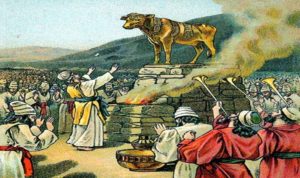
The reason why today’s global Sanhedrin does have power over us – financial, political, cultural, moral, and ultimately spiritual – is that the Christians of the latter times have lost their fiery zeal and love for the Lord, only care about a convenient biological existence, and therefore fear the Sanhedrin. The bad guys have used those two most powerful and always-linked tools of corruption, mammon and sexual license – the two heads of the Golden Calf – to corrupt, weaken, and destroy today’s Christian.   Thus having become depraved in heart, the nominal Christian loses his common sense and denies the Resurrection, if not theoretically then at least practically, in the feelings of his heart, his priorities, and his behavior. The power of the Spirit, so active in the Apostles and in the saints, is not evident, and the true Faith becomes a rare commodity indeed. The Lord predicted these days: “When the Son of Man comes, will He find the Faith on the earth?”

Any serious Orthodox person today must surely be disgusted by the superficiality, boredom, idiocy, and confusion of semi-Orthodox confession and semi-Orthodox life.   Even some poster-boy “World” Orthodox lapdog theologians are getting sick of the whole thing and are starting to reprove their own particular “canonical-hierarchical” errand boys of the global Sanhedrin for their mendacity and lack of faith (“Finally!” one might say. Well, better late than never). We  “True” Orthodox (i.e., those who are still actually and not merely “officially” in the Church) certainly have little to lose, having neither wealth nor the respect of men. Why not just “go for it,” as they say, and be like the Apostles? We have nothing to lose, except sin, death, and hell.

O beloved and most sweet voice of Christ, call us to invincible and joyful Faith in Thy Resurrection!   O Risen Lord, Crucified for our sake, glory be to Thee!

worshiping_the_golden_calffeature

Posted in Uncategorized | Comments Off on Be like the Apostles – just go for it!

My Lord and my God!

26 April OS 2016 – Monday of Thomas Week; Holy Hieromartyr Basil of Amasea, St. Joannicius of Devich, St. Stephen of Perm

Christ is Risen!

The reading today from the Acts of the Apostles (Acts 3: 19-26) is the second half of St. Peter’s sermon to the Jews who gathered on Solomon’s Porch after he had healed the lame man at the Beautiful Gate. Here is the whole passage (Acts 3: 11-26):

In those days: And as the lame man which was healed held Peter and John, all the people ran together unto them in the porch that is called Solomon’s, greatly wondering. And when Peter saw it, he answered unto the people, Ye men of Israel, why marvel ye at this? or why look ye so earnestly on us, as though by our own power or holiness we had made this man to walk? The God of Abraham, and of Isaac, and of Jacob, the God of our fathers, hath glorified his Son Jesus; whom ye delivered up, and denied him in the presence of Pilate, when he was determined to let him go. But ye denied the Holy One and the Just, and desired a murderer to be granted unto you; And killed the Prince of life, whom God hath raised from the dead; whereof we are witnesses. And his name through faith in his name hath made this man strong, whom ye see and know: yea, the faith which is by him hath given him this perfect soundness in the presence of you all. And now, brethren, I know that through ignorance ye did it, as did also your rulers. But those things, which God before had shewed by the mouth of all his prophets, that Christ should suffer, he hath so fulfilled. Repent ye therefore, and be converted, that your sins may be blotted out, when the times of refreshing shall come from the presence of the Lord; And he shall send Jesus Christ, which before was preached unto you: Whom the heaven must receive until the times of restitution of all things, which God hath spoken by the mouth of all his holy prophets since the world began. For Moses truly said unto the fathers, A prophet shall the Lord your God raise up unto you of your brethren, like unto me; him shall ye hear in all things whatsoever he shall say unto you. And it shall come to pass, that every soul, which will not hear that prophet, shall be destroyed from among the people. Yea, and all the prophets from Samuel and those that follow after, as many as have spoken, have likewise foretold of these days. Ye are the children of the prophets, and of the covenant which God made with our fathers, saying unto Abraham, And in thy seed shall all the kindreds of the earth be blessed. Unto you first God, having raised up his Son Jesus, sent him to bless you, in turning away every one of you from his iniquities.

St. Theophan the Recluse contrasts the ignorance of the Jews who killed the Prince of Life with our knowing sinfulness, which is without excuse:

“Repent ye therefore, and be converted, that your sins may be blotted out, when the times of refreshing shall come from the presence of the Lord (Acts 3:19).” Thus spoke the Holy Apostle Peter to the Jews who crucified the Lord, comforting them that they did it out of ignorance [see verse 17, “…I know that through ignorance you did it…”]. But we are crucifying the Lord within ourselves for a second time, not out of ignorance, but through our sins. The Most Merciful One receives us, too, when we repent and turn to Him with all our heart. We did this during Great Lent. Each came running to the Lord with tears of repentance over his sins. The more sincerely one did this, the more strongly he felt the refreshment of forgiveness proceeding from the face of the Lord, through the hand and the word of absolution of God’s priest. Now what is left for us to do? To be on guard against new falls, that we not fall again into the guilt of crucifying the Lord. The Apostle says that heaven has only received the Lord Jesus until the times of the restitution of all things (Acts 3:21). Then He will come again and set forth judgment. With what eyes will those who pierced His side look upon Him? [see Revelation 1:7, “Behold, he cometh with clouds; and every eye shall see him, and they also which pierced him: and all kindreds of the earth shall wail because of him. Even so, Amen.”] Indeed, we too will have to stand in their ranks if we stop bringing forth fruits of repentance and return to our old ways. Thoughts for Each Day of the Year, pp. 89-90

The idea that we are crucifying the Lord afresh by our sins probably does not occur to us often, and perhaps even less often do we consider the very real possibility that at His Second Coming we might look upon His wounds, caused by our sins, and wail too late in useless remorse over our unrepented sins and impending eternal perdition. How can we remember this, and how can we use this remembrance to find our salvation?

The Lord, of course, has risen and ascended on high in glory; He is the Pantocrator Who holds all things in His almighty hand. The Crucifixion is a specific historical event that happened nearly two thousand years ago.   The great contest is over, the Victor is triumphant, and we await His return in glory. Yet the death of the Lord is also a meta-historical event: at the moment He cried, “It is finished,” and gave up His spirit, this moment of His death entered into the Eternal Now. Recall what we read in the Ninth Ode of the Pre-Communion Canon:

The Lord is good. O taste and see! For of old He became like us for us, and once offered Himself as a sacrifice to His Father and is perpetually slain, sanctifying communicants. – from the Jordanville Prayer Book, Archimandrite Lazarus (Moore) translation, p. 316

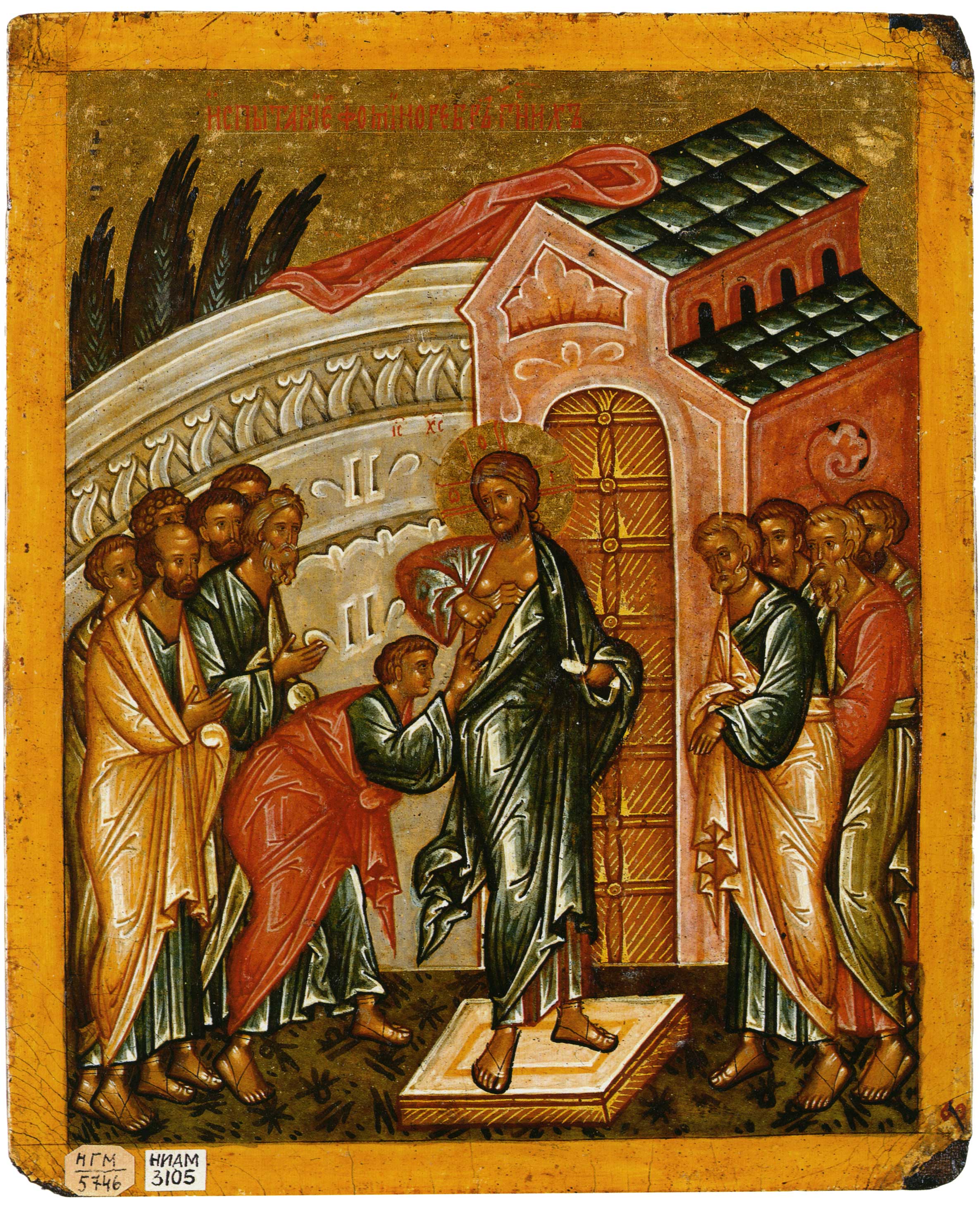
This perpetual slaying of the Lord, this eternal moment of His sacrificial death, is made perpetually present until the end of time – neither physically (of course) nor merely in memory (considered as a function of the limited and fallen human psyche), but mysteriologically (a mode of reality more real than the merely physical or psychological) – in the Bloodless Sacrifice of the Divine Liturgy.  When the awesome descent of the Holy Spirit has occurred at the Epiclesis, and the Slain Victim is lying upon the altar, we can once again make the confession of Thomas, who did not believe until he had gazed upon the pierced Side and Hands that will forever bear the wounds caused by sin. Only then did he say, “My Lord and my God!”

Do I ever, at that moment, bowing my head and heart in fear and trembling, consider that it was my actual sins, in addition to the Ancestral Sin of Adam and Eve, which made this Sacrifice necessary? Not only sin as the inherited state or condition of sinfulness common to all mankind, but my specific thoughts, feelings, choices, actions, and habits which, committed after Baptism, separate me from God and caused the death of the God-Man.

Yes, the Lord Jesus is the mighty Pantocrator, Who created, sustains, and governs all things. But He is also my Friend, Who gave His life for me. What do I not owe Him? I owe Him something beyond everything. I owe Him a debt that can never be repaid, in time or eternity. The least and most I can do is to give Him all that I am. There is no other permissible response. Admittedly, except for martyrs and really thorough penitents like St. Mary of Egypt, this giving usually does not happen all at once. But I must remember that by the hour of death I need make it complete, and the hour of death is unknown. Therefore  each day and each moment I must repeat the confession of Thomas joined to the prayer of the Publican, the Thief, the Harlot, and the Prodigal:

“My Lord and my God!”

“Lord Jesus Christ, Son of God, have mercy on me the sinner!”

thomas_sunday

Posted in Uncategorized | Comments Off on My Lord and my God!

Keeping the grace we have received

21 April OS 2016 – Wednesday of Renewal Week, Holy Hieromartyr Januarius, S. Anastasios of Mt. Sinai

Christ is Risen!

In the reading today from the Acts of the Apostles, St. Peter concludes his great proclamation of the Resurrection delivered to the multitude in Jerusalem on the day of Pentecost:

At that time, Peter said: Ye men of Israel, hear these words; Jesus of Nazareth, a man approved of God among you by miracles and wonders and signs, which God did by him in the midst of you, as ye yourselves also know: Him, being delivered by the determinate counsel and foreknowledge of God, ye have taken, and by wicked hands have crucified and slain: Whom God hath raised up, having loosed the pains of death: because it was not possible that he should be holden of it. For David speaketh concerning him, I foresaw the Lord always before my face, for he is on my right hand, that I should not be moved: Therefore did my heart rejoice, and my tongue was glad; moreover also my flesh shall rest in hope: Because thou wilt not leave my soul in hell, neither wilt thou suffer thine Holy One to see corruption. Thou hast made known to me the ways of life; thou shalt make me full of joy with thy countenance. Men and brethren, let me freely speak unto you of the patriarch David, that he is both dead and buried, and his sepulchre is with us unto this day. Therefore being a prophet, and knowing that God had sworn with an oath to him, that of the fruit of his loins, according to the flesh, he would raise up Christ to sit on his throne; He seeing this before spake of the resurrection of Christ, that his soul was not left in hell, neither his flesh did see corruption. This Jesus hath God raised up, whereof we all are witnesses. Therefore being by the right hand of God exalted, and having received of the Father the promise of the Holy Ghost, he hath shed forth this, which ye now see and hear. For David is not ascended into the heavens: but he saith himself, The LORD said unto my Lord, Sit thou on my right hand, Until I make thy foes thy footstool. Therefore let all the house of Israel know assuredly, that God hath made that same Jesus, whom ye have crucified, both Lord and Christ. – Acts of the Apostles 2:22-36

From the Apostles’ time until now, every generation has heard the proclamation of the Resurrection of Christ, and everyone who has heard has had to decide, “Do I believe or not?”   St. Theophan the Recluse addresses this choice in his message for today:

The mind can prove the truth of the Resurrection through reason based on the Scripture, and a non-believer cannot but admit the power of its arguments, as long as a sense of truth is not yet dead in him. A believer does not need proof, because the Church of God is filled with the light of the Resurrection. Both of these indicators of truth are faithful and convincing. But counter-reasoning can spring up and contradict the mind’s reason, and faith can be trampled and shaken by perplexities and doubts coming from without and arising within. Is there no invincible wall around the truth of the Resurrection? There is. It will occur when the power of the Resurrection, received at Baptism, begins to be actively revealed, as it purges the corruption of the soul and body and establishes within them the beginnings of a new life. He who experiences this will walk in the light of the Resurrection, and anyone speaking against the truth of the Resurrection will seem to him insane, like a person saying in the daytime that it is night. – Thoughts for Each Day of the Year, p. 86

We have all experienced this: Doubts arise, temptations to question our Faith, to wander off somehow. Then by God’s grace we take action: We arise and say our prayers; we do some spiritual reading; we go to Church and experience the joy of the divine services; we express our doubts to our priest or an Orthodox friend, and he gives us an inspired reply. The heart is made firm, the mind clears, we are at peace once again, and we say, “How could I have ever thought that?”

After the effort of Great Lent, and especially the effort of Holy Week and the climactic great vigil of the Resurrection on Holy Saturday night, there is usually a temptation to let down our guard spiritually and lapse into a worldly way of thinking: “Whew, that is over with. I have done my duty, and it was very nice, but now I can go back to ‘normal’ life.” For some, this means perhaps missing daily prayers now and then, or just eating too much, or losing our resolve not to think bad thoughts about others, and other typical daily failings. For others, however, it may mean forsaking any Church attendance and any thought of the Faith for weeks on end – taking a “summer vacation” from being Orthodox.   Light-minded people pass this off as normal behavior, but it is actually not a light matter; it is equivalent to killing yourself in May and hoping that God will resurrect you in September to pick up where you left off. But God is not obligated to do so. God is not mocked. After your little “vacation,” you may not return; you can very easily become that insane person who does not believe in the Resurrection.

It is possible, even, in a sense, easy, however, to maintain our vigilance and not “take a vacation from Church,” because what we have received at Pascha is precisely this power of the Resurrection that St. Theophan writes of, a power given not for show but for work: the power to purge the corruption of soul and body. But to put this power to work, we have to choose to be vigilant and active in our spiritual life, and we have to go deep within, desiring to treasure and nurture inside of us the grace that we have received, not just have a nice experience and then distractedly move on to other things. When we experience the inner resurrection, the cleansing and enlivening of the soul, it brings us great joy. But it is a quiet joy, an inner reality, not a scene in a sentimental religious movie with emotional music playing and special effects enhancing our “religious experience.” It is not manipulated from without; it comes from within. We have become so used to being manipulated, however, as a way of life, that being proactive agents in our spiritual and mental life seems foreign to us.

Let us, then, be proactive and take simple steps to maintain the Paschal grace. Yes, we are not fasting as much now, and the services are shorter. But this little relaxation is provided to give us the energy to be more vigilant, not less. Let us make sure we have our prayer ropes and are saying the Jesus Prayer as much as possible, that we keep up our prayer routines and going to Church, and that in forty days we prepare to go to Communion again, not waiting for the Apostles’ Fast. Also, let us pick out a good spiritual book and do some reading every day.   This simple approach, if taken seriously, will be very pleasing to the Risen Lord, and He will give His grace a thousand-thousand-fold to aid our humble efforts.

St. Peter’s words above are the bold proclamation of the Resurrection. I would like to conclude with something he said in another place, to remind us how to preserve and nurture the grace of the Resurrection within us:

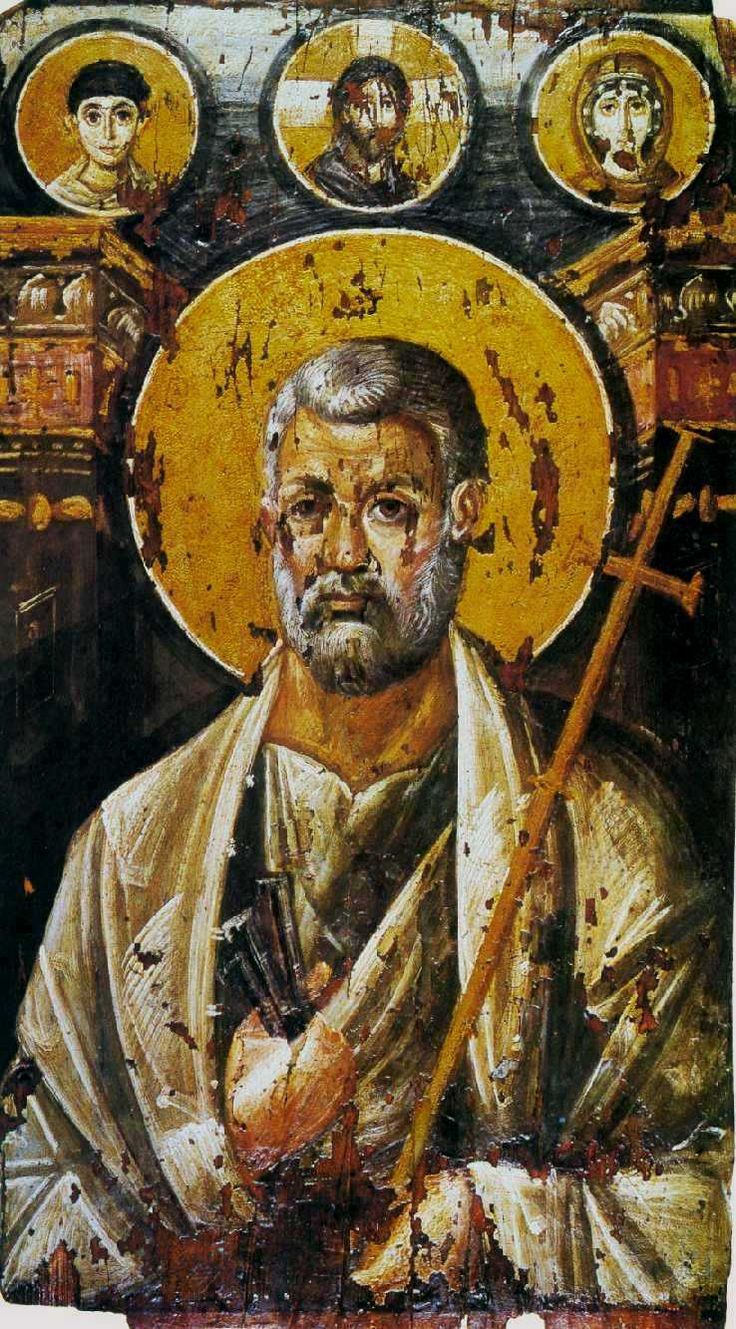
Brethren, Be sober, be vigilant; because your adversary the devil, as a roaring lion, walketh about, seeking whom he may devour: Whom resist, steadfast in the faith. – I Peter 5:8-9

stpeter_sinai

Posted in Uncategorized | Comments Off on Keeping the grace we have received

Authentic hope of salvation

14 April OS 2016 – Wednesday of Holy and Great Week

At the Liturgy of the Pre-Sanctified Gifts today, the Church appoints this reading from St. Matthew:

Now when Jesus was in Bethany, in the house of Simon the leper, There came unto him a woman having an alabaster box of very precious ointment, and poured it on his head, as he sat at meat. But when his disciples saw it, they had indignation, saying, To what purpose is this waste? For this ointment might have been sold for much, and given to the poor. When Jesus understood it, he said unto them, Why trouble ye the woman? for she hath wrought a good work upon me.  For ye have the poor always with you; but me ye have not always. For in that she hath poured this ointment on my body, she did it for my burial. Verily I say unto you, Wheresoever this gospel shall be preached in the whole world, there shall also this, that this woman hath done, be told for a memorial of her. Then one of the twelve, called Judas Iscariot, went unto the chief priests, And said unto them, What will ye give me, and I will deliver him unto you? And they covenanted with him for thirty pieces of silver. And from that time he sought opportunity to betray him. Matthew 26: 6-16

 St. Theophan the Recluse points out that on this day, save for this one instruction to the apostles to allow the repentant woman to anoint Him for burial, the Lord ceased from teaching and was silent until His sublime teaching at the Mystical Supper on Thursday evening.

The Lord was silent on Wednesday and Thursday until Thursday evening, so that at that time He could pour forth words with His disciples and to His disciples – words unlike anything in any writings, not only of human origin but also Divine.  Now, as the Church points out, we hear from the Lord’s mouth that [the disciples] should not hinder His anointing with myrrh, for this served as a preparation for His death.  Before His eyes was only death – the final mystery of His coming to earth for our salvation.  Let us also immerse ourselves in deep contemplation of this mystery-filled death, to draw from it good hope for the salvation of our souls, which are burdened by many sins, and which do not know how to obtain peace from the weariness of our awakened conscience, and from the knowledge of the righteousness of God’s judgment, which is dread and impartial.   – Thoughts for Each Day of the Year, pp. 81-82

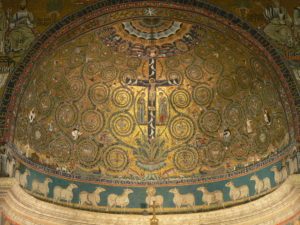
Our thoughts, then, should turn to the Lord’s death for our salvation, from which, as St. Theophan writes, we can draw good hope for the salvation of our souls.  It is only those, however, whose consciences are wearied by the constant awareness of their many sins, who can have this hope.  Those who have silenced their conscience, or who have never developed it, or who have skipped over the agonies of a sensitive conscience in order to go directly to having “spiritual experiences,” have no such hope.  Their claiming that they are “saved” (if they are “evangelicals”) or “deified” (if they are deluded “neo-hesychast” Orthodox) is empty  posturing  – such talk does not correspond to any interior spiritual reality.  Only the deeply repentant soul, grieving over her many sins, can begin to perceive what Christ’s death means for us.

When one has been a priest long enough, one cannot help but to have heard the confession of an extremely pious person who confesses that he has no hope of his salvation.  How can this be?  How can a baptized Orthodox Christian living a pious life, free from any unconfessed mortal sins specified by the canons, and eligible to receive Holy Communion, feel this way?   It is because he is at a point to which the Lord has led him by a long, painful path of self-awareness, the point at which he has exhausted his soul with attempting to be free from sin, from the slightest sin of thought or feeling, and he has come to know, beyond any doubt, by countlessly repeated experiences, by daily failure, that he cannot be completely pure before God, no matter what he does.  Yet no impure thing can enter into God’s presence, for “our God is a consuming fire.”   Therefore, precisely because he does fear God, and precisely because he is aware of his sins, he despairs of salvation.  This is the point at which real spiritual life begins to take place, for it is only at this point that he can understand and accept that salvation is by grace, through the Sacrifice of Christ on the Cross. 

The saints did not picture themselves daily ascending in exalted states of mystical union – though they in fact did enjoy such states – and did not blather constantly about visions – though they in fact did receive authentic visions.   So how did they spend their time?  What did they think about? They were weeping unceasingly over their sins.  They perceived very keenly that they deserved every temporal and eternal punishment, and that only the Unique Sacrifice of Christ on the Cross, in which He offered His Precious Blood to the Holy Trinity for the sins of the whole world, both the Ancestral Sin of our First Parents and every actual sin committed by every man from the beginning of the world until the Second Coming, could possibly save them.  This was what they were always thinking about, not how “deified” they were.   They asked themselves daily and constantly if they were going to be saved.

This is real spiritual life.   And with it comes authentic joy, “the joy of Thy salvation” that Prophet-King David sings of in Psalm 50, welling up into the quiet joy of eternal life.

Let us seize these precious remaining days of Great and Holy Week, in which we will once again live the mystery of the Awesome Sacrifice which alone forgives the sins of men, to beg the Lord to give us simultaneously the most profound awareness of our sins, the absolute conviction of the impossibility of our overcoming them by ourselves, and invincible hope in the power of the Cross to save us.  God desires to save us more than we desire to save ourselves.  Let us rejoice.

Glory to Thy Passion, O Lord!  Glory to Thy Long-suffering!  O Christ our God, glory be to Thee!  

San-Clemente-Apse-Mosaic2

Posted in Uncategorized | Comments Off on Authentic hope of salvation

Be merciful as your Father is merciful

6 April OS 2016 – Tuesday of the Sixth Week of Lent; St. Eutychius, Patriarch of Constantinople

St. Theophan the Recluse chooses a verse from the second reading at Vespers today – Proverbs 21: 3-21, for comment.

“He that stops his ears from hearing the poor, himself also shall cry, and there shall be none to hear him (Proverbs 21:13).” And we often marvel – why does God not listen to our prayers? Here is the reason! Because there surely have been instances when we have stopped our ears from hearing the entreaties of the needy; so the Lord does not hear us either.  It is no great woe if a prayer about something temporal is not heard; but how woeful if the Lord will not listen to us when we begin to pray to Him for the forgiveness of our sins. He will not listen if the cry to Him of those whom we have scorned is stronger than our prayers. We must hurry to avert this extreme misfortune, according to the example of Zacchaeus, whose wise decision caused the Lord to say, “This day is salvation come to this house (Luke 19:9).” – Thoughts for Each Day of the Year, p. 77

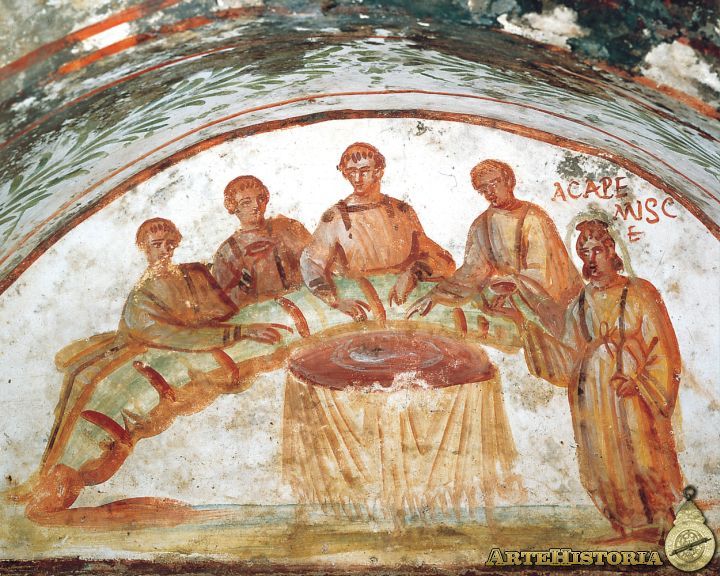
We know that the three main activities of Great Lent, and indeed of all Christian life, are prayer, fasting, and almsgiving. “Almsgiving” translates the Greek eleemosyne, which includes in its meaning the entire realm of acts of charity towards others, both material and immaterial, corporal and spiritual.   We would always know how and in what measure to give to others, both from our material substance and from our time and efforts, if we had the Lord’s commandment constantly in mind, “Be ye therefore merciful, as your Father also is merciful.”   We would pray always to have the prudence to act for the true good of the person in front of us, and we would so act.   What prevents this is distraction from prayer and anxiety over our own welfare. We are not paying attention to what is really going on in our life, being consumed by surface realities, and we are enslaved to passions whose root is sinful self-love.

To tackle all this is a tall order, but to start is simple.   At the beginning of each day, make your Cross and ask the Lord sincerely to show you how to do His holy will in regard to those around you.   Also, consider adding this marvelous prayer, popularized by the Holy Elders of Optina, to your morning prayers, for it “covers all the bases”:

Grant unto me, O Lord, that with peace of mind I may face all that this new day is to bring. Grant unto me to dedicate myself completely to Thy Holy Will.For every hour of this day, instruct and support me in all things. Whatsoever tidings I may receive during the day, do Thou teach me to accept tranquilly, in the firm conviction that all eventualities fulfill Thy Holy Will. Govern Thou my thoughts and feelings in all I do and say. When things unforeseen occur, let me not forget that all cometh down from Thee. Teach me to behave sincerely and rationally toward every member of my family, that I may bring confusion and sorrow to none. Bestow upon me, my Lord, strength to endure the fatigue of the day, and to bear my part in all its passing events. Guide Thou my will and teach me to pray, to believe, to hope, to suffer, to forgive, and to love. Amen.

So, we have asked God’s guidance to do for others, in love, what is for their true good, throughout all the hours of our day. Now, practically speaking, what are the guidelines for doing it?

First of all, are we fulfilling our basic duties to Church, family, community, our work, etc.? Let us review our day each evening, and ask God’s forgiveness if we have failed even in our basic duties, much less acts of grace-filled love.

Second, what are our priorities? If, beyond taking care of the basic needs of family, we are devoting significant amounts of time, money, and so forth to what are called “discretionary expenses” – sports, hobbies, vacations, eating out, movies, partying, concerts, etc, – and this curtails our supporting the Church and those in need, we are in deep spiritual trouble.

Third, do we realize that our support for the Church is in fact not alms? Alms are what we give over and above our basic obligations. Generous support for the Church – from our substance, as a basic budget priority, not from what is left over after everything else is paid for – is a fundamental moral obligation, not an extra sacrifice, and not to give it is a grave sin.

Fourth – We should help those in need who are closest to us: fellow Orthodox Christians and relatives. Only after this should we consider those “outside.” And we should never waste our money or volunteer time for “mainstream” “charities” like the various large foundations which are multi-billion dollar rackets that promote an anti-Christian social agenda while paying their executives six figure (or more) salaries.   In the name of curing this or that disease, or ending hunger, and other utopian pipe dreams, they usually are also promoting abortion, contraception, forced sterilizations, embryonic stem-cell research, euthanasia, the “gay” agenda, and all of the related misanthropic goals of the New World Order.   It is grievous to see Orthodox Christians who begrudge giving to the Church or Church-related charities, but who will volunteer their time and give money to secular organizations whose stated goal is to “help humanity” through “science,” which is code language for building the kingdom of Antichrist.

Fifth – We need to get a firm grip on, and constantly remember, the reality that everyone around us is starving for fundamental human kindness – just for someone to pay attention to them.   Relationships today are so technologized and depersonalized that simply to look someone in the face, smile, and show fundamental human interest is a counter-revolutionary act of humane (much less Christian) boldness.  Let us resolve to take time, show interest, and patiently listen to those we encounter each day. Let us remember, above all, that there is a famine for the Word of God.  We should ask the Lord’s guidance as to when and how to share our Faith, which is our true treasure, and which is available in abundance without end.

Sixth – If we are in deep financial trouble ourselves and cannot give money to support the Church or help those in need, let us humble ourselves and give extra time to prayer for others.  This is the primary alms, after all.

Seventh – Give thanks to God always, in every circumstance, for all things.  This ultimately will give us the true perspective from which we can do good with wisdom and humility.

Recently our Metropolitan issued a mid-Lent encyclical exhorting us to help those in need. You can read it at    http://hotca.org/documents/encyclicals/683-mid-lenten-encyclical-2016   Please read His Eminence’s timely words and ask the Lord to enlighten you how, whom, and in what measure you may fulfill the Lord’s command to be merciful to those in need.

A blessed final week of the Fast and a grace-filled Great Week to all!

agapecatacombpainting

Posted in Uncategorized | Comments Off on Be merciful as your Father is merciful

Getting out of Babylon

5 April OS 2016 – Monday of the Sixth Week of Lent; Holy Martyr Claudius, Holy Martyrs Theodoulos and Agathopodes

St. Theophan the Recluse chooses the reading at the Sixth Hour today – Isaiah 48:17-49:4, for comment.

Thus says the Lord: “I am thy God, I have shown thee how thou shouldest find the way wherein thou shouldest walk. And if thou hadst hearkened to my commandments, then would thy peace have been like a river, and thy righteousness as a wave of the sea. Thy seed also would have been as the sand, and the offspring of thy belly as the dust of the ground: neither now shalt thou by any means be utterly destroyed, neither shall thy name perish before Me.” Under what condition should all this come to pass? “Go forth from Babylon (Is. 48:17-30). “

Babylon is an image of all-around sinfulness. Abandon sin and turn to the Lord with all your heart. He will not remember your transgressions, and will consign all of your unrighteousness to oblivion. You will enter again into His mercy – and then you need only to walk the way which He will teach you, and your inner peace will be like a river; the good thoughts of your heart, like the sand; and the fruits of your good works, like the dust of the ground. Thoughts for Each Day of the Year, pp. 76-77

St. Theophan uses the image of Babylon, then, as an image of the soul in the state of sin, and “leaving Babylon” to mean the act of repentance – the decisive moment of turning from evil to do good. “Babylon” is simply a variant on “Babel,” for the ancient city of Babylon was built in the same place as the ill-fated tower which brought down the wrath of God on the arrogant utopia-builders of that time.   “Babel” or “Babylon” means, literally, “confusion,” in memory of the confusion of tongues God cast upon the tower builders, who were rebelling against His sovereignty. The state of sin, both within the soul and without, in society, is characterized precisely by confusion – a babel of demonic voices within and without. The pandemonium (a word for chaos that means, literally, “of all demons”!) we see in the world today is but a projection and a macrocosm of the pandemonium inside every graceless soul. Our baptized souls are not graceless, but we let them suffer the agonies of gracelessness when we admit the pandemonium of Babel into our psychic processes through spiritual inattention.

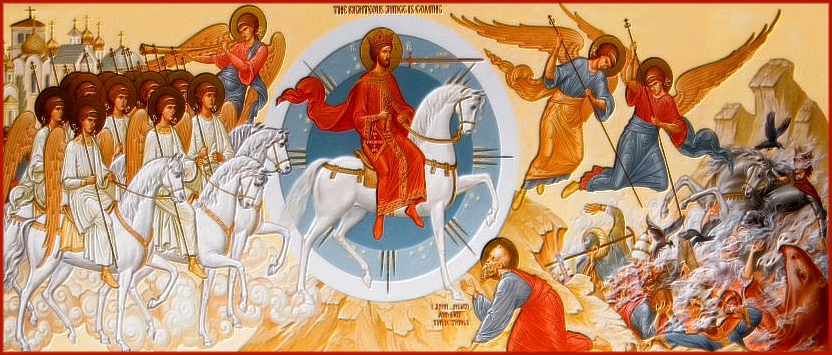
The builders of the new tower of Babel in our time are not really hiding the purpose of their project any longer. It is mostly out in the open now; for they believe that the critical mass needed to oppose them no longer exists. Like the tower-builders of old, they have forgotten the chief of the dramatis personae in this story: God. Or, rather, they choose to ignore Him. They are in for a rude surprise.   Whether in this life or the next, every soul will stand before Him, and no thought, word, or deed will escape His judgment. They have also forgotten the myriads and myriads of His angels, whom He is going to cut loose at some point to deal with them and with their invisible employers, the “aliens” whom they worship and want us to worship. Interesting times lie ahead.

St. Theophan gives us today the first step we must take to play our role in this great drama: turn from evil and do good. Face it: aren’t you tired of the constant coffeehouse chatter of the demons in your head? It is so depressing and so boring – worse even than MSNBC or Fox News, worse even than NPR!     Let us replace the psychic garbage of our uncontrolled thoughts with holy reading, holy listening (there are a lot of audio resources out there now!), prayer, reading Church services from the Horologion and all the rest – so much to do, so many resources to do it with, and such a short life to do it in! What are we waiting for?   The change from chaos to order, from fear to courage, from anxiety to peace – it happens in one moment, as did the salvation of the Good Thief on the cross.

As they say, “Just do it.”

last-judgment-icon-st-elias-church-brampton-ontario

Posted in Uncategorized | Comments Off on Getting out of Babylon

The just shall live by faith

2 April OS 2016 – Friday of the Fifth Week of Lent; St. Titus the Wonderworker; Holy Martyrs Amphian and Aedesius

The first reading at Vespers today, Genesis 22:1-18, presents one of the most powerful images in all the Old Testament: Abraham taking his son Isaac up Mt. Moriah, to sacrifice him, in obedience to God’s command. We know, of course, that the story has a happy ending: The angel of the Lord appears at the last moment, stays the father’s hand that holds the knife, and the boy lives. God commends Abraham for his faith and obedience, and a ram turns up, stuck in a thorn bush, which becomes the sacrifice instead. Abraham, however, did not know that this was how things were going to turn out. He acted simply on faith and obedience.

The typological significance of this passage is profound: Here there are two “types,” that is, two prophetic images, of Christ, both Isaac and the ram.   Abraham, the Father of Faith, is an image of God the Father offering His Only Son in sacrifice for the salvation of the human race, and Isaac, carrying the wood for the sacrificial fire on his back up to the top of Mt. Moriah as Christ was later to carry the Cross up to Golgotha, is an image of the Redeemer. Later, at the climax of the crisis, Isaac becomes an image of fallen man, unable to redeem himself, for whom Christ, the Lamb of God, is slain instead, as the ram is slain in Isaac’s stead.

The moral teaching of this event is obvious: Abraham becomes for all time the very image of faith and obedience. God had promised that through Isaac Abraham would become the father of many nations.   Here, it seems, He is going back on His promise. But Abraham does not say, “Wait, this is not fair! You promised!” Without a word, he sets out to do God’s will.

For each of us, there will be one or probably several crucial moments in our lives, turning points, at which we choose to follow the path of the Cross, the path up to Golgotha, or to go the other way. To remain faithful to marriage or monastic vows, to confess Orthodoxy in today’s church situation, to remain moral in our personal, familial, social, and professional behavior – all of these today require a near-Abrahamic level of faith and obedience. In the eyes of the world, indeed in the eyes of supposed fellow Orthodox or fellow “Christians” or fellow “nice people,” our choices will likely appear foolish, insane, or even criminal, more than once. It is not the condemnation of villains or nitwits which will wound us, but that of our friends. At these moments, we must close our ears to all these other voices and obey only that still, small voice that spoke to Elias at the mouth of the cave, when he thought himself all alone and wanted to die; we must obey the voice of God.

To hear this voice, however, and to discern what it says, we must be pure of heart and sound of mind. Above all, we must be in the grace of God.

To be in the grace of God, one must profess the Orthodox Faith, be in the Orthodox Church, and, moreover, be leading a conscious and active life of prayer, spiritual struggle, and participation in the Holy Mysteries. Spiritual life, like physical life, does not tolerate a vacuum – if the divine energies are not active and dominant in the soul, other energies will be. The stark and unsettling truth is that the vast majority of baptized Orthodox, as far as one can tell, are really in the category of energoumenoi, those whose psychic life is being energized not by grace but by the energies only of fallen nature and of the demons. They have not lost the grace of baptism, but it is not active, not energized, because they are living with a burden of unconfessed and unrepented sins, many of which they are not even conscious of, and they are either almost never receiving Holy Communion (old style nominal Orthodoxy) or they are receiving it all the time but disastrously without preparation (new style smiley-face Orthodoxy). If we followed the ancient discipline, they would all have to leave when the deacon dismisses the catechumens, because they are not eligible for Holy Communion.

I know that all of this sounds tough, daunting, even discouraging. But this is so because we rely on ourselves. If we really and truly relied on God, nothing would seem, indeed nothing would be, impossible. In the blink of an eye, all would appear in a totally different light – joyful, calm, and grace-filled, if only we turned to the Lord. Recently a friend gave me a new edition of the wonderful My Life in Christ by St. John of Kronstadt, and after many years I am re-reading it. I wish I had not waited so long! Two nights ago, I read this:

“How easily and quickly can the Lord save us! Instantaneously, unexpectedly, imperceptibly. Often during the day I was a great sinner, but at night, after prayer, I went to rest, justified and made whiter than snow by the grace of the Holy Spirit, with the deepest peace and joy in my heart!   How easy it is for the Lord to save us in the evening of our life; at the end of our days! O! Save, save, save me, most gracious Lord; receive me into Thy Heavenly Kingdom!   Everything is possible to Thee. ‘To his own master he stands or falls. Indeed, he will be made to stand, for God is able to make him stand (Romans 14:4).'” (My Life in Christ, Part I, p. 26; Holy Trinity Publications 2015).

The evening of our life draws near, for this life is short. How easy for the Lord to save us, if only we lived for Him!  Let us, then, pray most earnestly for the grace to forget ourselves and live totally for the Lord and by His power. The path before us would become clear, and we would have the strength to follow it.

We live in difficult days, and more difficult days lie ahead. We must, without delay, renew our struggle to lead the grace-filled life of prayer, fasting, frequent confession and Holy Communion, and all the fundamental activities of the Orthodox life, if we are to have indomitable faith and hope in God, and discern and obey His holy will at the many crossroads we have yet to face on the path to Paradise. May the holy patriarch Abraham, the exemplar of mighty faith for all generations, intercede for us, that we may follow unerringly the hard path up Golgotha, which is also the path to Paradise. After remaining faithful, to the end, in this short and sorrowful life, may we find rest in his bosom as we await the Second Coming of the spotless Lamb, the Redeemer of our souls.  This is God’s desire for us, and He is all-powerful to make it so. Amen.


Le_sacrifice_dIsaac_par_Abraham_(mosaïques_de_la_Chapelle_palatine,_Palerme)_(7026705017)

Posted in Uncategorized | Comments Off on The just shall live by faith

Governing the mind

1 April OS 2016 – Thursday of the Fifth Week of Lent; Thursday of the Great Canon; St. Mary of Egypt; St. Barsanuphius of Optina 

The second reading at Vespers today, Proverbs 16:17-17:17, contains one of the best known verses of Holy Scripture: “Pride goes before destruction, and folly before a fall (Proverbs 16:18).”

St. Theophan the Recluse uses this verse as an inspiration to exhort us about guarding our thoughts in general:

Therefore, do not allow evil thoughts to come in, and there will be no falls. And yet, what are people most careless about? About their thoughts. They allow them to seethe as much and however they like, not even thinking to subdue them or to direct them to rational pursuits. Meanwhile, within this inner turmoil the enemy approaches, places evil in the heart, seduces it, and inclines it toward evil. And the person, not noticing this himself, is ready for evil. It remains for him to carry out the evil that is fixed to his heart or to struggle against it. But this is our sorrow: almost no one takes on the struggle, while all are led to evil as if bound.   Thoughts for Each Day of the Year, p. 74

None of us disagrees with this. How do we do it?   We have heard the Church, through her preachers, tell us over and over again what the standard approach is, and we just have to do it:

  1. When we rise in the morning, make our Cross right away, start saying the Jesus Prayer, and then make sure we say our Morning Prayers.
  1. Take our prayer rope with us through the day (in a pocket or purse, if we cannot wear it), and let it remind us to struggle to say the Jesus Prayer as much as possible in the midst of our activities.
  1. Refuse unnecessary conversations and distractions.   Refuse gossip and condemnation of others.
  1. Make our Cross frequently during the day, to dedicate to God our a. commute time, b. the beginning of the work day and our work through the day, c. our meals. Make the Cross before meetings, conversations we know are going to be difficult or a temptation of some kind.
  1. When obviously sinful thoughts come into our minds, reject them forcefully with prayer.   When interesting, attractive thoughts – including seemingly good ones – come into our minds, we do not let them capture us by their attractiveness, but remain skeptical and question them with prayer.
  1. At home, to eat with the family, not in front of a screen.   Read holy books together. Always have family prayer time.
  1. Go to sleep saying the Jesus Prayer.

Try doing all of this for one day, and you will begin again to go along the path of governing your thoughts!

A blessed remainder of the Great Fast to all!

Today 1/14 2016, is the 103rd anniversary of the repose of the Elder Barsanuphius of Optina, +1913.  May his prayers be with us as we strive to do all of the above!   Venerable Father Barsanuphius, pray to God for us!   

KONICA MINOLTA DIGITAL CAMERA

Posted in Uncategorized | Comments Off on Governing the mind