The mystery of the Eighth Day

5 July OS 2016 – Monday of the Fifth Week of Matthew; St. Athanasios of Mt. Athos; St. Sergius of Radonezh; the New Nun-Martyr Elizabeth, Great Princess of Russia, and Those With Her.

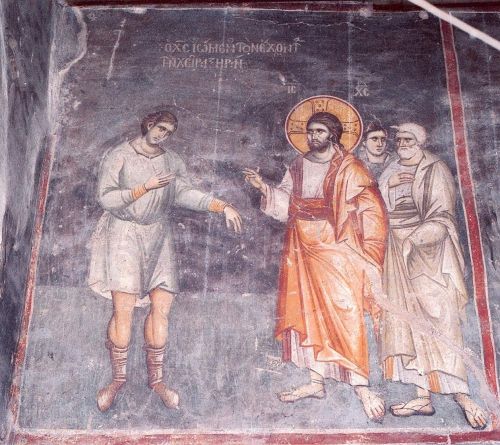
In today’s Gospel reading (Matthew 12:9-13), the Lord Jesus demonstrates the true keeping of the Sabbath:

At that time, when Jesus was departed thence, he went into their synagogue:
And, behold, there was a man which had his hand withered. And they asked him, saying, Is it lawful to heal on the sabbath days? that they might accuse him. And he said unto them, What man shall there be among you, that shall have one sheep, and if it fall into a pit on the sabbath day, will he not lay hold on it, and lift it out? How much then is a man better than a sheep? Wherefore it is lawful to do well on the sabbath days. Then saith he to the man, Stretch forth thine hand. And he stretched it forth; and it was restored whole, like as the other.

 St. Theophan the Recluse uses this passage to remonstrate with the Orthodox Christians of his (and our!) time:

“It is lawful to do well on the sabbath days.”  After healing the man with a withered hand in the synagogue on the Sabbath, the Lord said this as a reproach to the Pharisees, who took the commandment about Sabbath rest so far that they even measured the number of steps they could walk on that day.  But since it is not possible to do good works without movement, they would sooner have agreed to neglect good works than to allow any extra movement.  The Savior denounced them for this time and again, because the Sabbath required rest from worldly cares and not from works of piety and brotherly love.  In Christianity, instead of the Sabbath, Sunday is celebrated with the same goal: rest from all worldly affairs and the devotion of the day solely to God’s works. Christian sobriety has never reached the point of Pharisaic pettiness concerning not doing things on Sunday.  However, the permissible allowance for doing things on this day has been set far beyond the proper limits.  Not doing things kept the Pharisees from performing good works, whereas the things which Christians allow themselves are what lead them away from good works.  On the eve of Sunday they go to the theater and then to some other entertainment.  In the morning they oversleep and there is no time to go to church.  There are several visits, then lunch, and in the evening again entertainment.  Thus all their time is relegated to the belly and to pleasing the other senses, and there is no time to remember God and good works.  – Thoughts for Each Day of the Year, pp. 137-138

Let us apply St. Theophan’s remarks to our own situation. Today, Orthodox Christians who do not keep Sunday the way they should, are hypocrites to condemn or make fun of orthodox Jews for their legalistic attitude toward the Sabbath, since the result of their own lawless approach to the Lord’s Day is the same:  disobedience to the will of God and the consequent loss of grace.  And they have no excuse, for they are baptized members of Christ’s Church.

How does an Orthodox household spend Sunday?

First – Sunday begins on Saturday night!   We plan Saturdays, so that all tasks and outings finish in time for us to prepare to go to Church for Vespers or Vigil (Vespers/Matins).   Saturday night services are not only for the clergy or chanters or “super-pious.”  They are for everyone.  If we live too far from the church to make it reasonable to make the trip both Saturday night and Sunday morning, we should learn how to read the evening services at home.  Today’s Orthodox Christians plan parties and other events on Saturday nights, or sit around watching movies and TV or practicing self-hypnosis on social media because they have become secularized, not because this is normal for us.  When one has spent Saturday night in a godly manner, with church services, quiet time at home, spiritual reading, holy conversation, and prayer, the entire experience of Sunday is transformed, rising to a significantly higher spiritual level.  It is a wonderful, life-transforming experience, and it can happen every week! (That’s why God designed the seven-day week).  Try it…you’ll see.   When one adds confession after Vespers and reading the prayers of preparation for Holy Communion, Saturday night and Sunday become what they were meant to be:  a taste of Paradise.

Second – We abstain from all food and drink from midnight onward on Sunday, not only when we are preparing to receive Holy Communion, but every week, in order to prepare spiritually to attend divine services and to be eligible to receive the antidoron, the blessed bread left over from the Offering, given to the baptized Orthodox present who have not received Holy Communion.

Third – We arise early on Sunday and prepare ourselves and our children to attend the Orthros or Hours and Divine Liturgy.   We do not eat, drink, smoke, turn on entertainment devices or social media, or otherwise distract ourselves on Sunday morning. The time between arising and going to Church is strictly used for getting ready to go to Church, including some morning prayers and – optimally – pre-Communion prayers.  We clothe ourselves in modest and dignified “Sunday best,” not just any old thing, and go peacefully to divine services, which begin not halfway through the Liturgy, or even with the beginning of the Liturgy, but with Matins (Orthros) or, if Matins took place the evening before, with the Hours.

Fourth – After attending Divine Services with attention and love, we spend the rest of the day in godly fashion.   We socialize in Christian agape with our fellow parishioners and then spend the rest of the day in quiet, happy family activities or in doing good works – visiting an elderly friend, for example, or helping around the Church.  And if on no other day, at least on Sunday, we should have the family around the table at the same time for dinner!  Sunday also is the pre-eminent time to invite our fellow Orthodox to our home for spiritual fellowship.

Thus a true New Testament Sabbath!

For most of us, making the change to doing everything above will seem like a tall order.  The biggest problem is being forced to work on Sundays, a recent phenomenon in the new post-Christian America.  But if you use the Sundays when you do not have to work in the way God wants, and pray to be freed from working on Sundays, He may very well set you free!  At any rate, pick out the easiest change to make from what you are doing now, make it, get used to it, and then make the next change, and go from there…  Life is short, and so why waste your precious Sundays?  The next may be your last.
xphealswitheredhand

Posted in Uncategorized | Comments Off on The mystery of the Eighth Day

The light yoke

1 July OS 2016 – Thursday of the Fourth Week of Matthew; Holy Martyrs and Unmercenary Healers Cosmas and Damian

Today’s Gospel reading (Matthew 11:27-30) is our gracious Lord’s invitation to be freed of the burden of sin by taking on the light yoke of His commandments:

The Lord said to His disciples, All things are delivered unto me of my Father: and no man knoweth the Son, but the Father; neither knoweth any man the Father, save the Son, and he to whomsoever the Son will reveal him. Come unto me, all ye that labor and are heavy laden, and I will give you rest. Take my yoke upon you, and learn of me; for I am meek and lowly in heart: and ye shall find rest unto your souls. For my yoke is easy, and my burden is light.

St. Theophan the Recluse explains the process by which this transformation takes place:

O Divine, O dear, O sweetest voice of Thine! Let us all follow the Lord, Who calls us! But first we must experience something difficult and burdensome for us. We must experience that we have many sins, and that these sins are grave. From this is born the need to seek relief. Faith will then show us that our only refuge is in the Lord and Savior, and our steps will direct themselves toward Him. A soul desiring to be saved from sins knows what to say to the Lord: “Take my heavy, sinful burden from me, and I will take Thine easy yoke.” And this is how it happens: the Lord forgives one’s sins, and his soul begins to walk in His commandments. The commandments are the yoke, and sins are the burden. But comparing the two, the soul finds that the yoke of the commandments is as light as a feather, while the burden of sins is as heavy as a mountain. Let us not fear readily accepting the Lord’s easy yoke and His light burden. In no other way can we find rest unto our souls. – Thoughts for Each Day of the Year, p. 135

Here is how it happens, then:

Step One: We must experience that we have many sins, and that they are grave. St. Isaac the Syrian says that it is a greater miracle to see one’s sins than to raise the dead. Why? Because of the incomprehensible blindness of fallen human nature, which does not understand itself. We all have it. We must pray to see ourselves as we really are, so that we can really feel the burden of sin and the need to seek relief. We must realize with the entire consent of our being that we need a Savior.

Step Two: Faith shows us that our only refuge is our Savior and that He does forgive our sins. We are Orthodox Christians, and we accept the teachings of the Church, but often we do not feel them, do not have strong Faith welling up from the depths of our being with absolute conviction. This is not mere emotion, but a set of the soul, an experiential knowledge in the center of our being that God is, that God is indeed the Holy Trinity of Orthodoxy, and that Christ our Savior has indeed saved us. To acquire this set of soul, one near-infallible method is the frequent practice of slow, forcefully concentrated prayer. Open the prayer book, or take the Psalter, or take your prayer rope, and, in a quiet place, kneeling before the holy icons, force yourself to say the words a bit more slowly than usual, and forcefully struggle for attention, ruthlessly casting out every distracting thought. Set a timer for, say, ten or fifteen minutes, and do not let up until the alarm rings. If you feel the desire to continue, continue for as long as you like. Go on praying in this way until the light dawns in your heart. Do this frequently…daily. You shall see. The Lord promised to give us good things, and by praying in this way you are asking for the best things, including profound faith with the constant, abiding presence of God in the heart. He is faithful to His word, and He will give according to His promise.

Step Three: We must promise the Lord that we will live according to His holy commandments, and His commandments are not burdensome, for His yoke is easy and His burden is light. “For this is the love of God, that we keep His commandments: and His commandments are not grievous (I John 5:3).” Yet we must be honest with ourselves and realize what the standard for loving God really is: “Ye have not yet resisted unto blood, striving against sin (Hebrews 12:4).” This struggle unto blood, which ensues upon our promising to keep the commandments, feels perfectly natural, however, to those who have gone through Steps One and Two, and who keep repeating them when faith grows weak. And not only does it begin to come naturally, but it also engenders ineffable relief and inner happiness, often in inverse proportion to the difficulties of our outward life.

Let us, then, struggle earnestly in prayer, that the Lord may energize the potential of the baptismal grace already within us, and then being transformed strive zealously for God’s commandments, for His glory and for our salvation. May we by grace know through experience that the yoke of Christ is easy and His burden light.

Come to Me

Posted in Uncategorized | Comments Off on The light yoke

Enduring skillfully

 23 June OS 2016 – Wednesday of the Third Week of Matthew; Holy Martyr Agrippina

In today’s Gospel, the Lord promises His disciples that they who endure to the end shall be saved:

The Lord said to His disciples, Behold, I send you forth as sheep in the midst of wolves: be ye therefore wise as serpents, and harmless as doves. But beware of men: for they will deliver you up to the councils, and they will scourge you in their synagogues; And ye shall be brought before governors and kings for my sake, for a testimony against them and the Gentiles. But when they deliver you up, take no thought how or what ye shall speak: for it shall be given you in that same hour what ye shall speak. For it is not ye that speak, but the Spirit of your Father which speaketh in you. And the brother shall deliver up the brother to death, and the father the child: and the children shall rise up against their parents, and cause them to be put to death. And ye shall be hated of all men for my name’s sake: but he that endureth to the end shall be saved (Matt 10: 16-22).

 St. Theophan the Recluse gives us a to-do list of concrete measures to take in order to endure wisely unto salvation:

…Do we have anything to endure? In this no one is lacking. Everyone’s arena of endurance is vast, and therefore our salvation is at hand. Endure everything to the end and you will be saved. However, you must endure skillfully – otherwise you may not gain anything by your endurance.

 First of all, keep the Holy Faith and lead an irreproachable life according to the Faith. Immediately cleanse with repentance every sin that occurs.

 Second, accept everything that you must endure from the hands of God, remembering firmly that nothing happens without God’s will.

 Third, give sincere thanks to God for everything, believing that everything which proceeds from the Lord is sent by Him for the good of our souls. Thank Him for sorrows and consolations.

 Fourth, love sorrow for the sake of its great salvific power, and cultivate within yourself a thirst for it as for a drink which, although bitter, is healing.

 Fifth, keep in your thoughts that when misfortune comes, you cannot throw it off like a tight-fitting garment; you must bear it. Whether in a Christian way or in a non-Christian way, you cannot avoid bearing it; so it is better to bear it in a Christian way. Complaining will not deliver you from misfortune, but only make it heavier; whereas humble submission to God’s Providence and a good attitude relieve the burden of misfortunes.

 Sixth, realize that you deserve even greater misfortune. Recognize that if the Lord wanted to deal with you as you rightly deserve, would He have sent you such a small misfortune?

 Seventh, above all, pray, and the merciful Lord will give you strength of spirit. With such strength, when others marvel at your misfortunes, they will seem like nothing to you.

 from Thoughts for Each Day of the Year, pp. 129-130

Now there we have a handy to-do list to print out and put on the refrigerator!

St. Theophan makes several points here, but I should like to expand on three: That we all have something to endure and therefore our salvation is at hand, that we actually deserve greater misfortunes than those which we receive, and that above all we must pray.

  1. “…therefore our salvation is at hand.”   The spiritual struggler will lose hope if he sees this life as a dark tunnel with no end in sight. The devil would certainly like for us to see it this way. But this is an illusion.   When one thinks of the thousands of years since the Creation, and all the human generations before us, and the illimitable expanse of the aeons of the invisible universe inhabited by the angels, and the endless joy of the saints in heaven…one realizes that one is a very little person after all, that this life is short, and that all that matters is whether we please God in our short trial or not. This life is a sprint, not a marathon. Soon all will be over here, and our real life – or real sufferings – will start there. Is it not worth our while to endure for this short time?
  1. “…realize that you deserve even greater misfortune.” St. Ignaty Brianchaninov, in The Arena, is more explicit: One should realize that one deserves every temporal and eternal punishment.   Why is this? It is because the infinitely holy and good God has lavished His love on us, but we sin against Him. What misfortune would be sufficient to punish such ingratitude?   But the Lord does not visit such misfortune upon us – nothing we suffer is commensurate with what we deserve.   The proud human mind says that this teaching is a false image of a cruel god. The humble mind realizes that this is very Good News indeed, for it signifies that God desires our salvation, and that the misfortunes He sends us are not retribution but cleansing, because He wants us to be with Him once more in Paradise.
  1. “…above all, pray…”   The time of misfortune is actually the most opportune time for prayer, because it is a crisis, a moment of judgment, when we either go more deeply into prayer or we run away from God into illusory solutions to our predicament. When we do turn to God in great pain of heart, in the midst of suffering, our prayer deepens, we feel His presence, and we understand that we are made not for this life but for another world, that our home is not here but there, and this thought becomes the source of inexhaustible consolation. Prayer changes from being an interruption to our supposedly real life to the content of our really real life. We start praying more frequently, even constantly, and with greater fervor and attention.  This in turn gives us greater strength to endure the present misfortune and those yet to come.

Living in this way, we come to know in our experience the meaning of St. Paul’s words, “…we know that all things work together for good to them that love God, to them who are the called according to His purpose… For I am persuaded, that neither death, nor life, nor angels, nor principalities, nor powers, nor things present, nor things to come, Nor height, nor depth, nor any other creature, shall be able to separate us from the love of God, which is in Christ Jesus our Lord (Romans 8:28, 38-29).”

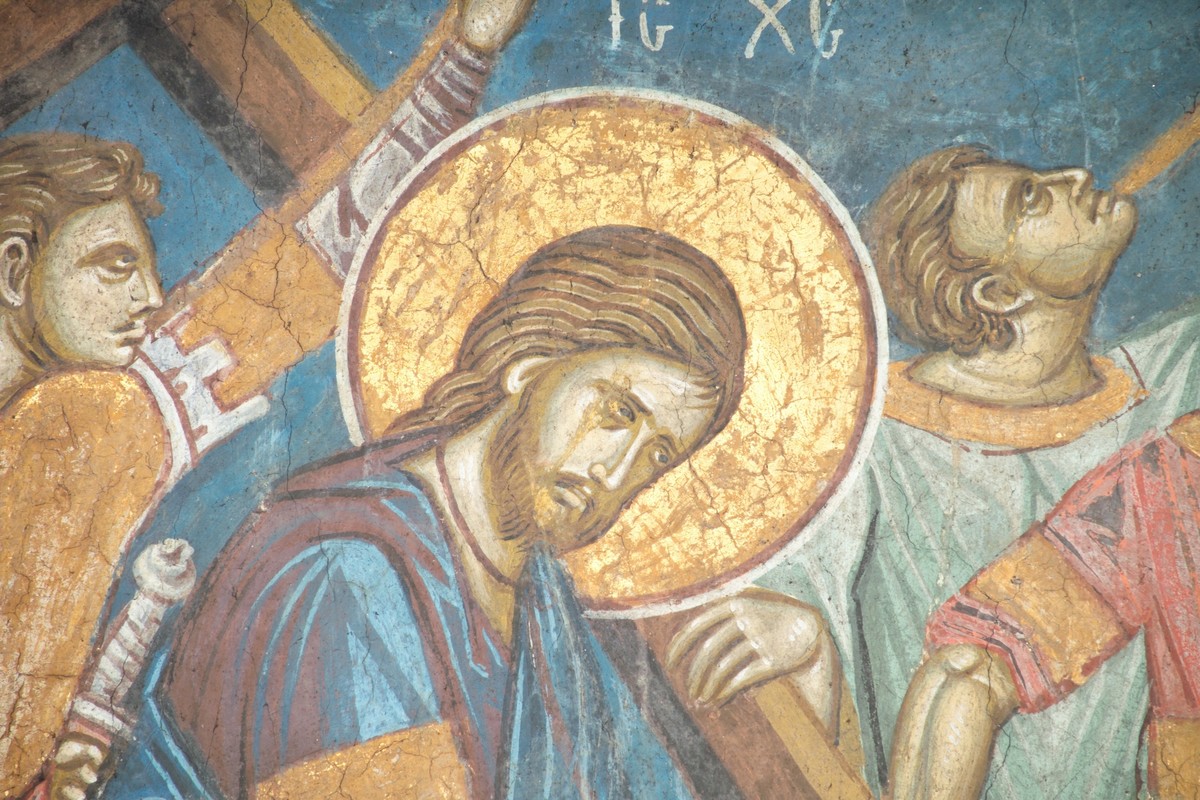
christ-being-led-to-the-crucifixion-monastery-decani-detail

Posted in Uncategorized | Comments Off on Enduring skillfully

The mystery of the age to come

Wednesday, 9 June OS 2016 – Afterfeast of Pentecost; St. Cyril of Alexandria

After the Holy Spirit descends at Pentecost, the Church immediately gives us our marching orders, in the words of the Lord at His Sermon on the Mount, so that we will put to work the grace we have received. Today’s section of the Sermon is Matthew 5:20-26.

The Lord said to His disciples, For I say unto you, That except your righteousness shall exceed the righteousness of the scribes and Pharisees, ye shall in no case enter into the kingdom of heaven. Ye have heard that it was said by them of old time, Thou shalt not kill; and whosoever shall kill shall be in danger of the judgment: But I say unto you, That whosoever is angry with his brother without a cause shall be in danger of the judgment: and whosoever shall say to his brother, Raca, shall be in danger of the council: but whosoever shall say, Thou fool, shall be in danger of hell fire. Therefore if thou bring thy gift to the altar, and there rememberest that thy brother hath ought against thee; Leave there thy gift before the altar, and go thy way; first be reconciled to thy brother, and then come and offer thy gift. Agree with thine adversary quickly, whiles thou art in the way with him; lest at any time the adversary deliver thee to the judge, and the judge deliver thee to the officer, and thou be cast into prison. Verily I say unto thee, Thou shalt by no means come out thence, till thou hast paid the uttermost farthing.

St. Theophan the Recluse explains what it means for our righteousness to exceed that of the scribes and the Pharisees:

Characteristic of the scribes is knowledge of the law without concern for life according to the law. Characteristic of the Pharisees is correctness of outward behavior without particular concern for correctness of thoughts and feelings in the heart. Both attitudes are condemned to remain outside the Kingdom of Heaven. Let everyone receive the lesson he needs from this. If you want to learn the Gospel law, do so – but in a way that enables you to establish your life according to this knowledge. Try to be correct in your behavior, but keep your inner feelings and dispositions correct at the same time. If you have gained some knowledge, do not stop there, but go further and understand the demands such knowledge makes of you – then act appropriately. Let your behavior show that your feelings and dispositions are not the result of externals, but that your external behavior proceeds from your feelings and dispositions, and actually expresses them. If you establish yourself this way, you will be higher than the scribes and Pharisees, and the doors of the Kingdom will not be closed to you.  Thoughts for Each Day of the Year, p. 120

The interior life has become foreign territory for most people, including Orthodox Christians. Busyness is the order of the day. If we are not at work, or getting trained to do some kind of technical or business job unrelated to humane (much less spiritual) concerns, or running around doing errands, we are distracting ourselves with social or entertainment media.   The mind, made to dwell within the heart, gets broken up and scattered over a thousand concerns, and the heart languishes in hard dryness, locked away in a dark place and ignored.

St. Isaac the Syrian, on the other hand, says that stillness is the mystery of the age to come. By stillness, of course, he does not mean mere inactivity, laziness, and not using the gifts God gave us. He means that we must center our lives within, with the mind in the heart, and live from there.   Then, whether “in the body or out of the body,” we will be living for the Lord, and we will become the true and lasting selves God means us to be. When the time comes for the soul to leave the body, the transition will be “painless, blameless, and peaceful,” as we pray in every Vespers, Matins, and Divine Liturgy.

To live in this way, we must take both negative and positive steps. The negative steps include turning off electronic devices except for strictly planned and structured use, and cutting out unnecessary busyness and idle talk.   The positive steps include being faithful to daily prayer and spiritual reading, learning the Jesus Prayer from the right sources and doing it, frequent confession, and frequent Holy Communion with attentive preparation. It is really a simple program when you think about it.

I recall a visit we made a few years ago to a women’s monastery in Greece. The elderly nun who came to the reception room to greet us sat down and looked at us, with a slight smile and twinkling eyes, for several minutes, before she said anything. She was at peace within herself and gave us credit for being so as well. There was no rush. It was the deeper courtesy born of profound respect for what it means for us to be alive, to be human, and to be God’s children.

The people in charge of worldly affairs today would like for us not to think or pray at all, but simply be robotic cogs in this vast, lifeless, and boring contraption they are constructing to replace human society. I suppose that when they have figured out a way for the actual robots to do everything, they plan to do away with us altogether. The most fundamental counter-revolutionary act we can perform to sabotage this anti-human takeover is to do the most human thing possible: to go within ourselves and pray with the mind in the heart. All of our outward resistance must flow from this.

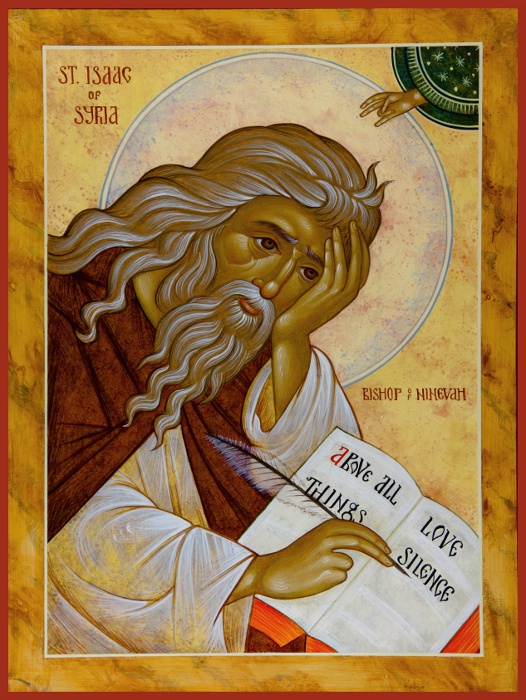
Isaac of Syria

Posted in Uncategorized | Comments Off on The mystery of the age to come

The prize of our high calling

4 June OS 2016 – Friday of the Seventh Week of Pascha; Leave-taking of the Ascension of the Lord; St. Metrophanes of Constantinople

In today’s Gospel, we are privileged to hear very words of the God-Man addressed to His heavenly Father on the night before He died, the conclusion of the Great High Priestly Prayer which is the entire content of chapter seventeen of the Gospel according to St. John:

At that time, Jesus lifted up his eyes to heaven and said, “As thou, Father, hast sent me into the world, even so have I also sent them into the world. And for their sakes I sanctify myself, that they also might be sanctified through the truth. Neither pray I for these alone, but for them also which shall believe on me through their word; That they all may be one; as thou, Father, art in me, and I in thee, that they also may be one in us: that the world may believe that thou hast sent me. And the glory which thou gavest me I have given them; that they may be one, even as we are one: I in them, and thou in me, that they may be made perfect in one; and that the world may know that thou hast sent me, and hast loved them, as thou hast loved me. Father, I will that they also, whom thou hast given me, be with me where I am; that they may behold my glory, which thou hast given me: for thou lovedst me before the foundation of the world. O righteous Father, the world hath not known thee: but I have known thee, and these have known that thou hast sent me. And I have declared unto them thy name, and will declare it: that the love wherewith thou hast loved me may be in them, and I in them.” John 17: 18-26

St. Theophan the Recluse points out that the Lord’s words here mean that it is all or nothing for us, becoming one with the Holy Trinity or total damnation. No one gets to settle for anything in between.

“As thou, Father, art in me, and I in thee, that they also may be one in us…I in them, and thou in me (John 17:21-23).” This is the golden chain that ties us with the Divinity! We have fallen away and a Mediator has arisen, Who is one with God the Father and has become one with us. Becoming one with Him, we are united in Him, and through Him with God the Father. Glory to Thy boundless mercy toward us, O Tri-hypostatic God, Who was well-pleased to establish for us such a bright path to deification! The Lord raises us up high; do not refuse His good gift. Confess His mercy and praise His unspeakable goodness! You think it humble to refuse such a height, but you are actually revealing crude ingratitude and carelessness toward a lofty gift. Know that there is no middle ground – it is all or nothing. If you do not want this loftiness, you will remain outside in bitter abasement, both temporally and eternally. Thoughts for Each Day of the Year, p. 117

A little scary, is it not?   Well, we need to be a little scared. “The fear of the Lord is the beginning of wisdom,” after all.  But St. Theophan is not saying here that we all have to become strict ascetics and hesychasts immediately, or we are doomed. What he means is that wherever we are spiritually, and whatever the duties required by our station and state of life, we always have to be looking upwards, remembering what our ultimate destiny and our true calling is, and always pushing ourselves a bit, prudently but definitely. “I press toward the mark for the prize of the high calling of God in Christ Jesus (Philippians 3:14).”

It is not humble, the saint remarks, to refuse union with God; it is base ingratitude.   It is also completely unrealistic, for there is no “safe place,” no middle-ground where those uninterested in spiritual life who are nonetheless moral citizens of the world of man may retire in anesthetized spiritual indifference for the duration of this life and for all eternity after death. It really is all or nothing. Every being in existence is truly happy only when fulfilling its purpose, its telos, says Aristotle, and the Holy Fathers agree with him. Our purpose is to attain the indwelling grace of the Trinity and abide in God’s bosom for all eternity. Those who attain this purpose will be forever happy, and those who do not will be forever sad.

One of the telltale marks of the image of God in man, prima facie evidence that man is made according to the image of God, is man’s thirst for God, experienced as the thirst for spiritual life. St. Augustine says famously that our hearts are made for God and that they are restless until they rest in Him. Therefore it is of utmost importance that we not quench this thirst but slake it daily and hourly. As we slake it, we feel delight, and yet – behold – the thirst grows. We must drink more deeply, and then more deeply, constantly, always, until we come to the Fountain of Life in Person and behold Him face to face. Then, according to the words of Truth Himself, spoken to the woman at the well, we will thirst no more.

“In Thee is the fountain of life, and in Thy light shall we see light. O, continue Thy mercy unto them that know Thee!”

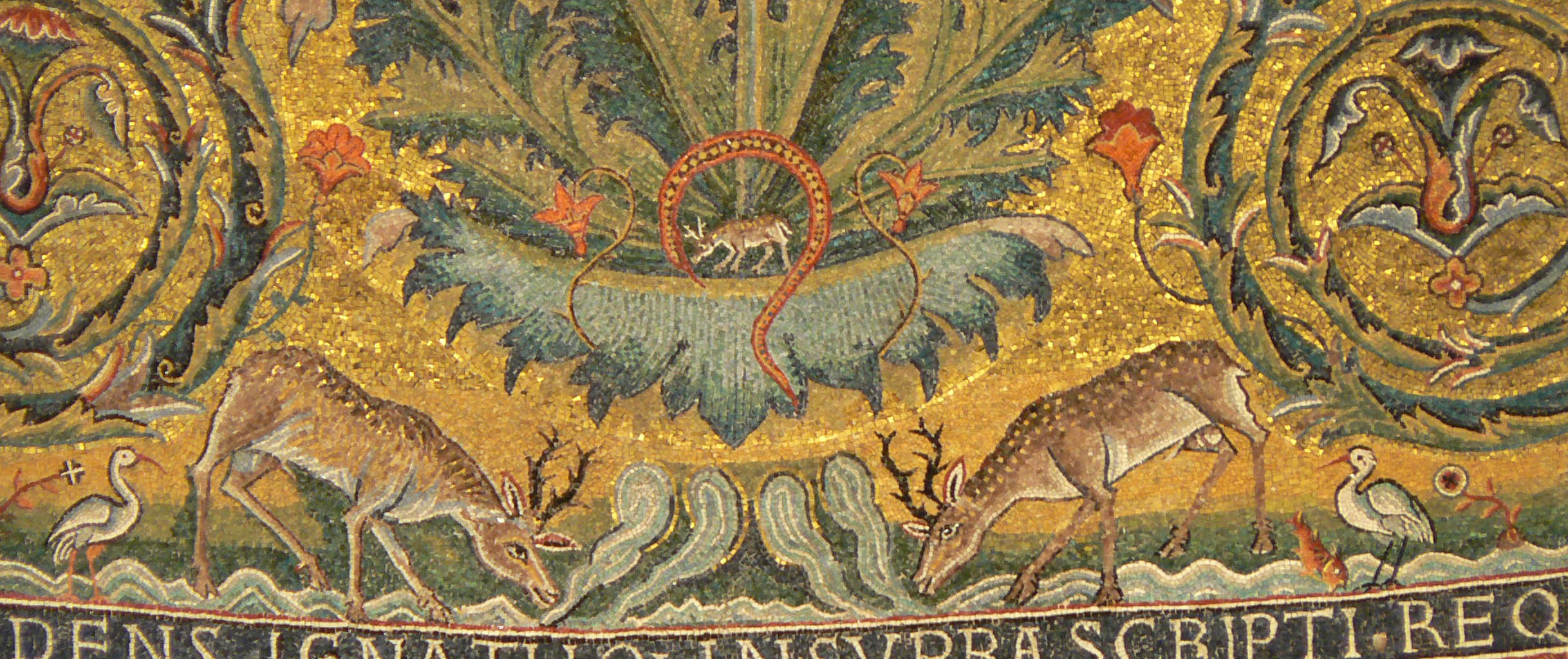
DeerParadiseRest

Posted in Uncategorized | Comments Off on The prize of our high calling

He that endures to the end shall be saved

2 June OS 2016 – Wednesday of the Seventh Week of Pascha; Afterfeast of the Ascension of the Lord; St. Nicephorus of Constantinople the Confessor

This is the last week of the sacred Fifty Days of Pascha, during which we read the Gospel according to St. John.   Today we continue reading the sublime words spoken by the Lord to the disciples at the Mystical Supper:

All things that the Father hath are mine: therefore said I, that he shall take of mine, and shall shew it unto you. A little while, and ye shall not see me: and again, a little while, and ye shall see me, because I go to the Father. Then said some of his disciples among themselves, What is this that he saith unto us, A little while, and ye shall not see me: and again, a little while, and ye shall see me: and, Because I go to the Father? They said therefore, What is this that he saith, A little while? we cannot tell what he saith. Now Jesus knew that they were desirous to ask him, and said unto them, Do ye inquire among yourselves of that I said, A little while, and ye shall not see me: and again, a little while, and ye shall see me? Verily, verily, I say unto you, That ye shall weep and lament, but the world shall rejoice: and ye shall be sorrowful, but your sorrow shall be turned into joy. A woman when she is in travail hath sorrow, because her hour is come: but as soon as she is delivered of the child, she remembereth no more the anguish, for joy that a man is born into the world. And ye now therefore have sorrow: but I will see you again, and your heart shall rejoice, and your joy no man taketh from you. And in that day ye shall ask me nothing. Verily, verily, I say unto you, Whatsoever ye shall ask the Father in my name, he will give it you. John 16: 15-23

 St. Theophan the Recluse likens the sadness of the disciples at the Lord’s death and their joy over His Resurrection to the times of crisis and rebirth we experience in the life of the soul:

The Lord said to the Holy Apostles before His sufferings: “A little while, and ye shall not see Me; and again, a little while, and ye shall see Me (John 16:16).” The Lord’s sufferings and death so struck the Holy Apostles that the eyes of their minds became dim, and they no longer saw the Lord as the Lord. The light was hidden, and they sat in a bitter and wearisome darkness. The light of Christ’s Resurrection dispersed this darkness, and they again saw the Lord. The Lord Himself explained His words thus: “Ye shall weep,” He said, “and lament, but the world shall rejoice; and ye shall be sorrowful, but your sorrow shall be turned into joy (John 16:20).” It is said that every soul experiences a similar defeat on the way to perfection. Universal darkness covers it, and it does not know where to go; but the Lord comes, and changes its sorrow into joy. This is truly as necessary as it is for a woman to suffer before a man is born into the world. Can we not conclude from this that he who has not experienced this has not yet given birth to a real Christian within himself? Thoughts for Each Day of the Year, pp. 115-116

Anyone who undertakes the conscious effort of spiritual life knows what the saint is talking about: There are periods in which one’s mind is darkened, the will becomes weak, doubt sets in, and all seems lost. But if one simply hangs on and cries to the Lord in the pain of his heart, and – simply, drily, not waiting for good feelings – makes an act of will to go on striving to have faith, to hope, and to love, light dawns again in the heart, the mind clears, and the will acquires new strength. The soul takes wing and a new day dawns.   All is well.

Each of these times of intense interior struggle, which normally occur periodically several or many times in the life of the Christian, can be likened to the pangs of childbirth. As do labor pains, these crises rise and subside, but each time the pain is greater, until the great moment comes, and birth takes place.   Thus in the life of the Christian: the Lord allows greater and greater temptations, doubts, and sorrows to afflict us periodically, until the last and greatest trial at the hour of death and the departure of the soul from the body. By experiencing the resurrection of the soul throughout the increasingly difficult crises of life, our faith in God’s truth, our hope in His divine aid, and our love and longing for His desired presence increase steadily, and at the time He knows best, when He sees that the set of the soul is as firm as it ever will be, He brings us into the arena of the final contest, there to do battle openly with the enemy of our salvation, when the spiritual senses are opened, the nature of the combat we have previously engaged in blindly now becomes visible, and we face final glory or final disgrace.

At any one of these crises, a man may choose to give up.   This may not be entirely obvious to others – he may continue to attend Church services more or less, observe the greater holidays and family baptisms and weddings, and formally consider himself an Orthodox Christian.   But the switch in his heart has been turned to the Off position, and his real attention is elsewhere. He has decided, though perhaps not in so many words, that the interior struggles of spiritual life are not his cup of tea. Unfortunately such a decision is extremely common; to borrow words from T.S. Eliot, “Mankind cannot bear too much reality.” Thus do the majority fulfill Our Lord’s terrible words, “Many are called but few are chosen.”

How can one remain among the few and be saved?   This, of course, is the subject of the Fathers’ entire vast literature on spiritual life. But now and here, today, let us consider one exercise: to get down on one’s knees (remember, we are kneeling and making prostrations again starting this Sunday evening) and beg the Lord earnestly for the Cardinal Virtue of Courage (Fortitude), for the Theological Virtue of Hope, and for the grace of perseverance.

I heard a talk at a clergy conference twenty years ago by a senior priest, in which he noted something that has always stuck with me, that one often hears sermons touching on Faith and Love, but rarely on Hope. Hope is the grace-filled gift of exercising one’s courage in the conviction that God is taking care of us, that things will get better for us, and that, in the end, all will be well and all manner of things will be well. We see this pre-eminently in the holy martyrs and confessors: they courageously persevered to the end, because they not only believed in God (i.e., believed the truths of the Faith), but they also believed God (they trusted in His promises; they placed their Hope in Him).

On Pentecost Sunday after the Divine Liturgy, we will perform the solemn Kneeling Vespers, at which the bishop or priest reads three great prayers for the descent of the Holy Spirit to renew the Church and our souls.   With the aid of the illimitable grace we will have thereby received, let us begin Sunday night to implore the Lord, with prostrations and tears, for the grace of persevering in the divine Faith with the courage born of Hope, to the end, that we may attain the desired object of all our Love and longing, the vision of the Holy Trinity in God’s eternal Kingdom.

Trinity


Posted in Uncategorized | Comments Off on He that endures to the end shall be saved

Our life is hid with Christ in God

4 May OS 2018 – Thursday of the Sixth Week of Pascha, The Ascension of the Lord

After the high point of Holy Week and Pascha, a lot of Orthodox slack off and start focusing on their worldly plans for the summer, and one does not see much of them until (one hopes) the Dormition of the Theotokos in August, which takes place when the secular school vacation period has ended and people are feeling that “church season,” along with the “school year,” has arrived again. One of the casualties of this unfortunate habit is a profitable celebration of the Ascension of the Lord, a sublime mystery that reveals the true purpose of life and puts everything into perspective.

When Christ ascended in His resurrected human flesh into the heavens, He glorified our humanity by seating it at the right hand of God the Father, and then He sent the Holy Spirit to us so that we can join Him there. What could be better than that? It should make one happy to be alive.

St. Theophan the Recluse says the following:

St. Paul expresses the power of the Lord’s Ascension in this manner: “When He ascended up on high, He led captivity captive, and gave gifts unto men (Ephesians 4:8 [quoting Psalm 67]).” Having satisfied God’s righteousness, the Lord opened for us all the treasures of God’s goodness. This is indeed a capturing or taking of spoils after victory. The beginning of the distribution of these spoils to people is the descent of the Holy Spirit, Who, having descended, always abides in the Church and gives everyone what he needs, receiving all from that captive captivity. Let everyone come and take. But prepare for yourself a repository for that treasure, which is a pure heart; have hands with which to take it, that is, unreflecting faith. Then step forth, searching hopefully and praying relentlessly. Thoughts for Each Day of the Year, p. 112.

The Redeemer’s sacrifice on the Cross, in which He offered His Precious Blood to the Most Holy Trinity and satisfied all righteousness, took away our sins.  By His Resurrection, He saved us from the power of death. These mighty deeds, however, as infinitely great as they are, were only the beginning. Not content with saving us, the Lord also glorified to the utmost the humanity He shares with us, ascending beyond every visible and invisible creature and placing our human nature, in His Person, in the bosom of the Most Holy Trinity. Having glorified our nature thus, He then sent the Holy Spirit to enable each of us personally to attain this glory. Knowing this, what steps should we take to get there too and be with Him?

The first step is to understand, accept, and internalize the meaning of our Baptism. St. Paul says in Romans 6, the reading we hear at every baptism, that we have died in Baptism. He says in Colossians 3:3, “For ye are dead, and your life is hid with Christ in God.” So, to begin with, let us remember that, for all ultimate purposes, in relation to anything that really counts, we are already dead. Once we have put everything in this perspective, we can actually get started. Knowing that we are dead, we have nothing to lose, and we can with absolute freedom and perfect faith do what St. Theophan says:   “…step forth, searching hopefully and praying relentlessly” for the gifts of the Holy Spirit.

Today, after you read this, tell yourself that in fact you are already dead, and therefore all the things you worry about do not matter that much. Then pray earnestly for the Four Cardinal Virtues: Prudence, Fortitude, Temperance, and Justice. Then pray for the Three Theological Virtues: Faith, Hope, and Love. Make a strong act of will to put absolute trust in the Lord, that He will bestow these seven gifts.  Do it again tomorrow and every day.

You will realize that, indeed, your life is “hid with Christ in God,” and that, far from being dead, you really have begun to live.

ascension 

Posted in Uncategorized | Comments Off on Our life is hid with Christ in God

Come to Me and drink

12 May OS 2016 – Wednesday of Mid-Pentecost; St. Epiphanios of Cyprus

Today we celebrate Christ as the Wisdom of God. In the Gospel, the Jews ask, “How can this uneducated man have such wisdom?” And the Lord responds that it is because His wisdom is from the Father, not from men. When He says that His doctrine is “not mine,” He means that it is not from His humanity but is divine, flowing from the divinity He shares with the Father.

About the midst of the feast Jesus went up into the temple, and taught. And the Jews marvelled, saying, How knoweth this man letters, having never learned?Jesus answered them, and said, My doctrine is not mine, but his that sent me. If any man will do his will, he shall know of the doctrine, whether it be of God, or whether I speak of myself. He that speaketh of himself seeketh his own glory: but he that seeketh his glory that sent him, the same is true, and no unrighteousness is in him. Did not Moses give you the law, and yet none of you keepeth the law? Why go ye about to kill me? The people answered and said, Thou hast a devil: who goeth about to kill thee? Jesus answered and said unto them, I have done one work, and ye all marvel. Moses therefore gave unto you circumcision; (not because it is of Moses, but of the fathers;) and ye on the sabbath day circumcise a man. If a man on the sabbath day receive circumcision, that the law of Moses should not be broken; are ye angry at me, because I have made a man every whit whole on the sabbath day? Judge not according to the appearance, but judge righteous judgment. Then said some of them of Jerusalem, Is not this he, whom they seek to kill? But, lo, he speaketh boldly, and they say nothing unto him. Do the rulers know indeed that this is the very Christ? Howbeit we know this man whence he is: but when Christ cometh, no man knoweth whence he is. Then cried Jesus in the temple as he taught, saying, Ye both know me, and ye know whence I am: and I am not come of myself, but he that sent me is true, whom ye know not. But I know him: for I am from him, and he hath sent me. Then they sought to take him: but no man laid hands on him, because his hour was not yet come. John 7: 14-30

Inspired by and expressing the Divine Wisdom, today’s hymns and readings are a theological feast, bringing together and glorifying the three great acts of Christ – the Resurrection, the Ascension, and the Giving of the Holy Spirit – by which He saved us from the devil, sin, death, and hell, glorified our human nature, and established His Holy Church. Being the mid-point of the sacred Fifty Days (the Pentecost) between Pascha and Pentecost, it gives us a moment to pause, so to speak, and marveling, to behold as with a single glance all that the Lord has done for us. St. Theophan the Recluse, in his commentary for today, refers to the Dismissal Hymn for the feast, which looks forward to Pentecost:

At Mid-feast give Thou my thirsty soul to drink of the waters of piety, for Thou, O Savior, didst cry out to all: Whosoever is thirsty, let him come to me and drink. O Well-spring of Life, Christ our God, glory be to Thee.

St. Theophan writes:

On Mid-Pentecost a cry is heard from the Lord: “If any man thirst, let him come unto Me, and drink (John 7:37) [from the Gospel reading at Pentecost].” If that is the case, then let us all go to Him. Whoever thirsts for anything, as long as it is not contrary to the Spirit of the Lord, will find satisfaction without fail. You who thirst for knowledge, go to the Lord, for he is the only Light that truly enlightens every man. You who thirst for cleansing from sins and the soothing of your conscience, go to the Lord, for he has lifted up the sins of the whole world upon the tree (cf. I Peter 2:24) and torn up their handwriting (cf. Col. 2:14).   You who thirst for peace of heart, go to the Lord, for He is the Treasure, the possession of which will make you forget all deprivations and despise all goods in order to possess Him alone. You who need strength – He has every strength. If it is glory – He has glory on high. If it is freedom – He is the giver of true freedom. He will resolve all of our uncertainties, break the bonds of the passions, disperse all sorrows and grieving, enable us to overcome all the impediments, temptations, and snares of the enemy, and will smooth out the path of our spiritual life. Let us all go to the Lord! Thoughts for Each Day of the Year, p. 101

The Lord, then, is everything to us, and He wants to give us what we truly need. Notice to whom St. Theophan directs his encouragement: Those who thirst for knowledge, those who thirst for a pure conscience, those who thirst for peace of heart, those who need strength, those who desire certainty, those who wish to break the bonds of the passions, those who wish to overcome all grief, those who want to overcome the devil, and those who want a smooth path for spiritual life. In other words, the saint is saying, Our Lord will give everything needed to those who want what He wants for them – true spiritual life. Everything needed for life and salvation, He will give in abundance, if only we heed His words, “…let him come to me and drink.”

Reflect on the stunning, paradoxical reality that the Lord is waiting to give us the very highest, most desirable things in life, and we do not ask for them. When is the last time we asked Him to give us the four cardinal virtues – Justice, Prudence, Temperance, and Fortitude?   When is the last time we asked Him to give us the seven gifts of the Holy Spirit – wisdom, understanding, counsel, knowledge, fortitude, piety, and fear of the Lord? When is the last time we asked Him to give us the three theological virtues – Faith, Hope, and Charity (Αγάπη, spiritual love)? Think about it.

The Holy Apostle James writes, “Ye ask, and receive not, because ye ask amiss, that ye may consume it upon your lusts (James 4:3).” We have to learn from Our Lord, the Wisdom of God, what to ask for and how to ask for it. 1. What to ask for: We must ask for spiritual things, those virtues that please the Lord above all, as well as those earthly things which we truly need, which contribute to doing His holy will. 2. How to ask: We must ask with thirst for spiritual knowledge, with thirst for a pure conscience, with thirst for certainty of theological faith, with thirst for freedom from the passions, in short, with thirst for doing the will of God, as the Lord thirsted and hungered to do the will of His Heavenly Father.

Suggestion: The next time you are in a practical bind of some kind, and you are really asking God to help you, and nothing seems to happen, put aside the immediate, earthly problem you are worried about, and beg God for all the good things listed above, for the virtues.   Tell Him that you want, above all, to do His most holy will. This will be very pleasing to Him, and surely He will give you (as much as you can receive according to your state of soul at this point in your life) these holy gifts. And – you know what? – you may very well see, suddenly and unexpectedly, the Gordian knot of your earthly predicament cut as well.

O Wisdom of God and Well-Spring of Life, Christ our God, glory be to Thee!

DeerParadiseRest

Posted in Uncategorized | Comments Off on Come to Me and drink

The man of divine desires

7 May OS 2016 – Third Friday of Pascha; The Appearance of the Sign of the Precious Cross over Jerusalem in 351 A.D.

Today’s reading from the Acts of the Apostles (Acts 8:40-9:19) is the famous account of one of the most far-reaching events in the Church’s history, the conversion of Saul, who became St. Paul:

In those days: Philip was found at Azotus: and passing through he preached in all the cities, till he came to Caesarea. And Saul, yet breathing out threatenings and slaughter against the disciples of the Lord, went unto the high priest, And desired of him letters to Damascus to the synagogues, that if he found any of this way, whether they were men or women, he might bring them bound unto Jerusalem. And as he journeyed, he came near Damascus: and suddenly there shined round about him a light from heaven: And he fell to the earth, and heard a voice saying unto him, Saul, Saul, why persecutest thou me?
And he said, Who art thou, Lord? And the Lord said, I am Jesus whom thou persecutest: it is hard for thee to kick against the pricks. And he trembling and astonished said, Lord, what wilt thou have me to do? And the Lord said unto him, Arise, and go into the city, and it shall be told thee what thou must do. And the men which journeyed with him stood speechless, hearing a voice, but seeing no man. And Saul arose from the earth; and when his eyes were opened, he saw no man: but they led him by the hand, and brought him into Damascus. And he was three days without sight, and neither did eat nor drink. And there was a certain disciple at Damascus, named Ananias; and to him said the Lord in a vision, Ananias. And he said, Behold, I am here, Lord. And the Lord said unto him, Arise, and go into the street which is called Straight, and inquire in the house of Judas for one called Saul, of Tarsus: for, behold, he prayeth, And hath seen in a vision a man named Ananias coming in, and putting his hand on him, that he might receive his sight. Then Ananias answered, Lord, I have heard by many of this man, how much evil he hath done to thy saints at Jerusalem: And here he hath authority from the chief priests to bind all that call on thy name. But the Lord said unto him, Go thy way: for he is a chosen vessel unto me, to bear my name before the Gentiles, and kings, and the children of Israel: For I will shew him how great things he must suffer for my name’s sake. And Ananias went his way, and entered into the house; and putting his hands on him said, Brother Saul, the Lord, even Jesus, that appeared unto thee in the way as thou camest, hath sent me, that thou mightest receive thy sight, and be filled with the Holy Ghost. And immediately there fell from his eyes as it had been scales: and he received sight forthwith, and arose, and was baptized. And when he had received food, he was strengthened. Then was Saul certain days with the disciples which were at Damascus.

 St. Theophan the Recluse goes to the heart of St. Paul’s motivation, which was zeal for doing the will of God:

St. Paul at first defended the Old Testament observances as zealously as he did because he was sincerely certain that it was the unalterable will of God that thse observances remain unchanged. He was not zealous because it was the Faith of his fathers, but because in being zealous he was offering service to God. In this lay the spirit of his life – to devote himself to God and direct all his energy toward things pleasing to Him. Thus, in order to bring about his conversion, or to make him stand for the New Testament order of things rather than that of the Old Testament, it was sufficient to show him tangibly that God no longer wanted the Old Testament but rather the New, and that He transferred all of His goodwill from the former to the latter.   The Lord’s appearance to him on the road accomplished this. There it became clear to him that he was not directing his zeal where he ought, that he was not pleasing God by acting as he did, but was acting contrary to His will. This vision of the state of things, with the help of God’s grace, immediately changed his strivings, and he cried out, “Lord what wilt Thou have me to do (Acts 9:6)?”   And from that moment he directed all of his zeal toward what was shown to him, and he did not forget this event for his entire life, but thankfully remembering it, stirred up his zeal with it – not sparing anything to work for his Lord and Savior. This is how all people act who have sincerely turned to the Lord. Thoughts for Each Day of the Year, pp. 97-98.

If we were born into an Orthodox family, we should love Orthodoxy, among other reasons, because it is the Faith of our fathers. Filial piety demands no less. This reason, however, is not enough to enable us to find our salvation through Orthodoxy. To love Orthodoxy only as the tradition of our ancestors, and for no higher reason, puts us on the same spiritual level with the Shintoists of Japan, with the same eternal consequences, or perhaps worse, since more is expected of us than of Shintoists. To be Christians truly, we must love Orthodoxy because every man, regardless of his birth, must be obedient to this Faith and no other if he desires to conform his will to the will of God.

This was the great driving force, one might say the only driving force, in the life of St. Paul: to do the will of God.  With the great Elias, he could honestly say, “I have been very jealous for the Lord God of hosts (III Kings 19:10).”   To desire to please God, to do His will, to defend His honor, to give Him glory – this was all in all to both of them and those like them.   When the Incarnate God, Jesus, revealed Himself to the zealous persecutor Saul, that was all it took for him to make a 180 degree turn and go 100 miles per hour in the other direction.   “Done,” as they say.

This kind of person, “the man of divine desires,” may make mistakes, even big ones, but he does not risk hearing those terrible words of the Son of Man to the Laodiceans: “…because thou art lukewarm, and neither cold nor hot, I will spew thee out of my mouth (Revelation 3:16).” As we increasingly appear to be facing apocalyptic circumstances, it is probably time to get off the Laodicean fence and be the good zealots all Orthodox should be.

The late Archbishop Averky of Jordanville wrote an essay on the virtue of zeal which should be required annual reading for everyone in our generation.   You can find it at http://orthodoxinfo.com/ecumenism/holyzeal.aspx. Let us all read it (or re-read it), and pray for the determination to put it into practice and the prudence to know how.

visionofstjohnapocalypse

Posted in Uncategorized | Comments Off on The man of divine desires

Thou Who alone knowest the heart

5 May OS 2016 – Third Wednesday of Pascha; Holy Great Martyr Irene

In today’s reading from the Acts of the Apostles (Acts 8:18-25), St. Peter rebukes Simon Magus for trying to buy the grace of the Holy Spirit:

In those days: When Simon saw that through laying on of the apostles’ hands the Holy Ghost was given, he offered them money, Saying, Give me also this power, that on whomsoever I lay hands, he may receive the Holy Ghost. But Peter said unto him, Thy money perish with thee, because thou hast thought that the gift of God may be purchased with money. Thou hast neither part nor lot in this matter: for thy heart is not right in the sight of God. Repent therefore of this thy wickedness, and pray God, if perhaps the thought of thine heart may be forgiven thee. For I perceive that thou art in the gall of bitterness, and in the bond of iniquity. Then answered Simon, and said, Pray ye to the Lord for me, that none of these things which ye have spoken come upon me. And they, when they had testified and preached the word of the Lord, returned to Jerusalem, and preached the gospel in many villages of the Samaritans.

St. Theophan the Recluse takes St. Peter’s expression, “…the thought of thine heart…” and expounds upon it:

St. Peter says to Simon: “Thou hast neither part nor lot in this matter: for thy heart is not right in the sight of God. Repent therefore of this thy wickedness, and pray God, if perhaps the thought of thine heart may be forgiven thee.” Thou hast no part…But Simon did not even begin to think that he had gone so far astray. Outwardly he had not done anything outrageous; only his thinking was wrong – so wrong, that the Apostle was uncertain as to whether it would be forgiven him even if he repented and entreated God. That is how important the heart’s disposition is, and the thoughts that proceed from it according to this disposition! Judging by this, a person may be one way on the outside, and completely different on the inside. Only God sees this inner state, and those to whom the Spirit of God, Who tries all hearts, reveals it. With what fear and trembling must we work out our salvation! And how sincerely and zealously must we pray to God: “Create in me a clean heart, O God; and renew a right spirit within me (Ps. 50:10). Then, at the Judgment, something terrible and amazing will happen. The Lord will say: “I know you not (Matt. 25:12)” to those who not only were sure of their own godliness, but who also appeared godly to everyone else. What remains for us to do? Only to cry out: “Thou who knowest all things, save us, O Lord” As Thou knowest, grant a saving formation to our heart!   – Thoughts for Each Day of the Year, p. 96

People with depraved minds misuse this teaching of the Church – that we cannot know the inner workings of the heart, that God alone knows the heart – to justify all kinds of evil today.   They proclaim that people performing the most abominable and filthy deeds, leading lives openly opposed to God’s Law, and teaching others to do the same, have “good hearts,” and therefore we must not “judge them,” thus giving a free pass to every kind of evil under the sun. Apparently, to this way of thinking, only those who try to uphold God’s Law are evil, because they are “mean,” and everyone else – especially the most openly defiant of God’s Law – has a “good heart.”   No doubt Theophan the Recluse, not to mention the Apostle Peter, would be extremely surprised by this interpretation.

The truth is quite otherwise, of course. We must believe in the Faith that God Himself has revealed, fulfill the outward Law of God, and in addition cleanse the inner man constantly to fight even the least thought that contravenes His holy Law. Without this foundation – the true Faith (orthodoxy) and the moral struggle to fulfill God’s Law (orthopraxy) – we cannot even begin to work on the heart, which is a fathomless abyss, and in which we will discover new evils every day, if we look closely enough.  A good heart does not mean being “nice” instead of “mean.” It means being cleansed of all the passions and of all ignorance, acquiring profound humility, and being in constant converse with God, constant awareness of one’s sinfulness and unworthiness, and constant gratitude, with tears, for His great and abundant mercy. A person who actually has a good heart constantly regards himself as a debtor to every commandment of God’s Law. Until one acquires this inner state, one should never claim to have a good heart. And if one does acquire such an inner state, the idea that he has a good heart will never occur to him.

The Orthodox concept of salvation, then, is maximalist to an extent inconceivable to modern man, something forgotten or not noticed by many purported apologists for Orthodoxy today.   I do not where the idea started, but I have noticed that one “pitch” that modernized “salesmen” for Orthodoxy use today is that the Western Christian God is “mean,” because He is all about laws and punishment, while the Eastern Orthodox God is “nice,” because He is all about “healing” and “love.” Of course, a one-dimensional paper doll “God” like this, all hugs and lollipops, appeals to people today, who would rather not be inconvenienced: “Give me pleasant experiences, only, please!” The reality, however, is that the Orthodox God makes the Western Christian God look like a pansy. If one really took seriously the lofty ascetical and mystical writings these “salesmen” claim as evidence for their “nice” God, one would doubt seriously the likelihood of salvation for most contemporary Orthodox, much less for most people one meets today.

The right response to this Orthodox maximalism, however, is not gloom and doom, but humility and hope.   We are in the Church, we plan to stay there – God’s grace helping us – and therefore we have a firm hope in our salvation, if only we keep working out our salvation “in fear and trembling.” Humility is the key. We have to put our heads down, accept God’s mysterious judgments with all our hearts, trust in His all-wise Providence over us, and constantly cry with the voice of the Publican, the Thief, and the Harlot: “Have mercy on me!” Hope in salvation will spring up, with the quiet joy of salvation, which we must guard with all the vigilance we can muster. Just never, ever, think that you have arrived, and never, ever, claim to have a “good heart.” Our hope is in God, not in ourselves.

O Thou that  knowest the hearts, spare our souls!

O Holy Apostles, pray to God for us!

Thou hast taken to Thyself, O Lord, the firm and divine-voiced preachers, the chief Apostles, for the enjoyment of Thy blessings and for repose; for Thou didst accept their labors and death as above all sacrifice, O Thou Who alone knowest the secrets of our hearts.

washingofthefeet_osiosloukas

Posted in Uncategorized | Comments Off on Thou Who alone knowest the heart