Becoming the good earth

3 September OS 2016 – Friday of the Thirteenth Week of St. Matthew; Holy Hieromartyr Anthimos of Nicomedia, Venerable Theoktistos, Righteous Edward King of England, the Passion-Bearer

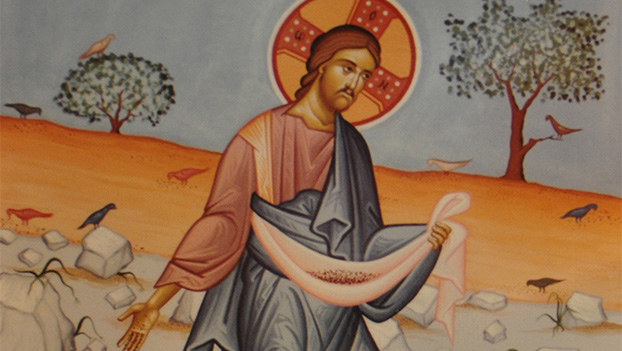
In the Gospel today (Mark 4:1-9), the Lord illustrates the several types of soul who fall away and the one type that endures, by means of the Parable of the Sower:

At that time, Jesus began again to teach by the sea side: and there was gathered unto him a great multitude, so that he entered into a ship, and sat in the sea; and the whole multitude was by the sea on the land. And he taught them many things by parables, and said unto them in his doctrine, Hearken; Behold, there went out a sower to sow: And it came to pass, as he sowed, some fell by the way side, and the fowls of the air came and devoured it up. And some fell on stony ground, where it had not much earth; and immediately it sprang up, because it had no depth of earth: But when the sun was up, it was scorched; and because it had no root, it withered away. And some fell among thorns, and the thorns grew up, and choked it, and it yielded no fruit. And other fell on good ground, and did yield fruit that sprang up and increased; and brought forth, some thirty, and some sixty, and some an hundred. And he said unto them, He that hath ears to hear, let him hear.

St. Theophan the Recluse tells us very simply how to be the good ground that yields spiritual fruit:

…How do you make yourself into the good ground? With attention and study of the word of God, sympathy and love toward it, and readiness to immediately carry out what you learn. With such a mind-set, not a single word will lie on the surface of your soul, but all will enter within. Uniting with the elements of the spirit which are dear to it, it will take root and sprout. Then, being nourished – from above through spiritual inspirations, and from below through good desires and labors – it will grow into a tree and will flower and give fruit… – Thoughts for Each Day of the Year, p. 182.

Notice that St. Theophan says that the word of God will unite with the elements of the spirit which are dear to it. In other words, God made the soul for Himself, to hear Him, to delight in Him, to want to do what He wants.   And furthermore, souls enlightened by Holy Baptism have the power to overcome the fallenness of human nature and to do all this. This is not impossible, by any means, but rather quite natural. We simply do not take advantage of the gifts we already have.

So let us begin on the basis of the assumption that our souls are designed to be the good soil, not the other way around.   What steps do we take? St. Theophan says 1. Attention and study of the word of God, 2. Sympathy and love toward it, and 3. Doing what it says.   These three activities correspond to the three powers of the soul: The reasoning power (ὁ λόγος – logos, mind, understanding, reason), the desiring power (ἡ επιθυμία – epithymia, desire, attraction, love), and the incensive power (ὁ θυμός – thymos, drive, anger, ambition, will to action). We simply have to turn the soul in the right direction as it performs its natural functions – to understand, to love, and to act. The soul is going to do this with or without guidance: there is no question that it will understand, love, and act. The question is whether it will understand, love, and act based upon the true or the false, the beautiful or the ugly, the good or the bad.

Let us, then, resolve each day, with God helping us, to spend time in prayer and sacred study, with the struggle for attention. Our hearts will naturally be attracted to the beauties of holiness depicted therein, if only we give it enough time and attention. Then we must listen to the promptings of conscience and do what the mind and heart are inclining towards. Thus we become the good earth that yields spiritual fruit.

Simple, no?

xpthesower

Posted in Uncategorized | Comments Off on Becoming the good earth

Enduring for the sake of Christ

19 August OS 2016 – Thursday of the Eleventh Week of St. Matthew; Afterfeast of the Dormition; Holy Martyr Andrew the Commander and the 2,593 Soldiers with Him

In the Gospel today, the Lord encourages us with very plain words, “He that shall endure unto the end, the same shall be saved.”

The Lord said to His disciples, he that shall endure unto the end, the same shall be saved. And this gospel of the kingdom shall be preached in all the world for a witness unto all nations; and then shall the end come. When ye therefore shall see the abomination of desolation, spoken of by Daniel the prophet, stand in the holy place, (whoso readeth, let him understand:) Then let them which be in Judaea flee into the mountains: Let him which is on the housetop not come down to take any thing out of his house: Neither let him which is in the field return back to take his clothes. And woe unto them that are with child, and to them that give suck in those days! But pray ye that your flight be not in the winter, neither on the sabbath day: For then shall be great tribulation, such as was not since the beginning of the world to this time, no, nor ever shall be. And except those days should be shortened, there should no flesh be saved: but for the elect’s sake those days shall be shortened. Then if any man shall say unto you, Lo, here is Christ, or there; believe it not. For there shall arise false Christs, and false prophets, and shall shew great signs and wonders; insomuch that, if it were possible, they shall deceive the very elect. Behold, I have told you before. Wherefore if they shall say unto you, Behold, he is in the desert; go not forth: behold, he is in the secret chambers; believe it not. For as the lightning cometh out of the east, and shineth even unto the west; so shall also the coming of the Son of man be. For wheresoever the carcase is, there will the eagles be gathered together.   – Matthew 24: 13-28

St. Theophan the Recluse points out that everyone has to endure something anyway; we may as well endure for the Lord and for our salvation!

not everyone who endures will be saved, but only he who endures on the Lord’s path. This life is given to us for that reason – to endure. Everyone endures something, even through to the very end. But enduring does not lead to benefit if it is not for the sake of the Lord and His Holy Gospel. Step onto the path of faith and the Gospel commandments; occasions to endure will multiply, but from that moment endurance will begin to bring forth crowns. That endurance which before was empty, will be made fruitful. The enemy brings such blindness upon us that the endurance which is encountered on the path of good seems heavy and unbearable, while what he inflicts on those who serve the passions seem light and free, although it is actually heavier and more dismal than what people bear in struggling against the passions and opposing the enemy! But we are blind and do not see this. We labor, endure, and strain ourselves to the breaking point for the sake of the enemy, unto our own perdition. – Thoughts for Each Day of the Year, pp. 171-172

We say this all the time: “Everyone has problems.” “Everyone has something to deal with in their lives.” And so forth. This is true, manifestly true, and no one will escape it.   Therefore, since we have to endure something anyway, why not endure the light yoke of Christ instead of the exhausting, anxiety producing, and frustrating yoke of worldliness? Why not endure unto salvation and not damnation? St. John Chrysostom points out that people exhaust themselves and spend their whole lives in tremendous anxiety to acquire the things that lead to hell – luxuries, pleasures, entertainment, the admiration of others, social status, etc. – while the things that lead to salvation – poverty, illness, the hatred of men, loneliness, etc. – are free and require no laborious pursuit. They knock at your door uninvited and bestow themselves un-bought!

We do not “go looking for trouble,” of course, in order to find our salvation – that would be a form of spiritual vanity. But we do not resent troubles when they come our way, as if we did not need them or deserve them. We remember the Lord’s words: “He who endures to the end, the same shall be saved.”   What matters is that we endure for the Lord, to please Him, and in the way that God desires, that is, according to His commandments. The trouble itself, the particular thing we have to endure, is not important. It is but a means, an instrument, to acquire grace and find our salvation.

Let us, then, take up the light yoke of God’s commandments, pray to be delivered from temptation, and say with all the sincerity we can muster, “Thy will be done.” The rest is in God’s hands. This thought, in itself, should give us lasting peace.

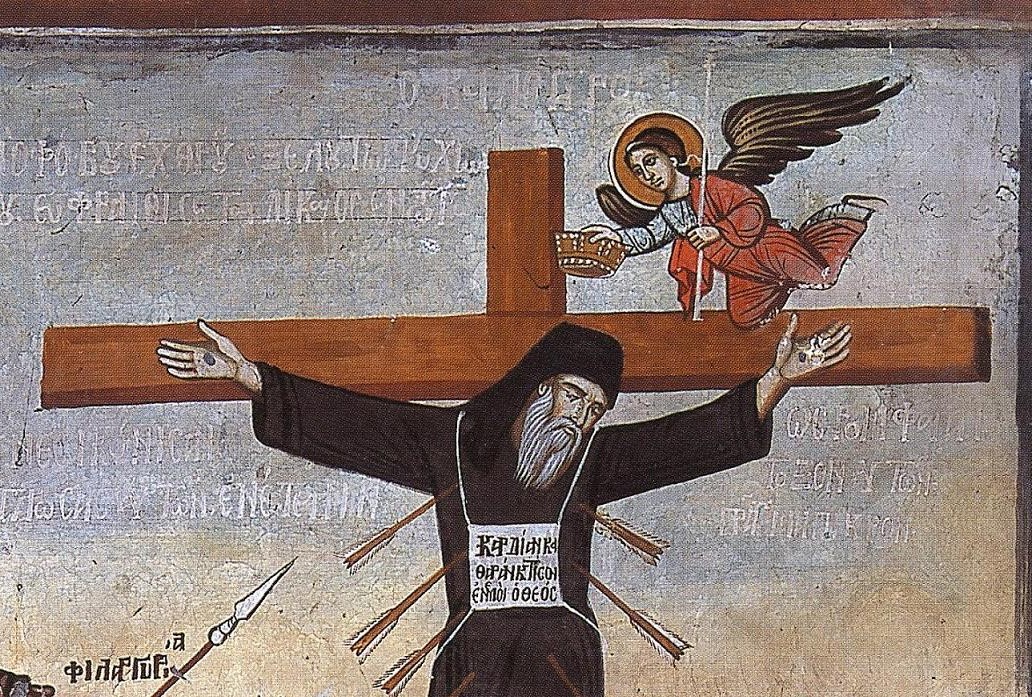
crucified monk

Posted in Uncategorized | Comments Off on Enduring for the sake of Christ

Turning to the Lord once and for all

18 August OS 2016 – Wednesday of the Eleventh Week of St. Matthew; Afterfeast of the Dormition; Holy Martyrs Florus and Laurus

In the Gospel today, the Lord announces to the unbelieving Jews that God rejects them, because of their unbelief and hardness of heart despite all of His mercies to them:

Woe unto you, scribes and Pharisees, hypocrites! because ye build the tombs of the prophets, and garnish the sepulchres of the righteous, And say, If we had been in the days of our fathers, we would not have been partakers with them in the blood of the prophets. Wherefore ye be witnesses unto yourselves, that ye are the children of them which killed the prophets. Fill ye up then the measure of your fathers. Ye serpents, ye generation of vipers, how can ye escape the damnation of hell? Wherefore, behold, I send unto you prophets, and wise men, and scribes: and some of them ye shall kill and crucify; and some of them shall ye scourge in your synagogues, and persecute them from city to city: That upon you may come all the righteous blood shed upon the earth, from the blood of righteous Abel unto the blood of Zacharias son of Barachias, whom ye slew between the temple and the altar. Verily I say unto you, All these things shall come upon this generation. O Jerusalem, Jerusalem, thou that killest the prophets, and stonest them which are sent unto thee, how often would I have gathered thy children together, even as a hen gathereth her chickens under her wings, and ye would not! Behold, your house is left unto you desolate. For I say unto you, Ye shall not see me henceforth, till ye shall say, Blessed is he that cometh in the name of the Lord. – Matthew 23: 29-39

St. Theophan the Recluse applies this example to our spiritual life: God gives us numerous opportunities to repent and form a firm intention to please Him, but at some point, unknown to us, there can be a final turning away from Him and the loss of His grace, if we stubbornly refuse His call:

How many mercies the Lord revealed to Jerusalem (that is, to the Jews)! And, in the end, He was still forced to say, “Behold, your house is left unto you desolate.” It is well known to all what the consequences of this were: the Jews are homeless to this day. [This was written in the 1880’s, long before the 1948 establishment of the State of Israel.] Does not a similar thing occur with the soul? The Lord cares for the soul and teaches it in every way. An obedient soul traverses the path indicated, but a disobedient soul remains in opposition to God’s calling. However, the Lord does not abandon even this soul, and uses every means to bring it to reason. If stubbornness increases, God’s influence increases. But there is a limit to everything. A soul becomes hardened, and the Lord, seeing that there is nothing more that can be done with this soul, abandons it to its fall, and it perishes like Pharaoh. Let anyone who is beset by passions learn from this the lesson that he cannot continue indulging himself indefinitely without punishment. Is it not time to abandon those passions – not just to deny oneself occasionally, but to decisively turn away? Indeed, no one can say when he will overstep the limit. Perhaps God’s long-suffering is just about to end.   – Thoughts for Each Day of the Year, pp. 170-171

Sobering words!   Some may object, however: “God’s mercy is without limits!   One can repent until death!” Of course it is absolutely true that God’s mercy is without limits, and, if a man come to his senses, and be in this life still, he can certainly repent. But note the condition: “…if a man come to his senses.” What St. Theophan is pointing out is that at some point before death a man may make a final turning away from God and never come back to his senses. God, for Whom there is no present, past, or future, and Who knows all things, withdraws His grace from such a person, knowing that he will never repent. This is what it means in Exodus when it says, “The Lord hardened Pharaoh’s heart.”

We must, then, keep careful watch over the life of the soul and not take God’s long-suffering for granted. Criminal psychologists note that it is a mark of sociopaths that they have no gratitude whatsoever for the many times that others have forgiven their crimes, and they have no remorse. We can be sociopaths in regard to God, taking His mercy for granted and becoming hardened in heart.

Why does this occur?   Of course, there is the obvious explanation, that we cherish our sins and passions and do not want to give them up. But there is also another reason, that God is not real to us.  Even if we feel helpless to fight our sins, even if we feel what is, humanly speaking, an irresistible attraction to them, yet if we had a lively faith in God, and deeply desired to please Him while feeling at the same time that all of our hope is in Him and that without Him we can do nothing – then He would show His might and come to save us. Our enemies would vanish very quickly. But lively faith and the desire to please God arise from a living sense of His presence, that He is right here, close to us, that indeed He is closer to us than we are to ourselves.

How do we obtain this lively sense of His presence? We must go to Christ, our Incarnate God, a man like us in all things but sin, and pour out our hearts before Him. We must approach the mercy seat, His Cross, and throw ourselves entirely on His mercy. We must approach Him, cling to Him, and not let go until our hearts are softened, and we are set again on the path to salvation.

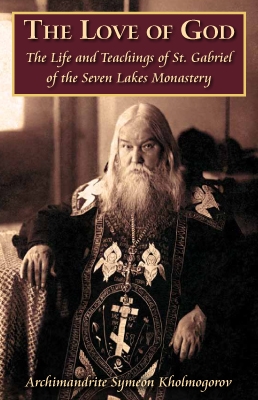
In his last testament to his spiritual children, the Elder Gabriel of Seven Lakes Monastery (+1915), gave very straightforward advice to those in spiritual trouble. What is remarkable is how simple the actions he recommends are, while at the same time what transcendent benefits he promises. I would like to reproduce it in full, and I pray that those who read it will take it to heart. It is taken from pp. 234-235 of The Love of God – the Life and Teachings of St. Gabriel of the Seven Lakes Monastery (St. Herman Press, 2016):

Elder Gabriel’s Testament to His Spiritual Children

             Soon, perhaps, I will die. I leave you an inheritance of great and inexhaustible riches. There is enough for everyone, only they must make profitable use of it and not doubt. Whoever is wise enough to make use of this inheritance will live without want.

  1. When someone feels that he is a sinner, and can find no way out, let him shut himself alone in his cell and read the Canon and Akathist to Sweetest Jesus Christ, and his tears will be a comforting remedy for him.
  1. When someone finds himself amidst misfortunes of any kind, let him read the Supplicatory Canon to the Mother of God (“Distressed by many temptations…”), and all his misfortunes will pass without a trace, to the shame of those who assailed him.
  1. When someone needs inner illumination of soul, let him read the Seventeenth Kathisma [i.e., Psalm 118] with attention, and his inner eyes will be opened. The need to bring what is written in it to realization will follow. The need to cleanse the conscience more frequently in Confession and to communicate of the Holy Mysteries of the Body and Blood of Christ will arise. The virtue of compassion for others will be manifest, so that we will not scorn them but rather suffer for them and pray for them. Then, the inward fear of God will appear, in which the accomplishments of the Savior will be revealed to the inner eye of the soul – how He suffered for us and loved us. Grace-filled love for Him will appear with the power of the Holy Spirit, Who instructs us in every ascetic labor, teaching us how to accomplish them and endure. In our patience, we will perceive and sense in ourselves the coming of the Kingdom of God in His power, and we will reign together with the Lord and become holy.

             This world will not appear to us the way it is depicted to us now. However, we will not judge it, since Jesus Christ will judge it. But we will see the falsehood of the world and the sin that is in it. We will see righteousness too, but only in the Savior, and we will partake of it in Him alone.    

            Falsehood! We see it and yet we do not. False is this world with all its quickly passing deceptions, for all will pass away, never to return. But Christ’s truth shall endure unto the ages of ages. Amen. 

                                                                        – Schema-archimandrite Gabriel


elder gabriel

Posted in Uncategorized | Comments Off on Turning to the Lord once and for all

The believing mind

12 August OS 2016 – Thursday of the Tenth Week of St. Matthew; the Dormition Fast; Holy Martyrs Photius and Anicetas

In the Gospel today, we see the chief priests and Pharisees refusing to repent and, instead, hardening their hearts against the Lord:

The Lord said to the Jews which came to Him: Therefore say I unto you, The kingdom of God shall be taken from you, and given to a nation bringing forth the fruits thereof. And whosoever shall fall on this stone shall be broken: but on whomsoever it shall fall, it will grind him to powder. And when the chief priests and Pharisees had heard his parables, they perceived that he spake of them.
But when they sought to lay hands on him, they feared the multitude, because they took him for a prophet.
St. Matthew 21: 43-46

 St. Theophan the Recluse remarks that the opposition to the Gospel is always irrational:

The chief priests and Pharisees perceived that the Lord was telling parables on their account, that He was opening their eyes so that they would see the truth. But what did they do with this? They thought about how to kill the Lord. If their common sense had not been distorted by their prejudice, then even if they could not believe, as the clarity of the instruction required, they would at least have carefully considered the truth of the Savior’s words. Their prejudice pushed them onto a crooked path, and they then proved to be God-killers. It has always been this way, and it is this way now. The Germans [i.e., the liberal Scripture scholars in the German universities], and our people who have become Germanized in their mentality, immediately cry out whenever they come across a miracle in the Gospels, “Not true, not true; this did not happen and could not happen, this needs to be crossed out.” Is not this the same as killing? Look through all the books of these clever men – in none of them will you find any indication as to why they think this way. Not one of them can say anything against what the Gospel truth proves, and not one cares to comprehend the arguments which sober-minded people use to convict their falseness; they only continue insisting that [what is written] could not be, and that is why they do not believe the Gospels. And you cannot do anything with them – they are ready to defy God Himself. –  Thoughts for Each Day of the Year, pp. 164-165

St. Theophan likens the blindness of the modern skeptic to the blindness of the Pharisees, and, indeed, it is the same, arising from the same cause: pride and hardness of heart. The materialist outlook, which the humanists and liberals call “rational,” is profoundly irrational, because it cannot explain the existence of mind itself, of knowledge itself. A person would only adopt such a philosophy from the primordial Luciferian urge to pretend to be god in spite of all evidence to the contrary. The offspring of the liberals, the nihilists, are at least honest to this extent: they not only admit but revel in their irrationality, and they not only admit but revel in the fact that the only possible outcome of their philosophy is total destruction.

All of us, living as we are in an “unbelieving and perverse generation,” suffer temptations to doubt, at least now and then. We have available to us excellent works of apologetics to help us overcome this on the intellectual level. But more importantly, we must immerse ourselves in the Orthodox worldview by constant reading of Scripture, of the Lives of the Saints, and other authentic Orthodox sources; by prayer; and by being present, with attention, as at many divine services in Church as possible. Our minds have to swim, as it were, in the Orthodox spiritual and mental universe, because being convinced at one point by an intellectual argument does not give us sufficient strength to stay convinced.  Our minds are naturally attracted to what they are exposed to, and our hearts follow our minds. This is simply human nature.

Such an immersion in Orthodox sources rewards us immediately with clarity of the mind and lightening of the heart. In contrast to the heavy burden of worldly thoughts and worldly subject matter,  God’s truth is the light burden that gives rest to our souls. In contrast to the mental  hell of this world’s confusion, it is Paradise before Paradise.

The next time, then, you are burdened by the world and its “news,” instead of doing something useless and destructive (like surfing to the next website in order to become more confused, helpless, and angry), open the Holy Gospel, stand in your icon corner, and start reading aloud.   Read the Life of a saint that has helped you in the past. Grab your prayer rope, take a walk, and glorify God for His beautiful creation.   We have an entire spiritual universe open to us, wider than the heavens, which no one else has. We need to show our gratitude by choosing to live in it.

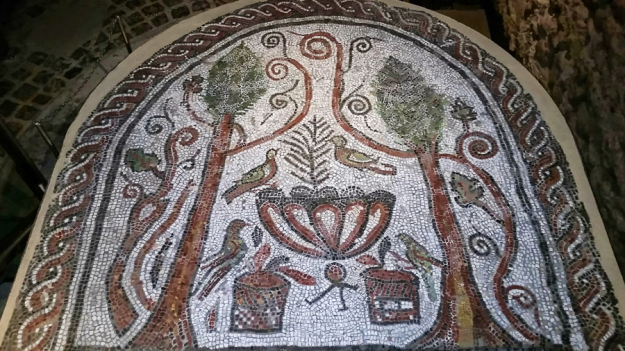
treesofparadise

Posted in Uncategorized | Comments Off on The believing mind

Life with integrity

10 August OS 2016 – Tuesday of the Tenth Week of St. Matthew; Holy Martyr Lawrence the Archdeacon of Rome

In the Gospel today, Our Lord confronts the chief priests and elders with their self-serving hypocrisy:

And when he was come into the temple, the chief priests and the elders of the people came unto him as he was teaching, and said, By what authority doest thou these things? and who gave thee this authority? And Jesus answered and said unto them, I also will ask you one thing, which if ye tell me, I in like wise will tell you by what authority I do these things. The baptism of John, whence was it? from heaven, or of men? And they reasoned with themselves, saying, If we shall say, From heaven; he will say unto us, Why did ye not then believe him? But if we shall say, Of men; we fear the people; for all hold John as a prophet. And they answered Jesus, and said, We cannot tell. And he said unto them, Neither tell I you by what authority I do these things. – St. Matthew 21: 23-27

 St. Theophan the Recluse uses this Gospel passage to describe the mindset of the truth-deniers of every age:

When the Lord asked the question about John the Baptist, the chief priests and the elders thought, “If we answer this way or that, either way is detrimental for us,” and that is why they decided it would be better to use ignorance as a cover. Their self-interest tied their tongue and did not allow them to witness to the truth. If they had loved truth more than themselves, the words would have been different, as would their works. Their interests buried the truth and would not let it reach their hearts. Their interests kept them from forming a sincere conviction, and made their hearts indifferent to the truth. This is how it always is – egotistical strivings are the primordial enemies of truth. All other enemies follow them and act by means of them. If one investigates how all delusions and heresies have arisen, it turns out that this is precisely the source of them all: In words, truth is truth; but in reality, the truth hinders us in one regard or another and must be eliminated, and a lie must be set in its place which is more favorable to us. Why, for example, are there materialists and nihilists? Because the idea of God the Creator, Provider, and Judge, together with the idea of the spirituality of the soul, hinders those people from living in grand style according to their inclinations, and so they push the idea aside. it is clear from the worthlessness of their premises that nihilists are not guided by the truth. They want everything to be just as they think it is, and every phantom that reflects their thoughts is exhibited by them as a witness to the truth. If they would sober up even a little, they would immediately see their lie. But they feel sorry for themselves, and therefore remain as they are. – Thoughts for Each Day of the Year, pp. 164-165

“…egotistical strivings are the primordial enemies of truth.” In the case of both religious and secular power-mongers, this egotism takes the obvious form of the publicly flaunted pursuit of self-interest. But “egotistical strivings” are not the sole property of the rich and powerful. All people, because “…they feel sorry for themselves…” shy away from holding the mirror of truth up to their own lives. Every man has a fallen nature, and therefore every man blinds himself to the truth.   Salvation requires that man assent to the revealed truths of the Faith, receive the grace of faith, and let the light of truth enlighten his darkened mind. The world (society), the flesh (our passions), and the devil fight this every step of the way. But God’s grace is all-conquering, and a man who wills not to feel sorry for himself, who desires to know and to live by the truth at all costs, will receive it in abundance.

Avoiding heresies and delusions, then, is not simply a matter of the mind but also of the will. Someone has to will to know the truth at all costs, no matter what it takes. Then, for that truth to be his glory instead of his shame, he has to live by it, at all costs, no matter what it takes, for to accept the truth in word but deny it by one’s life is the same – or perhaps worse – than never having accepted it at all.

The age we live in, however, in the apt expression of the late Fr. Seraphim Rose, is an age of spiritual fakery par excellence. It is literally a pandemonium, an age in which all the demons of hell have been let loose, for “he that restraineth” (i.e., the divinely anointed Orthodox emperor, and true Christian authority in general) has been removed, evil men rule every nation, and therefore, in the short run, evil seems to have free rein. Every kind of false opinion and phony “goodness” is exalted, and the hard truth of God’s Word is derided, even denounced as evil itself. To fit in, to serve one’s immediate self-interest of societal acceptance and advancement, one must bury the truth and not let it reach one’s heart, or if one does know the truth, one must tie one’s tongue and not witness to it.  The only path open to integrity is therefore not to fit in, to live as Noah before the Flood, Lot in Sodom, Joseph amid the fleshpots of Egypt, and Daniel in the court of Babylon.

Obviously, one can live in this way only by faith, by prayer, and by grace.  Only a “man of divine desires,” like Daniel, can keep the truth firmly fixed in mind and heart – and live by it – while surrounded by the enemies of truth and their witting or unwitting slaves. Only the burning love for Christ can give one the ability to keep going when everything in this world militates against the truth of the Faith.   Therefore conscious, attentive, and heartfelt prayer, on a daily basis, is not an “add-on,” an optional adornment of the obvious saints but not required for salvation. It is the life preserver of every sinner drowning in the sea of life.

The next time, then, you are tempted to skip your prayers, or inattentively to rattle through them, remember that you are, in fact, drowning, but the Lord is holding out His hand. He is saying, “Struggle a bit, pay attention to Me, and I will save you.”

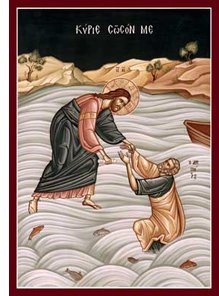
lordsaveme

Posted in Uncategorized | Comments Off on Life with integrity

Today if you hear His voice, harden not your hearts

4 August OS 2016 – Wednesday of the Ninth Week of St. Matthew; the Seven Youths of Ephesus

In the Gospel today, Our Lord proclaims His grace and sovereign will to save all men, even those who wait till the eleventh hour to repent:

For the kingdom of heaven is like unto a man that is an householder, which went out early in the morning to hire laborers into his vineyard. And when he had agreed with the laborers for a penny a day, he sent them into his vineyard. And he went out about the third hour, and saw others standing idle in the marketplace, And said unto them; Go ye also into the vineyard, and whatsoever is right I will give you. And they went their way. Again he went out about the sixth and ninth hour, and did likewise. And about the eleventh hour he went out, and found others standing idle, and saith unto them, Why stand ye here all the day idle? They say unto him, Because no man hath hired us. He saith unto them, Go ye also into the vineyard; and whatsoever is right, that shall ye receive. So when even was come, the lord of the vineyard saith unto his steward, Call the laborers, and give them their hire, beginning from the last unto the first. And when they came that were hired about the eleventh hour, they received every man a penny. But when the first came, they supposed that they should have received more; and they likewise received every man a penny. And when they had received it, they murmured against the goodman of the house, Saying, These last have wrought but one hour, and thou hast made them equal unto us, which have borne the burden and heat of the day. But he answered one of them, and said, Friend, I do thee no wrong: didst not thou agree with me for a penny? Take that thine is, and go thy way: I will give unto this last, even as unto thee. Is it not lawful for me to do what I will with mine own? Is thine eye evil, because I am good? So the last shall be first, and the first last: for many be called, but few chosen. – Matthew 20: 1-16

 St. Theophan the Recluse encourages us never to give up hope, even if we have waited until old age to repent:

In the parable about the hirelings, even he who worked only one hour was rewarded by he master of the house the same as the others. The hours of the day in this parable are an image of the course of our life. The eleventh hour is the final period of this life. The Lord shows that even those who lived without serving Him up that that moment can begin to work and can please Him no less than the others. Therefore, old age is no excuse. Let no one despair, supposing that there is no point in beginning to work. Begin, and do not be afraid. The Lord is merciful – He will give you all that He gives others: here, according to the order of grace, and there, according to the law of justice. Just have more fervor, and grieve more contritely about the carelessness in which almost all of your life was spent. You will say, “The master of the house summoned those in the parable – so, let the Lord call me. But is He not calling? Could it really be that you do not hear the voice of the Lord in the Church, saying, “Come unto Me all ye,” and the Apostle’s call, “As though God did beseech you by us: we pray you in Christ’s stead, be ye reconciled to God (II Corinthians 5:20).”  – Thoughts for Each Day of the Year, pp. 159-160

 The Lord did not tell this parable, of course, in order to encourage us to put off repentance, saying, “Great, no problem. I shall live a worldly life, planning to take the salvation of my soul seriously at the eleventh hour and prepare for death.” Those who take this approach usually do not recognize the eleventh hour when they see it, and death takes them at a time they did not expect. The right understanding at all times is to say, “This is the eleventh hour!”   As it is written in the Psalms, “Today if ye will hear His voice, harden not your hearts (Ps. 94),” and St. Paul exhorts us, saying, “For he saith, I have heard thee in a time accepted, and in the day of salvation have I succored thee: behold, now is the accepted time; behold, now is the day of salvation (II Corinthians 6:2).” Every day, every moment, may be our eleventh hour.   It is never too late or too early to repent. The time is always now.

The aggrieved workers of the first hour did not understand their employer’s seeming injustice because they did not acknowledge his right to do what he wished with what was his own. This is an image of our stiff-necked refusal to fall down before God’s infinite wisdom, accept His judgments, and confess His sovereignty over His creation and our lives in particular.

Both attitudes – “I’ll live as I please until old age, and then I’ll ‘get religion’,” and “God is not fair” – simply manifest the blindness of fallen nature. We live in delusion and do not realize it. If we saw things as they really are, we would be running to confess our sins constantly, commune frequently, and prepare for death daily.   If we saw things as they really are, we would be overwhelmed with gratitude that God, indeed, is not “fair.” He is merciful. If He were not, no one would be saved.

Today, if ye will hear His voice, harden not your hearts, as in the provocation, in the day of temptation in the wilderness.

For your fathers tempted Me, they proved Me and saw My works.

Forty years long was I grieved with that generation, and I said: They do always err in their hearts.

And they have not known My ways; so I swore in Mine anger: They shall not enter into My rest. – Psalm 94:8-11

There remaineth therefore a rest to the people of God. For he that is entered into His rest, he also hath ceased from his own works, as God did from His.
Let us labor therefore to enter into that rest, lest any man fall after the same example of unbelief. For the word of God is quick, and powerful, and sharper than any two-edged sword, piercing even to the dividing asunder of soul and spirit, and of the joints and marrow, and is a discerner of the thoughts and intents of the heart. Neither is there any creature that is not manifest in His sight: but all things are naked and opened unto the eyes of Him with Whom we have to do. Seeing then that we have a great high priest, that is passed into the heavens, Jesus the Son of God, let us hold fast our profession. For we have not an high priest which cannot be touched with the feeling of our infirmities; but was in all points tempted like as we are, yet without sin. Let us therefore come boldly unto the throne of grace, that we may obtain mercy, and find grace to help in time of need.
– Hebrews 4: 9-16

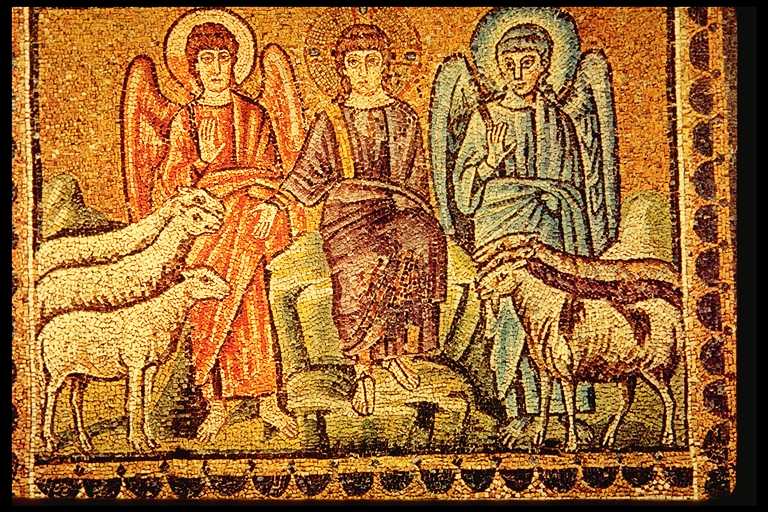
christ-judge-sheep-and-goats

Posted in Uncategorized | Comments Off on Today if you hear His voice, harden not your hearts

The “problem of evil” and real courage

15 July OS 2016 – Thursday of the Sixth Week of St. Matthew; Holy Martyrs Kirikos and Julita, Holy Great Prince Vladimir, Equal-to-the-Apostles

In today’s Gospel reading (Matthew 13:36-43), the Lord Jesus teaches the disciples that He permits the existence and intermingling of both the good and the evil during our earthly life, and how this relates to the Dread Judgment:

At that time, Jesus sent the multitude away, and went into the house: and his disciples came unto him, saying, Declare unto us the parable of the tares of the field. He answered and said unto them, He that soweth the good seed is the Son of man; The field is the world; the good seed are the children of the kingdom; but the tares are the children of the wicked one; The enemy that sowed them is the devil; the harvest is the end of the world; and the reapers are the angels. As therefore the tares are gathered and burned in the fire; so shall it be in the end of this world. The Son of man shall send forth his angels, and they shall gather out of his kingdom all things that offend, and them which do iniquity; And shall cast them into a furnace of fire: there shall be wailing and gnashing of teeth.Then shall the righteous shine forth as the sun in the kingdom of their Father. Who hath ears to hear, let him hear.

 St. Theophan the Recluse takes this occasion to explain the role of evil in the spiritual life of the faithful:

…Thus will be carried out the division of good and evil, light and darkness. Now is the period of time in which they are mixed. It pleased the Lord to arrange that the freedom of creatures should grow and be strengthened in good through the struggle against evil. Evil is allowed, both in connection with inward freedom and outside of a person. It does not determine anything, it only tempts. One who feels a temptation must not fall, but enter into battle. He who conquers is freed from one temptation, and advances forward and upward to find a new temptation there – and so on, until the end of his life. Oh, when will we comprehend the significance of the evil which tempts us, so that we might arrange our lives according to this understanding? The strugglers are finally crowned, and pass on to the next life, where there are neither sicknesses nor sorrows, and where they become inwardly pure like angels of God, free from the sting of tempting inclinations and thoughts. This is how the triumph of light and good is being prepared, and it will be revealed in all of its glory on the last day of the world. – Thoughts for Each Day of the Year, p. 145

One of the stock arguments of atheists is the so-called “problem of evil”: “How can a good and all-powerful God allow evil: Either He is good but not all-powerful and therefore cannot prevent evil, or He is all-powerful but evil, since He causes or allows evil to exist.” There are several things wrong with this argument, but let us make one thing clear: Only the Christian understanding of evil allows for man’s moral freedom, for man to be a spiritual and free being capable of loving God.   No other explanation makes room for this. God does not will evil, but He allows it, so that 1. Man may choose freely to obey Him or not, to become His servant and friend or not, and 2. The existence of evil provides the arena for man’s spiritual struggle – truly do the Fathers say that without temptations no one would be saved.  Anyone who has engaged in conscious spiritual life in an Orthodox setting understands this immediately.

Our intellects say, “Yes, now that someone has explained this to us, it is quite reasonable,” but we initially received this lofty understanding of man’s vocation through divine revelation, by grace, not by our own mental efforts. We realize that, being of divine origin, this truth is of course incomparably superior to the explanations that the fallen mind of man has created. We perceive that it gives us both peace of soul and the incentive to fight evil and to do good, and therefore not only is it intellectually satisfying but of the highest therapeutic and moral value.   Experiencing this, we ask, “Why would anyone not want to believe in the Faith?”

The answer, of course, is pride of mind, pride of will, and pride of sensuality: Fallen man wants to create his own reality, fallen man wants to disobey God’s law, and fallen man wants to indulge his passions. Even so, man has always wanted to explain evil, and therefore the finite and fallen intellect of man has constructed three basic explanations of evil.

The “Eastern religions,” Hinduism, Buddhism, and their variants, say that this world is an illusion, that evil is being trapped in the illusory, material world due to some cosmic accident no one can explain, and that you need to go through various incarnations to get rid of your materiality (karma), to realize that even your personal existence and the existence of a personal God are illusions (or, conversely, that you are God, which amounts to the same thing), and that once you get rid of all mental distinctions, you will be absorbed into the World Soul, totally lose your individual existence, and feel no pain. One is eerily reminded of the epitaph of the excommunicated apostate novelist, Nikos Kazantzakis, who claimed to have no religion at all: “I hope for nothing. I fear nothing. I am free.”

Islam – and, to the extent that they are infected by determinism, schools of Roman Catholic and Protestant thought – say that only God’s will is really operative in the universe, that He is not interested in explaining anything to us, that what constitutes good and evil is not even a question open to rational discourse, and that your job is to submit without question or thought to the great Divine Steamroller, “Allah,” or whatever you want to call it.   Admit His total sovereignty, don’t question anything, and jump onto the cosmic Juggernaut before it runs over you.   On Judgment Day, all you can do is hope for the best, because you have no idea whatsoever if you have pleased the GUI (the Great Ultimate It) or not.

Materialism says that everything we experience is an accidental concourse of material stuff, and therefore nothing means anything. Eat, drink, and be merry, or seek total power over others for the thrill of it, or commit suicide, or whatever. Since mind does not exist, who cares what good or evil are, anyway, or who could offer a meaningful definition, since what the neurons in your brain invent is an accident, and what the neurons in my brain invent is another accident, and the two do not have anything to do with each other, do they?

What all three explanations have in common, ultimately, is nihilism, “nothing-ism.”   At root, all three deny Who God is, deny who man is, and deny the love of God for man.   All three, at root, are the fruit of pride, of Satan’s rebellion against the All-Good and All-Loving God Who created him, the fruit of Satan’s choice to “reign in hell rather than to serve in heaven.”   To adopt any of these three views and really live by it is to consign oneself to hell in this life, much less the next. Yet people fall very easily into these views, and only with great difficulty, and by God’s grace, do they accept the Truth. Without the miracle of grace, humankind cannot bear too much reality.

The Orthodox Church teaches us the truth, which is that God created man out of love and for love, so that man could freely choose to love God and do His holy will.   Advancing step by step from the fear of punishment to the desire for heavenly rewards to the love of God for His own sake, and thereby attaining the freedom of divine friendship, a man becomes a “god by grace,” and in the process, far from being absorbed into the Cosmic One, and far from being the helpless pawn of an inscrutable fate, he becomes more, and more truly, himself. To accomplish this, however, we must be courageous and full of hope in God’s mercy; we must open our hearts and throw ourselves into the abyss of His love, trusting Him to catch us.   We have to look evil square in the face and bravely hope anyway in the all-loving and all-wise God, Who cares for us, Who became a man and died for us, and Who rose from the dead, giving us the hope of an everlasting life.

Kazantzakis claimed that he had no fear because he had no hope. This is not courage but the very essence of cowardice. We can choose this way – the way of nihilism – or we can go the path of the saints.   Increasingly it becomes clear, from all that is happening around us, that there is no other choice.

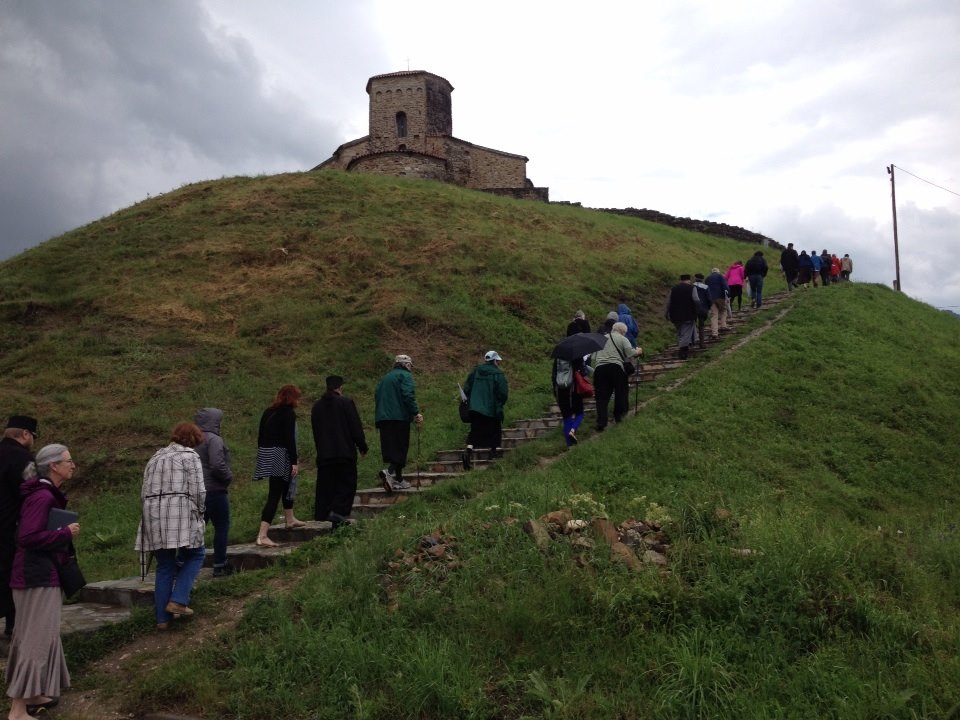
pilgrims walking up a hill to a church in Serbia

Posted in Uncategorized | Comments Off on The “problem of evil” and real courage

Growing our souls

14 July OS 2016 – Wednesday of the Sixth Week of Matthew; Holy Apostles Aquila and Priscilla, St. Nicodemus of the Holy Mountain

In today’s Gospel reading (Matthew 13:31-36), the Lord Jesus tells the Parable of the Mustard Seed and the Parable of the Leaven:

The Lord spake this parable: The kingdom of heaven is like to a grain of mustard seed, which a man took, and sowed in his field: Which indeed is the least of all seeds: but when it is grown, it is the greatest among herbs, and becometh a tree, so that the birds of the air come and lodge in the branches thereof. Another parable spake he unto them; The kingdom of heaven is like unto leaven, which a woman took, and hid in three measures of meal, till the whole was leavened. All these things spake Jesus unto the multitude in parables; and without a parable spake he not unto them: That it might be fulfilled which was spoken by the prophet, saying, I will open my mouth in parables; I will utter things which have been kept secret from the foundation of the world.
Then Jesus sent the multitude away, and went into the house.

St. Theophan the Recluse, commenting on Our Lord’s words, explains how we can apply the images of the mustard seed and the leaven both to the Church and to our own spiritual lives:

The Kingdom is like a grain of mustard seed and leaven. A small grain of mustard seed grows up into a large bush; leaven penetrates a whole lump of dough and makes it leavened. Here, on the one hand, is an image of the Church, which in the beginning consisted only of the Apostles and a few other people. It then spread and became more numerous, penetrating all of humanity. On the other hand, it is an image of the spiritual life revealed in every person. Its first seed is the intention and determination to be saved through pleasing God in accordance with faith in the Lord and Savior. This determination, no matter how firm, is like a tiny speck. Its movement and strength multiply and mature within its own self, and it begins to penetrate all the powers of the soul – the mind, will, and feelings – then fills them with itself, leavens them according to its spirit, and penetrates the entire constitution of the human nature – body, soul, and spirit – in which it was engendered.  – Thoughts for Each Day of the Year, p. 144

The seed, then, of spiritual life, is the “intention and determination to be saved through pleasing God in accordance with faith in the Lord and Savior.” There are three elements to this: Intention and determination to be saved, pleasing God, and faith.

We can check ourselves every day, and ask ourselves, “Do I intend to be saved, am I determined to be saved?” It cannot be a vague wish, as we would vaguely wish for someone to hand us a million dollars, though we neither think it likely nor make any efforts towards obtaining our wish. We have to intend it, choose it, set out decisively to get it, with determination. When our intention becomes unsteady or our determination weakens, we must ask the Lord to clarify our minds and strengthen our wills.

Every day we should ask ourselves, “Do I desire to please God?” and we should ask the Lord to strengthen this desire in us. It is impossible to overestimate the power of the desire to please God, to do His holy will.   Once someone is irrevocably committed to the doing of God’s will, he will receive very great power from God to do so.   The Lord will strengthen his will, and he will experience the truth of the words that with God nothing is impossible.

“Very well,” you may say, “I do intend and I do will, but weakly, and sometimes it seems like such a dry experience.  Often I approach it as though it were a Stoic self-improvement program.”  At this point we must recall the third element in the “program” St. Theophan outlines:  Faith.   We must beg with tears for Faith, which,  in addition to being the voluntary assent of the mind to divine Truth, is also – and more importantly – a free gift of God’s grace. When our will grows weak and the clarity of our intention grows blurry, let us open the Holy Gospel and start reading slowly aloud.  Let us read the Life of a saint.  Let us kneel before the holy icons and carefully, slowly, read the Akathist to Our Sweetest Lord Jesus Christ or His Most Pure Mother.  Let us confess and prepare for Holy Communion.  The sweetness of His love, the vision of His divine beauty, will once again captivate our hearts, and we will remember why we have made our act of will, and that will shall grow strong again.  We will remember the end of Faith, which is Charity – Divine Love – and, unable to forget the Beauty of that Divine Love, we will open our hearts to Faith,  and the Hope born of courage will be not barren but a fruitful act of the will.

O Lord, Who desires our salvation, make to grow the seed of Faith in our hearts!

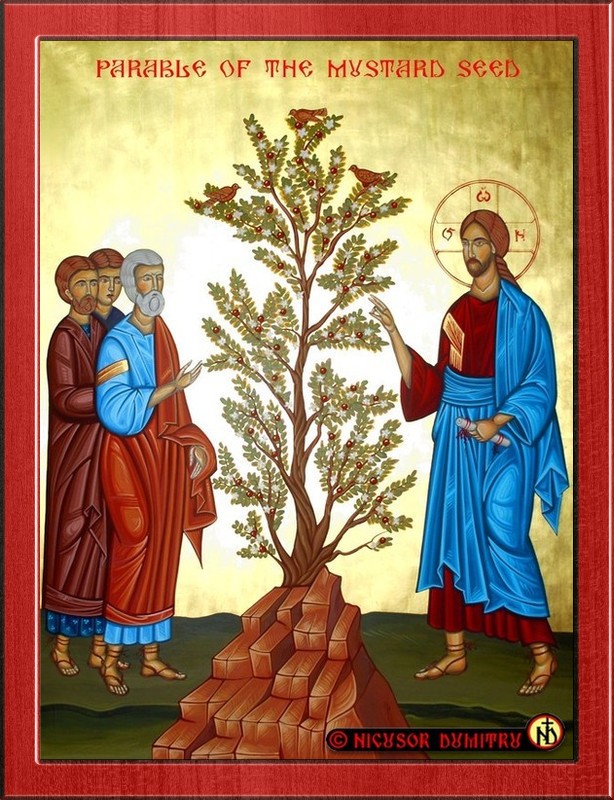
Mustard-Seed-Icon

Posted in Uncategorized | Comments Off on Growing our souls

Being relatives to the Lord

8 July OS 2016 – Thursday of the Fifth Week of Matthew; Holy Great Martyr Prokopios, Icon of the Mother of God “Kazan”

In today’s Gospel reading (Matthew 12:46-13:3), the Lord Jesus reminds us to realize who our true relatives are:

At that time, while Jesus yet talked to the people, behold, his mother and his brethren stood without, desiring to speak with him. Then one said unto him, Behold, thy mother and thy brethren stand without, desiring to speak with thee. But he answered and said unto him that told him, Who is my mother? and who are my brethren? And he stretched forth his hand toward his disciples, and said, Behold my mother and my brethren! For whosoever shall do the will of my Father which is in heaven, the same is my brother, and sister, and mother. The same day went Jesus out of the house, and sat by the sea side. And great multitudes were gathered together unto him, so that he went into a ship, and sat; and the whole multitude stood on the shore. And he spake many things unto them in parables. 

 St. Theophan the Recluse, commenting on Our Lord’s words, discusses the meaning of spiritual kinship:

“For whosoever shall do the will of My Father Who is in heaven, the same is My brother, and sister, and mother (Matt. 12:50).”  By this the Lord gives us to understand that the spiritual kinship which He came to plant and raise up on the earth is not the same as fleshly kinship; although in the form of its relationships, the spiritual is identical to the fleshly.  The spiritual also contains fathers and mothers – they are those who give birth to people with the word of truth, or the Gospel, as the Apostle Paul says.  And it contains also brothers and sisters – those who are born spiritually from the same person and grow in one spirit.  The bond between [spiritual] relatives is founded on the action of grace.  it is not external, not superficial, but it is as deep and alive as the fleshly bond, only it has its place in another, much higher and more important sphere.  This is why it predominates over the fleshly and, when necessary, offers the fleshly as a sacrifice to its spiritual interests without regret, in full certainty that this sacrifice is pleasing to God and is required by Him.  – Thoughts for Each Day of the Year, p. 140

Today, as we know, the natural, or traditional, human family is under attack as never before in “mainstream” Western society, to the point at which it is the exception rather than the rule.  To see a happy family of faithful, once-married, loving father (a man) and obedient mother (a woman) with many happy, healthy children,  surrounded by an extended family of caring grandparents and other relatives – though such families predominated in our society in living memory – is like encountering a vision from a lost world.   When the poor slaves (or, rather, lab rats) of the present day dystopia – brainwashed, addicted, self-mutilated (i.e., tattooed and pierced), fornicating, aborting, sodomizing, having children out of wedlock with various “partners,” experimenting with their “identity,” hooked on demonic music and demonic video, feminized men and masculinized women mentally and morally paralyzed by the basest passions and near-complete ignorance – encounter such a vision, they hardly know what they are looking at; they do not know where to place it in their understanding of reality.  The age-old normal has become unfamiliar, even disturbing.

Living as we are surrounded by such a nightmare, it may seem rather hard to us for the Lord and His saints to call us not only to be traditional families but even to surpass the natural bonds of family and place greater value on our spiritual relationships.  The truth of the matter, however, is that until we place our natural families in right order to our spiritual obligations and spiritual relationships, the natural family will continue to be lost. As Pushkin once said, if God be not in first place, He shall consent to be in no place.  If we do not subordinate even our traditional, natural, and praiseworthy earthly relationships to His holy will and holy plan for man, He will not hang around as an accessory, a deus ex machina to swoop in and conveniently fix the messes that we make, in order for us to live nice worldly lives according to the chimerical image of a “wholesome” Hallmark TV show.

Where do we start? Let Orthodox people who are married and have children construct their family life on the old pattern, as best they can:  Daily family prayer, family meals, faithful Church attendance Saturday night and Sunday morning, and feast days as much as possible.  Let father and mother with their children fast according to the Church’s laws, and practice frequent confession and Holy Communion. Let families prioritize according to the Gospel:  Better to be poor and spend more time at Church and with your children, than for mother and father both to work 60 hours per week in order to afford things people do not need nor until recently even imagined that they needed.  Turn off the media input and cut out all the extraneous “activities,” and make your home a happy, quiet, ordered holy place.

Let the single people earnestly seek God’s holy will for their lives and use their free time to serve the Church.   The Lord will show them the way.  He knows how hard it is to find a spouse nowadays:  He would not have put them in this situation if it were not for their salvation.  The main thing is to remain courageous and full of hope, based on faith.

All of the above, though it is actually just a “baseline,” a starting point, may seem too much to most of us, surrounded by circumstances that seem to entrap us in a vicious cycle of worldly cares and compromised principles.  But our situation is not hopeless, not at all.  For – and here is the Good News – the Orthodox Faith is not a self-help program by which we pull ourselves up by our own bootstraps.  It is the power of God working in our lives, based on the confession of the True Faith.  This power, coming by grace, is experienced directly when we put spiritual things first.  Has Orthodoxy failed us? Is it not so, rather, that we have failed Her?

When the Lord called us to “…be perfect as your heavenly Father is perfect,” He meant it.  We are failing all the time, and therefore we must live in repentance.  Yes, the force of circumstances may be such that normal, much less spiritual, life seems unattainable at times.  But let us, rather than living in alternating denial and rage, look at our circumstances straight in the eye, always tell the truth to ourselves and to others, and weep for our sins and the sins of the whole world! Let us constantly sorrow and grieve over so many souls being lost, and pray more earnestly, more energetically, more faithfully, with tears, to be delivered from the traps that surround us!   “Taste and see that the Lord is good.”  He will hear our prayer, and He will deliver us.

In addition to, or, rather, as the only effective setting for, our own life of prayerful repentance and our own domestic discipline, we have the life of the Church!  St. Theophan, in the passage above, speaks movingly of that special bond felt among spiritual siblings, the faithful who are born of the same spiritual father or mother.  This is seen most clearly in the circles of the pious faithful who have been given new birth by a truly God-inspired monastic elder or eldress; how they see each other with new, spiritual eyes, and cherish each other.  They experience family at a whole new level, and yet – if the elder be genuine and not a cult leader – this new experience transfigures and empowers the domestic church life of their natural families and does not denigrate it.  Truly, as St. John of the Ladder writes:  God is light to the angels, angels are a light to monks, and monks are a light to men.

Many of us – most of us – however, especially in the diaspora, do not have access to such a monastic figure.  We trust, however, in the grace that is in the Church.  If our parish priest is pious and God-fearing, if he preaches Orthodoxy and ministers the Holy Mysteries with godly fear, if he patiently hears our confessions and gives us traditional advice based on the Fathers, we find new birth through him, in virtue of his office, which is from God and not from man. Increasingly we need for our scattered parishes to be true spiritual families, in which the parishioners strive spiritually together, loving and helping each other.  The system under which the various parish churches are viewed only as buildings (albeit holy buildings) among which unaffiliated, uncommitted, and generally unsupportive Christians – whatever their outward show of piety – simply circulate to “light their candle,” and in which the clergy are merely cultic functionaries dispensing services to “customers” on demand no longer works (if it ever really worked!).   Let us commit to our parish churches as our true families, love and respect our priests as fathers in Christ, and help one another!

Finally, we must speak of the role of the godparents.  Time is long past when the godparent relationship may be allowed simply as a social tie ritualistically sealed by an obligatory baptism service grinned and giggled through as a sentimental cute-baby event. Sacramental kinship that is exploited to cement worldly relationships and build networks of “us vs. them” is not only less than what it should be, but is positively displeasing to God, as being a perversion of that which is holy.   Every prospective godfather or godmother must put spiritual things first, accept to baptize a child (or adult!) as a sacred duty, and do his best to pray for, encourage, enlighten, and edify his godchild with all fear of God and love.   If this is in place, then the social side – financial help, companionship, etc. – will flow naturally from this, with discretion. How delightful for the soul of a child, when, in addition to his natural father and mother, he has godparents whose pious example and wise words elevate his innocent soul!    All the earthly helps they give – presents, outings, etc. – are transfigured by Faith.  This is a taste, for the child, of Paradise on earth.

When all is submitted to the hierarchy of goods ordained by God, all is well.  Let us take steps today, making a short list of those behaviors we do have control over and can change, and pray earnestly to the Lord to enlighten us regarding our spiritual families and our earthly families, that we may see all things in light of the Gospel, set good priorities, and experience the power of grace.

God is with us.
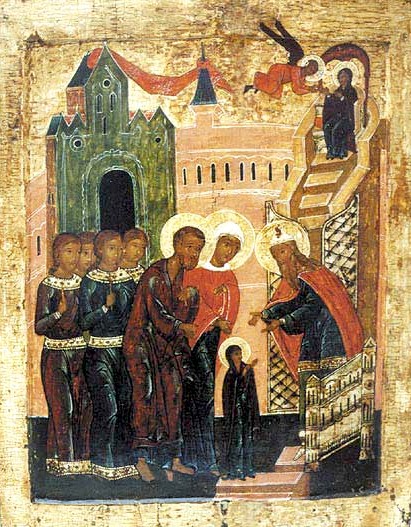
Entry_of_Virgin_Mary_(icon)

Posted in Uncategorized | Comments Off on Being relatives to the Lord

The sign of Jonas

8 July OS 2021 – Wednesday of the Fifth Week of Matthew; Our Lady of Kazan; Holy Great Martyr Procopios

In today’s Gospel reading, the Lord Jesus teaches us about the necessity of perseverance in the work of salvation:

At that time, certain of the scribes and of the Pharisees answered Jesus, saying, Master, we would see a sign from thee. But he answered and said unto them, An evil and adulterous generation seeketh after a sign; and there shall no sign be given to it, but the sign of the prophet Jonas: For as Jonas was three days and three nights in the whale’s belly; so shall the Son of man be three days and three nights in the heart of the earth. The men of Nineveh shall rise in judgment with this generation, and shall condemn it: because they repented at the preaching of Jonas; and, behold, a greater than Jonas is here. The queen of the south shall rise up in the judgment with this generation, and shall condemn it: for she came from the uttermost parts of the earth to hear the wisdom of Solomon; and, behold, a greater than Solomon is here. When the unclean spirit is gone out of a man, he walketh through dry places, seeking rest, and findeth none. Then he saith, I will return into my house from whence I came out; and when he is come, he findeth it empty, swept, and garnished. Then goeth he, and taketh with himself seven other spirits more wicked than himself, and they enter in and dwell there: and the last state of that man is worse than the first. Even so shall it be also unto this wicked generation. – Matthew 12:38-45

The Pharisees and scribes in this passage are like a lot of people today, a lot of people throughout history, both Christian and non-Christian, who want God to prove Himself to them by something worldly, spectacular, and, ultimately, empty. The Lord brushes aside their foolishness and tells them that the sign He will give them His is own resurrection from the dead.   If by the testimony of the Prophets they cannot recognize the One Who is already among them, and if they will not believe even though He should rise from the dead, what good will signs and wonders do them?   As Father Abraham tells the Rich Man in Luke 16, “If they hear not Moses and the prophets, neither will they be persuaded, though one rose from the dead.”  (St. Ignaty Brianchaninov wrote a powerful essay on this theme, which you can find online here – http://orthodoxinfo.com/ecumenism/st-ignatius-brianchaninov-miracles-and-signs.aspx).   

I have a friend who returned to the practice of Orthodoxy in old age.  After many years of worldly living, he now reads the Scriptures and prays every day, and he prays for many other people as well. He is amazed and touched, continually, by the miracle of the Holy Fire that occurs in Jerusalem every year on Great Saturday, and he never tires of watching YouTube videos of this stupendous occurrence. He frequently asks me, “How can people see this and not believe in Christ?”   I answer him, “Because their hearts are not open.” It has not yet occurred to him that his reading the Gospel and praying every day is a far greater miracle than the Holy Fire.

After rebuking the Pharisees’ unbelief, the Lord warns His disciples to be sober and watchful over their own spiritual state, lest they fall back into sin after their conversion and their last state be worse than the first. St. Theophan the Recluse explains it this way:

In every person who lives unrepentant in sin, there lives a demon, as if in a house, who takes charge over everything within him. When by the grace of God such a sinner comes to contrition over his sins, repents, and ceases to sin – the demon is cast out from him. At first the demon does not disturb the one who has repented because, in the beginning, there is much fervor within him which burns demons like fire and repulses them like an arrow. But then, when fervor begins to grow cold, the demon approaches from afar with its suggestions, throws in memories about former pleasures, and calls the person to them. If the penitent does not take care, his sympathy will soon pass to a desire for sin. If he does not come to his senses and return to his former state of soberness, a fall is not far off. The inclination for sin and the decision to commit it are born from desire – the inner sin is ready, and the outward sin is only waiting for a convenient occasion. When an occasion presents itself, the sin will be accomplished. Then the demon will enter again and begin to drive a person from sin to sin even faster than before. The Lord illustrated this with the story about the return of the demon into the clean, swept house. – Thoughts for Each Day of the Year, pp. 139-140

There are several things to note here. The first is that the Lord’s words do not make any sense unless one accepts that an unrepentant person has a demon living in him. This is not figurative but literal. Apart from faith and baptism, human beings are naturally (that is, according to fallen nature) in spiritual communion with demons. Until one believes this, one is not even at Square One of an Orthodox understanding of conversion and spiritual life. One reason why we, who do profess the Faith and are baptized, fall back into sin, inviting the “seven worse” back into our lives, is that we do not have a lively appreciation of this stark reality.

The next thing to note about St. Theophan’s words is that a penitent usually is tempted to stop being penitent when the fervor of conversion – either that of his initial conversion or of a conversion following a good confession and change of life after Baptism – wears off. So, to be wise warriors, we have to anticipate this moment of danger, and say to ourselves ahead of time, “The Lord is giving me this obvious grace of fervor and zeal now, but it will inevitably wear off, and then I must resolve to go on fighting sin even if I do not feel like it.”   When the first moment of slackness comes, and desire comes knocking at the door, we will say, “Aha, there it is!” and force ourselves to fight, begging the Lord for mercy and for a return of our spirit of zeal.   Remember how St. Anthony the Great struggled all of one night against demons until he was almost dead, and when the Lord’s presence finally relieved him, he asked, “Lord, where were you all night?” The Lord answered, “I was here all along, but I wanted to see your struggle.”   The times of struggle without consolation are inevitable for all of us, and we must make a firm resolve to be courageous. In His good time, the Lord will give us consolation and renewed strength.

Finally, note that St. Theophan links the inclination to sin and the decision to sin to desire.  We have to kill our love of pleasing ourselves, which is the basic reason why the Church enjoins us to fast and to watch over our senses. The entire effort of the advertising industry which dominates all of our news, entertainment, and social media is directed towards cultivating sensuality, pleasing ourselves, and feeling sorry for ourselves:   “You deserve a break today.” “Have it your way.” “You need this.”   By accepting such thoughts, we forge for ourselves unbreakable chains of slavery to sin; we become paralyzed and unable to act according to God’s will. Those who spoil themselves also tend to spoil their children, and thus spiritual death is passed from one generation to the next.

Let us then resolve to flee quickly to the saving tribunal of confession and repentance, to preserve the spirit of zeal and keep fighting when we do not feel like it, and to avoid constantly pleasing ourselves as we would avoid a poisonous snake.  The miracle of true and lasting repentance, that is, the resurrection of the soul, will take place continually in our hearts, and we will have no need of “signs and wonders.”   The sign of Jonas – the Resurrection of Christ – will be all that we need.


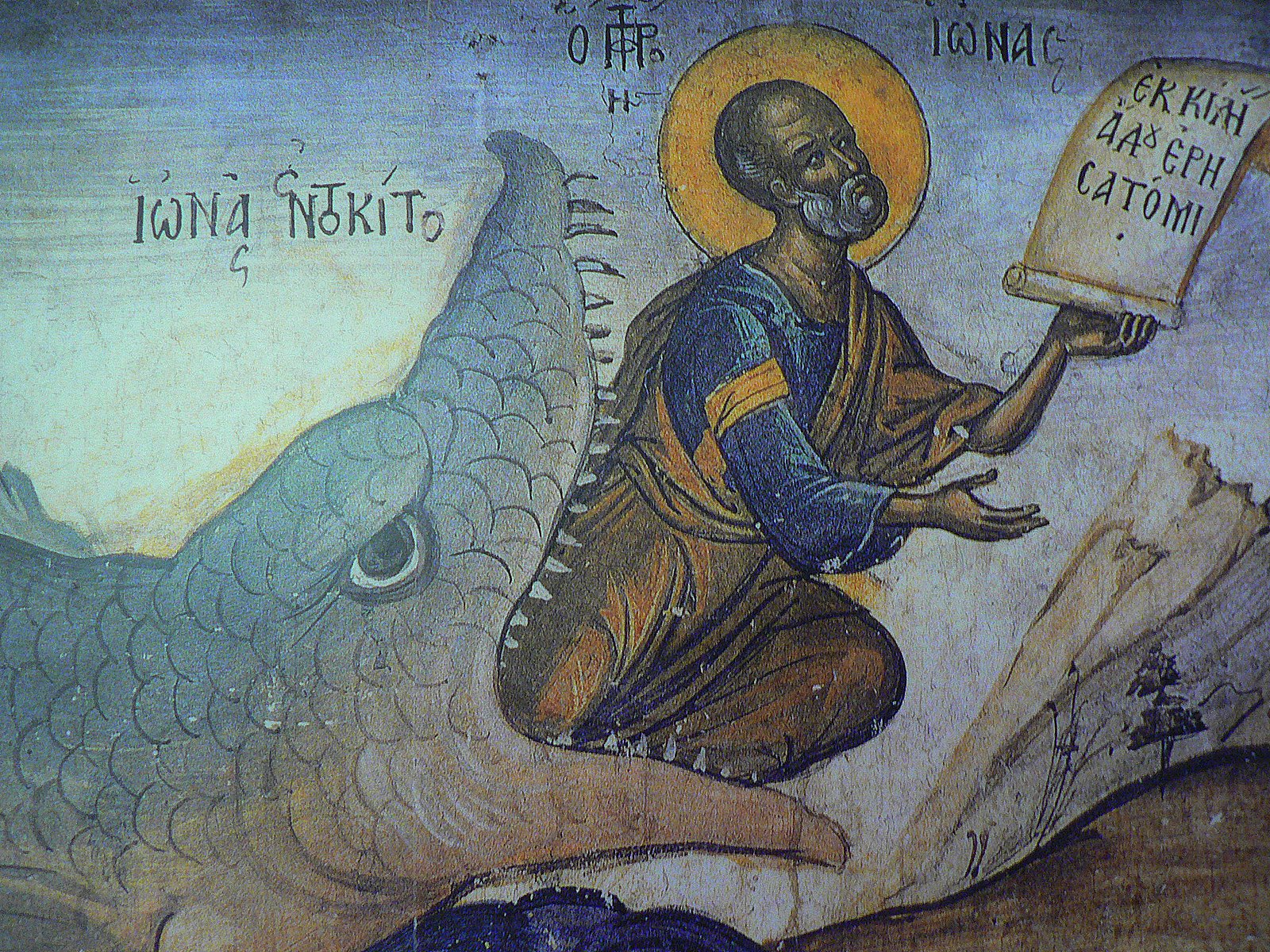
Jonas

Posted in Uncategorized | Comments Off on The sign of Jonas