Becoming whole

17 February OS 2017: Thursday of the First Week of Lent; Holy Great Martyr Theodore the Recruit

The first reading at Vespers today is Genesis 2:4-19.

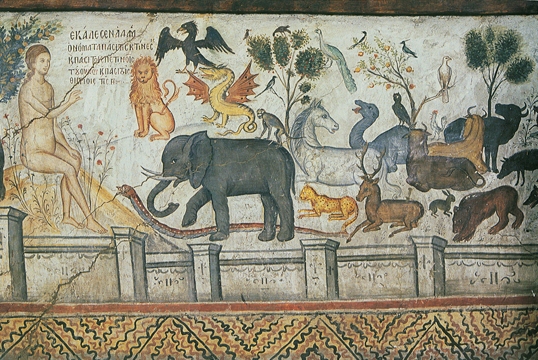
God made the animals to be a companion for man “…and brought them unto Adam to see what he would call them, and whatsoever Adam called any living creature, that was the name thereof.” Adam’s mind was a pure and unbroken mirror, perfectly reflecting all around him. His speech, the speech of Paradise, was perfect expression, and each name he gave perfectly expressed the essence of each thing he named.  Between the mind, the word coming forth from the mind, and the thing named by the word, there was no conflict, no gap, no misunderstanding.  Adam was at one with God, with himself, and with creation, in understanding, in activity, and in love.

Sin broke man’s mind into countless pieces, and each piece reflects only a tiny and disconnected fragment of what is real. Sin broke man’s activity, and his efforts always end in defeat. Sin broke man’s love, and he devotes his heart to that which is unworthy, and the object of his love devours him.

Grace heals man’s mind, his activity, and his love. Grace unites the fragmented thoughts, gives power to man’s activity, and directs his love to that which is truly lovable. Grace restores man to Paradise.

Christ, the New Adam, came to give us this grace.   Let us worship Him.

Posted in Uncategorized | Comments Off on Becoming whole

Rest with God

16 February OS 2017: Wednesday of the First Week of Lent; Holy Martyr Pamphylos and Companions

The first reading at Vespers today is Genesis 1:24-2:3.

 Since God made the human heart to hold Him, man’s first occupation was to contemplate God.   He made Adam and Eve to be His friends. He commanded them to till and to keep Paradise, but this was not work as we understand it. They did the physical work of tending the plants of Paradise and governing the animals, but this gave them pure joy and delight, for it was labor without pain. They also worked at a higher “tilling and keeping,” and this was their primary activity: tilling and keeping the mind, contemplating God in His infinite perfections. God designed this “work” to continue for all eternity, intending for their minds to rise ever higher, never ceasing, to greater and greater understanding, unto greater and greater delight in knowing and loving God.

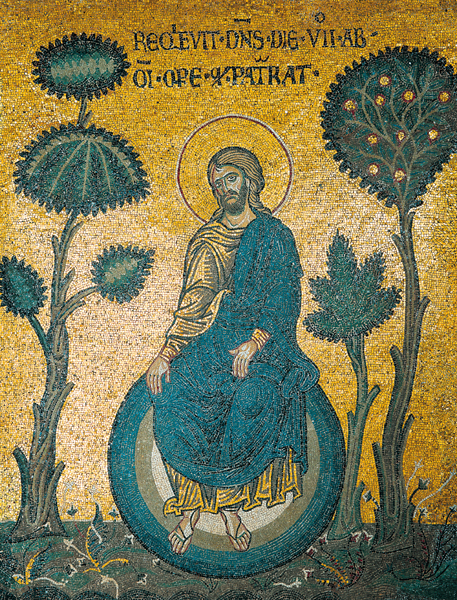
In today’s reading, the Lord Himself teaches by example what is the end of all our labors: the Seventh Day rest. “And on the sixth day God ended His works which He had made; and He ceased on the seventh day from all His works which He had made. And God blessed the seventh day, and sanctified it, because that in it He ceased from all His works which God had begun to make.” Knowing our fallen state, He gives us six days of the week to work for the food that perishes, but on the day sanctified by His own rest, God commands man to cease from labor and spend the day in his original activity, which is spending time with God.

When God became a man to save us, He completed all His labors once again on the Sixth Day and rested once again from all His labors on the Seventh Day, sleeping in the tomb according to the body but going down with His human soul into Hades, to free all those held captive from ages past. Then on the First Day, which is also the Eighth Day, He broke the bonds of death by His Resurrection and sanctified this day as the icon of eternity.   Thus Christians now rest on the Lord’s Day to honor the image of that Day that shall know no evening, and not only to honor but actually to partake by anticipation of the endless delight of that Day, even in this life.

How do we keep the Lord’s Day? How do we actually spend the 24 hours from sunset Saturday to sunset Sunday? Let us, this Lent, resolve to be honest about this, make straight that which we have made crooked, and fill up that which we lack.

Posted in Uncategorized | Comments Off on Rest with God

In Thy light shall we see light

15 February OS 2017: Tuesday of the First Week of Lent; Holy Apostle Onesimos

 The first reading at Vespers today is Genesis 1: 14-23.

 In Brothers Karamazov, the boy Smerdyakov mockingly asks the pious Grigoriy how there could have been light on the first day if God did not create the sun until the fourth day.   He grows up to be a nihilist who murders his father without remorse.

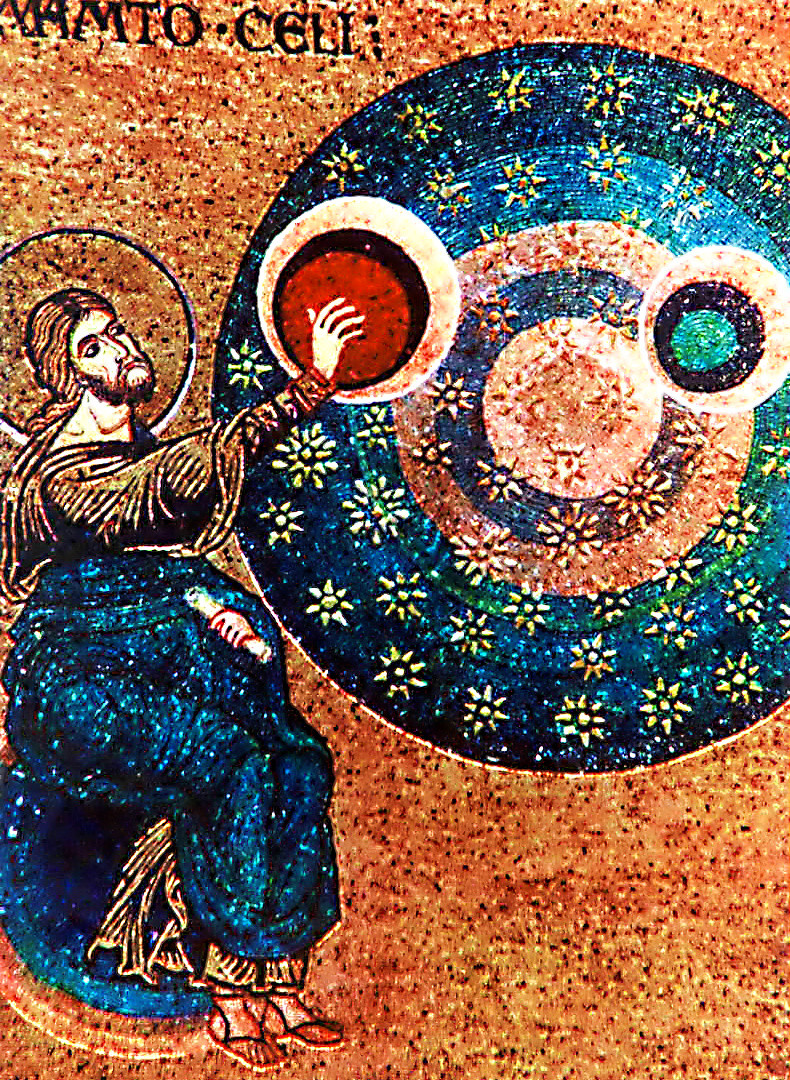
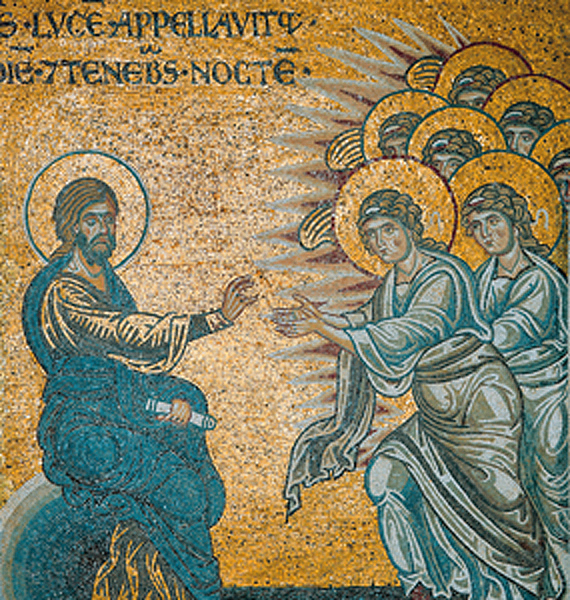
On the first day, God said, “Let there be light.” God did not need to sun to make the light. His light – both the uncreated light and the created light – illumined all that He made on the First, Second, and Third Days of Creation. He created the sun and moon and stars as servants of the light; they are not light itself. Likewise, God did not need the brain to create mind. Being the Uncreated Mind, He created countless bodiless intelligences, the Angels, before this world came to be.   Man’s physical organs of thought – both the brain and the heart – He created as servants of the mind; they are not mind itself.

To make clear that the sun, moon, and stars are not gods, God inspires Moses to state that the Lord made them “…for signs and for seasons, for days and for years.” God made all the vast physical cosmos, whose awesome grandeur and unimaginable dimensions human science has confirmed in our time, to be a calendar for man, a servant of man.   For man alone is made in the Image of God. One human heart is potentially greater than the entire physical cosmos, for into the heart of the baptized the Holy Trinity comes to dwell.

All man’s ills – of mind, heart, and body – arise when he worships creatures and not the Creator as the source of his life. All man’s ills – of mind, heart, and body – arise when he forgets the nobility of his divine calling. During Great Lent, we re-learn that God is God, and that we must worship Him alone.   We re-learn that He made us in His Image and that we must recover the primordial Likeness.   By re-learning our original nobility, we come to lament our present poverty, and we aspire to the Paradise that we lost through sin.

Posted in Uncategorized | Comments Off on In Thy light shall we see light

Begin at the beginning

14 February OS 2017: Monday of the First Week of Lent (Clean Monday); S. Auxentios

 As we begin Great Lent, we begin also to read the Book of Genesis at Vespers. The first words remind us of the foundation of all spiritual life, the firm conviction that God is our Creator and that we are His creatures:

In the beginning, God created the heavens and the earth.

 The infinitely good and wise God, the omnipotent One, brought all things from nothing into being. This includes you and me.

My existence is contingent, not necessary. The blink of an eye separates me in time from the abyss of nothingness from which I came, and the blink of an eye separates me in time from the hour of my death. Compared to God, I am nothing.

All of our problems arise from forgetting this fundamental reality, in one way or another. If only we were actively mindful of this at every day and hour, we would always be happy. Our sorrows come from trying to be God. This is true of each of us personally as well as the entire human race.   When we remember that we are finite, sinful, and doomed to die, all of life comes into perspective, and we can attain peace of heart.

May the grace of this Great Lent, which may be our last, bring us to constant remembrance that we are creatures and therefore our Creator should be everything to us.

Posted in Uncategorized | Comments Off on Begin at the beginning

A ten point program

13 January OS 2017 – Afterfeast of Theophany; Thursday of the 32nd Week after Pentecost; Holy Martyrs Hermylos and Stratonikos; Holy Monk-Martyrs of Sinai and Raithu

In the reading from the Apostolos today, St. James the Just calls us to live a Gospel life, before it is too late:

Brethren: Submit yourselves therefore to God. Resist the devil, and he will flee from you. Draw nigh to God, and he will draw nigh to you. Cleanse your hands, ye sinners; and purify your hearts, ye double minded. Be afflicted, and mourn, and weep: let your laughter be turned to mourning, and your joy to heaviness. Humble yourselves in the sight of the Lord, and he shall lift you up. Speak not evil one of another, brethren. He that speaketh evil of his brother, and judgeth his brother, speaketh evil of the law, and judgeth the law: but if thou judge the law, thou art not a doer of the law, but a judge. There is one lawgiver, who is able to save and to destroy: who art thou that judgest another? Go to now, ye that say, To day or to morrow we will go into such a city, and continue there a year, and buy and sell, and get gain: Whereas ye know not what shall be on the morrow. For what is your life? It is even a vapour, that appeareth for a little time, and then vanisheth away. For that ye ought to say, If the Lord will, we shall live, and do this, or that. But now ye rejoice in your boastings: all such rejoicing is evil. Therefore to him that knoweth to do good, and doeth it not, to him it is sin. Go to now, ye rich men, weep and howl for your miseries that shall come upon you. Your riches are corrupted, and your garments are motheaten. Your gold and silver is cankered; and the rust of them shall be a witness against you, and shall eat your flesh as it were fire. Ye have heaped treasure together for the last days. Behold, the hire of the labourers who have reaped down your fields, which is of you kept back by fraud, crieth: and the cries of them which have reaped are entered into the ears of the Lord of sabaoth. Ye have lived in pleasure on the earth, and been wanton; ye have nourished your hearts, as in a day of slaughter. Ye have condemned and killed the just; and he doth not resist you. Be patient therefore, brethren, unto the coming of the Lord. Behold, the husbandman waiteth for the precious fruit of the earth, and hath long patience for it, until he receive the early and latter rain. Be ye also patient; stablish your hearts: for the coming of the Lord draweth nigh. Grudge not one against another, brethren, lest ye be condemned: behold, the judge standeth before the door.  – James 4:7-5:9

Here is a comprehensive set of instructions for the evangelical life, the true Orthodox life. We can summarize it in a list of bullet points:

  1. Submit to God.   Tell Him every day that you want His will to be done, but that you know that you often do not see it, or, seeing it, resist it, and you need His grace to discern it and do it, and to accept whatever involuntary crosses come your way.
  1. Resist the devil. The only people who lose the invisible warfare are those who turn coward and quit.   Keep fighting. If you sin every hour, repent every hour, and you will be numbered among the martyrs and saints.
  1. Cleanse your hands and purify your hearts. Go to confession and cleanly confess all of your outward sins and inner sinful thoughts. Examine your conscience daily, hate your sins, and resolve to fight them.
  1. Mourn and weep. Ask for a real Orthodox heart, for real sorrow over the sins of the world and one’s own sins. Grieve for sinful mankind, who has rejected God.
  1. Speak not evil of one another. Cut out gossip.   Take the high road of peace of heart which comes from looking up, to God, to resolve your problems with others, and cut out all the analysis, which leads inevitably to condemnation, since everyone does indeed deserve condemnation, including you.
  1. Humble yourselves. Ask the Lord to make you see how helpless you are and cut out all of your self-satisfaction and arrogance.   Train yourself to say always, “If God wills…God willing…if I live until tomorrow…”
  1. Your gold and silver is cankered. Face it, you’ll never have enough money, but you will always have what you need.   Trust in God.
  1. Be just. You cannot be “spiritual” if you don’t even obey the Ten Commandments.
  1. Be patient, therefore, brethren until the coming of the Lord. The Lord is coming in your lifetime, no matter what, either in the Second Coming or the hour of your death.   Endure, keep the faith; it’s later than you think.
  1. “…the judge standeth at the door.” Why waste time pondering other people’s relative guilt or innocence? You are about to stand before the Judge. This should concentrate your mind.

What a joy and relief it would be to live like this!


Posted in Uncategorized | Comments Off on A ten point program

Removing what keeps us from God

15 December OS 2016 – Nativity Fast; Wednesday of the 28th Week after Pentecost; 13th Week of St. Luke; Holy Hieromartyr Eleutherios

The Gospel reading for today is Mark 8:30-34:

At that time, Jesus charged His disciples that they should tell no man of him. And he began to teach them, that the Son of man must suffer many things, and be rejected of the elders, and of the chief priests, and scribes, and be killed, and after three days rise again. And he spake that saying openly. And Peter took him, and began to rebuke him. But when he had turned about and looked on his disciples, he rebuked Peter, saying, Get thee behind me, Satan: for thou savourest not the things that be of God, but the things that be of men. And when he had called the people unto him with his disciples also, he said unto them, Whosoever will come after me, let him deny himself, and take up his cross, and follow me.

For his commentary (Thoughts for Each Day of the Year, pp. 279-280), St. Theophan the Recluse adds the verses immediately following these, Mark 8:35-38, and considers the passage as a whole:

For whosoever will save his life shall lose it; but whosoever shall lose his life for my sake and the gospel’s, the same shall save it. For what shall it profit a man, if he shall gain the whole world, and lose his own soul? Or what shall a man give in exchange for his soul? Whosoever therefore shall be ashamed of me and of my words in this adulterous and sinful generation; of him also shall the Son of man be ashamed, when he cometh in the glory of his Father with the holy angels. 

St. Theophan links three of the Lord’s sayings above to three main obstacles to our salvation:  Our self-pity, cupidity (desire for worldly things), and desire for human respect (embarrassment).

First, “Whosoever will come after me, let him deny himself, and take up his cross, and follow me.”   Our chief obstacle to denying ourselves is self-pity, which is very much encouraged by the world today:  “Treat yourself, be easy on yourself,” and so forth.  Everyone today feels sorry for himself; everyone is a “victim.” But this is the opposite of what Jesus Christ expects of us.   If you feel sorry for yourself and blame others all the time, no one can help you, for you are falling down a black hole from which there is no escape.   We must ask the Lord for the grace of forgetting ourselves and for the virtue of courage.   Also, we must force ourselves to be grateful to the Lord for everything that He is and that He has done for us.  We must force ourselves to forget ourselves and think about doing good for others.  We all know how liberating this is.

Second, “…what shall it profit a man, if he shall gain the whole world, and lose his own soul?”   Every one of us, both rich and poor, fears want and desires plenty.  To a moderate extent, this is healthy, an aspect of the instinct for self-preservation that God gave man after the expulsion from Paradise, so that he would take care of himself.   But it is common, in fact nearly universal, for this instinct to run amok and become what we call in Greek pleonexia (plenty-sickness)a constant nagging feeling that we always have to acquire more and more, that we never have enough.  This is a profound spiritual sickness, and those who are not healed of it cannot really believe in God, for they have placed the idol of material security above their hope in God.  The tricky part here is that even very religious people justify piling up material security endlessly by saying that they have a duty to provide for their family.   Enough is never enough.   We overcome this sickness by the grace of God, for which we must pray daily, so that we will have the discernment to know what is truly needed and what is not.  We also must force ourselves to give to the Church first, before paying our other bills (and certainly before vacations, luxury items, and entertainment!), to demonstrate in reality (not words and dreams) that God comes first.  Remember, supporting the Church out of our substance (not our surplus) is not charity but simple justice, a minimum we owe God.  Alms are another matter, and indeed we must also set aside something for those more needy than ourselves.   These two practices – tithing and almsgiving – liberate us from worry and set our feet firmly on the rock of God’s commandments, and, suddenly, we find that we are much richer than we thought.  We go from basing our decisions on fear to basing them on hope in God.

Third, “Whosoever therefore shall be ashamed of me and of my words in this adulterous and sinful generation; of him also shall the Son of man be ashamed, when he cometh in the glory of his Father with the holy angels.”  Those who are embarrassed by their Orthodoxy in front of others will never enter Paradise, for they worship men over God.   The next time you are tempted to hide your Orthodox Christian convictions for the sake of not being rejected by someone in front of you, ask yourself, did that person die for you on the Cross?  No.   Did Jesus Christ die for you on the Cross?  Yes.  To whom do you owe your loyalty?  Whose respect do you want?  Think about it.   Only those who are willing to suffer for their Faith, including the psychological discomfort of human disapproval, go to Paradise.   There is no path to salvation that involves always being admired by worldly people.    If worldly people admire you, take stock of your life, for you are probably in spiritual trouble.  If worldly people think you are an idiot, well, you may be an idiot, but at least you have the possibility for coming to grips with what is real, while they are stuck in an unreal world, a hall of mirrors from which people rarely escape.

When God became a human being, He chose to be a poor child of a poor family, with nowhere to lay His head.  Self-pity, love of riches, and the admiration of worldly people are totally absent from the scene at the manger.  Let us ask the Word made Flesh to help us be like Him.

Posted in Uncategorized | Comments Off on Removing what keeps us from God

For the Son of Man cometh at an hour when ye think not

4 December OS 2016 – Nativity Fast; Saturday of the 26th Sunday after Pentecost; 11th Week of St. Luke; Holy Great Martyr Barbara, St. John of Damascus

In the daily Gospel reading, our Lord commands us to be vigilant, preparing for Judgment:

The Lord said to His disciples: Fear not, little flock; for it is your Father’s good pleasure to give you the kingdom. Sell that ye have, and give alms; provide yourselves bags which wax not old, a treasure in the heavens that faileth not, where no thief approacheth, neither moth corrupteth. For where your treasure is, there will your heart be also. Let your loins be girded about, and your lights burning; And ye yourselves like unto men that wait for their lord, when he will return from the wedding; that when he cometh and knocketh, they may open unto him immediately. Blessed are those servants, whom the lord when he cometh shall find watching: verily I say unto you, that he shall gird himself, and make them to sit down to meat, and will come forth and serve them. And if he shall come in the second watch, or come in the third watch, and find them so, blessed are those servants. And this know, that if the goodman of the house had known what hour the thief would come, he would have watched, and not have suffered his house to be broken through. Be ye therefore ready also: for the Son of man cometh at an hour when ye think not. – St. Luke 12:32-40

These words are most obviously about the Second Coming, but St. Theophan the Recluse relates them to the hour of death and one’s own Particular Judgment as well:

We must be ready at every hour – one does not know when the Lord will come, either for the Last Judgment or to take you from here; for you they are the same. Death decides everything. After death comes the results of your life; whatever you’ve acquired, you’ll have to be satisfied with for all eternity. If you have acquired what is good, your lot will be good; if you have acquired what is evil, then your lot will be evil. This is as true as the fact that you exist. All of this could be decided this moment – here at this very moment, as you read these lines – and then, the end of everything; a seal will be set to your existence, which no one can remove. This is something to think about! But one cannot be sufficiently amazed at how little people think about it. What is this mystery which is wrought upon us? We all know that death will come at any moment, that it is impossible to escape it, but meanwhile almost no one at all thinks about it – and it will come suddenly and seize us. Even then – even when a fatal disease seizes a person, he still does not think that the end has come. Let psychologists resolve this from a scientific aspect; from the moral aspect it is impossible not to see here an incomprehensible self-delusion, alien only to one who is heedful of himself.   – Thoughts for Each Day of the Year, pp . 270-271

Incomprehensible self-delusion – that’s it!   Where does it come from, and what can we do about it?

Our blindness to death comes from two places – the inside and the outside of us.   On the inside, despite the grace of baptism, the power of whose grace we do not activate enough by struggling against sin, our fallen nature denies the reality of death. This blindness is instinctive, unconscious, and we are all born with it. It comes from two sources, one natural and one unnatural.   The natural source is the memory of immortality that resides in the human heart since Paradise. We have inherited this psychosomatically from our First Parents, and there is nothing we can do about it. Actually, in itself it is a good thing: It gives empirical proof that man was created for eternal life.   Then there is the unnatural and sinful source of the blindness to death: the inherited Ancestral Sin that we are all born with, which carries the damage to the heart caused by our First Parents’ accepting the lie, “You shall be as gods.” I do not think I am going to die, because I think that I am God, that I am the source of my own life. All of my problems come from this.

The external causes of our blindness to death are illusion and distraction.   Because of modern medical science, we have the illusion that there is a cure for everything. Living in the “First World,” we are not confronted daily with infant and child mortality, and we do not see adults dying young on a regular basis in the homes around us and in our own homes, dying from infections or getting kicked by mules or bitten by snakes, or just malnutrition. We live in an insulated, cosseted environment in which daily physical problems usually do not rise above the level of discomfort and inconvenience. Even when we do become dangerously ill, we are prone to think not about death and God’s judgment, about the shortness of this life and the vanity of all things here below, but about hoping for a cure, so that we can eke out a few more years of biological existence.

Because of the frenzied environment created by the demands of work or school, interrupted only by frenzied “input” from the “news” and entertainment media, we are constantly distracted and agitated.   This world seems to be all there is, because it demands our attention at every waking hour. It won’t go away. We are little rats running on a wheel, and we are not allowed to get off, or so it seems.

How do we get off the wheel, calm down, face reality, and prepare for death?   The key moment comes when we have a break from our duties, and we make the choice either to be distracted by the news and entertainment media or to do spiritual works: spiritual reading, prayer, preparation for confession, and the various activities of spiritual life.   Every one of these moments is a moment of crisis, in the original meaning of the word: not simply an emergency, but an emergency characterized by judgment. It is a moment of judgment – we are being judged at that very moment by the choice that we make.   Life consists of thousands of such moments that interrupt the duties of our work, and the final result of the choices we make at these moments is what St. Theophan refers to above: “After death comes the results of your life; whatever you’ve acquired, you’ll have to be satisfied with for all eternity.” Now we know that we can take nothing from this world with us, except our soul. “What we have acquired” is virtue or vice, grace or separation from God, holiness or sinfulness. It is up to us.

Life is short, death is certain, judgment is eternal. Let us wisely use the free moments given us by the All-Merciful God, Who desires our salvation infinitely more than we do, and Who is waiting with invincible love to give us spiritual gifts, so that He may find us watching when He comes.

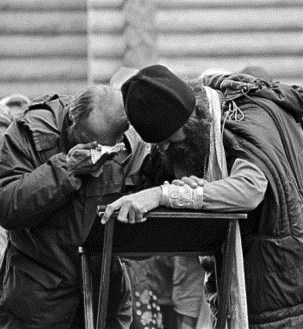
confession2

Posted in Uncategorized | Comments Off on For the Son of Man cometh at an hour when ye think not

Faith unfeigned

29 November OS 2016 – Nativity Fast; Monday of the 26th Sunday after Pentecost; 11th Week of St. Luke; Holy Martyrs Paramon and Philoumenos

Today we begin reading St. Paul’s First Epistle to Timothy:

Paul, an apostle of Jesus Christ by the commandment of God our Saviour, and Lord Jesus Christ, which is our hope; Unto Timothy, my own son in the faith: Grace, mercy, and peace, from God our Father and Jesus Christ our Lord. As I besought thee to abide still at Ephesus, when I went into Macedonia, that thou mightest charge some that they teach no other doctrine, Neither give heed to fables and endless genealogies, which minister questions, rather than godly edifying which is in faith: so do. Now the end of the commandment is charity out of a pure heart, and of a good conscience, and of faith unfeigned: From which some having swerved have turned aside unto vain jangling; Desiring to be teachers of the law; understanding neither what they say, nor whereof they affirm. – I Timothy 1: 1-7

We live in an age of spiritual fakery par excellence.  Even within the Orthodox world, even within the True Orthodox world, there is an astounding variety of false teachers, would-be “elders,” professional disputers, and ecclesiastical entrepreneurs whose “enterprise” is to gather followers and make a name for themselves. To whom should we listen? Whom should we trust? Where is the One, Holy, Catholic, and Apostolic Church, apart from which salvation is impossible?

St. Paul gives us a good measuring stick: “Now the end [i.e., the goal, the purpose] of the commandment is charity out of a pure heart, and of a good conscience, and of faith unfeigned.”   In other words, the outcome of the teaching must be that it inspires one to live according to the Gospel, provides a solid theological basis for doing so, shows where to obtain the grace for doing so, and gives the practical tools for doing so. Orthodoxy is not a debating club or an ecclesiastical turf war. It is life.

We have no control over bishops, “theologians” (what a useless term that has become!), “elders” (ditto), and priests. We ourselves are, to a greater or lesser degree, deluded and ignorant, and therefore our discernment is extremely poor. Our task is to do what we have control over, which is to apply ourselves industriously to the ABC’s of spiritual life and thereby acquired better discernment, i.e., to become less deluded and ignorant.

So…if someone should come to me and say, “What synod, bishop (elder, priest, teacher, etc., fill-in-the-blank) should I follow?” My answer is, “Have we said our morning prayers today? How are we keeping the Nativity Fast?  Let’s go do it, and then we can talk. Perhaps in struggling together, through a free and undeserved gift of grace from Jesus Christ, we two ignorant ones will arrive at some conclusion that will be pleasing to Almighty God.”

We have the books; let’s read them. We have the instructions of the Fathers; let’s follow them.

Let us hide ourselves from the world, immerse ourselves in humility, and be active and vigilant, doing the works of God.

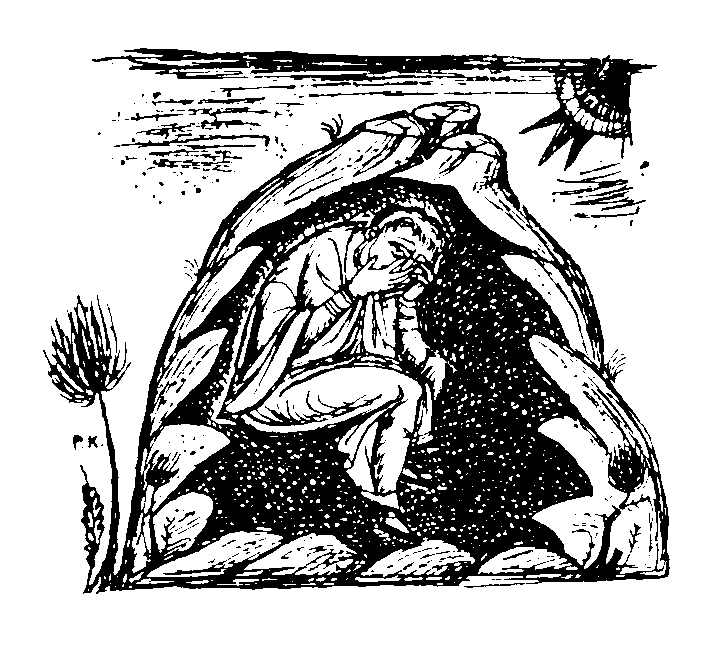
monk weeping sketch

Posted in Uncategorized | Comments Off on Faith unfeigned

Avoiding the millstone

19 November OS 2016 – Nativity Fast; Friday of the Ninth Week of St. Luke; Holy Prophet Abdias (Obadiah), Holy Martyr Barlaam, Venerable Barlaam and Joasaph

In today’s Gospel, the Lord warns us sternly against offending our brother: 

The Lord said, Ye are they which justify yourselves before men; but God knoweth your hearts: for that which is highly esteemed among men is abomination in the sight of God. The law and the prophets were until John: since that time the kingdom of God is preached, and every man presseth into it. And it is easier for heaven and earth to pass, than one tittle of the law to fail. Whosoever putteth away his wife, and marrieth another, committeth adultery: and whosoever marrieth her that is put away from her husband committeth adultery.   Then said he unto the disciples, It is impossible but that offenses will come: but woe unto him, through whom they come! It were better for him that a millstone were hanged about his neck, and he cast into the sea, than that he should offend one of these little ones. Take heed to yourselves: If thy brother trespass against thee, rebuke him; and if he repent, forgive him. And if he trespass against thee seven times in a day, and seven times in a day turn again to thee, saying, I repent; thou shalt forgive him. St. Luke 16:15-18, 17:1-4

St. Theophan the Recluse points out that we offend and condemn others all the time, and we do not think about it, and yet these two sins are very hateful to God:

…Two sins which are very great in the eyes of God are not regarded as anything by people: offending and condemning. The offender, according to the word of the Lord, would be better off dead; he who condemns is already condemned. But neither the one nor the other think about it, nor can they even admit that they are sinful in any such thing. Indeed, what blindness surrounds us, and how carelessly we walk in the midst of death!   Thoughts for Each Day of the Year, pp. 258-259

How can we avoid these extremely common falls? The most powerful antidote is attentiveness. Let us assume that we are not uncommonly malicious (i.e., that our ill will is weak, just as our good will is weak- the state of most people, including the baptized), that we fundamentally intend to think and do well towards others, and that we fall into condemning and offending through the weakness common to all men. This usually occurs because we are not leading an attentive life. When we are not in a prayerful state, our minds being drawn out of ourselves, broken, and scattered over a thousand shifting impressions, we lose control of our thoughts, feelings, and actions.   In such a state, we cannot help but say and do that which offends, and at the same time condemn others in our thoughts.

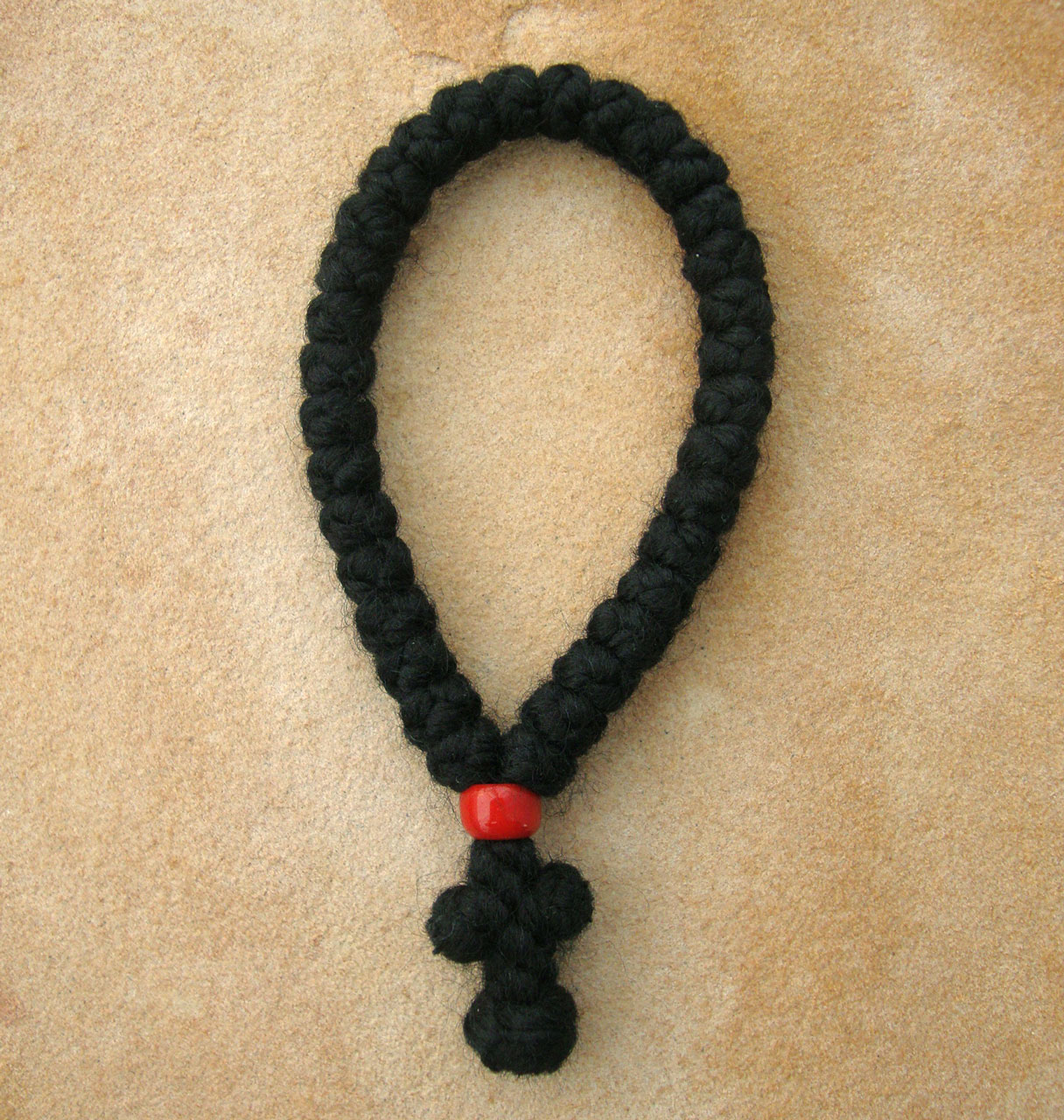
During this holy fast, let us ask the Lord to strengthen our weak will and make a firm resolve to lead an attentive spiritual life, whose foundation is continual prayer.   Having said our morning prayers, let us take the Prayer of Jesus with us through the day, repeating it as often as possible – silently, of course, when in the midst of others, but repeating it nonetheless. This all-powerful weapon, the Name of the Lord, will cleanse and concentrate the mind, make us more aware of ourselves, and give us the lively sense of the Presence of the Lord, so that we will fear to offend Him, fear to drive away this most desired Guest of the soul, by any offensive thoughts, words, or deeds directed to our neighbor.

prayer-rope


Posted in Uncategorized | Comments Off on Avoiding the millstone

Merry Nativity Fast!

15 November OS 2016 – Holy Martyrs Gurias, Samonas, and Abibus; St. Paissy Velichkovsky; New-Martyr Catherine of Mandra

…when ye fast, be not, as the hypocrites, of a sad countenance. For they disfigure their faces, that they may appear unto men to fast. Verily I say unto you, they have their reward. But thou, when thou fastest, anoint thine head and wash thy face, that thou appear not unto men to fast, but unto Thy Father who is in secret; and thy Father, who seeth in secret, shall reward thee openly.

 – The words of Jesus Christ in Matthew 6:16-18

Today we begin the Nativity Fast, and we must look ahead to the temptations ahead and make a firm resolve to be cheerful and spiritually attentive. A lot of Orthodox Christians who sincerely try to keep this fast (which all too many neglect!) find it harder to stay motivated and cheerful during this season than during the Great Fast before Holy Week.

The temptation to be discouraged arises for several reasons, and when we understand them and take action, the Fast goes much better.

First of all, we struggle with the physical reality all around us: the short days and long nights of winter with their cold and gray weather. The best antidote to despondency is to devote the last hour of the night, before bed, to prayer, and then to rise early, before sunrise, again to pray. After a peaceful night’s sleep begun with prayer, we rise before the sun, concentrate our mind and heart on God, and then, when the sun rises, we have a full day ahead of us – none of the hours of light is lost. Also, we should take time during the day – if we are not forced to work indoors all day in a windowless space – to pause quietly outdoors or by a window, and gaze at the exquisite winter light as it touches God’s creation,  especially trees and other plants. The winter light glows with a graceful, blessed quality of gentleness and joyful sadness: it calls forth interiority and prayer from the human heart.   The bright sorrow of repentance and the nostalgia for the lost Paradise prick the heart suddenly, and we realize how precious light is, and how precious are the fleeting hours of this life. We recall the Lord’s words: “Walk while ye have the light of life…”

Secondly, we also suffer from the distraction of the obligations imposed (really or seemingly) by the secular “holiday season,” when a lot of people become obsessed with buying presents they cannot afford for people whom they fear will not like them, all the while trying to project good cheer at an exhausting round of obligatory and superficial social gatherings. The baptized soul and mind of the Orthodox Christian who is sincerely looking forward to the Feast of the Incarnation of the Word cannot help but feel burdened by the crushing meaninglessness of this exercise in futility, this absurd chase after a “good cheer” which keeps retreating with every shopping trip and every drink at some party imposed by work or social contacts.   One mental exercise I have used in the past, when I had a secular job and was forced to interact more continuously with the world, is simply to look forward every day, with longing, to an intermediate goal before the Orthodox Nativity – to 12/25 December, the ancient feast of St. Spyridon (and more recently, especially for our Russian-American brethren, St. Herman of Alaska). I think that most of us “veteran” Orthodox know the feeling of relief that I always have on that day, when the madness of phony Christmas finally dissipates, and we can look forward to a quiet thirteen days to prepare our souls with prayerful vigilance for the Great Feast we are about to celebrate. Having an intermediate goal is encouraging – it is like having incremental goals in an exercise or diet program rather than just looking ahead to the final outcome.   Motivated by this, we make a more strenuous effort to take the Jesus Prayer with us throughout the day, so that even in the midst of “holiday season,” we can keep our hearts pure.

Finally, we also feel the social pressure created by anti-Christian power elites who claim that Christmas decorations, greetings, school events, and TV programs that explicitly celebrate the Birth of Christ (the ones that are respectful and not blasphemous) are “unfair” to non-Christians, while non-Christian symbols and customs must be imposed on everyone, especially the Christians, in order to “celebrate diversity.” We know, of course, that this word “diversity” is Newspeak which means the opposite of diversity. It is code language that really means the depraved – not to mention boring and extremely stupid – mono-culture of globalism: a numbing, flattening uniformity of materialism, sensuality, and the ever-despairing power struggle for the “survival of the fittest” in a merciless, endless, and impersonal universe. We fight this most effectively by prayer first of all – it does not do any good to rant about “multiculturalism” on Facebook if you are not even saying your evening prayers. With the foundation of prayer and an attentive spiritual life, we can smile and cheerfully say “Merry Christmas” to the poor fellow human beings around us, for whom such a simple, old-fashioned greeting may be the only ray of light in a very dark day.

Being Orthodox Christians, we choose not to get steamrolled by “holiday season.” We know what this season is for: to prepare to celebrate the Birth of Christ. And we know how to keep it, though because of our circumstances we often fail. Let us remind ourselves, however, how to keep it, and, when we fail, get up again and keep trying, trying to

+Fast for the forty days. (When obliged to go to parties, stick with the veggie tray!)

+Prepare for Holy Communion.

+Go to more services (When is the last time you went to Vespers on Saturday evening or got up early on Sunday to go to Matins?).

+Force ourselves to be cheerful and kind to everyone (especially tired retail clerks!).

+Say “Merry Christmas” and refuse to be intimidated by the “diversity” propaganda.

+Keep thanking God for everything we have and not get caught up in consumerism. Keep our shopping and present giving simple, in order to focus on the Birth of our Savior, and on sincere love for our family and friends, which is the real purpose of the gifts, anyway.

A blessed Nativity Fast to all!

++++++++++++++++++++++++++++++++++++++++++++++++++++++++++++++

“…and on earth, peace…”

Since God is peace surpassing every mind, it is necessary that the heart which desires to receive Him be peaceful and undisturbed. As David has said: “His place has been established in peace (Ps. 75:2).” Hence you ought in the first place to establish your heart in a peaceful state.

Before everything else, have that peace and staidness in your five senses. That is, do not look or talk or move your hands or walk disturbedly, but in a peaceful and orderly manner. For when you become accustomed to preserve that peace in your outer movements, you shall easily and effortlessly be led to a peaceful inner state. For according to the Fathers, the inner man conforms to the outer man. Accustom yourself to love all men and be at peace with all, if this is possible, as Paul says: “If it be possible, as much as lieth in you, live peaceably with all men” (Romans 12:18).   Guard your conscience so that it does not accuse you with regard to anything, but rests at peace in relation to God, yourself, your neighbor, and external things, and especially does not accuse you that you have neglected some commandment of God. For the guarding of the conscience begets peace of heart. Accustom yourself to bear insults without being disturbed.

– from Unseen Warfare, as edited by St. Nicodemus of the Holy Mountain and St. Theophan the Recluse
christcrucified

Posted in Uncategorized | Comments Off on Merry Nativity Fast!