I am a sojourner on the earth, hide not from me Thy commandments

24 November OS 2015 – Monday of the 28th Week after Pentecost/10th Week of St. Luke, Afterfeast of the Entry of the Theotokos, Holy Hieromartyrs Clement of Rome and Peter of Alexandria (Holy Great Martyr Catherine, according to the Slavonic Menaion)

Today’s daily Gospel reading is Luke 17: 20-25.

At that time when Jesus was demanded of the Pharisees, when the kingdom of God should come, he answered them and said, The kingdom of God cometh not with observation: Neither shall they say, Lo here! or, lo there! for, behold, the kingdom of God is within you. And he said unto the disciples, The days will come, when ye shall desire to see one of the days of the Son of man, and ye shall not see it. And they shall say to you, See here; or, see there: go not after them, nor follow them. For as the lightning, that lighteneth out of the one part under heaven, shineth unto the other part under heaven; so shall also the Son of man be in his day. But first must he suffer many things, and be rejected of this generation.

 St. Theophan the Recluse uses the example of the Lord’s own suffering to illuminate the path of suffering of His true followers:

Having said that the Son of Man will appear on His day like lightning, instantly illuminating everything under heaven, the Lord added: “But first He must suffer many things, and be rejected of this generation…” He suffered in His person at one specific time [i.e., at His Passion and Crucifixion], after which sufferings continue in the person of believers. There is suffering as they are born, as they are brought up in the spirit, and as they ward of the actions of the enemy, both inward and outward…The sorrows, temptations, and wavering of faith due to unbelief are continual arrows. Words and writings that exude unbelief are the flaming arrows of the evil one. These days, the evil one has led many blacksmiths to forge such arrows. The hearts of believers ache when they are struck by them and see others struck…But the day of the Lord’s glory will appear – then all the secret darkness will be revealed, and those who have suffered will rejoice with the Lord. Until that time we must endure and pray. – from Thoughts for Each Day of the Year, pp. 260-261

We live in hope, awaiting the return of the Lord, the revelation of the secret thoughts of the hearts, and the Great Judgment.   Until then, we suffer outwardly and inwardly, especially because we are so few, because those outside the true Faith are so many, and because the propaganda of the Father of Lies grows stronger every day, not only, as in St. Theophan’s day, emanating from those obviously against the Church – atheists, communists, masons, et al. – but in our day, and more grievously, also from those possessing seeming authority in the Church – patriarchs, synods, theology professors, spiritual writers, and so forth – who have made themselves instruments of the currently coalescing global governance long prepared by the atheists, communists, and masons. The enemy is within the gates and pretending to be our friend.

When we hear deceptive and seductive arguments against our pure confession of Faith, especially very clever ones with a “holy” covering, our hearts may waver – “Maybe I am wrong, maybe it is alright to compromise in order to get along…these seem like nice people…they print nice books…they have a lot of resources to do good…” and so forth. But deeper within our hearts, we know that these thoughts are exactly what we have always known them to be: lies from the Evil One.

And we may still suffer, as well, from wavering in the face of the overtly anti-Christian propaganda: propaganda for evolution, for homosexuality, for the equality of all beliefs, for “tolerance” of every kind of sin and disorder, for…you name it.

The Lord allows all of this, so that we may go more deeply into prayer and into studying our Holy Faith, in order to be strengthened more and more as the attacks increase more and more. We will either grow stronger or we will fall, but there is no standing still, no option to remain just as we are. We are on a pilgrimage, and we have to keep putting one foot in front of the other. We must feed on courage and hope from the Lord, obtained as His free gift after fervent prayer. We alternate between moments of darkness, when all seems lost, and brilliant flashes of light, when the gracious Lord, seeing our steadfastness in the midst of darkness while knowing our utter weakness and absolute dependence on grace, gives us the consolation of absolute assurance of His Truth, of the forgiveness of our sins, and of His loving presence in our hearts, whose sweetness is so great that we will endure anything rather than to lose it.   He becomes everything to us.
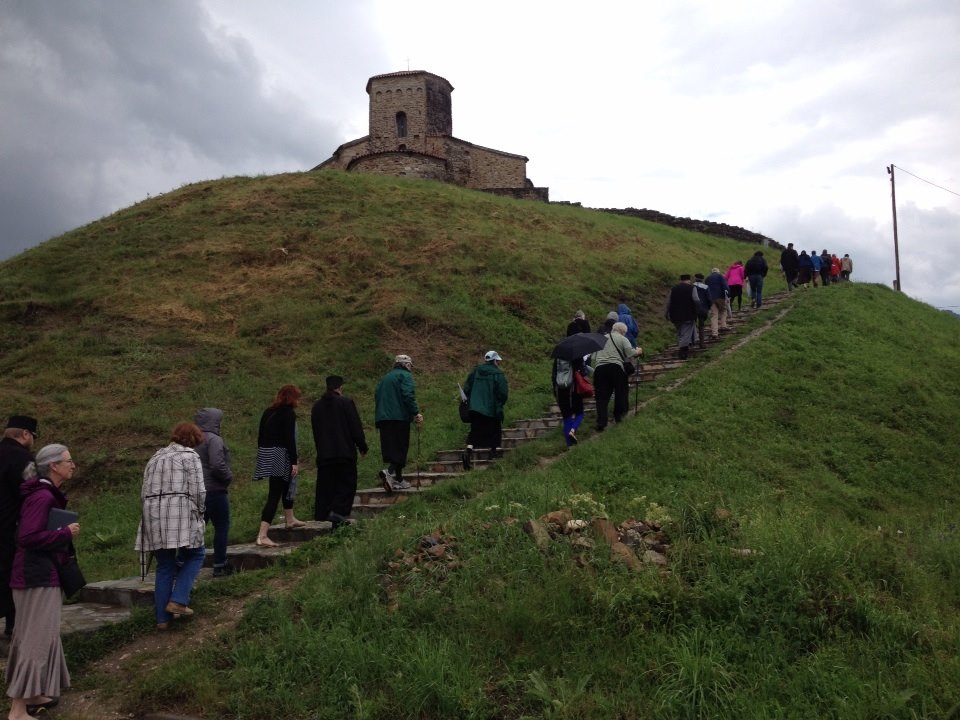
pilgrims walking up a hill to a church in Serbia

During the Nativity Fast, there is a peculiar kind of warfare deriving from our desire for the legitimate human consolations of the Christmas and New Year celebrations – the company of family and friends, the warmth of happy social gatherings, decorations and presents, and so forth. In their proper place, all of these are indeed good things. But today they have become so mixed up with improper, worldly, and foolish things, that even what was once good has become poisoned or at most empty, and to a Christian with sensitive Orthodox perceptions, this is extremely painful, not because we do not love our family, friends, and co-workers, but because we do.   Loving them, we desire their true good, and the nature of their true good is exactly what it seems most often impossible for us to convey or for them to understand.

In the face of all this, we must have recourse ever more deeply and persistently to our refuge, which is prayer. We must go into the closet of the heart and there “break ourselves” before God, pouring out our sorrows, our faith and lack of faith, our desire for the salvation of our loved ones, and our grief over the sins of all this perishing world.   We must surrender ourselves to Him and live only for Him. We must realize what it means to become not only servants but also friends of God. This process causes both great pain and great joy. It is a flaming crucible that lasts all of one’s life and climaxes in the last trial of death, until every impurity, every alloy of sin, worldliness, doubt, and unbelief is burned away.   This must be so, for to ascend unscathed between the awaiting ranks of demons at the hour of death, the soul must have already known by experience the meaning of the Lord’s words, “…for behold, the kingdom of God is within you.”

O dear Savior, Who suffered for us, let us also in our little way suffer for Thee, that we might live and reign forever with Thee! To Thee be the glory, with the Father and the Holy Spirit, unto the ages of ages.   Amen.

+++++++++++++++++++++++++++++++++++++++++++++++++++++++++++++

 When the soul of a man departs from the body, a certain great mystery is there enacted. If a person is under the guilt of sin, bands of demons and fallen angels approach along with the powers of darkness which capture that soul and drag it as a captive to their place. No one should be surprised by this fact. For if, while a man lived in this life, he was subject to them and was their obedient slave, how much more, when he leaves this world, is he captured and controlled by them? You can understand this, however, from what happens to those on the better side. Indeed, angels even now stand alongside God’s holy servants, and holy spirits surround and protect them. And when they leave their bodies, the bands of angels receive their souls and carry them to their side into pure eternity. And so they lead them to the Lord. Homily 22 of St. Macarius the Great, “On the two possible states of those who depart from this life.”
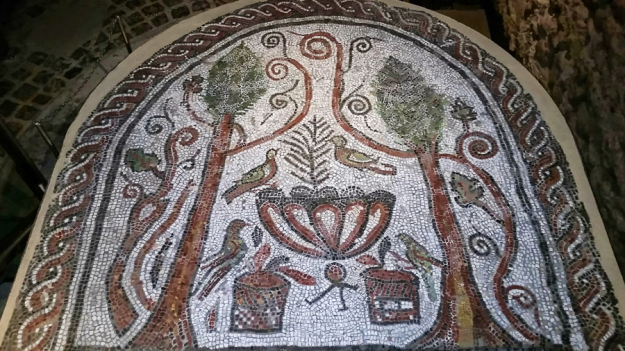
 treesofparadise

Posted in Uncategorized | Comments Off on I am a sojourner on the earth, hide not from me Thy commandments

Most Holy Theotokos, save us!

22 November OS 2015 – Saturday of the 27th Week after Pentecost/9th Week of St. Luke, Afterfeast of the Entry of the Theotokos, Holy Apostles Philemon and Onesimus, Holy Martyr Cecilia

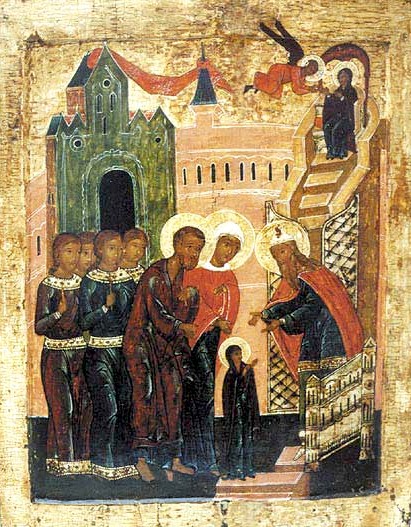
Yesterday we celebrated the Great Feast of the Entry of the Mother of God into the Temple, on which we recall how at the age of three she was dedicated to the Lord by her holy parents Joachim and Anna, in fulfillment of the vow they had made when beseeching the Lord for a child.   From the age of three until she was betrothed to the Righteous Joseph, she dwelt in the Holy of Holies in the Temple in Jerusalem, being fed by an angel and contemplating the highest divine mysteries continuously, remaining in ceaseless prayer at all times.

St. Gregory Palamas, in his Second Homily on the Entry, brings to light many remarkable insights of the Church into the great mystery of the Theotokos – who she is and what is her part in the great mystery of salvation.   Here is one profound passage:

She alone forms the boundary between created and uncreated nature, and no one can come to God except through her and the Mediator born of her, and none of God’s gifts can be bestowed on angels or men except through her. As in the case with lamps on earth constructed of glass of some other transparent material, it is impossible to look at the light or enjoy its rays except through the lamp, so it is beyond the reach of all to look upwards to God or be helped by Him to make progress in any direction, except through the Ever-Virgin, this God-bearing lamp who is truly radiant with divine brightness. “God is in the midst of her,” it says, “she shall not be moved (Ps. 45:5).”   – from “On the Entry of the Mother of God into the Holy of Holies II,” in The Homilies by St. Gregory Palamas (Mount Thabor Publishing).

What this means practically for us is that we must wholeheartedly pray to Panagia (the Most Holy Theotokos) for our salvation and that of those whom we love. No one comes to the Father apart from Jesus Christ, and no one comes to Jesus Christ apart from the Holy Virgin Mary. This means not only assenting to the dogmas about the Mother of God, but also having a lively relationship in prayer with the Mother of God.

The Church’s treasury of prayer provides us with the means to acquire this relationship. The two pre-eminent and most beloved forms of prayer to the Theotokos are the Salutations (Hairetismoi) of the Akathist Hymn and the Small Canon of the Supplication (Paraklisis) to the Mother of God.   Many pious families throughout the centuries have made a practice of saying one or the other (or both!) of these every day.   We could make a resolve to do this, or to adopt another practice, such as saying the prayer “Theotokos and Virgin, Rejoice…” (Theotoke Parthene) so many times per day, or a daily prayer rope of 33 or 100 prayers, “Most Holy Theotokos, save us!”

We also have the great, inestimable gift of being able to run to the Holy Virgin with all of our sorrows in time of need.   When we are at our lowest, when things seem at their worst, when we see no way out of this or that situation, let us run to our icons, fall down on our knees in prayer and prostrations, and beg Our Most Pure Lady to help us. She is truly our Mother, and she cares for us incalculably more than our own mothers according to the flesh. She is the Joy of All Who Sorrow and Quick to Hear all those in need. Let us lay bare our souls and hearts before her in prayer, and we will receive speedy consolation through the grace of Her divine Son.

My most holy Lady, Mother of God, by thy holy and all-powerful prayers banish from me, they humble, wretched servant, despondency, forgetfulness, folly, carelessness, and impure, evil, and blasphemous thoughts out of my wretched heart and my darkened mind. And quench the flame of my passions, for I am poor and wretched, and deliver me from my many cruel memories and deeds, and free me from all their bad effects; for blessed art thou by all generations, and glorified is thy most honorable name to the ages of ages. Amen.   – from the Morning Prayers in the Prayer Book published by Holy Trinity Monastery, 1960 edition.

Entry_of_Virgin_Mary_(icon)

Posted in Uncategorized | Comments Off on Most Holy Theotokos, save us!

Speaking a true word

19 November OS 2015 – Wednesday of the 27th Week after Pentecost/9th Week of St. Luke, Holy Prophet Abdia (Obadiah), Holy Martyr Barlaam, Righteous Barlaam and Josaphat

Throughout the coming weeks, we will be fasting and increasing our vigilance in prayer and divine services in order to prepare for the Great Feast of the Nativity of the Lord. The Church in Her wisdom has placed the feast days of several of the prophets during the Nativity Fast – such as the Prophet Obadiah, whom we remember today – in order to call our attention to their prophetic words foretelling the coming of God in the Flesh to save the human race from eternal death.

What is a prophet? Today, there is a lot of “buzz” – whether emanating from conspiracy websites, occult/New Age authors, pop “evangelical Christian” circles, the Roman Catholic groups promoting various “apparitions,” or the newly appeared and cleverly marketed false elders of “World Orthodoxy” – about prophecies concerning future events, but we know that we should not be curious about all that and cannot trust it – it is a bizarre hall of mirrors, a world of delusion. In the true Church, there have always been real prophets, and it is to them we should turn for the explanation of the Holy Scriptures and their message regarding the beginning of the world, the present, and the end.

In the Old Testament Church, that is, the congregation of the true worshippers of God from Adam and Eve until the coming of Christ, the prophets – like Moses, Elias, Isaias, Jeremias, and Daniel – were holy men, not just religious people who were curious about the future and “figured it out.” Because of their pure and blameless life, and because God chose them as His spokesmen, they saw in mystical visions the Truth about the beginning of the world, the present state of God’s people, and things to come.

St. Gregory the Dialogist [Gregory the Great, Pope of Rome] (c. 540-604), distinguishes for us the various modes of prophecy: “Prophecy has three tenses: the past, the present, and the future…We shall speak more truly of the three tenses of prophecy if we quote the evidence of Holy Scripture. Prophecy concerning the future: ‘Behold, the Virgin shall conceive in the womb, and shall bring forth a Son (Isaiah 7:14).’ Prophecy concerning the past: ‘In the beginning, God made the heaven and the earth (Genesis 1:1).’ For a man [Moses] speaks of a time when man was not [the beginning of the world]. A prophecy about the present is when Paul the Apostle says ‘But if all keep on prophesying, and some unbeliever or unlearned should come in, he is reproved by all, he is examined by all. And thus are the secrets of his heart become manifest; and so falling upon his face, he will make obeisance to God, reporting that God is verily among you (I Corinthians 13:24, 25).’ Indeed, when it is said, ‘the secrets of his heart are made manifest,’ it is truly shown that through this mode of prophecy the Spirit does not predict what the future will be, but reveals what is. How then may it be called the spirit of prophecy which lays bare no future event but reports the present? In this case, attention must be paid to what is rightly described as prophecy, not because it predicts future events, but because it uncovers hidden truths.” – from The Homilies of St. Gregory the Great on the Book of the Prophet Ezekiel (Center for Traditionalist Orthodox Studies), quoted in The Lives of the Holy Prophets (Holy Apostles’ Convent).

Prophecy, then, is not simply predicting the future. It is the speaking of a true word directly sent from the Lord into the pure heart of a saint, whether concerning the past, the present, or the future, for the salvation of souls.

In the New Testament Church, the holy prophets are the ascetical and God-bearing Fathers who accurately interpret the Scriptures, as well as the monastic elders and spiritual fathers who give accurate, Scripturally true, and ecclesiastically traditional advice to their spiritual children based on a pure-hearted understanding of the spiritual state, the sins, and the needs of the person in front of them.   They, too, are prophets, because their hearts are pure and they are strictly adhering to obedience to the Word of God. They do not seek visions or knowledge, but only purification from sin, illumination, and holiness. God gives them knowledge of things past, present, and to come – to the extent needed by the Church in their time – as a by-product of repentance and holiness.

How different are the self-appointed prophets who tickle the ears of the curious! They may occasionally give accurate “prophecies,” because they are helped by demons, who are extremely intelligent and can to some extent figure out what is going to happen next. But the “truth” of these “prophecies” is always mixed with the poison of untruth. This poisonous “truth,” however, is entertaining and addicting, while God’s truth is plain, uplifting, and straight talk, and calls for our repentance, obedience to the Church’s tradition, and moral regeneration. This is why most people would rather get their “prophecy” from Nostradamus or the “Left Behind” series or false elders rather than from the true Church. Let us not be like them, but return to the pure fountains of Truth during this Fast: our daily prayers, the reading of Holy Scripture and accessible patristic commentaries, reliable and traditional books about the ABC’s of spiritual life, and the Lives of the Saints.   If we keep the Faith and strive for repentance, the Lord will give us the discernment we need to read the signs of the times and to prepare for those future realities we do know about without any new prophetic revelation: death, God’s judgment, Heaven, and Hell.

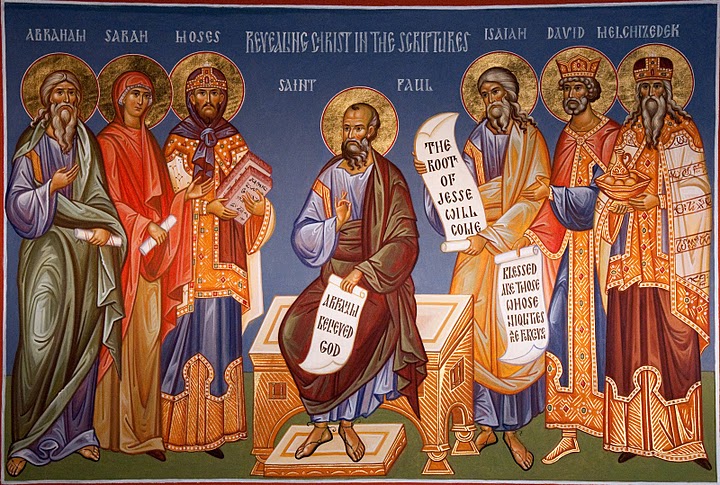
prophets and st paul


Posted in Uncategorized | Comments Off on Speaking a true word

Keeping the Nativity Fast

Today I posted this Rector’s Message for December on our parish website at saint-irene.com

…when ye fast, be not, as the hypocrites, of a sad countenance. For they disfigure their faces, that they may appear unto men to fast. VerilyI say unto you, they have their reward.  But thou, when thou fastest, anoint thine head and wash thy face, that thou appear not unto men to fast, but unto Thy Father who is in secret; and thy Father, who seeth in secret, shall reward thee openly.

– The words of Jesus Christ in Matthew 6:16-18

We have recently begun the Nativity Fast, and perhaps already it is getting us a little down.  A lot of Orthodox Christians who sincerely try to keep this fast (which all too many neglect) find that it is more difficult to stay motivated and cheerful during this season than during the Great Fast before Holy Week and Pascha.

This is probably for several reasons.  There are the short days and long nights of December with their cold and gray weather.  There is the distraction of the secular “holiday season,” which seems to make people a little nutty as they become obsessed with buying tons of presents they cannot afford for people whom they fear will not like them, all the while trying to have good cheer at an exhausting round of obligatory and superficial social gatherings.

Lately, we also have the political and social tension created by anti-Christian power elites who claim that Christmas decorations, greetings, school events, and TV programs actually related to the Birth of Christ are “unfair” to non-Christians and should be eradicated from public life, while non-Christian symbols must be imposed on everyone, especially the Christians, in order to “celebrate diversity,” which is code for worshipping the rapidly spreading reign of the Antichrist global government, under which, of course, there is no real diversity, but only the mind-numbing uniformity of materialism, sensuality, and the ever-despairing power struggle for the “survival of the fittest” in a merciless, endless, and impersonal universe.

Being Orthodox Christians, we choose not to get steamrolled by all of this.  We know what this season is for:  to prepare to celebrate the Birth of Christ.  And we know how to keep it, though because of our weakness in the face of our circumstances we often fail.  Let us remind ourselves, however, how to keep it, and, when we fail, get up again and keep trying, trying to…

Fast for the forty days.  (When obliged to go to parties, stick with the veggie tray!)

Prepare for Holy Communion.

Go to more services.

Force ourselves to be cheerful and kind to everyone (especially tired retail clerks!)

Say “Merry Christmas” and don’t get intimidated by the propaganda into that “Happy Holiday” nonsense.

Keep thanking God for everything we have and not get caught up in consumerism.

Keep our shopping and present giving simple, in order to focus on the Birth of our Savior, and on sincere love for our family and friends, which is the real purpose of the gifts, anyway.

A blessed Nativity Fast to all!

++++++++++++++++++++++++++++++++++++++++

“…and on earth, peace…” 

Since God is peace surpassing every mind, it is necessary that the heart which desires to receive Him be peaceful and undisturbed. As David has said: “His place has been established in peace” (Ps. 75:2).  Hence you ought in the first place to establish your heart in a peaceful state.

 Before everything else, have that peace and staidness in your five senses.  That is, do not look or talk or move your hands or walk disturbedly, but in a peaceful and orderly manner. For when you become accustomed to preserve that peace in your outer movements, you shall easily and effortlessly be led to a peaceful inner state. For according to the Fathers, the inner man conforms to the outer man. Accustom yourself to love all men and be at peace with all, if this is possible, as Paul says: “If it be possible, as much as lieth in you, live peaceably with all men” (Romans 12:18).   Guard your conscience so that it does not accuse you with regard to anything, but rests at peace in relation to God, yourself, your neighbor, and external things, and especially does not accuse you that you have neglected some commandment of God. For the guarding of the conscience begets peace of heart. Accustom yourself to bear insults without being disturbed. 

 –   from Unseen Warfare, edited by St. Nikodimos of the Holy Mountain and St. Theophan the Recluse

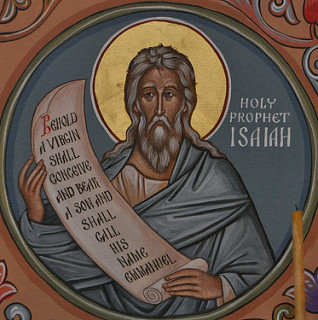
st isaiah icon

Posted in Uncategorized | Comments Off on Keeping the Nativity Fast

Invincible might

15 November OS 2015 – Saturday of the Twenty Sixth Week after Pentecost/8th Week of St. Luke, Holy Martyrs Gourias, Amonas, and Abibus, Holy New Martyr Katherine of Mandra, Beginning of the Nativity Fast  

The reading from the Holy Gospel today is Luke 9: 37-43.

At that time, it came to pass, that on the next day, when they were come down from the hill, much people met Jesus. And, behold, a man of the company cried out, saying, Master, I beseech thee, look upon my son: for he is mine only child. And, lo, a spirit taketh him, and he suddenly crieth out; and it teareth him that he foameth again, and bruising him hardly departeth from him. And I besought thy disciples to cast him out; and they could not. And Jesus answering said, O faithless and perverse generation, how long shall I be with you, and suffer you? Bring thy son hither. And as he was yet a coming, the devil threw him down, and tare him. And Jesus rebuked the unclean spirit, and healed the child, and delivered him again to his father. And they were all amazed at the mighty power of God. 

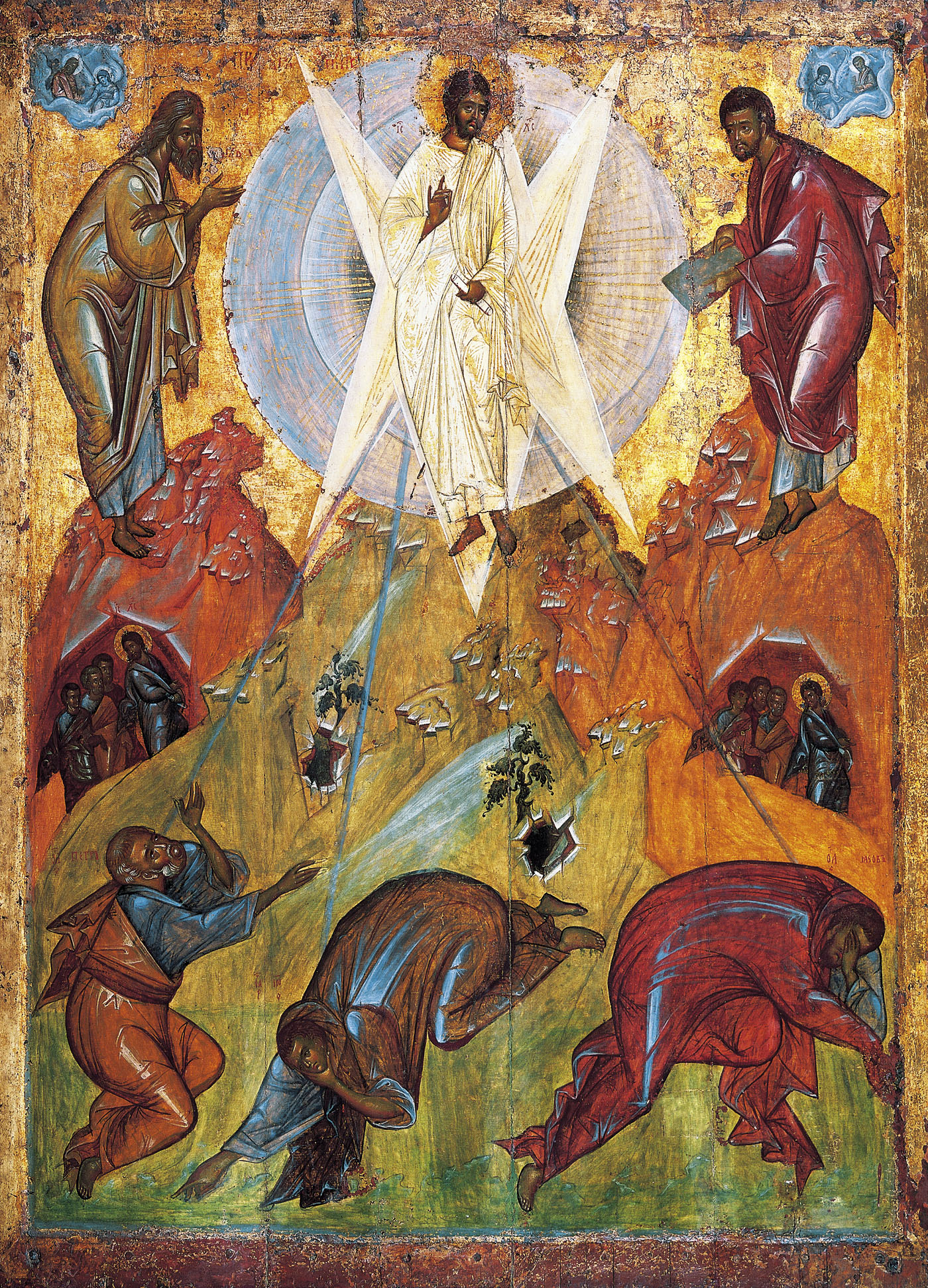
The “hill” in this passage is Mount Tabor, and “they” are the Lord with Peter, James and John. They have just come down from the mountain after the Lord’s Transfiguration.   The apostles’ joy at beholding the Lord in glory before their very eyes had caused Peter to ask if they could not perhaps pitch little tents for Christ to dwell there with Moses and Elias, and all of them could just stay there for a bit…”Lord, it is good for us to be here.”  This, however, was not to be, for Christ had yet to go forth and complete His awesome exploit for our salvation.   They had had to descend the mountain.

When they come down, immediately they find distressing evidence that fallen man does indeed need a Savior: a boy possessed by an evil spirit.   The Lord does quite easily, with but a word, what the disciples could not, delivering the child from the devil and giving him back again, healed and whole, to his father.   He verifies by divine power the words of the Father heard on the mountain: “This is my beloved Son.”

We do not understand our real situation unless we fully comprehend and accept the reality that this world we live in is fallen, occupied not only by billions of sinful men – who, apart from divine intervention, would keep doing evil willy-nilly till the end of time off their own bat, with no encouragement to do so whatsoever – whom we can see, but also by malignant spirits – far outnumbering the men and far more powerful than they, who are constantly aggravating each man’s tendency to sin in a thousand artful ways, occupying men’s minds and even their bodies – whom we cannot see.   Out of His mercy and love for man, the Lord closed the spiritual eyes of our first parents after the Fall, and subsequently those of all their descendants, so that we cannot see these creatures. But there they are.

This realization should, to put it mildly, give us a sober outlook on life. It puts all of our Orthodox customs and practices into the only context in which they make sense: this short earthly life as an arena for spiritual combat. When understood fully, it confronts us with The Choice: God or the devil, heaven or hell.   There is no Third Way, no separate peace. No one is allowed to sit this one out.

The Good News is that the billions of devils are outnumbered by One – the Almighty God Who created them and holds them in unbreakable chains, subject to His sovereign will. This One loves us, and He has done, is doing, and will do everything for our salvation.   We have only to believe in Him as He desires to be believed in, worship Him as He desires to be worshipped, and serve Him as He desires to be served.   This belief, this worship, and this way of life constitute what we call Orthodoxy.   They are the invincible armor and irresistible weapons that enable us to overcome the World, the Flesh and the Devil. We can deflect anything the bad guys throw at us.

Today we begin the holy fast for the Lord’s Nativity.   What a wonderful and simple weapon the Lord through Holy Church has given us: to deny ourselves in this very basic, very simple way, and so in simple and humble obedience acquire His grace to overcome our invisible foes. In both St. Matthew’s and St. Mark’s account of the exorcism related above by St. Luke, the Lord afterwards explains to the disciples that “this kind” (i.e., this type of creature, a demon) cannot be cast out except by prayer and fasting. When we fast, we are joining ourselves to the Lord Himself, Who as a man really and truly fasted while on earth. When we pray, we are uniting ourselves to Christ, Who as a man really and truly prayed to His heavenly Father.   What an immeasurable honor – to do as the God-Man did!   What invincible weapons – those wielded by the God-Man Himself!   With Him, we cannot fail.

Let us “serve the Lord with fear and rejoice in Him with trembling (Ps. 2).” We live in godly fear until the end of our earthly pilgrimage, and we simultaneously rejoice, living in hope of our eventual victory.   May the Lord, Who revealed our true destiny in His Transfiguration, give us the grace to serve Him in prayer and fasting this Nativity Fast and all the days of this temporal life, so that we may tabernacle with Him on the summit of the heavenly Sion, where our vision of His beauty will have no end.

Transfiguration_by_Feofan_Grek_from_Spaso-Preobrazhensky_Cathedral_in_Pereslavl-Zalessky_(15th_c,_Tretyakov_gallery)

Posted in Uncategorized | Comments Off on Invincible might

Going up to Jerusalem

14 November OS 2015 – Friday of the Twenty Sixth Week after Pentecost/8th Week of St. Luke, Holy Apostle Philip

The reading from the Holy Gospel today is Luke 13: 31-35

At that time, the same day there came certain of the Pharisees, saying unto him, Get thee out, and depart hence: for Herod will kill thee. And he said unto them, Go ye, and tell that fox, Behold, I cast out devils, and I do cures to day and to morrow, and the third day I shall be perfected. Nevertheless I must walk to day, and to morrow, and the day following: for it cannot be that a prophet perish out of Jerusalem. O Jerusalem, Jerusalem, which killest the prophets, and stonest them that are sent unto thee; how often would I have gathered thy children together, as a hen doth gather her brood under her wings, and ye would not! Behold, your house is left unto you desolate: and verily I say unto you, Ye shall not see me, until the time come when ye shall say, Blessed is he that cometh in the name of the Lord.

The Pharisees imagined they could frighten the God-Man with the threat of Herod’s evil intentions, but they were mistaken.   He announces calmly that He knows that He will be killed, and that it will happen in Jerusalem, the city that always murdered the prophets.   He also announces that, until this happens, He will continue to “walk,” that is, to carry out His mission of teaching, preaching, healing, casting out devils, and raising the dead – His mission to inaugurate the Kingdom of God.   He is in complete control of the situation, and He is going to His voluntary Passion to fulfill the will of the Father, to fulfill God’s providential plan for our salvation from before the ages.

Today we may feel that matters are out of our control, involving both the Church’s situation and society in general, in many ways that affect our lives directly.  This chaos, however, is limited and temporary – a trial we must pass through, our Golgotha.   We must “set our face towards Jerusalem” as the Lord did (And it came to pass, when the time was come that He should be received up, He steadfastly set his face to go to Jerusalem – Luke 9:51) – we must voluntarily join ourselves to Him in His Passion.   And, as we resolve to endure whatever the Lord allows for our salvation, we must resolve with equal determination to go about our mission as well, to do the Lord’s work, the Church’s mission.

How does one acquire courage to carry on when the outlook is grim?   Here are three considerations:

Perspective – From God’s point of view – sub specie aeternitatis (from the perspective of eternity) – the entire history of this whole world, much less one’s lifetime, is the blink of an eye.   He is the King of the Ages, the Sovereign of History. All is unfolding according to His plan for our salvation, which He desires infinitely more than we do.   We have only to do our part in history; we have no responsibility for controlling history.   He will arrange everything for our true good.

Consolation in Prayer – When external circumstances are at their worst is precisely the time when consolation in prayer is greatest, if we are faithful to prayer and wholeheartedly resolve to grow closer to God in our trials.   Many Orthodox Christians who suffered in the communist hell of the 20th century testified that ultimately their time in prison, living in the utmost humiliation and deprivation, became the happiest time of their lives, precisely because it was at this time that they experienced what prayer really is and what a human being is really made for – most intimate union with the Lord, Who becomes everything to us when we have lost everything else.   We cannot conceive of the unspeakable consolation such people experienced…but we may have the opportunity to do so in future.   Let us begin now to deepen our life of prayer!  The next time we are anxious over the future course of events, let us turn to a favorite book on prayer and spiritual life that has motivated us in the past, rather than to this or that website to read the latest spin on the absurd epiphenomena of man’s vain strivings.

Love for Others – Typically fear for the future is mixed with self-pity.   Let us forget ourselves and act determinedly each day for the true good of those for whom we are in varying degrees responsible.   A man becomes a good soldier only when he counts his own life as nothing, when he thinks himself already a dead man.   Let us be good soldiers in the Church Militant, counting our lives as nothing, determined to lay down our lives for our friends, in order to practice that love than which there is no greater.   With this option clearly open to us, how can we say that our lives are out of control?

The duty is ours; the consequences are God’s.    Let us set our faces serenely to go to Jerusalem, and on the way, each day, seek simply to know and to do His will.

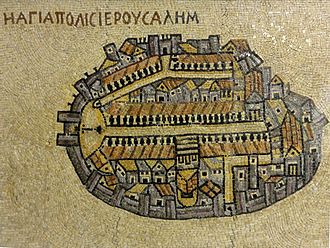
madabamap


Posted in Uncategorized | Comments Off on Going up to Jerusalem

To be rather than to seem

12 November OS 2015 – Wednesday of the Twenty Sixth Week after Pentecost/8th Week of St. Luke, St. John the Merciful, Archbishop of Alexandria

The reading from the Holy Gospel today is Luke 12: 48-59

The Lord said, For unto whomsoever much is given, of him shall be much required: and to whom men have committed much, of him they will ask the more. I am come to send fire on the earth; and what will I if it be already kindled? But I have a baptism to be baptized with; and how am I straitened till it be accomplished! Suppose ye that I am come to give peace on earth? I tell you, Nay; but rather division: For from henceforth there shall be five in one house divided, three against two, and two against three. The father shall be divided against the son, and the son against the father; the mother against the daughter, and the daughter against the mother; the mother in law against her daughter in law, and the daughter in law against her mother in law. And he said also to the people, When ye see a cloud rise out of the west, straightway ye say, There cometh a shower; and so it is. And when ye see the south wind blow, ye say, There will be heat; and it cometh to pass. Ye hypocrites, ye can discern the face of the sky and of the earth; but how is it that ye do not discern this time? Yea, and why even of yourselves judge ye not what is right? When thou goest with thine adversary to the magistrate, as thou art in the way, give diligence that thou mayest be delivered from him; lest he hale thee to the judge, and the judge deliver thee to the officer, and the officer cast thee into prison. I tell thee, thou shalt not depart thence, till thou hast paid the very last mite.

Most of us have experienced precisely what the Lord describes above: we endure uneasy, strained, or even broken relationships with family and friends because we have chosen to follow our conscience in regards to the Orthodox Faith regardless of the earthly consequences. When this happens not once but several times, perhaps many times, we can certainly start to feel worn out, alone, and discouraged, and may be tempted to think, “What’s the use? It’s time to throw in the towel.”

It helps greatly, however, as Christ Himself says, to “…discern this time.”   It does not require that one be a clairvoyant elder or a theologian or even a pious Orthodox Christian to see that the times we live in are times of extreme spiritual deception coupled with social disintegration of unprecedented scale and rapidity.   When everyone around us is bending to the demonic winds that are blowing, and we do not, they are bound to think us uncongenial.   Their discomfort in our presence does not amount to an argument for the validity of their choices.

In order to deal with the constant, kaleidoscopically shifting changes going on around us, you should start with the question: “Do I still believe as I have always believed?”   If the answer is “Yes,” proceed to the next question, “Am I acting according to my conscience, to the best of my ability, God helping me?”   If the answer is “Yes,” then be at peace. As the saying goes, “Either they’re crazy or I’m crazy, and I know that I am not crazy.”

When we are tempted to sentimental or humanistic solutions to theological and philosophical disagreements over what is real and what is not, we need to crucify emotions, imagination, and curiosity, fall down before the holy icons in our prayer corner, and abandon ourselves entirely to God’s Providence, placing everyone we love in His hands.   There really are no halfway solutions, and we cannot make a separate peace in order to escape the inescapable: the conflict between truth and falsehood, between good and evil, between the real and that which is pretending to be real.

There is an old Latin expression: Esse quam videri, “To be rather than to seem to be.” In regard to where the path to salvation lies, let us desire steadfastly the reality over the appearance, as the gap between the two widens daily.

Here is a suggestion: When asking God for discernment in regards to your situation in life, read the Seventeenth Kathisma (Ps. 118 in the Church’s numbering, beginning “Blessed are the blameless in the way…”), and struggle for attention while reading. May the Lord, through this holy practice, grant all of us clarity of mind and peace of heart!

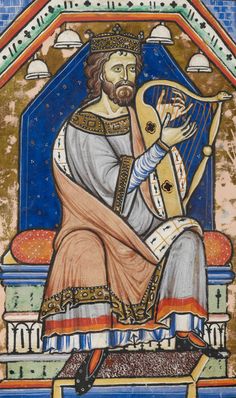
King David Playing Harp

Posted in Uncategorized | Comments Off on To be rather than to seem

Let us act for the Lord

11 November OS 2015 – Tuesday of the Twenty Sixth Week after Pentecost/8th Week of St. Luke, Holy Martyrs Menas, Victor, Vincent, and Stephanida; Righteous Theodore the Studite 

The reading from the Holy Gospel today is Luke 12:42-48.

And the Lord said, Who then is that faithful and wise steward, whom his lord shall make ruler over his household, to give them their portion of meat in due season? Blessed is that servant, whom his lord when he cometh shall find so doing. Of a truth I say unto you, that he will make him ruler over all that he hath. But and if that servant say in his heart, My lord delayeth his coming; and shall begin to beat the menservants and maidens, and to eat and drink, and to be drunken; The lord of that servant will come in a day when he looketh not for him, and at an hour when he is not aware, and will cut him in sunder, and will appoint him his portion with the unbelievers. And that servant, which knew his lord’s will, and prepared not himself, neither did according to his will, shall be beaten with many stripes. But he that knew not, and did commit things worthy of stripes, shall be beaten with few stripes. For unto whomsoever much is given, of him shall be much required: and to whom men have committed much, of him they will ask the more.

“For unto whomsoever much is given, of him shall be much required…”   The Lord makes the same point in another place, in the Parable of the Talents. He entrusts much to His faithful servants, and He expects much in return.   Recall all that the Lord has given us:

He created us, bringing us from nothing into being, and he upholds us in existence at every moment.   Nothing separates us from the abyss of non-being except His sovereign will, His decision that we continue to be.

When we had fallen away from Him, He became a man like us in all things but sin, and He suffered a terrible death on the Cross for our salvation.

By rising from the dead, He has destroyed the power of sin, death, the devil, and hell.   In Holy Baptism He has granted us the forgiveness of sins and eternal life.

By ascending into Heaven, He has placed our human nature in the bosom of the Uncreated Godhead, the Holy Trinity.

By sending the Holy Spirit, He has granted us the grace-filled life of the Church. We have infinite divine help for all of our needs and activities, given us in prayer, in the Holy Mysteries, in the intercession of the Mother of God, the Holy Angels, and the choir of the saints. We have access to the countless blessings bestowed on the Church, all of the treasures of Her unsurpassed worship, art, music, and theological and spiritual literature.   We have detailed and supremely wise instructions for conducting the struggle of this earthly life.

All of this is ours, our inheritance.   We are the richest people on earth.   Let us give thanks for this inheritance and at the same time ponder how we may take advantage of all these inestimable blessings, in order to do real work for the Lord, to be his active and vigilant servants.   How can we do this?

First, every day dedicate your day to the Lord. Ask Him to show you His holy will, and express your desire to please Him in all you do in your duties at home and at work.

Second, ask how you can more actively serve your parish, help your priest, and serve the brethren. Do you see the parish as a “vendor” to supply your needs, or as a precious inheritance for which you are responsible and an arena for service and struggle?   In other words, are you a taker or a giver?

Third, recall that without the Lord we can do nothing. Beg Our Lord, as you dedicate yourself to more active work for His glory, to remind you constantly that all is from Him and for Him, so that you do not become puffed up with pride in achievement or fall into despondency over failure.   Be at peace regardless of outcomes: the duty to act is ours, but the consequences are God’s.

As we approach our patriotic holiday of Thanksgiving, let us give thanks to the Lord for all things, and let us dedicate ourselves more completely to His service.

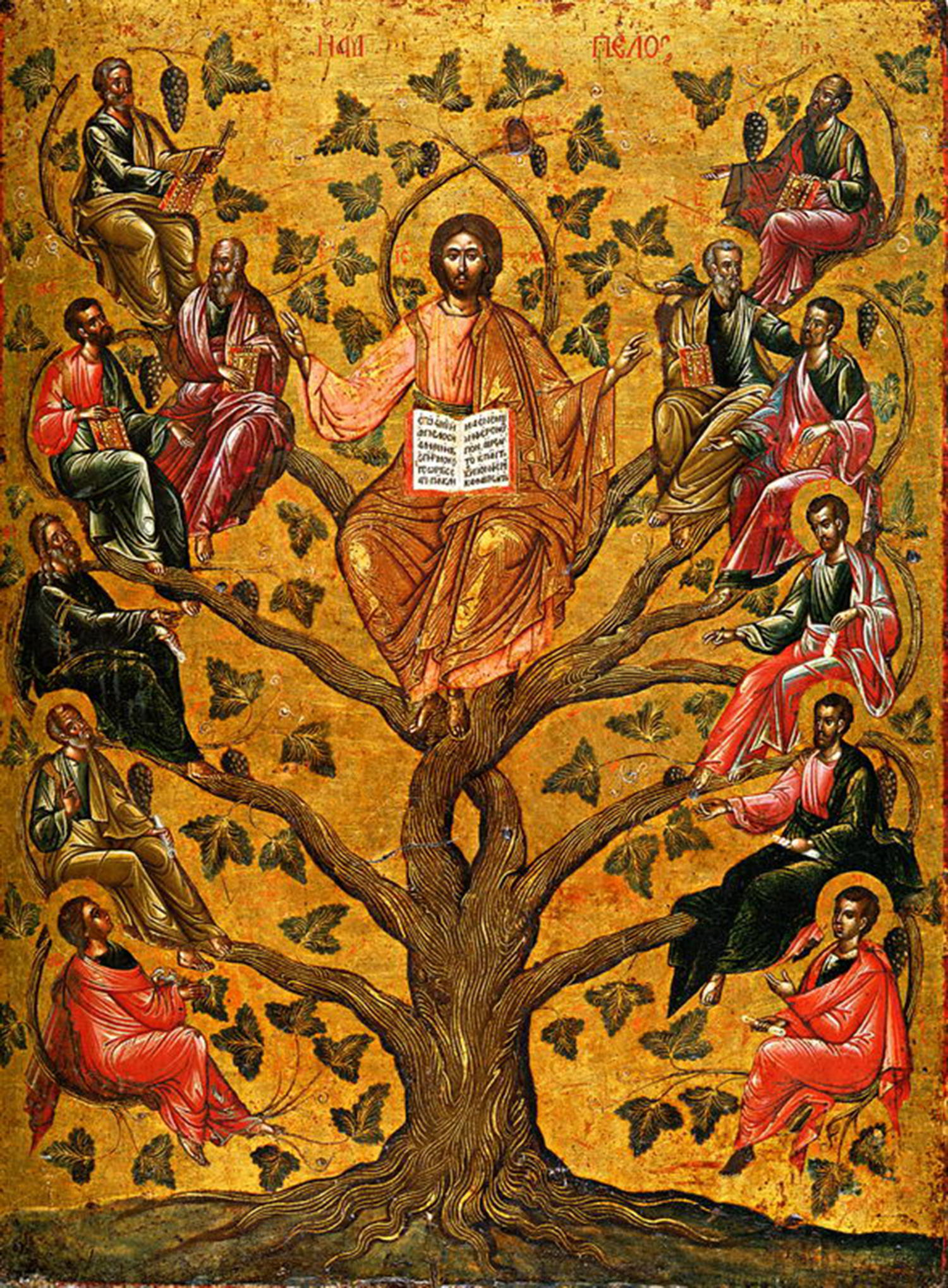
 The True Vine

Posted in Uncategorized | Comments Off on Let us act for the Lord

Freedom from care

10 November OS 2015 – Monday of the Twenty Sixth Week after Pentecost/8th Week of St. Luke, St.  

The reading from the Holy Gospel today is Luke 12: 13-15, 22-31

And one of the company said unto him, Master, speak to my brother, that he divide the inheritance with me. And he said unto him, Man, who made me a judge or a divider over you? And he said unto them, Take heed, and beware of covetousness: for a man’s life consisteth not in the abundance of the things which he possesseth. And he said unto his disciples, Therefore I say unto you, Take no thought for your life, what ye shall eat; neither for the body, what ye shall put on. The life is more than meat, and the body is more than raiment. Consider the ravens: for they neither sow nor reap; which neither have storehouse nor barn; and God feedeth them: how much more are ye better than the fowls? And which of you with taking thought can add to his stature one cubit? If ye then be not able to do that thing which is least, why take ye thought for the rest? Consider the lilies how they grow: they toil not, they spin not; and yet I say unto you, that Solomon in all his glory was not arrayed like one of these. If then God so clothe the grass, which is to day in the field, and to morrow is cast into the oven; how much more will he clothe you, O ye of little faith? And seek not ye what ye shall eat, or what ye shall drink, neither be ye of doubtful mind. For all these things do the nations of the world seek after: and your Father knoweth that ye have need of these things. But rather seek ye the kingdom of God; and all these things shall be added unto you.

We all believe the Lord’s words, of course, but at the same time words like these put us to shame – we know that we do not live them.   How do we acquire all-daring trust in the Lord to provide for us, and with this trust acquire also detachment from our money, property, and other material resources? How do we obey God’s command to work hard and take care of our families while simultaneously not worrying about what we are to eat or drink or wear?   Here are a number of suggestions:

  1. Every day, dedicate your work and your financial decisions to God. Say, “O Lord, today I work for Thy glory. Guide my thoughts, decisions, and actions, so that in all that I do, and in all of my management of my family’s resources, I am acting for your glory and for the salvation of those for whom I am responsible, and not merely from worldly concerns.”
  1. Every day, pray for more faith: “O Lord, I believe. Help my unbelief!”
  1. Tithe. When any income comes in, just write a check for one-tenth of that amount to the support of the Church. You will soon be relieved of anxiety and receive the grace of freedom from cares, and often  you will even start doing better financially (though of course this is not guaranteed, despite what the “prosperity Gospel” preachers say). The Lord frequently consoles us, even in this life, when we show more faith in Him.
  1. Give thanks to God for all things, especially when your affairs are not prospering.   Pray earnestly for the insight to understand how even the most difficult problems are for your salvation.
  1. If you have helped someone, especially if they have borrowed money from you, and they have not shown appropriate thanks, or have not paid you back, let go. Forgive and forget.   Set your heart firmly on receiving your reward from the Lord.   Pray for the grace of complete forgiveness.   If in future a relative or a brother in the Faith comes to you to borrow money – do not lend money. Give freely what you can afford to give, and absolutely do not expect repayment.   In this way your heart will be free to love your brother.

May our All-Provident and All-Wise Lord grant us the grace of freedom from cares! May our hearts be set on His Kingdom above all the things of this world, and may He lead us all alike to life everlasting.

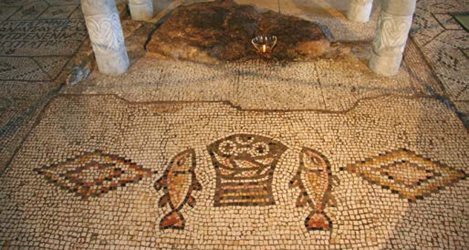
tabgah mosaic

Posted in Uncategorized | Comments Off on Freedom from care

The sign of Jonas

3 November OS 2015 – Monday of the Twenty Fifth Week after Pentecost/7th Week of St. Luke, Translation of the Relics of St. George

 The reading from the Holy Gospel today is Luke 11: 29 -33.

At that time, when the people were gathered thick together, Jesus began to say, This is an evil generation: they seek a sign; and there shall no sign be given it, but the sign of Jonas the prophet. For as Jonas was a sign unto the Ninevites, so shall also the Son of man be to this generation. The queen of the south shall rise up in the judgment with the men of this generation, and condemn them: for she came from the utmost parts of the earth to hear the wisdom of Solomon; and, behold, a greater than Solomon is here.  The men of Nineveh shall rise up in the judgment with this generation, and shall condemn it: for they repented at the preaching of Jonas; and, behold, a greater than Jonas is here. No man, when he hath lighted a candle, putteth it in a secret place, neither under a bushel, but on a candlestick, that they which come in may see the light.

What is the sign of Jonas?   Christ Himself explains, in Matthew 12:40, “For as Jonas was three days and three nights in the whale’s belly; so shall the Son of man be three days and three nights in the heart of the earth.” The sign of Jonas is the Resurrection of Christ. Just yesterday, Sunday, we celebrated the Resurrection once again, as we do week after week, Sunday after Sunday, and year after year, Pascha after Pascha. If only we understood more deeply what this means, if only we had a lively appreciation of the reality that the Resurrection is the foundation of our lives!

Today people are fearful, but we have nothing to fear, for Christ has conquered sin, the devil, death, and hell.

Today people worship nothingness – they are spinning out of control into suicidal darkness; they have made a pact with death. We worship Christ, the Life-giver and Light-giver. Rather than spinning out of control, we are centered and stable on Him.

Today people are in despair, because they believe they have nothing to look forward to. We live in hope, for Christ having risen once will die no more – death has no power over Him. And our life, being hid with Christ in God, is indestructible – death has no power over us, but rather will be the gateway to an eternal and imperishable life.

Being made victors, having received this life and light, having this hope – surely we would be the worst ingrates of all if we gave into fear, darkness, and despair.   We truly would be worthy of being condemned by the queen of the south and the men of Nineveh.

Why do some believe in the Resurrection and some do not? In yesterday’s Sunday Gospel, for the Fifth Sunday of St. Luke, the parable of the Rich Man and Lazarus, Father Abraham concludes with the words: “If they believe not Moses and the Prophets, they would not believe though one should rise from the dead.”   Both the Jews who believed in Jesus and His Resurrection, and those who did not, shared the same Scriptures and the same hope of the Messiah.   But those who rejected Jesus and denied the Resurrection had, as St. Paul put it, a “veil over their eyes” when they read the Old Testament Scriptures – they read but did not understand. They thought that the Scriptures were simply a resource to be mined by their rabbis in order to create a hypocritical, outwardly religious lifestyle and an idolatrous worship of their ethnic identity.   Those who turned out to be the true Jews – those who believed in the Resurrection, accepted Jesus as the Messiah, and worshipped Him as the God-Man – took the true meaning of the religion of their fathers into their hearts, and they had a heartfelt desire to answer the voice of God they heard calling from the Scriptures: the call to conversion, to prayer from the heart, to love of God and neighbor, to humility, to total submission to God’s holy will, to being cleansed from idolatry of any created thing. Their spiritual eyes were open, and when the witnesses to the Resurrection testified to Him Whom they had seen, heard, and touched after He rose from the dead, their minds and hearts accepted this testimony as true.  They were not only of the seed of Abraham: they kept the Faith of Abraham.

We are of the seed of the New Israel, descended from generations of Orthodox Christians. Do we see our Faith primarily as an ideology of some kind of national or racial cultural identity, our Church primarily as an endowed institution with the material and human resources to give us social and psychological stability and comfort? If so, we have made it an idol – we are worshipping it as a thing in itself and not worshipping the Uncreated God.   What happens to those who worship the outward comforts of their religious and ethnic institutions as a god is that their descendants end up going to the opposite extreme and hating their historical Orthodox and national identity, hating the Church. Why? Because we are not pagans or idolaters: We are the worshippers of the true God. Therefore God will not allow us to worship anything but Him, and He will especially not allow us to worship the cultural achievements and outward aspects of His True Church, because, being the highest achievements of humanity, they are the most seductive idols!   Those who go down this path, who compromise their Faith but “really get into” Byzantine chant or the latest academic blah-blah about patristic theology or their ethnic identity or church architecture or the power struggles of their patriarchate or their social connections in the local ethnic community or …whatever – they are no different spiritually from the Scribes and Pharisees who, rather than worshipping the God of the Jews “in Spirit and in Truth” preferred to worship being Jewish.  Outwardly they have the name of those who live, but they are dead.

Let us, in this age of spiritual deception par excellence, love the things of the Church without making idols of them, so that, when the day comes (and it is a distinct possibility) when we are given the choice – compromise your faith and morals and thereby remain free to enjoy all of your beautiful and comforting ethnic and religious “stuff,” or be faithful and so be left to rot in dungeons with no icons, no priests, no divine services, no chant, no beautiful churches – we will choose the latter, and we will rejoice that we are suffering for His Name. We will not only chant about the Resurrection but will also live the life of the Resurrection.

For the Lord is our God, and He alone must we adore and serve.

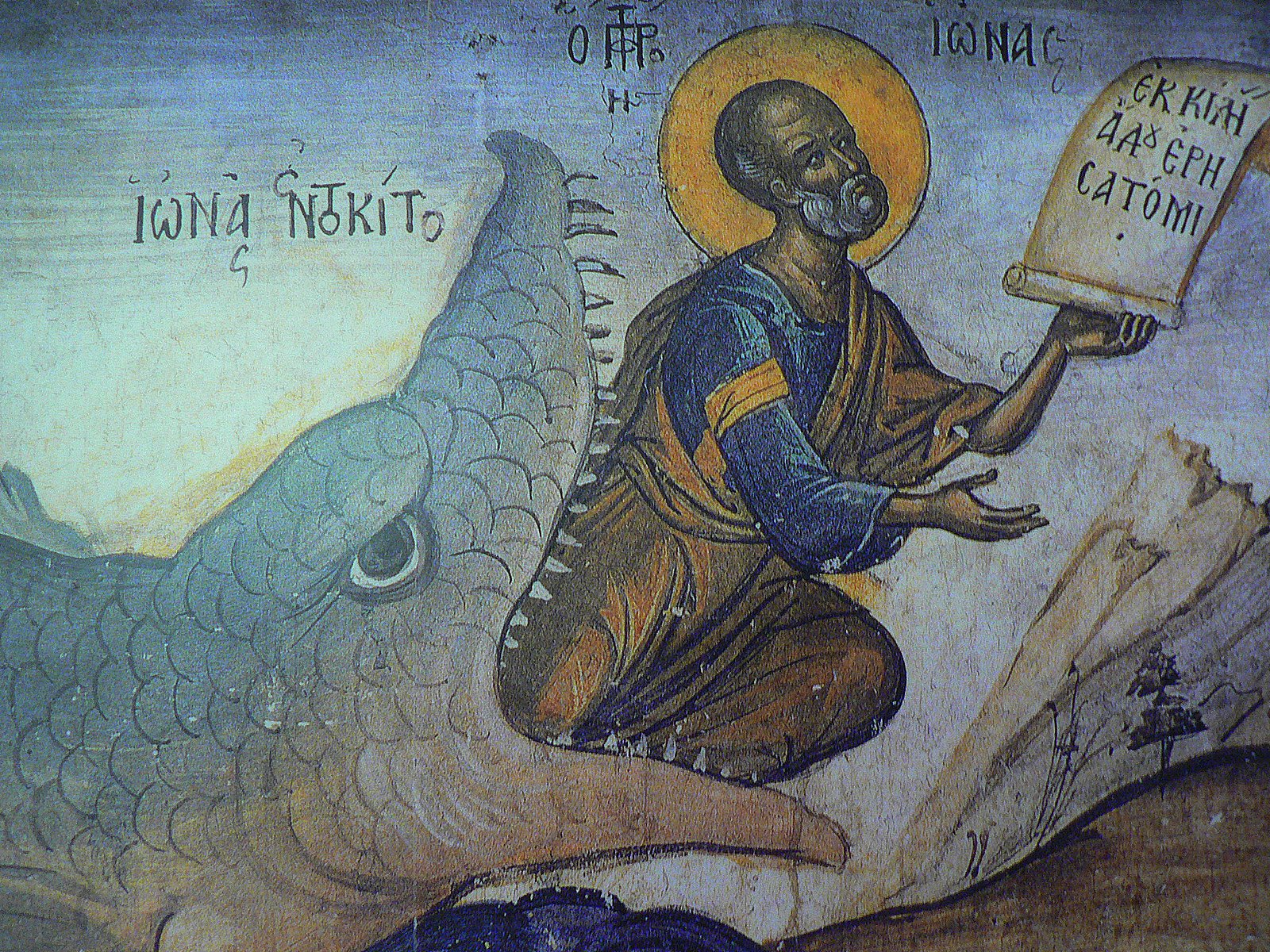
Jonas 

Posted in Uncategorized | Comments Off on The sign of Jonas