Standing firm

17 March OS 2017: Thursday of the Fifth Week of Lent; S. Alexis the Man of God, St. Patrick the Enlightener of Ireland

The first reading at Vespers today is Genesis 18:20-33.

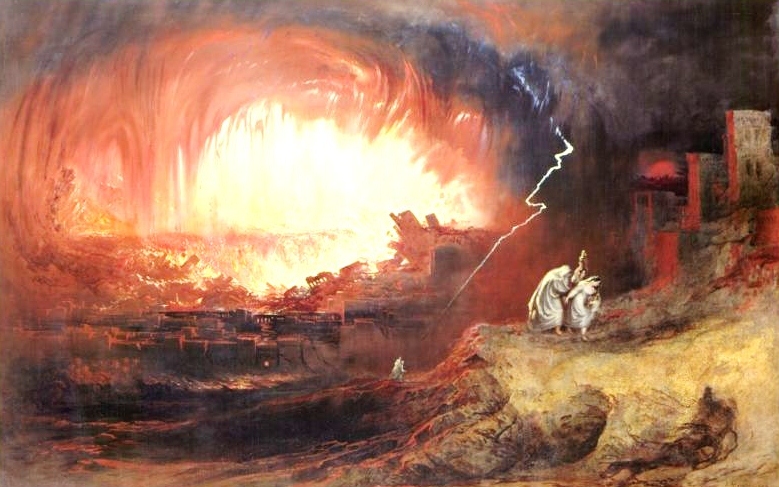
Abraham pleads with the LORD not to destroy Sodom if only ten righteous men can be found there. The two angels sent by God will not find ten, but only one, the righteous Lot, and only he and his daughters will survive.

Living, as we are today, in the midst of Sodom, we must be absolutely determined not only to remain moral ourselves, but also to speak and to act against the lies of Sodom with absolute and consistent clarity and intransigence, not giving one inch. The lies of Sodom are that black is white, evil is good, the abnormal is normal, and the perverted is sacred. These thoughts, constantly repeated and shoved down the throats of everyone who will listen, corrode the mind and will, and only a militant state of soul burning with righteous indignation will resist.

The biggest lie is that the Christian virtue of non-condemnation means calling evil good, that “forgiveness” means saying that sin is not a sin.   This is absurd, of course: if it is not a sin, then there is nothing to forgive. The reality is that the sins of Sodom are explicitly among those that cry out to God for vengeance, that God will indeed avenge them, and that it will be terrible to behold. Our God is a consuming fire, and nothing impure can stand in His presence.

We need to wake up and beg God to renew in us manly and righteous wrath against the sodomites, both those who practice these abominations and those who sanction them and propagandize them.   If we are not indignant against such insults to God’s holiness and honor, if we are not wrathful against the present destruction of innocence and purity on a catastrophic scale, we will have neither hope of turning the tide nor of escaping God’s wrath ourselves, as aiders and abettors of these most satanic sins.

If we are destined to play the part of Lot, and destruction is inevitable, let us stand firm, and the LORD will send His angels to rescue us in time.
Posted in Uncategorized | Comments Off on Standing firm

Father of nations

16 March OS 2017: Wednesday of the Fifth Week of Lent; Holy Martyr Sabinus

The first reading at Vespers today is Genesis 17:1-9

Again God repeats His promise and renews His covenant with Abram. The reading begins by stating that Abram was ninety-nine years old at the time. The LORD waits until it is humanly impossible for him and Sarah to have children, in order to make it clear that Isaac’s birth, the fulfillment of the promise, is God’s work and not man’s. He is inaugurating the covenant of faith and of grace. All is from God.

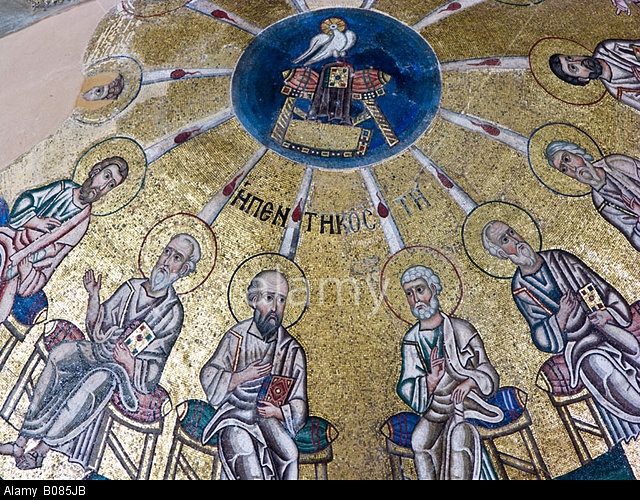
At this particular repetition of the promise and renewal of the covenant, God makes a further revelation. He gives Abram a new name: Abraham, Father of Nations.   Note that he is not the father of “the nation” or “a nation” but of “nations.” This title looks forward to the mission of the Holy Apostles, who converted the nations – the Gentiles – to the Faith of Abraham, after Pentecost. Abraham is the father of all the nations who come into the One, Holy, Catholic, and Apostolic Church.

God promises Abraham that their covenant will be “everlasting.” One day the same LORD who makes this promise to Abraham will stand as a man before Pontius Pilate and reveal to him that “My kingdom is not of this world.”

Let us trust in God and believe that all comes from Him, abandoning our trust in ourselves. Let us love the Church. And let us look forward to the Kingdom which is to come. Through the confession of the Faith and Holy Baptism, the God of Abraham has made an everlasting covenant with us. We have only to be faithful and to hope in His promise.

Posted in Uncategorized | Comments Off on Father of nations

The covenant

15 March OS 2017: Tuesday of the Fifth Week of Lent; Holy Martyrs Agapios and Companions

The first reading at Vespers today is Genesis 15: 1-15.

“The LORD came unto Abram in a vision, saying, ‘Fear not, Abram; I do shield thee, and thy reward shall be exceeding great.'” But here Abram shows that he is only human, and he questions God: “O Master, O LORD, what wilt Thou give me, seeing I go away childless…?”   God does not chastise him, but instead repeats His promise to make Abram’s descendants innumerable, this time comparing them to the stars of heaven, and Abram believed Him:   “And Abram believed God, and it was accounted to him for righteousness.”

This passage should console us greatly, since it shows that even a very great and holy man, who is in the state of theoria, of divine vision, can still need to grow in faith and hope in God.   This is something that goes on to the end of his life, and to the end of our lives. It shows that God does not chastise us when we question Him with childlike trust, “What wilt Thou give me?” Rather, He reassures us and increases the measure of our faith. Then, if we believe His promise and put our hope in Him, He accounts this to us as righteousness. Not great acts of asceticism or charity, but simply this: an act of faith and hope in Him.

God and Abram do not stop, however, at this noetic and verbal agreement. They make a physical covenant based upon sacrifice. Once again, Abram goes into ecstasy, into the state of divine vision, and he mystically beholds and speaks with God Who comes to make covenant upon the blood of sacrificed beasts of his flock. This is serious business: the cutting of the animals in two signifies, “You may do this to me and more if I break faith with you.”

The same LORD God who made this sacrificial covenant in blood with Abram has made an everlasting covenant with us, by the blood of the Lamb of God, our Lord Jesus Christ, which purchased us for God. All that we are and all that we have comes from Him; all that we are and all that we have belongs to Him. “For ye are bought with a price: therefore glorify God in your body, and in your spirit, which are God’s (I Corinthians 6:20).” The entire Orthodox way of life – the fasting, the Church services, prayer, correction of our outward habits and inner thoughts, and every aspect of active Christian life – is to help us to glorify God in body and spirit. He has accounted our faith as righteousness; we must show our thanks for His gift by struggling for holiness.

Posted in Uncategorized | Comments Off on The covenant

Children of the promise

14 March OS 2017: Monday of the Fifth Week of Lent; S. Benedict

The first reading at Vespers today is Genesis 13: 12-18.

Here God makes Abram a stupendous promise, that his seed would number as the dust of the earth, i.e., that his descendants would be countless, a promise repeated several times in Genesis. Abram’s physical descendants through Isaac and Ishmael have indeed attained large numbers in the course of history, the far greater in number being the sons of Ishmael. God’s covenant with Abraham had nothing to do with Ishmael, however, but only with Isaac, the son of the promise. The point here is not demographic numbers or the spread of a biological group sharing similar DNA. Abraham is father in the Faith to all who believe in the Savior Whom Isaac prefigures. The true children of Abraham are the children of the Church.

During Great Lent, we children of the Church read Genesis to remind us that we are part of one great, single story, the story of all the true believers in the true God from Adam until now. We read how the lonely, righteous patriarchs, each in his turn, made the critical choice to believe God when He promised him invincible help if only he would trust in Him, and this choice, the choice of one lonely man, led to eternal life for countless souls.  Now it is our turn: What choice will we make? Our feeling lonely is no excuse to say No to God.   We have too much precedent against that. Each of us, in this life, will make the choice. Each of us, in the next life, will stand before God’s Judgment.

Some say that man’s repentance is now impossible and the end is near. Since they go right on enjoying their daily cup of coffee and chatting on Facebook, it is not easy to take them seriously. They forget that by living in Faith, one of them could beget or bear or teach or inspire one child who, like Abraham, could become “the father of many nations,” whose life and labor could bring to repentance many souls and thus stave off the end, possibly unto the salvation of countless souls.   They forget the duty of all Orthodox Christians: to implore God with tears to make them into parents or priests or elders or teachers…of a saint.

The duty is ours. The consequences are God’s. Let us cast off fear and live this day in Faith.

Posted in Uncategorized | Comments Off on Children of the promise

The task at hand

11 March OS 2017: Friday of the Fourth Week of Lent; S. Sophronios of Jerusalem

The first reading at Vespers, Genesis 12: 1-7, relates how God called Abram, whom later He will rename Abraham.

After the scattering of the peoples from Babel, the true knowledge of God remains intact among one family only, and their lineage produces Abraham, who will become the Father in the Faith for all true worshippers of God until the end of the world.

As with Noah, the LORD chooses a particular person to carry out His plan, and the choice of this one man to have faith and to obey affects the salvation of uncounted souls. As with Noah, the LORD gives him a difficult task that he cannot fulfill without great faith and obedience. As does Noah, Abram offers sacrifice unto the LORD.

So too our lives, if we are indeed heirs of the Promise, will bear these marks of particularity, faith coupled with obedience, and sacrifice.

Particularity – When we see that few share our convictions, we must not be shaken. There have been many and critical times in history when almost everyone had fallen away, and God called the few – sometimes just one person and his family – to carry on the true knowledge of Him and the true worship of Him. These few were never distinguished by superior wealth or power or cleverness, but only by this sheer fact, that God had called them.

Faith and obedience – Faith is a free gift, a grace from God: He reveals Himself, giving us the true knowledge of Who He is. It is also our assent to this knowledge, but even the ability to assent is God’s gracious gift to us.  In return, God demands obedience:  “All right, Noah, I have given you the gift of Faith. Now build the Ark.” “All right, Abram, I have given you the gift of Faith. Now risk everyone and everything dear to you, and go off with them to a place you have never been before and know nothing about, trusting Me to take care of you.”   When God gives us our appointed task, it is clear that we have to do it or we will perish, spiritually if not physically. It is also clear that without Him we cannot do it, but with Him success is never in doubt.

Sacrifice – Abram, upon arriving in the Promised Land, immediately built an altar to the LORD.   The true worship of God always accompanies the true faith in God, and true worship, from the beginning of our race, has always centered on sacrifice, culminating in the One True Sacrifice that takes away the sins of the world, that of Our Lord Jesus Christ on the Cross.  So, in our particular and humanly impossible adventure of faith and obedience, we struggle in every way possible to ensure that we and ours will have access to the True Sacrifice that takes place only on Orthodox altars at the Divine Liturgy, at which the One Paschal Sacrifice of the Lamb of God is made present again and again until the end of the world, “for the remission of sins and life everlasting.” Even if it turns out that we have to live in a cave somewhere, let us make sure that the cave has a true altar and a true priest. With God helping us, it can be done.

A simple program, really, if you think about it.

Posted in Uncategorized | Comments Off on The task at hand

The earth beneath our feet

10 March OS 2017: Thursday of the Fourth Week of Lent; Ss. Quadratus and Companions, Martyrs

The first reading at Vespers today, Genesis 10:32-11:9, recounts the history of the Tower of Babel.

Men, delivered from extinction in the Flood by God’s mercy to Noah, did not learn their lesson, and they determined to play God by building a tower to scale the heavens.  One would have thought that the not-distant memory of worldwide catastrophe brought on by human pride and corruption would have daunted them, but they demonstrated the endless capacity of men to delude themselves, and they attempted, once again, to make life into a project to thwart God.   The surprise was on them:  God cannot be thwarted.

God solved the problem by creating many different languages and nations, scattering man across the face of the earth.  He knew, in His infinite wisdom, that people do better in small groups, that small is beautiful.   Man is by nature social: without family and community, without love, he withers and dies.  And precisely because of this, he needs to be in little groups: families, Church parishes, communities. He needs life on a human scale, life with a human face. Being just an atom floating in a vast sea of faceless individuals – which is the plan for humanity of the Babel-Tower-Builders of all ages – has the same effect as having no society at all.  It encloses one in his ego, which is hell on earth.

The Church is the ultimate answer to the Tower project.  She gathers all the nations under Her care without destroying them.  Each nation, and each local community and family, attains its true greatness mothered and instructed by Her.  Family life blossoms, and this becomes the basis of that true national greatness which cannot be measured by GDP or number of dollars spent on social programs or military adventures, but by the piety, learning, and virtue of the nation’s people.

Each of us needs to abjure the mass mentality and mass culture, and rekindle the love of one’s own:  One’s own family, ancestry, tongue, culture, and place.  Let us make our houses into homes, where family life flourishes in piety, learning, and virtuous labor.  Let us love the land beneath our feet and the sky over our heads.   It will be a great day when we are more concerned about our children’s Latin lesson or our chickens’ getting into our next-door neighbor’s yard than about what some crooks are doing in Washington, D.C., New York, the City of London, Brussels, or Davos.

For this to happen, we have to un-do the illusion that things that happen on video screens of various kinds are more real and more important than things that happen in front of us in real life.   Here is a short list of exercises that may help with this. :

1.  Buy stationery and postage stamps, and write someone you love a real letter once a week.

2.  Plant a garden and keep after it.

3.  Spend at least one evening per week with your family and just talk, or sing, or tell stories, or take a walk.  Or simply do nothing – you’ll learn more just looking at each other rather than the Internet.

4.  Learn the names of the trees and plants where you live, and be able to identify them.

Pick one and try it.  You have nothing to lose!

Posted in Uncategorized | Comments Off on The earth beneath our feet

The ancient reverence

9 March OS 2017: Wednesday of the Fourth Week of Lent; the Holy Forty Martyrs

The first reading at Vespers today is Genesis 9:18 – 10:1.

Noah curses Ham for insulting his father, and all of Ham’s posterity are cursed as well. There are three realities here that today many wish to deny:

Divinely-established hierarchy: God places some men over others, the most primordial example being that of placing the father over his family. The deluded slogan of the French Revolution, the catastrophe that inaugurated the current reign of demonic insanity, combines “equality” with “fraternity,” but this is self-contradictory, because without hierarchy there is no love, only the competition of “equals.” No one is responsible for anyone else, and no one has to obey anyone else. In practice of course, this results in the evil anti-hierarchy of “might makes right, the “law of the jungle,” and “survival of the fittest.” Another word for such a condition is “hell.”

The duty of filial piety: This comprises not only the affection but also the reverence of children toward parents, a reverence the children owe even to bad parents.   The commandment God will later give to Moses does not create a new obligation but rather enshrines what was known from the beginning: “Honor thy father and thy mother: that thy days may be long upon the land which the LORD thy God giveth thee.” Filial piety brings a blessing upon one’s life; filial impiety brings a curse. In his last and greatest novel, Brothers Karamazov, Dostoevsky uses the image of a parricide, one who murders his father, to illustrate the essence of nihilism, which is the worship of self-will that leads to eternal death.

The duty to shield the eyes from evil: Ham’s duty was not only to cover his father’s nakedness out of filial piety but also to cover his own eyes and to be silent regarding what he had inadvertently witnessed. There are times when our duty requires the accusation of evil and to be silent is a sin. A great deal of the time, however, we indulge in looking upon and speaking about evil that is none of our business and about which we can do nothing, the result being that we both coarsen ourselves and spread the effect of the evil we profess to abhor.   Contemporary man has completely lost the very concept of the obscene – that there are some things that should not be seen or heard by others.   The word obscene comes from the Latin 0-, ob-, which means, in this context, “away from,” and scena, “stage,” i.e., the stage in a theater.   There are many things, due either to their especial sacredness or especial evil, that should not – must not – be heard, seen, portrayed, or spoken of in public.   They must remain “offstage.” A society that forgets this is doomed to degradation and dissolution.

How do we recover the pietas of our fathers in the Faith?   As a first step, we must turn off the input of filth from the world around us and immerse ourselves in that which is good: good reading, good art, and good music.   We find this first of all in the Church and Her sacred writings, art, and chant. We find this secondly in the healthiest and best non-liturgical writing, art, and music of Christian civilization.   It is all there for us to partake of it. We simply have to make the choice.

As a second step, let us refuse to speak of evil things except when called upon to do so by our station in life and our duties, and even then only to say what is truly required to those who truly need to know.

As a third step, let us pray with tears for the Lord to show us the way out of the sacrilegious burlesque that constitutes “post-modern” life, and for the wisdom and strength to build an ark in which we can ride the waves unsullied over the sea of sewage which passes for contemporary culture.

Holy Patriarch Noah, pray to God for us.


Posted in Uncategorized | Comments Off on The ancient reverence

Household goods

28 February OS 2018: Tuesday of the Fourth Week of Lent; S. Proterius of Alexandria, Bishop and Martyr; S. Basil the Confessor

The first reading at Vespers today is Genesis 9: 8-17.

God’s makes His after-Flood covenant with a single household: “And behold, I establish my covenant with you, and with your seed after you, and with every living soul that is with you, of the fowls and of the cattle, and with all the wild beasts of the earth, as many as are with you, of all that came out of the ark.”

Noah is the paterfamilias, the patriarch, of a farming family, of wife and sons and sons’ wives, of the domestic and wild beasts in their care and under their authority.   God chose a family of animal husbandmen, along with their “critters” – not a government or an army or a political party or a business or a city – to be the foundation of all the future of the earth.  Governments, cities, and all the rest are part of God’s plan for society, too, but they are not the foundation. The foundation is the family, and, to be more precise, husband and wife, their children, their extended family, and ultimately their posterity, caring for animals and tending the soil.

All the Scriptures, all the Fathers, and all the best philosophers of all history testify that the natural family – man and wife with their offspring, living on their own land and caring for their own needs – is the setting most conducive to a moral and pious life.   Life in the city, detached from nature, always tied to commerce – and often, worse, to moneylending – naturally tends to the breakup of the family and to every vice, which must be fought at every step, as any bishop of any great metropolis in Christian history can testify.

“Economics” in today’s parlance means some kind of abstract system or mathematical game pretending to offer the best way of dealing with the production, distribution, and consumption of goods and services by abstract beings called “individuals,” a kind of human being which never exists in nature except as an extreme neurotic (at best) or a sociopath (at worst). The Greek original of “economy,” oikonomia, however, does not mean something so removed from reality. It means, literally, the “law of the household,” the understanding of how families govern themselves and their material substance. All true understanding of economics for larger groups – communities, nations, mankind – must be built on this. Edmund Burke said that the true purpose of politics is for a man to be happy at home. The same is true of economics.

Great Lent is a great time to get back to basics. How does our family life conform to the law given by Scripture, to the example of our pious ancestors, to the God-given, natural reality of what a family is? Given our circumstances, what can we do to recover the law of the household, the life of the family? We cannot all “go back to the land” (though more of us could than we think); we have inherited the highly artificial system of things that dominates us, and only a mighty revolution in the current life of man will change that. But we can resolve to do a few things:

  1. Always say family prayers, every day.
  2. Always have a family meal, every day.
  3. Grow some of our own food and care for some dumb creatures, together.
  4. Curb our appetites, pay our own way, and avoid debt.

Let’s start there.   If we manage this short list, it will make for a profitable Lent!

Posted in Uncategorized | Comments Off on Household goods

Good stewards

7 March OS 2017: Monday of the Fourth Week of Lent; Holy Hieromartyrs of Cherson

The first reading at Vespers today is Genesis 8:21-9:7.

The LORD God commands Noah and his sons, as He had commanded Adam and Eve, to “…increase and multiply, and fill the earth, and have dominion over it.”  We do not get back to Paradise by sitting around and dreaming about it. We have to work.

Two opposite extremes distort the meaning of our work on earth. Utopians say that this life is all there is, and our duty is to make heaven on earth. Their scheme distorts the meaning of work by exalting it too greatly, casting it as a pseudo-salvation. Quietists says that what we do on earth does not matter, that we need simply to crawl into a hole, pray, and be “holy,” by which, I suppose, they mean sitting in that hole, and certainly not practicing active love like the saints. Their scheme distorts the meaning of work by detaching it from our eternal destiny.  They could very well summarize their philosophy in the words of Peter Pan – “Think happy thoughts” – and their “heaven” bears close resemblance to Never-Never Land. They lose Paradise through avoiding life in this world, as do the Utopians by worshipping it.

This world is temporary, not eternal as the materialists teach. God expects us to love it without being attached to it, for we look forward to a New Heaven and a New Earth, in which all the labors of man shall cease, and we will spend eternity in contemplation of the beloved God. But this world is also quite real, not an illusion as the Hindus and Buddhists teach. God made it, and He pronounced it good. He loves His creation, and He expects man, His steward, to love it too.

We practice this love by marrying and giving life to children with the courage born of faith and other-centeredness, eschewing the cowardice born of faithlessness and self-centeredness.

We practice this love through honest labor that supports our families and responsible stewardship over the good things God has given us.

We practice this love by laboring for souls, for God’s Church.

In all this, however, we do not aim to create heaven on earth, but rather to acquire heaven by making good use of our time on earth. Contrary to what the Utopians think, life on earth is not all there is – it is the arena in which we work out our eternal destiny. Contrary to what the Quietists think, life on earth requires effort – it is the arena in which we work out our eternal destiny.

Let us resolve to spend the second half of Great Lent in active labor, sacrifice, and deeds of love. At the end of this Lent, and at the end of our lives, may we hear the desired Voice:

“Well done, thou good and faithful servant: thou hast been faithful over a few things, I will make thee ruler over many things: enter thou into the joy of thy Lord.”

Posted in Uncategorized | Comments Off on Good stewards

A savor of sweetness

4 March OS 2017: Friday of the Third Week of Lent; S. Gerasimos of the Jordan

The first reading at Vespers today is Genesis 8:4-21.

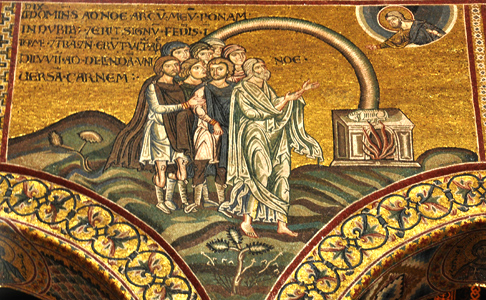
“And Noah builded an altar unto the LORD, and took of all the clean beasts, and of all the clean fowls, and offered them as a whole burnt-offering upon the altar. And the LORD God smelled a savor of sweetness, and the LORD God considered and said, ‘I will not again curse the ground earth any more for the works of men; for the imagination of man is bent intently upon evil things from his youth. I will not therefore smite again all living flesh, as I have done.”

The first thing Noah does after he comes out of the Ark is to build an altar and offer sacrifice to the Lord.   We, too, when we emerge from some danger, great or small – the first thing we must do is to offer sacrifice in prayer, worship, fasting, and good deeds. For our little sacrifices to be pleasing to God, however, they must be joined to the only Sacrifice that saves, the Sacrifice of Christ on the Cross.

Because the Lord is pleased with Noah’s sacrifice, He decides never to destroy man again from the face of the earth as long as the earth shall last. He promises this, while at the same time He states clearly what is man’s condition, that “…the imagination of man is bent intently upon evil things from his youth.” He knows that man’s fallen nature is such that his heart spontaneously gives rise to evil thoughts night and day, endlessly and every minute. Yet because He has “smelled a savor of sweetness,” He decides that He will give man a chance.

Noah’s sacrifice, and indeed all the Old Testament sacrifices, prefigure the one, unique, and only saving Sacrifice – the Sacrifice of Christ on the Cross. These little sacrifices pleased God because they obtained grace through hope in the great Sacrifice that was to come.  Reaching back in time to the beginning of the world and forward in time to the end of the world, the Sacrifice of the Cross alone destroys the power of sin over man. Only by dying and rising with Christ, partaking of His sacrificed Flesh and Blood, and calling upon the name of the Crucified continually, can we change the thoughts of our hearts from evil continually to good continually.

We have drawn near to the middle of Great Lent, and this Sunday we will once again, God willing, be made worthy to venerate the Cross of Christ with fear and love. Let our kissing the Cross be not an empty gesture but rather a vow to follow Him to Golgotha, to call upon His holy name continually, and to make our lives a sacrifice to His glory.


Posted in Uncategorized | Comments Off on A savor of sweetness