For all have sinned and fallen short of the glory of God

4/17 June OS 2017: Saturday of the Second Week of Pentecost; St. Metrophanes, Patriarch of Constantinople

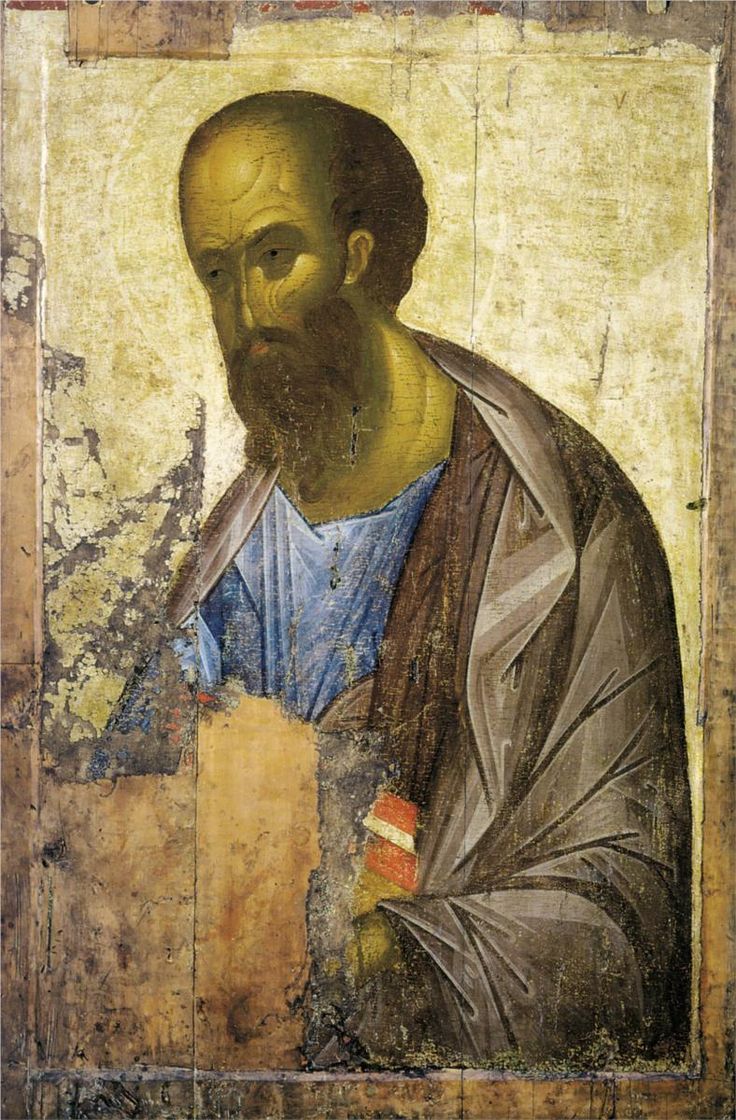
In today’s reading from the Apostolos (Romans 3:19-26), St. Paul tells us flat out that no human being is naturally pleasing to God.

Brethren: Now we know that what things soever the law saith, it saith to them who are under the law: that every mouth may be stopped, and all the world may become guilty before God. Therefore by the deeds of the law there shall no flesh be justified in his sight: for by the law is the knowledge of sin. But now the righteousness of God without the law is manifested, being witnessed by the law and the prophets; Even the righteousness of God which is by faith of Jesus Christ unto all and upon all them that believe: for there is no difference: For all have sinned, and come short of the glory of God; Being justified freely by his grace through the redemption that is in Christ Jesus: Whom God hath set forth to be a propitiation through faith in his blood, to declare his righteousness for the remission of sins that are past, through the forbearance of God; To declare, I say, at this time his righteousness: that he might be just, and the justifier of him which believeth in Jesus.

Today everyone is yelling and screaming to prove that they are better than that other person, who is totally evil and needs to be silenced and destroyed. St. Paul has the answer to this: For all have sinned and come short of the glory of God.

Today everyone is casting about for materialistic solutions to what are essentially spiritual problems. St. Paul has the answer to this: For all have sinned and come short of the glory of God.

Today people think they can discover the roots of evil through psychology or sociology or political science or historical analysis. St. Paul has the answer for this: For all have sinned and come short of the glory of God.

We need to remind ourselves constantly that apart from the grace of God and the forgiveness through Jesus Christ, apart from enlightenment and protection from above, we are naturally in continuous communion with malicious demons who are invading our minds every minute, giving us false opinions, aggravating our sinful passions, and impelling us to bad decisions, sinful behavior, and the destruction of community, family, and self. This is just the way it is. And this is true of everyone, not just the obviously wicked.

Though we are baptized Orthodox Christians, we easily forget this truth, rely on our own righteousness, forget to abide in constant mourning over sin, forget death and God’s judgment, and live in delusion. Every single person is in some measure of delusion, except for those who sincerely believe themselves worthy of every temporal and eternal punishment, who cast their care entirely on the Lord, and abide in constant repentance.

It is now a holy fasting season. Time to wake up.
Posted in Uncategorized | Comments Off on For all have sinned and fallen short of the glory of God

The just shall live by faith

24 May/6 June OS 2017: The Third Day of Trinity, Tuesday of Pentecost Week; St. Symeon of the Wondrous Mountain

Having completed reading the Acts of the Apostles on the Saturday before Pentecost, we now begin the great annual cycle of the apostolic epistles, hearing today St. Paul’s opening words to the Romans:

Paul, a servant of Jesus Christ, called to be an apostle, separated unto the gospel of God, (Which he had promised afore by his prophets in the holy scriptures,) Concerning his Son Jesus Christ our Lord, which was made of the seed of David according to the flesh; And declared to be the Son of God with power, according to the spirit of holiness, by the resurrection from the dead: By whom we have received grace and apostleship, for obedience to the faith among all nations, for his name: Among whom are ye also the called of Jesus Christ: To all that be in Rome, beloved of God, called to be saints: Grace to you and peace from God our Father, and the Lord Jesus Christ. Now I would not have you ignorant, brethren, that oftentimes I purposed to come unto you, (but was let hitherto,) that I might have some fruit among you also, even as among other Gentiles. I am debtor both to the Greeks, and to the Barbarians; both to the wise, and to the unwise. So, as much as in me is, I am ready to preach the gospel to you that are at Rome also. For I am not ashamed of the gospel of Christ: for it is the power of God unto salvation to every one that believeth; to the Jew first, and also to the Greek. For therein is the righteousness of God revealed from faith to faith: as it is written, The just shall live by faith. Romans 1: 1-7, 13-17

The just shall live by faith.” St. Paul begins his annual tutorial for us on what it means to be a Christian by stating his main thesis.

There are people who think that if they strive for justice, they do not need faith in Jesus Christ. These are the humanists, the Freemasons, and the universalists. They think they can be right and do good without the right faith in Jesus Christ. On Judgment Day, they are in for a surprise.

There are people who think that if they have faith in Jesus Christ, it does not matter whether they strive to practice justice or not. These are all they who are smug about having faith, not being humbled by the moral demands of faith. They think that “being saved” gives them a free pass not to struggle with sin. On Judgment Day, they are in for a surprise.

How do you know if you have the capacity to be just? Well, first of all, ask yourself if you are in the True Faith. Apart from the true faith and the true baptism, all of man’s “justice” is worthless. How do you know if you are in the True Faith, not only in potential but in act? Well, ask yourself if you are struggling, with total reliance on the all-sufficing grace of Christ’s Sacrifice, and according to the unerring apostolic and patristic tradition, to overcome your passions and sins, and thereby to attain the Original Justice man had with God in Paradise.

So there you have it.

Posted in Uncategorized | Comments Off on The just shall live by faith

Adventures in salvation

5/18 May OS 2017: Thursday of the Week of the Samaritan Woman; Holy Great Martyr Irene

Today’s reading from the Acts of the Apostles is Acts 14: 20-27.

In those days: As the disciples stood round about Paul [after he had been stoned and left for dead], he rose up, and came into the city: and the next day he departed with Barnabas to Derbe. And when they had preached the gospel to that city, and had taught many, they returned again to Lystra, and to Iconium, and Antioch, Confirming the souls of the disciples, and exhorting them to continue in the faith, and that we must through much tribulation enter into the kingdom of God. And when they had ordained them elders in every church, and had prayed with fasting, they commended them to the Lord, on whom they believed. And after they had passed throughout Pisidia, they came to Pamphylia. And when they had preached the word in Perga, they went down into Attalia: And thence sailed to Antioch, from whence they had been recommended to the grace of God for the work which they fulfilled. And when they were come, and had gathered the church together, they rehearsed all that God had done with them, and how he had opened the door of faith unto the Gentiles.

In the passage immediately previous to this (Acts 14: 6-19), Paul has just been in the city of Lystra, where in short order he…

  1. renders ambulatory a man unable to walk since birth, simply by a word of command, like Christ Himself;
  2. gets worshipped as Hermes by the local pagans;
  3. gets stoned near to death by some angry Jews from Antioch and Iconium, who, not content with running him out of town, have pursued him in order to kill him, so determined are they to shut up this fellow Jew who keeps telling everyone that the crucified Nazarene is the Messiah Who rose from the dead; and (at the beginning of today’s passage),
  4. gets up and goes about his business as if nothing special had happened.

How is that for contrast? Never a dull moment! Having left the comfort of the Sanhedrin for the poverty of the Fishermen, Saul become Paul is having an adventure like no other.

When, today, we hear Paul’s words, “…that we must through much tribulation enter into the kingdom of God,” we know we are dealing with a man who knows whereof he speaks.   He is both continuously enduring much tribulation and continuously living in the power of the kingdom to come, even in this life.   He is walking proof of the Resurrection.

Amid our present trials, it is tempting to look back on this or that previous “normal” period of Church life, imagine that it was a Golden Age of unchanging tranquility, and conclude that if our lives are not tranquil we must be doing something wrong.   When we study the Scriptures and Church history carefully, however, we realize that those whom God is saving are always hanging on to their faith and their sanity by their fingernails, and that simultaneously God is saving them by His sovereign will and power in the kind of circumstances He always decrees for the saints: impossible circumstances. It is always a near thing, it often appears that all is lost, and one never knows the outcome until the end.  Salvation is always an adventure.

When, therefore, we suffer the fragility, loneliness, and limitation of real Orthodox life in the 21st century, created by the straitened circumstances and limited resources that fall to the lot of those who do not join the lemming rush into betrayal, theological indifference, and worldly accommodation, this is not a sign that God has left us, but rather that He is with us.

Better to be with the Fishermen than with the Sanhedrin!


Posted in Uncategorized | Comments Off on Adventures in salvation

You don’t take a knife to a gunfight

3/16 May OS 2017: Tuesday of the Week of the Samaritan Woman; Ss. Timothy and Maura, Martyrs

In today’s reading from the Acts of the Apostles, St. Paul deals with a sorcerer:

And Barnabas and Saul returned from Jerusalem, when they had fulfilled their ministry, and took with them John, whose surname was Mark. Now there were in the church that was at Antioch certain prophets and teachers; as Barnabas, and Simeon that was called Niger, and Lucius of Cyrene, and Manaen, which had been brought up with Herod the tetrarch, and Saul. As they ministered to the Lord, and fasted, the Holy Ghost said, Separate me Barnabas and Saul for the work whereunto I have called them. And when they had fasted and prayed, and laid their hands on them, they sent them away. So they, being sent forth by the Holy Ghost, departed unto Seleucia; and from thence they sailed to Cyprus. And when they were at Salamis, they preached the word of God in the synagogues of the Jews: and they had also John to their minister. And when they had gone through the isle unto Paphos, they found a certain sorcerer, a false prophet, a Jew, whose name was Bar-jesus: Which was with the deputy of the country, Sergius Paulus, a prudent man; who called for Barnabas and Saul, and desired to hear the word of God. But Elymas the sorcerer (for so is his name by interpretation) withstood them, seeking to turn away the deputy from the faith. Then Saul, (who also is called Paul,) filled with the Holy Ghost, set his eyes on him, And said, O full of all subtilty and all mischief, thou child of the devil, thou enemy of all righteousness, wilt thou not cease to pervert the right ways of the Lord? And now, behold, the hand of the Lord is upon thee, and thou shalt be blind, not seeing the sun for a season. And immediately there fell on him a mist and a darkness; and he went about seeking some to lead him by the hand. Then the deputy, when he saw what was done, believed, being astonished at the doctrine of the Lord. – Acts of the Apostles 12:25-13:12

People today – even, strange to say, some Orthodox Christians – would regard St. Paul’s blinding the sorcerer as an act of “intolerance” or being “mean” (as in the bumper sticker, “Mean people __________”).   If only St. Paul had preached Luv and Peace, perhaps old Elymas would have realized the error of his ways and come to his senses! Thank goodness – so goes this line of thought – today we have kinder, gentler methods to deal with people who are, you know, diverse!

Elymas was not simply different; he was evil in the extreme. Not only was he evil, but he also actively sought to rob Sergius Paulus of the truth of Jesus Christ.   What could be worse than that – to destroy another man’s soul on purpose? Someone who would do that is not open to gentle persuasion, for his heart is hard, he is given over to the service of the devil, and he needs to be “taken out,” as they say. According to the Mosaic law, St. Paul could have justifiably slain him. The treatment he chose was mild by comparison.

Man today recoils at the Church’s strictness in her judgment on such matters, because he does not believe in the soul or eternal salvation or eternal punishment. People who readily undergo all manner of torture – chemotherapy, drastic surgeries, the myriad pills and potions of “Big Pharma” with terrible side effects, etc. – in order to eke out a few more years or even months of mere biological existence, think it dreadful that the Church would endorse severe measures to save their souls for eternity.   It all depends on what you think is real and what you think is important.

We are not sorcerers, and we pray that we will never require the Elymas treatment. But we will never have peace until we accept every pain and sorrow in this life as the necessary correction for our sinfulness, a correction willed by God from all eternity. And when Holy Church, in the person of a bishop or a confessing priest, decides to correct us by her ecclesiastical and spiritual methods, how grateful we should be: We can suffer here for a time and not there for eternity!

O All-Wise Lord, Who has given us the Apostolic Church to guide us to salvation, glory be to Thee!


Posted in Uncategorized | Comments Off on You don’t take a knife to a gunfight

Meek as lambs, bold as lions

12/25 April OS 2017: Tuesday of Thomas Week; S. Basil of Parium, Bishop and Confessor

Today’s reading from the Acts of the Apostles is Acts 4: 1-10.

And as they spake unto the people, the priests, and the captain of the temple, and the Sadducees, came upon them, Being grieved that they taught the people, and preached through Jesus the resurrection from the dead. And they laid hands on them, and put them in hold unto the next day: for it was now eventide.
Howbeit many of them which heard the word believed; and the number of the men was about five thousand. And it came to pass on the morrow, that their rulers, and elders, and scribes, And Annas the high priest, and Caiaphas, and John, and Alexander, and as many as were of the kindred of the high priest, were gathered together at Jerusalem. And when they had set them in the midst, they asked, By what power, or by what name, have ye done this? Then Peter, filled with the Holy Ghost, said unto them, Ye rulers of the people, and elders of Israel, If we this day be examined of the good deed done to the impotent man, by what means he is made whole; Be it known unto you all, and to all the people of Israel, that by the name of Jesus Christ of Nazareth, whom ye crucified, whom God raised from the dead, even by him doth this man stand here before you whole.

 St. Peter has just now healed the lame man by the Beautiful Gate of the Temple and immediately preached the Resurrection of Jesus to the gathered multitude who beheld the miracle. His preaching is a condensed version of his great sermon on Pentecost: “You folks killed your Messiah, Jesus, but now He is Risen, and He will forgive you and save you, granting you the Resurrection also, if only you believe in Him.” Five thousand men convert on the spot. Now, predictably, he gets into trouble, but (also predictably) this does not faze him. He goes right on telling the truth even to those who do not want to hear it, the priests and Sadducees, who have a vested interest in the truth not being true.

St. John Chrysostom points out that these corrupt men are not afraid to arrest the Apostles unjustly and publicly. They had arrested Jesus at night by stealth, but on the basis of their (as they thought) success in getting away with this, they have become bold to persecute the Master’s followers in broad daylight, as publicly as possible:

But I wish you to consider, how those same persons, who in the case of Christ must need look out for one to deliver Him up to them, now with their own hands arrest the Apostles, having become more audacious and more impudent since the Crucifixion. In truth, sin, while it is yet struggling to the birth, is attended with some sense of shame; but when once fully born, it makes those more shameless who practice it.  – St. John Chrysostom, Homily 10 on the Acts of the Apostles

St. Chrysostom is making an important point here: The audacity of the Sadducees is like that of any sinner. You get away with something – as you think – once, and you become less afraid to commit the sin.   Of course, we never really get away with anything, for there is an Impartial Judge Who sees all and will judge all.   We know that, but we can go right on sinning. Just as the Sadducees knew that Jesus really had risen from the dead, but they kept lying to themselves, so we are quite capable of lying to ourselves.

Moreover, their deep-down guilt, paining their hearts despite all their self-deceit, makes them downright angry against the Apostles for clearly proving by their preaching and miracles that Jesus really had risen from the dead and therefore must be the Messiah and the Son of God. It is a classic case of “shoot the messenger.” We can act the same way when someone points out our sins and failings, not only not hearing them but even turning against them.

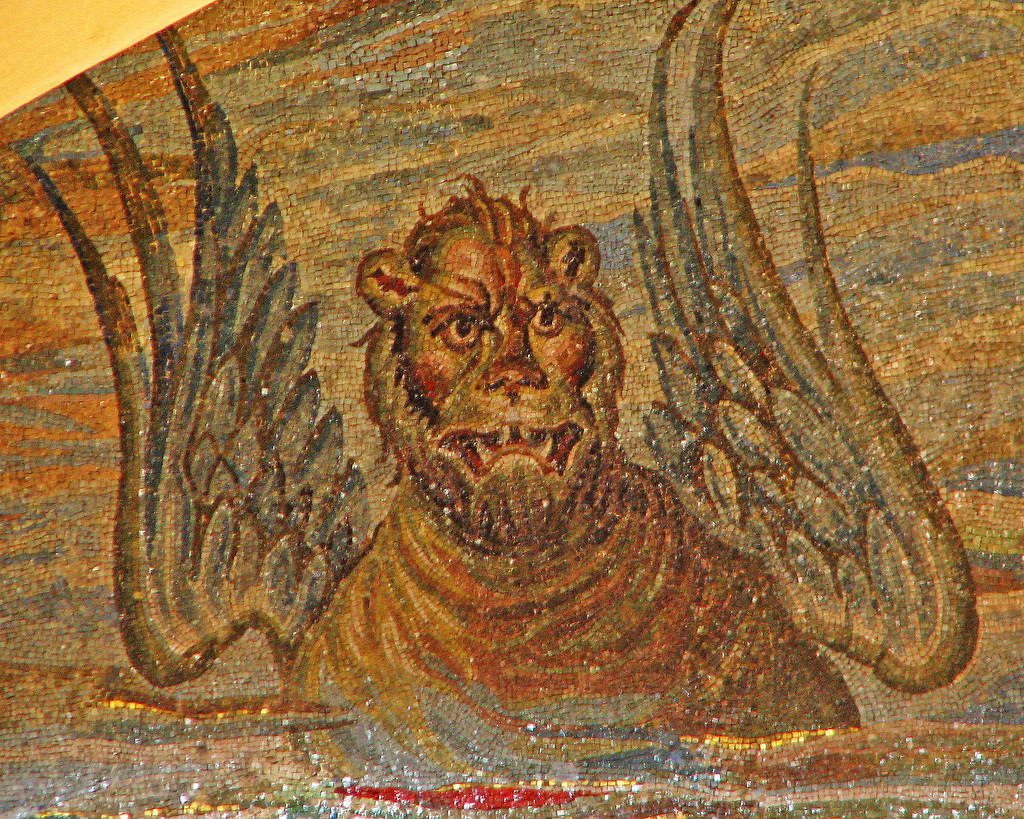
St. Peter was not made of different stuff from the Sadducees. He was a sinful man as they were sinful men, and he had betrayed the Lord from cowardice when put on the spot. But he repented right away, and now, after the Resurrection, he has become as bold as a lion.   When we repent, when we are ruthlessly honest with ourselves about our sins and passions, and we confess them cleanly and clearly, we receive infinite divine power to be bold in our Faith. At that point, the Lord can work in us, because then it is completely clear that it is God’s divine power, the grace unleashed by the Resurrection of Christ, acting in us, not because of our worthiness but because of His mercy. This is how it works.

After Pascha, we can become lazy and indifferent to spiritual struggle – “That was for Lent; now I’ll just ‘enjoy myself’.”   This decision bears the bitter fruits of falling back into denial, lack of self-awareness, indifference to sin.   This in turn makes our faith dull: far from being the living power of God living and acting in us, our Faith becomes again only ethnic or family identification or a set of dead propositions or some kind of group membership.   If persecution or death finds us in this state, we will be in trouble.

In order to roar like lions before the unbelieving world, we need to be meek as lambs in the saving tribunal of confession, cleanly confess all of our faults as frequently as possible, and acquire peace and purity of heart. Then the power of the Resurrection will fill our souls, and nothing in heaven, on earth, or under the earth will frighten us.

Posted in Uncategorized | Comments Off on Meek as lambs, bold as lions

He will deliver us

24 March OS 2017: Thursday of the Sixth Week of Lent; Forefeast of the Annunciation; S. Zacharias the Recluse of Egypt, S. Artemon Bishop of Seleucia

The first reading at Vespers today is Genesis 46: 1-7.

In this brief passage, we read how Jacob went down into Egypt with all his family and possessions, in obedience to God’s command.

What guarantee did Jacob have that all would be well? Only God’s promise: “And I will go down with thee into Egypt, and I will bring thee up again at the end, and Joseph shall put his hands upon thine eyes.” As always, God fulfilled His promise, first to Jacob personally, and four hundred years later, when He delivered all of Jacob’s posterity from slavery in Egypt and returned them to the Land of the Promise.

In the typology of the Fathers, Egypt represents the territory of the demons and the flesh, fallen society with all of its temptations. Pharaoh represents Satan, and just as Pharaoh enslaved the Hebrews, so in our lives Satan strives to enslave us to the passions and to sins. The New Moses, our Lord Jesus Christ, leads us out of Egyptian slavery to the Promised Land of the Kingdom of Heaven.

Just as God sent Jacob down into Egypt, knowing that his descendants would undergo so great a trial, so He allows us to confront manifold temptations, both in the sense of physical trials of various kinds and in the sense of the combat with sin, not so that we will be lost, but rather that we will learn to trust in God and to fight sin.

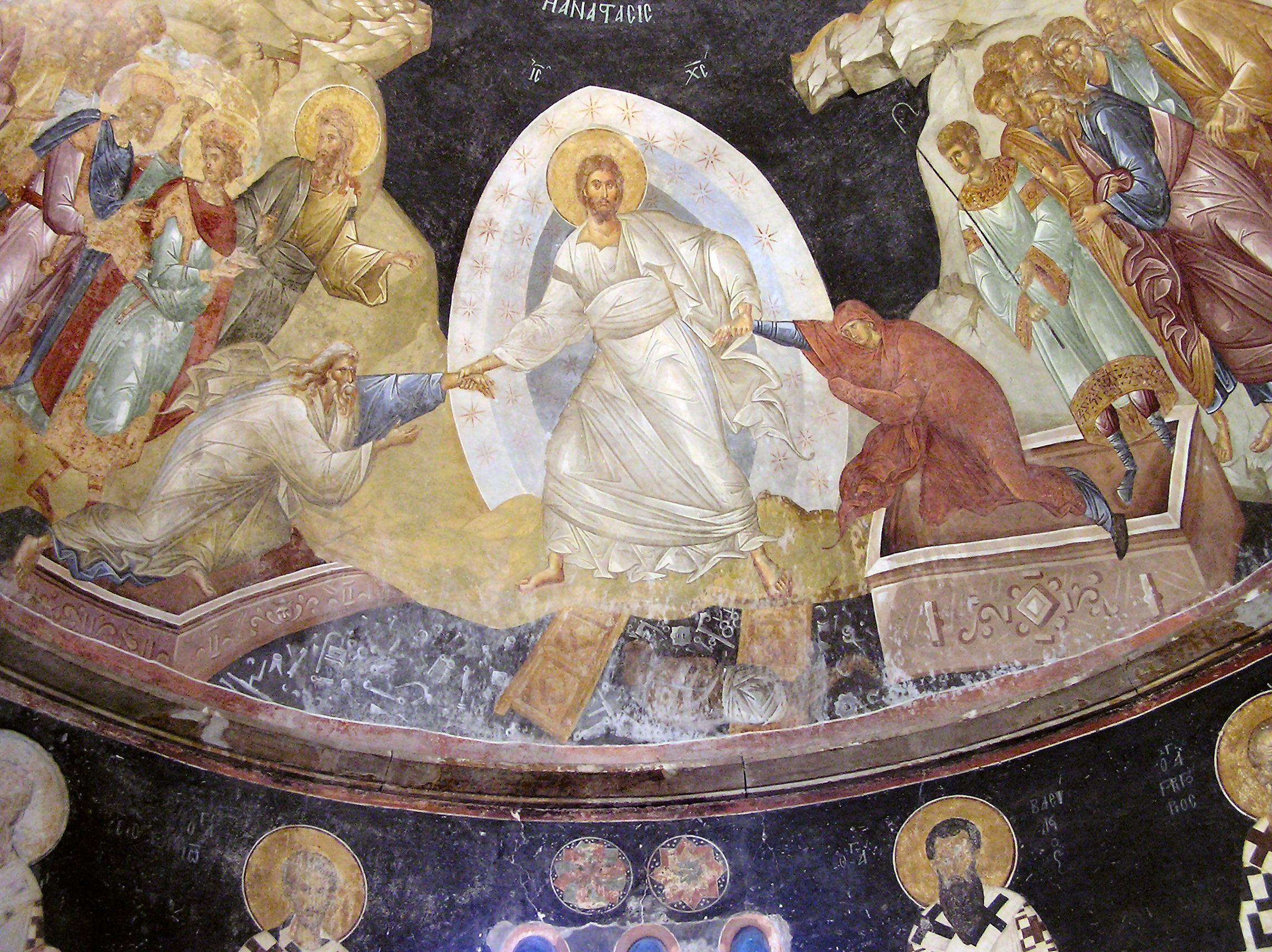
The greatest descent of all is the voluntary descent of the God-Man to the very depths of death and hell, in order to raise up Adam who had fallen. Surely He Who willed to descend to the uttermost abyss for our salvation will raise us up, too, from our trials and our temptations, when we call upon His name.

As we prepare to celebrate the God-Man’s suffering, death, descent into Hades, and glorious Resurrection, let us ask Him for the grace to trust in Him to take us by the hand and lead us on the path of this life, as did the patriarchs of old, the course of whose lives we have pondered this Lent. They put absolute trust in the Lord in the midst of their trials, though they could only look forward to a future deliverance.   The Lord in Whom they trusted has now come to us in the flesh and has saved us. We have no excuse not to trust in Him.

Posted in Uncategorized | Comments Off on He will deliver us

The serenity of innocence

23 March OS 2017: Wednesday of the Sixth Week of Lent; Holy Monk-Martyr Nikon and His Disciples

The first reading at Vespers today is Genesis 43:26-31 and 45:1-16, in which the Righteous Joseph the All-Comely, now governor of all Egypt, makes himself known to his brothers and demonstrates his greatness of soul in forgiving them and providing for them.

As Joseph explains matters to his brothers, who are cowering in fear lest he should take revenge on them, he is at peace, because he sees that all that has happened to him, including their betrayal, was part of God’s plan to save their family from the great famine. From childhood, when he dreamed that his father and brothers bowed down to him, until now, when his brothers are actually prostrate at his feet, he has pursued a tranquil course of doing the will of God amid the storms of personal disaster – betrayal by his brothers and being cast into a pit, being sold into slavery, and being thrown into prison because he would not sin with another man’s wife, who then falsely accused him of the very thing he refused to do with her.  The God Who chose him from his youth and guided his every step has not disappointed him in his hope.

On Great Monday, we will remember Joseph as a typos, a prophetic prefiguration, of Christ Himself, both in His humiliation and in His glory. As Joseph was betrayed by his brothers, so Our Lord was betrayed by His disciple. As Joseph was falsely accused when innocent, so with Christ. As Joseph was exalted to the right hand of Pharaoh, so Christ is exalted to the right hand of God.

We can imitate Joseph in his likeness to the Savior by imitating his patience and his hope, and by a firm determination to accept the will of God for ourselves.  When life throws us into a pit, let us realize that it is God Himself Who has allowed us to be helpless, so that we might accept deliverance from Him and Him alone.  When falsely accused, let us face it calmly, knowing that our vindication is from Him. When He delivers us, let us show greatness of soul in forgiving our enemies, seeing His profound wisdom in all that has happened to us.

The Patriarch Joseph the All-Comely is also a typos of Righteous Joseph the Betrothed, the guardian of the Most Pure Virgin and the Infant Christ. Like the Old Testament Joseph, the New Testament Joseph is a man of action. He proves himself obedient not by words – of which not a single one is recorded in the Gospel – but by deeds. When the famished Egyptians come to Pharaoh crying out for bread, he says, “Go to Joseph,” for has made Joseph the steward over all the grain of Egypt.   As we languish in Egyptian slavery to the passions and sensual pleasures, and we cry to God for deliverance, He says to us, “Go to Joseph,” who was made steward of the True Bread Who was born in Bethlehem, the town whose name means “House of Bread,” for our salvation.

May we prepare with humility and love to receive this True Bread in Our Lord’s Precious Body and Blood, at this Passiontide and Radiant Resurrection. May we, like the two Josephs, always do the will of God with undoubting serenity and unwavering firmness, and so be found worthy to receive the reward of the good steward:

“Well done, thou good and faithful servant: thou hast been faithful over a few things, I will make thee ruler over many things: enter thou into the joy of thy lord (Matthew 25:21).”

Posted in Uncategorized | Comments Off on The serenity of innocence

Real wealth, real freedom

22 March OS 2017: Tuesday of the Sixth Week of Lent; Holy Hieromartyr Basil of Ankyra

The first reading at Vespers today is Genesis 31:3-36, which concludes the history of Jacob’s winning his two wives and becoming a wealthy man with a large family and household.

In fourteen years, God has given Jacob both domestic happiness and material success, despite all the efforts of Laban, his crafty father-in-law, to cheat him. The LORD has demonstrated, once again, that man’s cleverness is powerless against His wisdom and His will. God willed to make Jacob a great patriarch in His plan of salvation for mankind, and He has acted according to His will.

Jacob’s new status as a great householder gives him what today we call “financial freedom”: he is his own master, not beholden to an employer or creditor who can take the bread out of his mouth at any moment. Now God alone, the Master of wind, weather, the tides of warring nations, and the health of man and beast, will give or take away his prosperity.  He has obtained his freedom, however, not by going around or against God’s will, but by fulfilling it.   He has done his part in the plan of salvation; he has conformed his will to the will of God.

Jacob’s earthly wealth provides a typos, a prophetic image, of the true wealth the Lord wants to give us, new and permanent properties of soul and body, gifts of His uncreated grace: pure prayer, harmony with God’s creation, lasting peace of heart – all the joys of friendship with God.  Jacob’s earthly freedom provides a prophetic image of the eternal freedom God intends for us, the freedom of the sons of God: freedom from sin, the devil, death, and hell. We must conform our wills to the will of God, and we will become free.

A fatally mistaken idea about freedom grips the minds of men, who equate freedom with the ability to disobey God and get away with it.  They want to make their own rules and create their own reality. It does not seem to occur to them that the further they go in this direction, the more miserable they become. This present misery only faintly presages what is in store for them. What is doubtless going to happen to them after they die, apart from an unrevealed miracle of God’s mercy upon which no one can rely, is something we cannot – and would prefer not – to imagine.

Mentored by Satan, men mistakenly imagine that the ability to do evil and not suffer thereby is inherent in having a will, in being free and rational creatures, but it is not. Our natural will is most free, is itself, when conformed completely to God’s will; we are most ourselves, most free, most rational, and possessed of will in its ultimate degree, when we do God’s will at every moment. What men mistakenly call “free will” is what St. Maximus the Confessor identifies as the “gnomic” will – a diseased condition of the will based on ignorance, conflicting opinions, and moral weakness, the result of the Fall. It is this condition of the will that we experience every day when our choice wavers between good and evil, between God’s Law and the law of sin and death.

We overcome the stress and misery of this wavering, uncertain state by unrelenting work on ourselves. Yes, we obtain the glorious freedom of the sons of God by God’s gift, but also we must labor. We find an example in Jacob, who did indeed receive all as gift from God but also was not idle. Last week we recalled his labors while chanting the Great Canon:

In privation Jacob the Patriarch endured the burning heat by day and the frost by night, making daily gains of sheep and cattle, shepherding, wrestling, and serving, to win his two wives.

By the two wives, understand action and knowledge in contemplation. Leah is action, for she had many children; and Rachel is knowledge, for she endured great toil. And without toil, O my soul, neither action nor contemplation will succeed. – Ode Four of the Great Canon of St. Andrew of Crete

May the sweetness of Holy Pascha that we will soon enjoy  give us a taste of the eternal wealth and freedom that cannot be taken away.  May it encourage us to serve the Lord in active virtue and find rest in Him through prayer.

Let us conform our wills to His holy, peaceful, and perfect will, and we will find glorious rest, the freedom of the sons of God.

Posted in Uncategorized | Comments Off on Real wealth, real freedom

Divine desire

21 March OS 2017: Monday of the Sixth Week of Lent; S. James of Catania

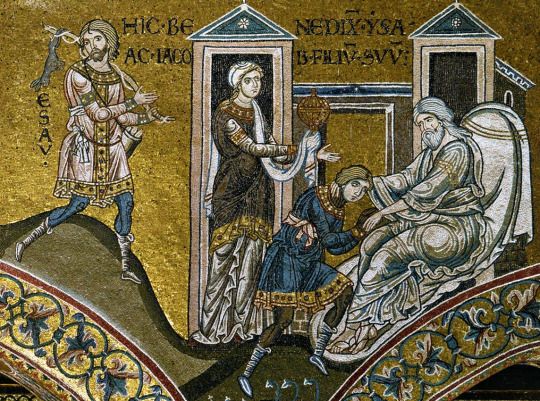
The first reading at Vespers today is Genesis 27:1-41, which recounts how Jacob took Esau’s blessing by deceiving his father Isaac.

Jacob’s deception offends our sense of fairness. Yet by this deception Jacob becomes the ancestor of the God-Man. He burns with desire to receive God’s blessing, by whatever means, and thereby he becomes the instrument of God’s will to save us.

Jacob’s unfairness does not have to meet our approval before inspiring us to emulate his zeal. He demonstrates absolute faith that his father’s blessing will convey irresistible divine power.  He believes without doubting that Isaac’s words convey a permanent grace: once Isaac speaks them, he cannot take them back.   He burns with desire, with a divine eros, to have this blessing, and God rewards his fervor with His grace.

Esau, by contrast, in an earlier incident, has already demonstrated his lack of zeal for divine things and greater desire for earthly pleasure, when he sold his birthright to Jacob for one hot meal. He has also demonstrated his love of pleasure and disregard of God’s Law by running after loose women.   By preferring the things of earth to the things of heaven, he has lost both his birthright – the right to be and to be called a son of God – and his blessing – the grace of God.

Each of us must ask himself whether he is a Jacob or an Esau, whether he prefers heaven or earth. Of course, the answer is that we are both: we waver and undulate; we are hot one day and cold the next.   But we should take heart from Jacob’s example: If we want divine blessings, we have only to ask for them. When is the last time we asked for such gifts as

– the love of prayer?

– zeal for heavenly things?

– constant remembrance of death and God’s judgment?

– the grace to see and remember all of our sins and to make a good confession?

– the grace of perseverance in the Faith and repentance until death?

Let us entreat the Lord to ignite our hearts with the divine eros that sets apart the saints. He waits for us to ask, and, desiring with His own divine desire, He desires to give.

“…this one thing I do, forgetting those things which are behind, and reaching forth unto those things which are before, I press toward the mark for the prize of the high calling of God in Christ Jesus (Philippians 3:13-14).”

Posted in Uncategorized | Comments Off on Divine desire

Extreme Humility

18 March OS 2017: Friday of the Fifth Week of Lent; S. Cyril of Jerusalem

The first reading at Vespers today is Genesis 22: 1-18, the sacrifice of Isaac.

God’s commands Abraham to sacrifice Isaac as the ultimate test of his faith and obedience. Beyond all hope, He had given Abraham a son in his old age, the son who furthermore was the living pledge of God’s promise that Abraham would be the father of nations.   Now He says, “Give him back to me, but go on believing that I will do what I promised.”

Abraham does it. Of course, the Angel stays his hand, and he receives his son back beyond all hope, as from the dead. But morally Abraham has sacrificed him. In his will and in his heart he has given him back to God. After he receives him yet a second time from God, as from the dead, neither his relationship with God nor with his son will ever be the same again. Both will be incomparably higher, holier, and more permanent.

Everything Abraham is, everything he hopes for, everything he believes in, is wrapped up with Isaac. To give him up means to give up everything, everything except God.   By his obedience, he is saying in action, “You, LORD, are everything, and I am nothing. Do with me as You will.”

Thus one could say that there are three types, three pre-figurations, of Christ in His Passion in this history of Abraham’s sacrifice: Isaac prefigures the Only Son of the Father, carrying the wood of the sacrifice on his back, as Christ carried the Cross. The ram caught in the bush and sacrificed in Isaac’s stead prefigures the Lamb of God, Who suffered in place of sinful man.   Usually in the typology Abraham is seen as a type of God the Father, Who offers His Son for our salvation. Yet, if I may be so bold, I shall venture to offer that Abraham in his crushing, utter abasement before God, in his Job-like submission (“The Lord hath given, and the Lord hath taken away, blessed be the name of the Lord!”) is also a type of the Paschal Christ in His Extreme Humility, His emptying himself to the uttermost for us.

Each and every saint, each and every Orthodox Christian who goes to Paradise, will have one or perhaps several crises when he has to give up that which he thought he could not live without. There is no getting around it. The door of Extreme Humility is the door to Paradise.

During these closing days of Great Lent, when we prepare to glorify the Lord in His Passion, let us quietly pray for true humility, to realize very deeply within ourselves that God is God, and that He is holding us in the palm of His hand. Let us pray for the grace of an unchanging firmness to make an act of absolute faith and hope in Him, so that when the crisis comes, and we must sacrifice our particular Isaac, there will be no doubt of the outcome.

O Lord Jesus, Who emptied Thyself for us to the uttermost, glory be to Thee!


Posted in Uncategorized | Comments Off on Extreme Humility