Happy Nativity Fast!

…when ye fast, be not, as the hypocrites, of a sad countenance. For they disfigure their faces, that they may appear unto men to fast. VerilyI say unto you, they have their reward.  But thou, when thou fastest, anoint thine head and wash thy face, that thou appear not unto men to fast, but unto Thy Father who is in secret; and thy Father, who seeth in secret, shall reward thee openly.

– The words of Jesus Christ in Matthew 6:16-18

We have recently begun the Nativity Fast, and perhaps already it is getting us a little down.  A lot of Orthodox Christians who sincerely try to keep this fast (which all too many neglect) find that it is more difficult to stay motivated and cheerful during this season than during the Great Fast before Holy Week and Pascha.

This is probably for several reasons.  There are the short days and long nights of December with their cold and gray weather.  There is the distraction of the secular “holiday season,” which seems to make people a little nutty as they become obsessed with buying tons of presents they cannot afford for people whom they fear will not like them, all the while trying to have good cheer at an exhausting round of obligatory and superficial social gatherings.

Lately, we also have the political and social tension created by anti-Christian power elites who claim that Christmas decorations, greetings, school events, and TV programs actually related to the Birth of Christ are “unfair” to non-Christians and should be eradicated from public life, while non-Christian symbols must be imposed on everyone, especially the Christians, in order to “celebrate diversity,” which is code for worshipping the rapidly spreading reign of the Antichrist global government, under which, of course, there is no real diversity, but only the mind-numbing uniformity of materialism, sensuality, and the ever-despairing power struggle for the “survival of the fittest” in a merciless, endless, and impersonal universe.

Being Orthodox Christians, we choose not to get steamrolled by all of this.  We know what this season is for:  to prepare to celebrate the Birth of Christ.  And we know how to keep it, though because of our weakness in the face of our circumstances we often fail.  Let us remind ourselves, however, how to keep it, and, when we fail, get up again and keep trying, trying to…

Fast for the forty days.  (When obliged to go to parties, stick with the veggie tray!)

Prepare for Holy Communion.

Go to more services.

Force ourselves to be cheerful and kind to everyone (especially tired retail clerks!)

Say “Merry Christmas” and don’t get intimidated by the propaganda into that “Happy Holiday” nonsense.

Keep thanking God for everything we have and not get caught up in consumerism.

Keep our shopping and present giving simple, in order to focus on the Birth of our Savior, and on sincere love for our family and friends, which is the real purpose of the gifts, anyway.

A blessed Nativity Fast to all!

++++++++++++++++++++++++++++++++++++++++

“…and on earth, peace…” 

Since God is peace surpassing every mind, it is necessary that the heart which desires to receive Him be peaceful and undisturbed. As David has said: “His place has been established in peace” (Ps. 75:2).  Hence you ought in the first place to establish your heart in a peaceful state.

 Before everything else, have that peace and staidness in your five senses.  That is, do not look or talk or move your hands or walk disturbedly, but in a peaceful and orderly manner. For when you become accustomed to preserve that peace in your outer movements, you shall easily and effortlessly be led to a peaceful inner state. For according to the Fathers, the inner man conforms to the outer man. Accustom yourself to love all men and be at peace with all, if this is possible, as Paul says: “If it be possible, as much as lieth in you, live peaceably with all men” (Romans 12:18).   Guard your conscience so that it does not accuse you with regard to anything, but rests at peace in relation to God, yourself, your neighbor, and external things, and especially does not accuse you that you have neglected some commandment of God. For the guarding of the conscience begets peace of heart. Accustom yourself to bear insults without being disturbed. 

 –   from Unseen Warfare, edited by St. Nikodimos of the Holy Mountain and St. Theophan the Recluse
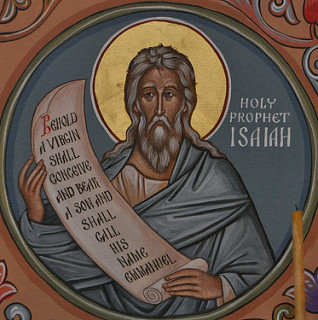
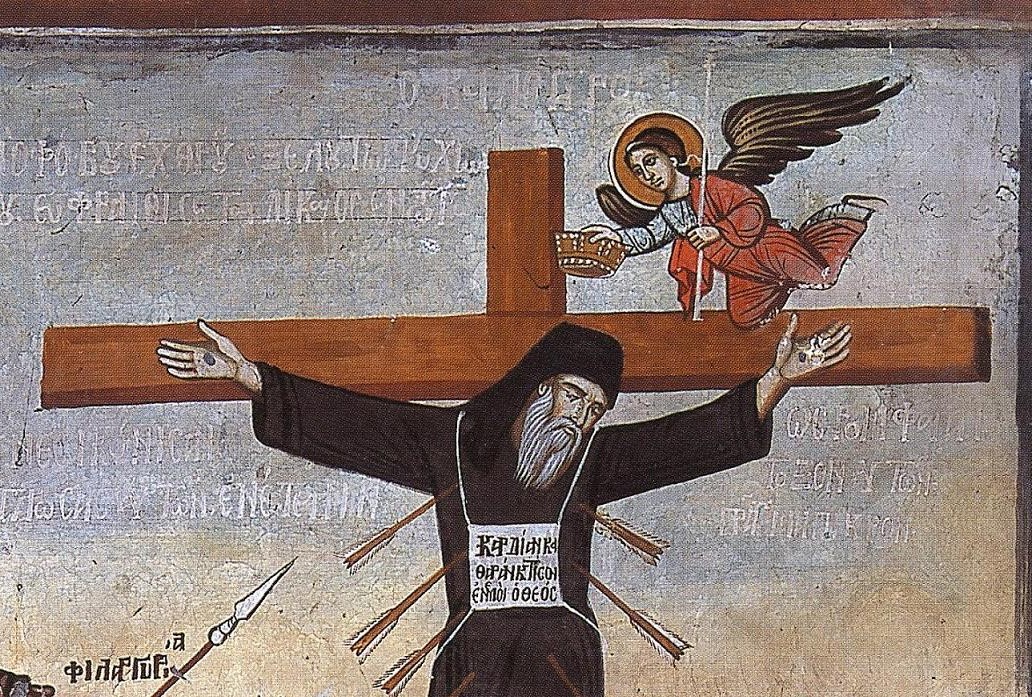
st isaiah icon

Posted in Uncategorized | Comments Off on Happy Nativity Fast!

The Choice

12 November OS 2017 – Saturday of the  8th Week of St. Luke, St. John the Almsgiver, Archbishop of Alexandria 

The reading from the Holy Gospel today is Luke 9: 37-43.

At that time, it came to pass, that on the next day, when they were come down from the hill, much people met Jesus. And, behold, a man of the company cried out, saying, Master, I beseech thee, look upon my son: for he is mine only child. And, lo, a spirit taketh him, and he suddenly crieth out; and it teareth him that he foameth again, and bruising him hardly departeth from him. And I besought thy disciples to cast him out; and they could not. And Jesus answering said, O faithless and perverse generation, how long shall I be with you, and suffer you? Bring thy son hither. And as he was yet a coming, the devil threw him down, and tare him. And Jesus rebuked the unclean spirit, and healed the child, and delivered him again to his father. And they were all amazed at the mighty power of God. 

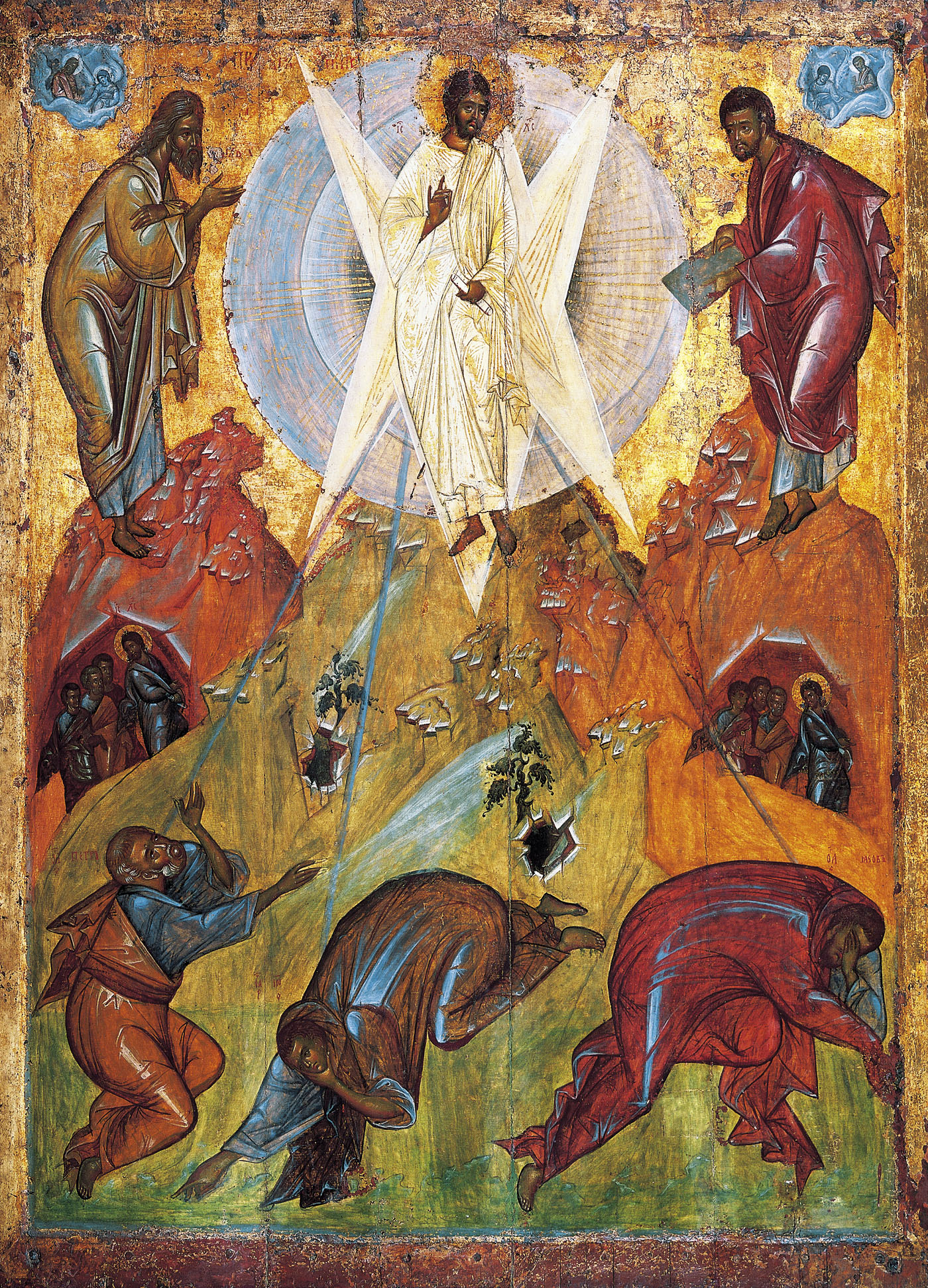
The “hill” in this passage is Mount Tabor, and “they” are the Lord with Peter, James and John. They have just come down from the mountain after the Lord’s Transfiguration.   The apostles’ joy at beholding the Lord in glory before their very eyes had caused Peter to ask if they could not perhaps pitch little tents for Christ to dwell there with Moses and Elias, and all of them could just stay there for a bit…”Lord, it is good for us to be here.”  This, however, was not to be, for Christ had yet to go forth and complete His awesome exploit for our salvation.   They had had to descend the mountain.

When they come down, immediately they find distressing evidence that fallen man does indeed need a Savior: a boy possessed by an evil spirit.   The Lord does easily, with only a word, that which the disciples could not, delivering the child from the devil and giving him back again, healed and whole, to his father.   He verifies by divine power the words of the Father heard on the mountain: “This is my beloved Son.”

We do not understand our real situation unless we fully comprehend and accept the reality that this world we live in is fallen.  Billions of sinful men, whom we see, occupy it, and by their own power they can do only evil or good mixed with evil – the result, ultimately, is the same – and they will keep doing evil till the end of time, and they would do so with no encouragement whatsoever.  They do, however, receive such encouragement, from malignant spirits, whom we cannot see,  far outnumbering the men and far more powerful than they, who constantly aggravate each man’s tendency to sin in a thousand artful ways, and actually inhabit men’s minds and even their bodies.   Out of His mercy and love for man, the Lord closed the spiritual eyes of our first parents after the Fall, and subsequently those of all their descendants, so that we cannot see these creatures. But they are there.

This realization should, to put it mildly, give us a sober outlook on life. It puts all of our Orthodox customs and practices into the only context in which they make sense: this short earthly life as an arena for spiritual combat. When understood fully, it confronts us with The Choice: God or the devil, heaven or hell.   There is no Third Way, no separate peace. No one is allowed to sit this one out.

The Good News is that the billions of devils and sinful men are outnumbered by One – the Almighty God Who created them and holds them in unbreakable chains, subject to His sovereign will. This One loves us, and He has done, is doing, and will do everything for our salvation.   We have only to believe in Him as He desires to be believed in, worship Him as He desires to be worshipped, and serve Him as He desires to be served.   This belief, this worship, and this way of life constitute what we call Orthodoxy.   They are the invincible armor and irresistible weapons that enable us to overcome the World, the Flesh and the Devil. We can deflect anything the bad guys throw at us.

In a few days, we shall begin the holy fast for the Lord’s Nativity.   What a wonderful and simple weapon the Lord through Holy Church has given us: to deny ourselves in this very basic, very simple way, and so in simple and humble obedience acquire His grace to overcome our invisible foes. In both St. Matthew’s and St. Mark’s account of the exorcism related above by St. Luke, the Lord afterwards explains to the disciples that “this race [in Greek γένος – literally this genus, this type of creature, a demon] cannot be cast out except by prayer and fasting.” When we fast, we are joining ourselves to the Lord Himself, Who as a man really and truly fasted while on earth. When we pray, we are uniting ourselves to Christ, Who as a man really and truly prayed to His heavenly Father.   What an immeasurable honor – to do as the God-Man did!   What invincible weapons – those wielded by the God-Man Himself!   With Him, we cannot fail.

Let us “serve the Lord with fear and rejoice in Him with trembling (Ps. 2).” We live in godly fear until the end of our earthly pilgrimage, and we simultaneously rejoice, living in hope of our eventual victory.   May the Lord, Who revealed our true destiny in His Transfiguration, give us the grace to serve Him in prayer and fasting this Nativity Fast and all the days of this temporal life, so that we may tabernacle with Him on the summit of the heavenly Sion, where our vision of His beauty will have no end.

Transfiguration_by_Feofan_Grek_from_Spaso-Preobrazhensky_Cathedral_in_Pereslavl-Zalessky_(15th_c,_Tretyakov_gallery)

Posted in Uncategorized | Comments Off on The Choice

The duty is ours; the consequences are God’s

11 November OS 2017 – Friday of the 8th Week of St. Luke; Holy Martyrs Menas, Vincent, Victor, and Stephanida; S. Theodore Studite; Righteous King Stephen of Decani

The reading from the Holy Gospel today is Luke 13: 31-35

At that time, the same day there came certain of the Pharisees, saying unto him, Get thee out, and depart hence: for Herod will kill thee. And he said unto them, Go ye, and tell that fox, Behold, I cast out devils, and I do cures to day and to morrow, and the third day I shall be perfected. Nevertheless I must walk to day, and to morrow, and the day following: for it cannot be that a prophet perish out of Jerusalem. O Jerusalem, Jerusalem, which killest the prophets, and stonest them that are sent unto thee; how often would I have gathered thy children together, as a hen doth gather her brood under her wings, and ye would not! Behold, your house is left unto you desolate: and verily I say unto you, Ye shall not see me, until the time come when ye shall say, Blessed is he that cometh in the name of the Lord.

The Pharisees imagined they could frighten the God-Man with the threat of Herod’s evil intentions, but they were mistaken.   He announces calmly that He knows that He will be killed, and that it will happen in Jerusalem, the city that always murdered the prophets.   He also announces that, until this happens, He will continue to “walk,” that is, to carry out His mission of teaching, preaching, healing, casting out devils, and raising the dead – His mission to inaugurate the Kingdom of God.   He is in complete control of the situation, and He is going to His voluntary Passion to fulfill the will of the Father, to fulfill God’s providential plan for our salvation from before the ages.

Today we may feel that matters are out of our control, involving both the Church’s situation and society in general, in many ways that affect our lives directly.  This chaos, however, is limited and temporary – a trial we must pass through, our Golgotha.   We must “set our face towards Jerusalem” as the Lord did (And it came to pass, when the time was come that He should be received up, He steadfastly set his face to go to Jerusalem – Luke 9:51) – we must voluntarily join ourselves to Him in His Passion.   And, as we resolve to endure whatever the Lord allows for our salvation, we must resolve with equal determination to go about our mission as well, to do the Lord’s work, the Church’s mission.

How does one acquire courage to carry on when the outlook is grim?   Here are three considerations:

Perspective – From God’s point of view – sub specie aeternitatis (from the perspective of eternity) – the entire history of this whole world, much less one’s lifetime, is the blink of an eye.   He is the King of the Ages, the Sovereign of History. All is unfolding according to His plan for our salvation, which He desires infinitely more than we do.   We have only to do our part in history; we have no responsibility for controlling history.   He will arrange everything for our true good.

Consolation in Prayer – When external circumstances are at their worst is precisely the time when consolation in prayer is greatest, if we are faithful to prayer and wholeheartedly resolve to grow closer to God in our trials.   Many Orthodox Christians who suffered in the communist hell of the 20th century testified that ultimately their time in prison, living in the utmost humiliation and deprivation, became the happiest time of their lives, precisely because it was at this time that they experienced what prayer really is and what a human being is really made for – most intimate union with the Lord, Who becomes everything to us when we have lost everything else.   We cannot conceive of the unspeakable consolation such people experienced…but we may have the opportunity to do so in future.   Let us begin now to deepen our life of prayer!  The next time we are anxious over the future course of events, let us turn to a favorite book on prayer and spiritual life that has motivated us in the past, rather than to this or that website to read the latest spin on the absurd epiphenomena of man’s vain strivings.

Love for Others – Typically fear for the future is mixed with self-pity.   Let us forget ourselves and act determinedly each day for the true good of those for whom we are in varying degrees responsible.   A man becomes a good soldier only when he counts his own life as nothing, when he thinks himself already a dead man.   Let us be good soldiers in the Church Militant, counting our lives as nothing, determined to lay down our lives for our friends, in order to practice that love than which there is no greater.   With this option clearly open to us, how can we say that our lives are out of control?

The duty is ours; the consequences are God’s.    Let us set our faces serenely to go to Jerusalem, and on the way, each day, seek simply to know and to do His will.

madabamap

Posted in Uncategorized | Comments Off on The duty is ours; the consequences are God’s

Just do it

5 November OS 2017 – Saturday of the Seventh Week of St. Luke; Ss. Galaction and Episteme, Martyrs 

In today’s Gospel (Luke 9:1-6), we see the Lord gathering and sending out His Holy Apostles to preach, heal, and cast out demons:

Then he called his twelve disciples together, and gave them power and authority over all devils, and to cure diseases. And he sent them to preach the kingdom of God, and to heal the sick. And he said unto them, Take nothing for your journey, neither staves, nor scrip, neither bread, neither money; neither have two coats apiece. And whatsoever house ye enter into, there abide, and thence depart. And whosoever will not receive you, when ye go out of that city, shake off the very dust from your feet for a testimony against them. And they departed, and went through the towns, preaching the gospel, and healing everywhere.

St. Theophan the Recluse encourages us by reminding us that this very same apostolic preaching is with us, alive and active, to this very day:

“And He sent them to preach the Kingdom of God (Luke 9:2).” Then, it was only throughout Palestine, but later they were sent throughout the whole world. The preaching which was begun then has not ceased to this day. Every day we hear what has been handed down by the Holy Apostles and the Lord Himself as if they were before us, and the power which acted in them acts to this day in the Church of God. The Lord has not deprived any believers of anything: those who are the most recent have everything the first ones had. Thoughts for Each Day of the Year, pp. 246-247

We all know that this is true, but generally we do not feel it to be true in our daily lives.   How do we cure this, how do we once again experience the lively, life-giving joy of Faith we had when we were first converting to the Faith or, in the case of those baptized as infants, when we were first coming to an adult awareness of the power of our Faith and experiencing its power?   We know from past experience that, if only we can have this lively awareness, life is 100% better: no problem seems too great, because we know that the Risen Lord Jesus is walking with us, that the Holy Virgin and our saint and our guardian angel and all the hosts of heaven are with us. Life is bright on the inside even when not on the outside.   But we often fail in this awareness and think about life as if our worldly problems were all that there is, and our Faith is something abstract.

I would like to suggest three activities to help us receive the grace of a lively awareness and happiness that we, no different from the early Christians, have the power of the Apostolic Faith within us:

  1. Gratitude:   We must frequently, daily, force ourselves to glorify the Lord for all that He has done for us. When feeling far from God, we should get down on our knees before the holy icons and start recounting all that He has done for us, from the Creation of the world through all the history of the Old and New Testaments, the Lives of the Saints, and then our own life and all the good things He has given us, and above all the infinite gift of being in His Holy Church.   The fog will lift, and we will “taste and see how good the Lord is.”
  1. Daily Scripture Reading: All right, I have said this a million times, but it is still true. Read your daily Scriptures!   Every day throughout the year Holy Church prescribes two Scripture readings from the New Testament or, during the weekdays of Great Lent, three readings from the Old Testament.   Get a calendar with readings listed for every day (hard copy or online), get out your Bible or New Testament (or, if you are really “with it” liturgically, your Apostolos and Evangelion!), and read. Read standing before the icons, read aloud and slowly, and let the divinely inspired words sink into your ears, your mind, and your heart. They are living and active, and they will act! “For the word of God is quick, and powerful, and sharper than any two-edged sword, piercing even to the dividing asunder of soul and spirit, and of the joints and marrow, and is a discerner of the thoughts and intents of the heart (Hebrews 4:12).” Day by day, the Holy Apostles will preach once again to us, as they did 2,000 years ago. The same truth and the same power are present.
  1. Confession and Holy Communion: Usually we do not feel the Lord’s presence because of our sins. It is really that simple.   We have the solution: to confess our sins, receive His forgiveness, and partake of His Precious Body and Blood. What could be simpler? What could be better?   As they say: “Just do it.”

God is with us.

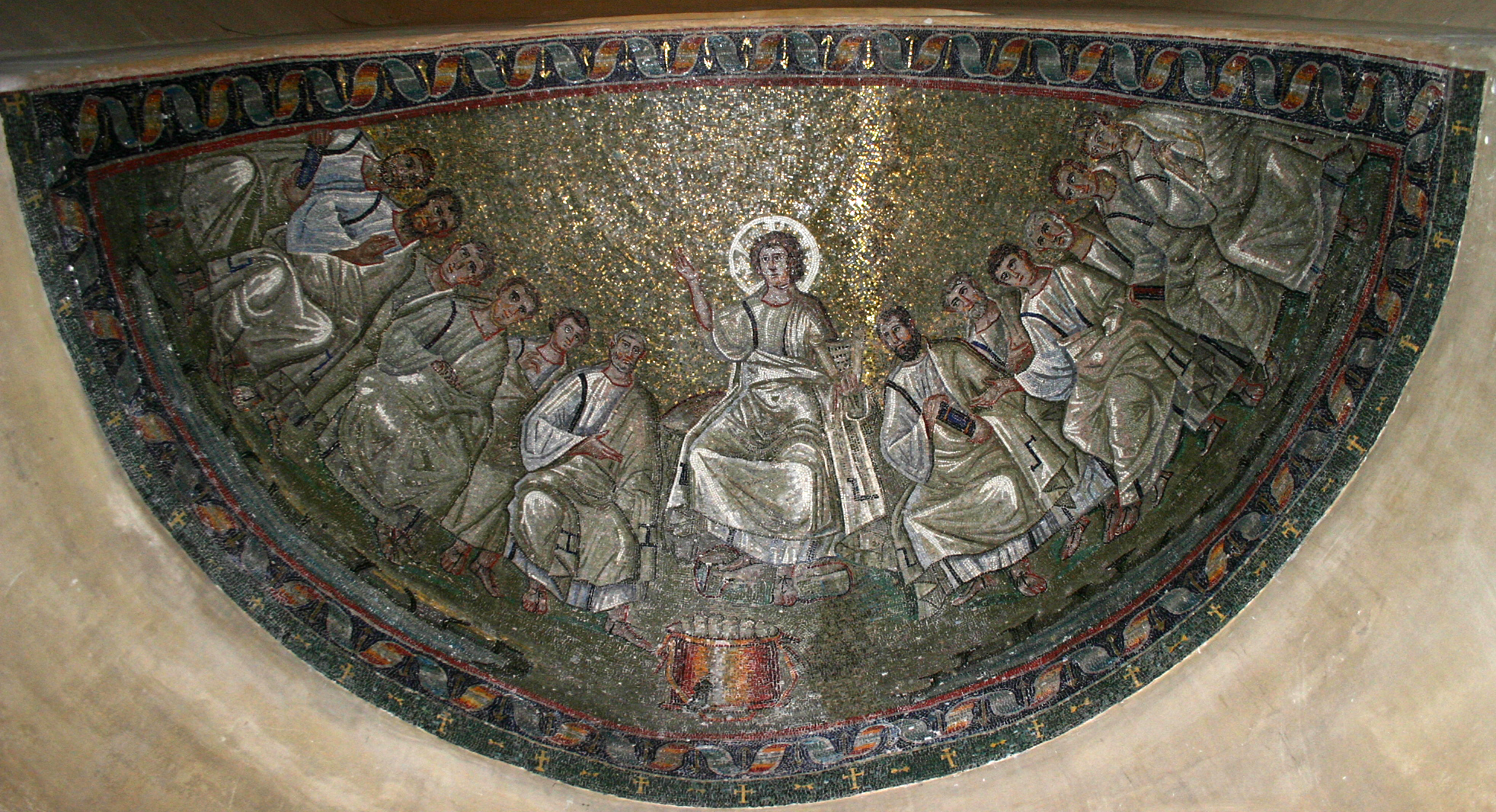
christ-traditio-legis-s-lorenzo


Posted in Uncategorized | Comments Off on Just do it

Memento mori

5 November OS 2016 – Friday of the Seventh Week of St. Luke; Holy Martyrs Galaction and Episteme

Today’s Gospel reading is Luke 12:2-12.

The Lord said to His disciples: There is nothing covered, that shall not be revealed; neither hid, that shall not be known. Therefore whatsoever ye have spoken in darkness shall be heard in the light; and that which ye have spoken in the ear in closets shall be proclaimed upon the housetops. And I say unto you my friends, Be not afraid of them that kill the body, and after that have no more that they can do. But I will forewarn you whom ye shall fear: Fear him, which after he hath killed hath power to cast into hell; yea, I say unto you, Fear him. Are not five sparrows sold for two farthings, and not one of them is forgotten before God? But even the very hairs of your head are all numbered. Fear not therefore: ye are of more value than many sparrows. Also I say unto you, Whosoever shall confess me before men, him shall the Son of man also confess before the angels of God: But he that denieth me before men shall be denied before the angels of God. And whosoever shall speak a word against the Son of man, it shall be forgiven him: but unto him that blasphemeth against the Holy Ghost it shall not be forgiven. And when they bring you unto the synagogues, and unto magistrates, and powers, take ye no thought how or what thing ye shall answer, or what ye shall say: For the Holy Ghost shall teach you in the same hour what ye ought to say.

 St. Theophan the Recluse, commenting on the Lord’s words concerning whom we should fear, says this:

…The greatest fear we have is of death. But the Lord says that the fear of God should exceed the fear of death. When circumstances come together in such a way that it is necessary either to lose one’s life or to act against what is suggested by the fear of God, it is better to die rather than to go against the fear of God. For if you go against the fear of God, then after your bodily death, which is in any case inevitable, you will meet another death which is immeasurable worse than all of the mot terrible bodily death. If we always bore this in mind, the fear of God would not weaken in us, and we would perform no deeds contrary to the fear of God… – Thoughts for Each Day of the Year, p. 246

Death, heaven, hell, and God’s judgment are not popular topics today.   Everyone is obsessed with this world, with remaining in it as long as possible, and making it as comfortable as possible.   They have forgotten that this is a fool’s errand: No matter what you do to avoid it, death will some day overtake you. The real question is not how to avoid death but how to prepare for the inevitable.   Since death is the one thing we know, without a doubt, that is going to happen to us, using this life to prepare for it is the most realistic approach to life.

The Lord tells us, today, what is the basis for a life that prepares us for death: to fear God.   The fear of God means not an animal fear, agitating us to run away from God, to hide from Him, because He is going to do something bad to us. It is rather a reverent fear, a deeply-felt desire never to do anything displeasing to Him, never to disobey His holy will, coupled with a lively apprehension that we can, indeed, lose ourselves for all eternity, that we can, indeed, inherit eternal torment after death.

Each day we need to remind ourselves, “I will die for certain!” and ask the Lord, “O Lord, this day enable me to live according to Thy holy will!”

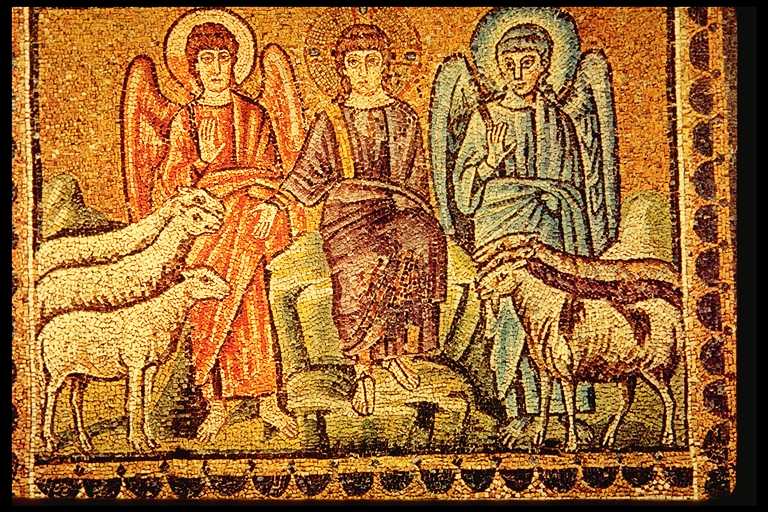
christ-judge-sheep-and-goats

Posted in Uncategorized | Comments Off on Memento mori

To be rather than to seem

2 November OS 2017: Wednesday of the Seventh Week of St. Luke; Ss. Acyndinus, Pegasius, Aphthonius, Elpidephorus, and Anempodistus of Persia, Martyrs.

The daily Gospel reading for the Divine Liturgy this morning is Luke 11: 42-46 –

The Lord said, Woe unto you, Pharisees! for ye tithe mint and rue and all manner of herbs, and pass over judgment and the love of God: these ought ye to have done, and not to leave the other undone. Woe unto you, Pharisees! for ye love the uppermost seats in the synagogues, and greetings in the markets. Woe unto you, scribes and Pharisees, hypocrites! for ye are as graves which appear not, and the men that walk over them are not aware of them. Then answered one of the lawyers, and said unto him, Master, thus saying thou reproachest us also. And he said, Woe unto you also, ye lawyers! for ye lade men with burdens grievous to be borne, and ye yourselves touch not the burdens with one of your fingers.

St. Theophan the Recluse’s commentary bears careful reading in its entirety. As usual, he shows himself a master of the intricacies of spiritual psychology:

The Lord begins to reproach His contemporaries by saying that they pass over judgment and the love of God. The drying up of righteousness and love is the root of all disharmony, both in society and in every person. It comes from the predominance of self-love or egoism. When egoism inhabits the heart an entire horde of passions settles therein. [This horde] strikes out against righteousness and love, which require selflessness; while the passions generated from it chase away all other virtues. The person becomes, by his heart’s disposition, unfit for anything that is truly good. He can still tithe mint and rue and all manner of herbs, but he does not find within himself the courage to do anything more substantial. This does not mean that his outward behavior is disgraceful. No, it is adorned in every way with decency, but on the inside he is as a grave which appears not, and the men that walk over it are not aware of it. The beginning of self-correction is the beginning of the appearance of selflessness in the heart, after which righteousness and love are restored. Then, one after the other, all other virtues begin coming to life. Then the person becomes comely in the eyes of God because of his heart’s disposition, although on the outside he may sometimes seem unattractive to other people. But the judgment of man is not the important thing: the important thing is for God’s judgment not to be against us. – Thoughts for Each Day of the Year, pp. 244-245

This is a lot to take in. I would like to offer a few thoughts inspired by the saint’s insights:

Egoism gives rise to all the other passions, destroys love and justice inside of people, and this destroys society. So the only path back to love and justice in society is for Orthodox people to overcome their egoism and subdue their passions.

You can be full of these disgusting passions and seem like a very nice person on the outside. This hypocritical life is what makes up our modern worldly society at its best. When all the masks fall off, then the “law of the jungle” ensues and social life becomes an insane, chaotic war of “all against all.” This is what we are seeing today.

If you are an Orthodox Christian, your responsibility is awesome, because you have the grace and the tools to overcome all this by starting with yourself.

The first step is self-correction, as laid out in the teachings of the Scriptures and the Holy Fathers: Reprove yourself, humble yourself, realize in your being, in constant thoughts, feelings, and actions (not just words) that you are not the center of the universe. This means humbling the body through fasting and prostrations, and humbling your mind by submitting to the Gospel reasoning and giving up worldly reasoning. You have to be ruthless with yourself, examine your thoughts, words, and deed, and confess frequently, living from one Holy Communion to the next in fear and trembling, looking forward to death and God’s judgment.

When you start doing this, you may go from seeming like a “nice person” to seeming strange, perhaps even unpleasant. The other “nice people” may not understand you any more, because you will be going from the realm of phony love, which does not speak truth and pretends to accept everything, to real love, which is sometimes a “harsh and dreadful thing,” in the words of Dostoevsky’s Father Zossima. Real love hurts.

But always remember: The only thing that matters at the end of the day is God’s judgment.

Posted in Uncategorized | Comments Off on To be rather than to seem

A resurrected life

31 October OS 2017 – Monday of the 7th Week of St. Luke;  Holy Apostles Stachys, Amplias, Urban, Narcissus, Apelles, and Aristobulus of the Seventy

The reading from the Holy Gospel today is Luke 11: 29 -33.

At that time, when the people were gathered thick together, Jesus began to say, This is an evil generation: they seek a sign; and there shall no sign be given it, but the sign of Jonas the prophet. For as Jonas was a sign unto the Ninevites, so shall also the Son of man be to this generation. The queen of the south shall rise up in the judgment with the men of this generation, and condemn them: for she came from the utmost parts of the earth to hear the wisdom of Solomon; and, behold, a greater than Solomon is here.  The men of Nineveh shall rise up in the judgment with this generation, and shall condemn it: for they repented at the preaching of Jonas; and, behold, a greater than Jonas is here. No man, when he hath lighted a candle, putteth it in a secret place, neither under a bushel, but on a candlestick, that they which come in may see the light.

What is the sign of Jonas?   Christ Himself explains, in Matthew 12:40, “For as Jonas was three days and three nights in the whale’s belly; so shall the Son of man be three days and three nights in the heart of the earth.” The sign of Jonas is the Resurrection of Christ. Just yesterday, Sunday, we celebrated the Resurrection once again, as we do week after week, Sunday after Sunday, and year after year, Pascha after Pascha. If only we understood more deeply what this means, if only we had a lively appreciation of the reality that the Resurrection is the foundation of our lives!

Today people are fearful, but we have nothing to fear, for Christ has conquered sin, the devil, death, and hell.

Today people worship nothingness – they are spinning out of control into suicidal darkness; they have made a pact with death. We worship Christ, the Life-giver and Light-giver. Rather than spinning out of control, we are centered and stable on Him.

Today people are in despair, because they believe they have nothing to look forward to. We live in hope, for Christ having risen once will die no more – death has no power over Him. And our life, being hid with Christ in God, is indestructible – death has no power over us, but rather will be the gateway to an eternal and imperishable life.

We all believe this, but we often – perhaps usually – do not feel it.  We feel, instead, as do the sad inhabitants of this world who live outside the realm of grace, that we are slaves of “the system”- i.e., the society created by fallen man –  oppressed by the grim necessity of purely material life.  Of course, this is an illusion, for our baptism, our death and resurrection with the Lord, has freed us from all necessity, and we are truly free. We do not take advantage of our freedom, however, when we go on loving our sins and passions.

Yesterday, we celebrated the Resurrection of Christ.  Perhaps we even received His Body and Blood, the Fountain of Immortality.   Yet even so soon as this morning, perhaps, or even yesterday after we left Church, we scattered the grace we received through distraction, and the working week now begins with gloom instead of joy.   If only Orthodox Christians went forth to their work in this world shining with the light of Resurrection we receive on our beautiful Sundays!   We would indeed become what Our Lord commands us to be:  a light to the world.

Some practical ways to avoid losing our Sunday-Resurrectional grace are needed.  Here are some ideas:

  1.  First and foremost, we should struggle to prepare more often for the great Mystery of Holy Communion.  There are those who do not prepare but they go to Communion all the time – they are in great danger, committing the sin of audacity, and the priests who facilitate this are in even greater danger.  They are in a kind of plani (deception), thinking like modern non-Orthodox people, with a make-believe “frequent communion” mode that is not much different from the mentality of the Vatican II “Catholics,” Episcopalians, etc.   They think that just by going to Communion all the time they automatically have become like the early Christians, and yet they have some kind of unspoken “dispensation” to live the way that modern, worldly people do. On the other hand, there is the majority of us (I speak here of us “Old Calendarists” and other traditional Orthodox people), who respect the Holy Mystery the way our forefathers did.  We know that the week before we commune, we must fast more strictly, not watch TV, not smoke, not go out with our friends, go to Vespers and have Holy Confession on the eve of communing, go to Church early and attend Matins, etc., but …we only prepare and commune once or twice a year!  This is not as bad as the sacrilege of unprepared communion, but it still deprives us of the grace of true Christian life, and so, is the result really much different?   Yes, we do not insult the grace, but we lose the grace. We are not like St. Mary of Egypt and other great ascetics, who could preserve the grace of their communion for a long time without regular sacramental communion.  We need regular Holy Communion, because otherwise the demons get an open door and separate our inner lives and our family lives from Christ. We must face this.  Let us all try to prepare and receive Holy Communion at least once every forty days. This would increase our reception of the Holy Mystery from once or twice to nine times per year, which would beautifully transfigure our family lives and our parish life in a marvelous way, not because of the “arithmetic” (“more is better”) but because our lives would become the way Orthodox lives should be, constantly vigilant; our souls would be in a constant state of struggle against the sins and passions, and our faces would be alight with the light of the Resurrection.  We would truly live as the Body of Christ, receiving infinite power from the Body and Blood of Christ.  To be what we should be, we must receive what we are.  We must have His Blood flowing through our veins.

2.  After we receive Holy Communion or the antidoron on Sundays, let us try to stay recollected and quiet.  I know this is difficult, because in our circumstances, we usually see our fellow parishioners only on Sunday and feast days, and we naturally want to chat, catch up on their news, etc.  We need this, because we don’t live in villages or ethnic neighborhoods any more, and we have to have the human connection.  Even monks in hesychastic sketes converse on feast days and show a human interest in their brothers.  But a.  Let us keep our conversation on a high level, not gossiping and so forth, but saying that which encourages and edifies our brother, and b. When we go home, instead of TV or Internet, let us stay quiet and recollected, taking a walk outside in God’s creation, reading spiritual books or at least good secular books, doing quiet, “old fashioned” Sunday things with our family.  Or, if we look at the Internet, we should find good Orthodox chants, sermons, or lectures (there are a lot out there!), or healthy cultural and historical items, not the latest about politics or Hollywood scandals.

3.  As we go to work on Monday morning, let us make an explicit prayer to Our Savior, that we not be consumed by the worries  of this world, but maintain that which we have received on His Day.

May the grace of the Resurrection shine forth in us!

Posted in Uncategorized | Comments Off on A resurrected life

Why be Orthodox?

25 October OS 2017 – Tuesday of the 6th Week of St. Luke, Holy Martyrs Marcian and Martyrius 

Two years ago, I offered these thoughts on the daily Gospel for the 6th Tuesday of St. Luke: 

The reading from the Holy Gospel today is Luke 11: 1-10.

At that time, it came to pass, that, as he was praying in a certain place, when he ceased, one of his disciples said unto him, Lord, teach us to pray, as John also taught his disciples. And he said unto them, When ye pray, say, Our Father which art in heaven, Hallowed be thy name. Thy kingdom come. Thy will be done, as in heaven, so in earth. Give us day by day our daily bread. And forgive us our sins; for we also forgive every one that is indebted to us. And lead us not into temptation; but deliver us from evil. And he said unto them, Which of you shall have a friend, and shall go unto him at midnight, and say unto him, Friend, lend me three loaves; For a friend of mine in his journey is come to me, and I have nothing to set before him? And he from within shall answer and say, Trouble me not: the door is now shut, and my children are with me in bed; I cannot rise and give thee. I say unto you, Though he will not rise and give him, because he is his friend, yet because of his importunity he will rise and give him as many as he needeth. And I say unto you, Ask, and it shall be given you; seek, and ye shall find; knock, and it shall be opened unto you. For every one that asketh receiveth; and he that seeketh findeth; and to him that knocketh it shall be opened.

St. Theophan the Recluse, in discussing the Lord’s teaching on prayer, addresses the need to pray from the heart:

…We must concern ourselves about only one thing: that when we stand at prayer, at home or in church, we have true prayer in our soul: a true turning and lifting up of our mind and heart to God. Let everyone do this as he is able. …do not mutter the prayers like a wound-up machine that plays songs. No matter how long you stand like that, and mumble the prayers, you have no prayer, when your mind is wandering and your heart is full of empty feelings. But if you stand at prayer and are accustomed to it, what does it cost you to draw your mind and heart there as well? Draw them there, even if they have become stubborn.   Then true prayer will form and will attract God’s mercy, and God’s promise, “Ask, and it shall be given you,” will be fulfilled. Often it is not given because there is no petition, only a posture of petitioning. – Thoughts for Each Day of the Year, pp. 237-238

Here St. Theophan assumes that the reader is already someone who has the habit of regular prayer.   He is most certainly not saying, “Only pray when you feel like it,” which is the perverse meaning people give this command to pray from the heart. Not only must we force ourselves to pray when we do not feel like it, but when we are forcing our bodies to stand up and our lips to move, we also must force the mind to pay attention.   When the Lord sees our repeated efforts to pray with attention, He will give feeling to the heart, in due season.

Why are we Orthodox, or why should someone become Orthodox?   There are a number of reasons, of course: It is demonstrably the visible One, True Church; the Orthodox Church has not changed the original teachings of Christ and the Apostles; the Orthodox Church has the most complete, most theologically rich, most beautiful, organically continuous and unadulterated system of Christian public worship; etc.   Another way, however, of looking at it is this: Only in the Orthodox Church can we find both the grace and the correct instruction to enable us to enter into an un-deluded and authentic interior life. The institution of the Church, the dogmas of the Church, the public worship of the Church – God has given us all this to enable us to choose “the one thing needful,” an authentic life lived with God in the inner man, in the soul.

This is the subtlest but strongest argument for Orthodoxy: Orthodoxy enables us to be friends with the Lord, as Adam and Eve were in Paradise.   In order to experience this, however, one has to do Orthodoxy, one has to engage in some kind of interior struggle, or Orthodoxy increasingly will make no sense, until one finally gives up and lapses into a purely nominal identification (the case with most “ethnic” Orthodox) or leaves the Church altogether (the case with fallen away, one-time enthusiastic adult converts), or remains active in Church life in a purely superficial sense, consumed by ecclesiastical politics, social connections among families in the ethnic community, parish social and fundraising events, and intra-parish squabbles. The danger of the last option is that such a person usually imagines that he is actually practicing the Faith and goes to the grave having abandoned the path to salvation without even noticing it.

The reality is that what goes on inside of us is bigger than what goes on outside of us. One human heart in which God dwells by His uncreated energies is larger than the entire physical universe.  Our real life is inside of us. This is where the issues of life, the main battles of life, are fought. Most people, sadly, surrender without firing a shot, because they do not even know where the battlefield is, or that there is a war going on.

God knows better than we what obstacles we face to attain a focused interior state. He knows better than we what an idiotically distracted way of life the “advanced” societies of the 21st century thrust upon their inmates.   He does not demand that we attain a high spiritual state before we die; He does, however, demand that we get on the road to a high spiritual state and keep going, or at least not wander into other paths. He wants us to get on the ladder of divine ascent and stay on it, even if it means climbing with painful slowness or just hanging on to the lowest rung.

Let us, then, renew our resolve to set aside time every day to be alone with our Creator and Redeemer, and to struggle for regularity and attention in prayer.

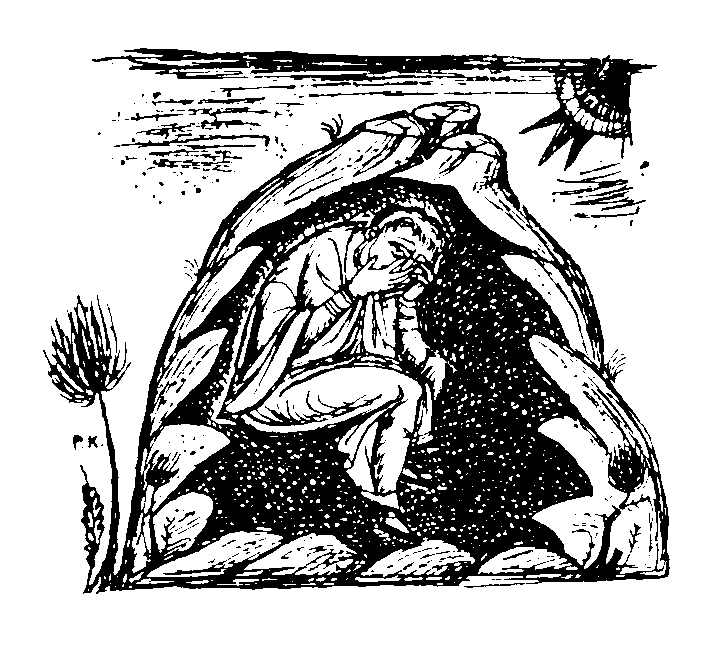
monk weeping sketch

Posted in Uncategorized | Comments Off on Why be Orthodox?

Acquiring real faith

22 October OS, 2017 A.D. – Saturday of the Fifth Week of St. Luke; St. Averkios, Equal-to-the-Apostles 

On the fifth Saturday of Luke in 2015, I offered these thoughts on today’s Gospel: 

 The reading from the Holy Gospel today is Luke 7: 1-10.

At that time, Jesus entered into Capernaum. And a certain centurion’s servant, who was dear unto him, was sick, and ready to die. And when he heard of Jesus, he sent unto him the elders of the Jews, beseeching him that he would come and heal his servant. And when they came to Jesus, they besought him instantly, saying, That he was worthy for whom he should do this: For he loveth our nation, and he hath built us a synagogue. Then Jesus went with them. And when he was now not far from the house, the centurion sent friends to him, saying unto him, Lord, trouble not thyself: for I am not worthy that thou shouldest enter under my roof: Wherefore neither thought I myself worthy to come unto thee: but say in a word, and my servant shall be healed.  For I also am a man set under authority, having under me soldiers, and I say unto one, Go, and he goeth; and to another, Come, and he cometh; and to my servant, Do this, and he doeth it. When Jesus heard these things, he marvelled at him, and turned him about, and said unto the people that followed him, I say unto you, I have not found so great faith, no, not in Israel. And they that were sent, returning to the house, found the servant whole that had been sick.

What prevents us from having the great faith of the centurion? Here is a man who was a pagan, not a member of the Church of the Old or the New Testaments, and he had sufficient faith in the Lord Jesus that he believed that all He had to do was to speak and the servant would be healed. We the baptized, the people of the New Israel the Church, who belong to Christ through being purchased by His own blood, should we not have such complete and lively faith?

One reason we do not have such faith is that we do not ask for it!   Here is Christ, the Giver of all good gifts, waiting to give us spiritual gifts – the gift of prayer, the gift of courage in temptations, the gift of peace in the midst of troubles, and so forth – but usually we confine ourselves to asking Him to give us outward things, or we do not ask for anything at all.

Why do we not ask? This is related to a deeper reason that we lack faith: Secretly or unconsciously we have a mechanistic and deterministic view of the universe, in which things just happen according to impersonal laws or material circumstances, and we are just “stuck.” Our faith is a comforting thought system, not a lived reality.  We are all closet materialists to some degree, not in our stated philosophy of life but in our hearts.

When do people usually come to real faith? The disagreeable truth is that we come to deep, profound faith, real trust in God, when something so terrible happens, or when so many little bad things happen, that our life feels out of control, and we are forced to turn to God as the last resort…or despair.   Sadly, many people today choose despair.   They call it realism, but, as Soren Kierkegaard said, one characteristic of despair is precisely that it does not know that it is despair.

Let us not wait for the “big wake-up call” but rather wake ourselves up, make earnest prostrations, and beg on our knees for absolute Faith in the One Who made us and redeemed us. Let us ask for new eyes to see the universe and this earth and the lives of the people around us and our own lives as being a tiny, ever so manageable, ever so un-frightening world where the Infinite One works His will for our salvation in the blink of an eye prior to taking us into eternity.   Now that is realism.

Glory to Thee, O Lord! Glory to Thee!

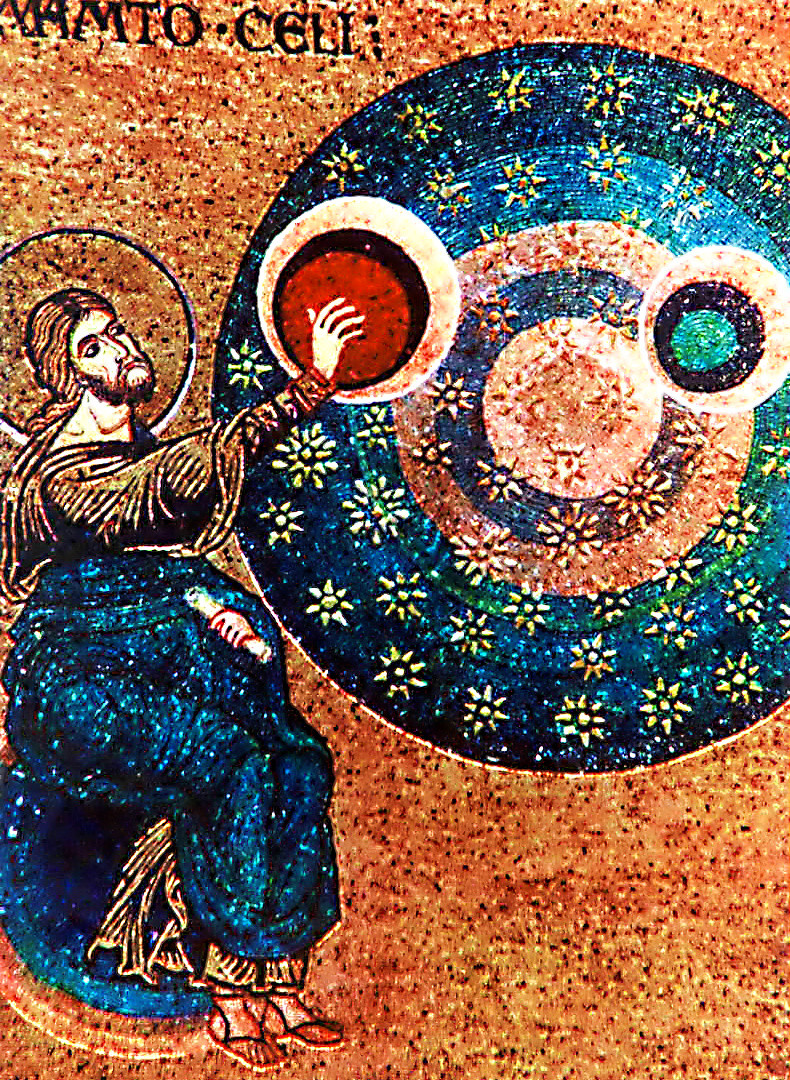
God creates the heavens mosaic

Posted in Uncategorized | Comments Off on Acquiring real faith

True love for God and neighbor

19 October OS 2017 – Wednesday of the 5th Week of St. Luke; Holy Prophet Joel, Holy Martyr Varus, Holy Righteous Father John of Kronstadt 

On the Wednesday of the 5th Week of St. Luke in 2015, I offered these thoughts on the daily Gospel: 

The reading today from the Holy Gospel is Luke 9:44-50.

Let these sayings sink down into your ears: for the Son of man shall be delivered into the hands of men. But they understood not this saying, and it was hid from them, that they perceived it not: and they feared to ask him of that saying. Then there arose a reasoning among them, which of them should be greatest. And Jesus, perceiving the thought of their heart, took a child, and set him by him, And said unto them, Whosoever shall receive this child in my name receiveth me: and whosoever shall receive me receiveth him that sent me: for he that is least among you all, the same shall be great. And John answered and said, Master, we saw one casting out devils in thy name; and we forbad him, because he followeth not with us. And Jesus said unto him, Forbid him not: for he that is not against us is for us.

In commenting on this passage, St. Theophan the Recluse chooses to write about the words, “…whosoever shall receive me receiveth him that sent me…”

…whosoever does not confess the Lord does not honor God, because he does not confess the God Who is the true God. The true God does not exist without the Son, Who is co-eternal and co-unoriginate. Therefore, once you cease to confess the Son, you no longer confess the true God. Only God will discern what your confession is worth; but since God is revealed to us as the true God, apart from this revelation one cannot have the true God.  Thoughts for Each Day of the Year, p. 233

The God Whom Abraham worshipped is the same Holy Trinity Whom Christ revealed and Whom the Church confesses.   There is no other God.

Yet today many “experts,” including supposedly Orthodox bishops and theologians, tell us, “Christians, Jews, and Moslems all worship the same God, the God of Abraham.”  This, however, is not true, and for a Christian to repeat this assertion is an act of apostasy, for by saying this he denies the only true God – not only the God of Christians but of all men and all the universe – the Holy Trinity.

How do people who consider themselves Christians fall into this way of thinking?   When one examines this question, one usually discovers two reasons, an intellectual error and a spiritual problem.

Many (most?) Christians today, including nominally Orthodox Christians, have false assumptions they are not aware of, assumptions they have breathed in with the pestilential air of the times, to borrow an apt expression from the late Fr. Seraphim Rose. These assumptions include the idea that God is just out there somewhere, that no one really knows more about Him than anyone else, and most human beings are basically good people who sort of grope their way to some understanding of God based on their cultural background and do their best to worship Him in whatever way possible.  Everyone needs to do what “works for him,” i.e., what provides psychological comfort and social belonging. Theology is a hobby for priests and professors, and dogmas are really just opinions of one faction or another; all that matters is to be a “good person” who has some kind of religion.

The spiritual problem twinned with this intellectual error is the lack of heartfelt love for Christ and love for the salvation of one’s neighbor.   If someone understands Who Christ is and what He suffered for us, the blasphemy that “all religions lead to God” horrifies him; he cannot remain indifferent. Intellectual indifferentism, then, is the twin of spiritual indifference, the lack of zeal and ultimately the lack of charity. True charity must involve charity towards God, first of all, and how can one love God if one denies that which He has plainly revealed about Himself? True charity towards one’s neighbor, love of neighbor, means, above all, desiring his salvation. But there is no salvation apart from Christ.

The odd thing is that people claim that their indifferentism is a manifestation of love, when in fact it is the opposite: it is a manifestation of the most fundamental indifference to the true good of one’s neighbor. Let us pray for our hearts to be filled with the burning love of Christ Crucified for us, which must be the mark of a true Christian, so that our prayers will be more effectual for the enlightenment and salvation of our neighbor.

Posted in Uncategorized | Comments Off on True love for God and neighbor