God is with us

4 November OS 2018 – Saturday of the Seventh Week of St. Luke; St. Ioannikios the Great; Holy Hieromartyrs Nicander and Hermas

In today’s Gospel (Luke 9:1-6), we see the Lord gathering and sending out His Holy Apostles to preach, heal, and cast out demons:

Then he called his twelve disciples together, and gave them power and authority over all devils, and to cure diseases. And he sent them to preach the kingdom of God, and to heal the sick. And he said unto them, Take nothing for your journey, neither staves, nor scrip, neither bread, neither money; neither have two coats apiece. And whatsoever house ye enter into, there abide, and thence depart. And whosoever will not receive you, when ye go out of that city, shake off the very dust from your feet for a testimony against them. And they departed, and went through the towns, preaching the gospel, and healing everywhere.

St. Theophan the Recluse encourages us by reminding us that this very same apostolic preaching is with us, alive and active, to this very day:

“And He sent them to preach the Kingdom of God (Luke 9:2).” Then, it was only throughout Palestine, but later they were sent throughout the whole world. The preaching which was begun then has not ceased to this day. Every day we hear what has been handed down by the Holy Apostles and the Lord Himself as if they were before us, and the power which acted in them acts to this day in the Church of God. The Lord has not deprived any believers of anything: those who are the most recent have everything the first ones had. Thoughts for Each Day of the Year, pp. 246-247

We all know that this is true, but generally we do not feel it to be true in our daily lives.   How do we cure this, how do we once again experience the lively, life-giving joy of Faith we had when we were first converting to the Faith or, in the case of those baptized as infants, when we were first coming to an adult awareness of the power of our Faith and experiencing its power?   We know from past experience that if only we can have this lively awareness life is 100% better: no problem seems too great, because we know that the Risen Lord Jesus is walking with us, that the Holy Virgin and our saint and our guardian angel and all the hosts of heaven are with us. Life is bright on the inside even when not on the outside.   But we often fail in this awareness and think about life as if our worldly problems were all that there is, and our Faith appears as something abstract.

I would like to suggest three activities to help us receive the grace of a lively awareness and happiness that we, no different from the early Christians, have the power of the Apostolic Faith within us:

  1. Gratitude:   We must frequently, daily, force ourselves to glorify the Lord for all that He has done for us. When feeling far from God, we should get down on our knees before the holy icons and start recounting all that He has done for us, from the Creation of the world through all the history of the Old and New Testaments, the Lives of the Saints, and then our own life and all the good things He has given us, and above all the infinite gift of being in His Holy Church.   The fog will lift, and we will “taste and see how good the Lord is.”
  1. Daily Scripture Reading: All right, I have said this a million times, but it is still true. Read your daily Scriptures!   Every day throughout the year Holy Church prescribes two Scripture readings from the New Testament or, during the weekdays of Great Lent, three readings from the Old Testament.   Get a calendar with readings listed for every day (hard copy or online), get out your Bible or New Testament (or, if you are really “with it” liturgically, your Apostolos and Evangelion!), and read. Read standing before the icons, read aloud and slowly, and let the divinely inspired words sink into your ears, your mind, and your heart. They are living and active, and they will act! “For the word of God is quick, and powerful, and sharper than any two-edged sword, piercing even to the dividing asunder of soul and spirit, and of the joints and marrow, and is a discerner of the thoughts and intents of the heart (Hebrews 4:12).” Day by day, the Holy Apostles will preach once again to us, as they did 2,000 years ago. The same truth and the same power are present.
  1. Confession and Holy Communion: Usually we do not feel the Lord’s presence because of our sins. It is really that simple.   We have the solution: to confess our sins, receive His forgiveness, and partake of His Precious Body and Blood. What could be simpler? What could be better?   As they say: “Just do it.”

God is with us.
Posted in Uncategorized | Comments Off on God is with us

Whom we should fear

3 November OS 2018 – Friday of the Seventh Week of St. Luke; Holy Martyrs Acepsimas the Bishop, Joseph the Presbyter, and Aeithalas the Deacon, of Persia;  Dedication of the Church of the Holy Great-martyr George in Lydda 

Today’s Gospel reading is Luke 12:2-12.

The Lord said to His disciples: There is nothing covered, that shall not be revealed; neither hid, that shall not be known. Therefore whatsoever ye have spoken in darkness shall be heard in the light; and that which ye have spoken in the ear in closets shall be proclaimed upon the housetops. And I say unto you my friends, Be not afraid of them that kill the body, and after that have no more that they can do. But I will forewarn you whom ye shall fear: Fear him, which after he hath killed hath power to cast into hell; yea, I say unto you, Fear him. Are not five sparrows sold for two farthings, and not one of them is forgotten before God? But even the very hairs of your head are all numbered. Fear not therefore: ye are of more value than many sparrows. Also I say unto you, Whosoever shall confess me before men, him shall the Son of man also confess before the angels of God: But he that denieth me before men shall be denied before the angels of God. And whosoever shall speak a word against the Son of man, it shall be forgiven him: but unto him that blasphemeth against the Holy Ghost it shall not be forgiven. And when they bring you unto the synagogues, and unto magistrates, and powers, take ye no thought how or what thing ye shall answer, or what ye shall say: For the Holy Ghost shall teach you in the same hour what ye ought to say.

 St. Theophan the Recluse, commenting on the Lord’s words concerning whom we should fear, says this:

…The greatest fear we have is of death. But the Lord says that the fear of God should exceed the fear of death. When circumstances come together in such a way that it is necessary either to lose one’s life or to act against what is suggested by the fear of God, it is better to die rather than to go against the fear of God. For if you go against the fear of God, then after your bodily death, which is in any case inevitable, you will meet another death which is immeasurable worse than all of the mot terrible bodily death. If we always bore this in mind, the fear of God would not weaken in us, and we would perform no deeds contrary to the fear of God… – Thoughts for Each Day of the Year, p. 246

Death, heaven, hell, and God’s judgment are not popular topics today.   Everyone is obsessed with this world, with remaining in it as long as possible, and making it as comfortable as possible.   They have forgotten that this is a fool’s errand: No matter what you do to avoid it, death will some day overtake you. The real question is not how to avoid death but how to prepare for the inevitable.   Since death is the one thing we know, without a doubt, that is going to happen to us, using this life to prepare for it is the most realistic approach to life.

The Lord tells us, today, what is the basis for a life that prepares us for death: to fear God.   The fear of God means not an animal fear, agitating us to run away from God, to hide from Him, because He is going to do something bad to us. It is rather a reverent fear, a deeply-felt desire never to do anything displeasing to Him, never to disobey His holy will, coupled with a lively apprehension that we can, indeed, lose ourselves for all eternity, that we can, indeed, inherit eternal torment after death.

Each day we need to remind ourselves, “I will die for certain!” and ask the Lord, “O Lord, this day enable me to live according to Thy holy will!”

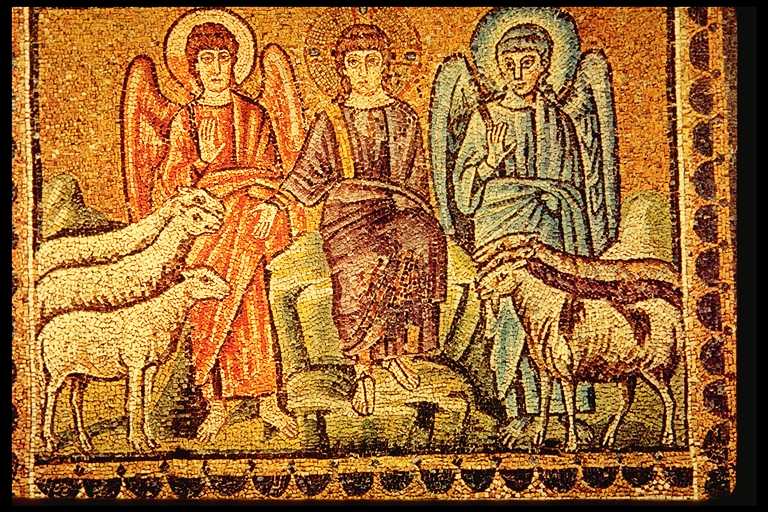
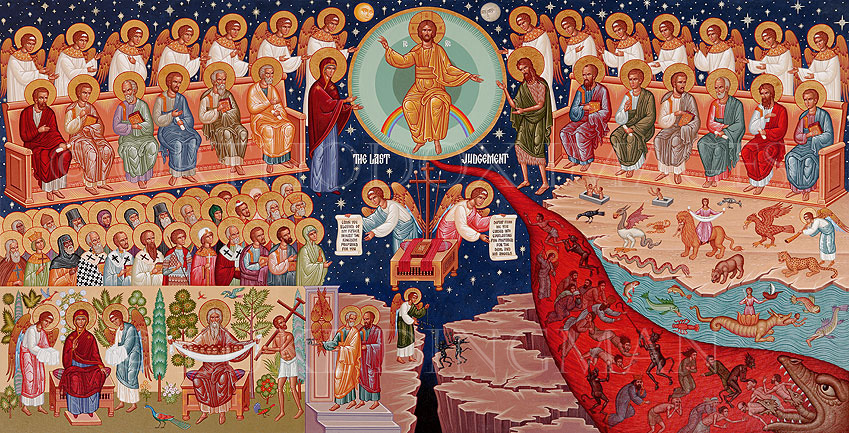
christ-judge-sheep-and-goats

Posted in Uncategorized | Comments Off on Whom we should fear

For every good gift and every perfect gift is from above

25 October OS 2018 – Wednesday of the 6th Week of St. Luke; Holy Martyrs Marcian and Martyrius ; St. Tabitha the Almsgiver 

The reading from the Holy Gospel today is Luke 11: 9-13.

The Lord said to His disciples: I say unto you, Ask, and it shall be given you; seek, and ye shall find; knock, and it shall be opened unto you. For every one that asketh receiveth; and he that seeketh findeth; and to him that knocketh it shall be opened. If a son shall ask bread of any of you that is a father, will he give him a stone? or if he ask a fish, will he for a fish give him a serpent? Or if he shall ask an egg, will he offer him a scorpion? If ye then, being evil, know how to give good gifts unto your children: how much more shall your heavenly Father give the Holy Spirit to them that ask him?

St. Theophan the Recluse uses a powerful, difficult-to-accept example to illustrate the meaning of the Lord’s teaching that, as good parents give children what they really need, so the Lord gives us what we really need and not what we think we need:

…A father and mother pour out heartfelt prayers for their son before God, that He arrange what is best for him, but in addition they express what they consider to be better for their son, that is, that he be alive, healthy, and happy. The Lord hears their prayer and arranges for their son what is best, no according to the understanding of those asking, but as it is in reality for their son: He sends a disease from which their son dies. Those who think that everything ends with the present life will feel that the Lord has not heard them, but rather did the opposite of what they asked, or left the person alone about whom they prayed to his own fate. But those who believe that the present life is only a preparation for the next life have no doubt that the son for whom they prayed fell sick and died precisely because their prayer was heard and because it was better for him to leave here than to remain here.   You will say, “Why pray, then?” No, you must not refrain from prayer, but when praying for specific things you must always keep in mind the condition: “If Thou Thyself, O Lord, deemest this to be salvific…” — Thoughts for Each Day of the Year, pp. 238-239  

For a parent to lose a child is about the worst thing he can imagine. St. Theophan chooses this example on purpose, to make his point as strongly as possible: God alone knows what is good for us, and everything He does is for our eternal good above all, not our temporary good.

There are several points to keep in mind here:

  1. The Lord commands us to ask for what we need, both temporal and eternal things.   By asking for the temporal things we need – health, a home, a job, good success for our children, etc. – we are laying everything at God’s feet, placing all our trust in Him, and growing in faith and hope in His mercy.   We are demonstrating our faith that all comes from Him.   We are acquiring a child-like mind that sees things very simply by asking our Heavenly Father as a child would ask his earthly father for what he needs. Often we do not have even natural, this-world happiness because we do not ask God for it…we think we can do it all ourselves.
  1. The Lord knows what is truly good for us, and, as a good parent does not give a child what he imagines he needs but what he really needs, so the Lord gives us what we really need, for our salvation. He wants to give us both material and spiritual blessings, but only in precisely that way which is conducive to our salvation, which He alone knows.   This is the meaning of the images that the Lord uses in His teaching, of the fish vs. the snake and the bread vs. the stone.
  1. The last statement of Christ in today’s reading is the punch line: If ye then, being evil, know how to give good gifts unto your children: how much more shall your heavenly Father give the Holy Spirit to them that ask him? The Lord wants to give us good things. He says so. But what are the truly good things?   The truly good things are spiritual gifts. God is standing there, waiting to give us, desiring that we ask Him to give us, the truly good things: the desire for prayer, a love of heavenly things, hunger for Holy Communion, the mindfulness of death and God’s judgment, true humility…all kinds of the best things!   But we do not ask.   It is like a man standing at a street corner with a treasure chest full of gold and jewels, begging the passersby simply to ask him for some of it and he will give it…but they do not ask. They pass by.   This is what Christians do who read Christ’s words in today’s Gospel and do not ask for spiritual gifts but only for earthly things.

May the merciful Lord grant us the desire for the things of heaven!   May He grant us to feel undoubtingly and hungrily, at the center of our being, in the innermost tabernacle of our spirit, in the heart, that we are properly inhabitants not of this world but of the next. Then we will know what to ask for, and we will receive it.

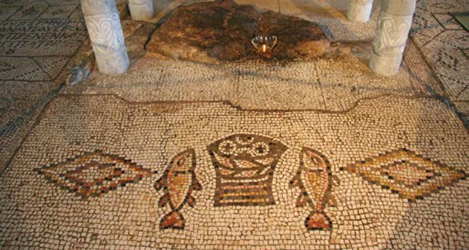
tabgah mosaic

Posted in Uncategorized | Comments Off on For every good gift and every perfect gift is from above

The Kingdom of God is within you

24 October OS 2018 – Tuesday of the 6th Week of St. Luke; Holy Martyr Arethas and Companions; Righteous King Elesbaan of Ethiopia

The reading from the Holy Gospel today is Luke 11: 1-10.

At that time, it came to pass, that, as he was praying in a certain place, when he ceased, one of his disciples said unto him, Lord, teach us to pray, as John also taught his disciples. And he said unto them, When ye pray, say, Our Father which art in heaven, Hallowed be thy name. Thy kingdom come. Thy will be done, as in heaven, so in earth. Give us day by day our daily bread. And forgive us our sins; for we also forgive every one that is indebted to us. And lead us not into temptation; but deliver us from evil. And he said unto them, Which of you shall have a friend, and shall go unto him at midnight, and say unto him, Friend, lend me three loaves; For a friend of mine in his journey is come to me, and I have nothing to set before him? And he from within shall answer and say, Trouble me not: the door is now shut, and my children are with me in bed; I cannot rise and give thee. I say unto you, Though he will not rise and give him, because he is his friend, yet because of his importunity he will rise and give him as many as he needeth. And I say unto you, Ask, and it shall be given you; seek, and ye shall find; knock, and it shall be opened unto you. For every one that asketh receiveth; and he that seeketh findeth; and to him that knocketh it shall be opened.

St. Theophan the Recluse, in discussing the Lord’s teaching on prayer, addresses the need to pray from the heart:

…We must concern ourselves about only one thing: that when we stand at prayer, at home or in church, we have true prayer in our soul: a true turning and lifting up of our mind and heart to God. Let everyone do this as he is able. …do not mutter the prayers like a wound-up machine that plays songs. No matter how long you stand like that, and mumble the prayers, you have no prayer, when your mind is wandering and your heart is full of empty feelings. But if you stand at prayer and are accustomed to it, what does it cost you to draw your mind and heart there as well?  Draw them there, even if they have become stubborn.   Then true prayer will form and will attract God’s mercy, and God’s promise, “Ask, and it shall be given you,” will be fulfilled. Often it is not given because there is no petition, only a posture of petitioning. – Thoughts for Each Day of the Year, pp. 237-238

Here St. Theophan assumes that the reader is already someone who has the habit of regular prayer.   He is most certainly not saying, “Only pray when you feel like it,” which is the perverse meaning that silly people give this command to pray from the heart. Not only must we force ourselves to pray when we do not feel like it, but when we are forcing our bodies to stand up and our lips to move, we also must force the mind to pay attention.   When the Lord sees our repeated efforts to pray with attention, He will give feeling to the heart, in due season, and this feeling will be authentic spiritual feeling, not mere fallen emotion.

Why are we Orthodox, or why should someone become Orthodox?   There are a number of reasons, of course: The Orthodox Church is demonstrably the visible One, True Church; the Orthodox Church has not changed the original teachings of Christ and the Apostles; the Orthodox Church has the most complete, most theologically rich, most beautiful, organically continuous and unadulterated system of Christian public worship; etc.   Another way, however, of looking at it is this: Only in the Orthodox Church can we find both the grace and the correct instruction to enable us to enter into an un-deluded and authentic interior life. The institution of the Church, the dogmas of the Church, the public worship of the Church – God has given us all this to enable us to choose “the one thing needful,” an authentic life lived with God in the inner man, in the soul.

This is the subtlest but strongest argument for Orthodoxy: Orthodoxy enables us to be friends with the Lord, as Adam and Eve were in Paradise.   In order to experience this, however, one has to do Orthodoxy, one must engage in some kind of interior struggle, or Orthodoxy increasingly will make no sense, until one finally gives up and lapses into a purely nominal identification (the case with most “ethnic” Orthodox) or leaves the Church altogether (the case with fallen away, one-time enthusiastic adult converts), or remains active in Church life in a purely superficial sense, consumed by ecclesiastical politics, social connections among families in the ethnic community, parish social and fundraising events, and intra-parish squabbles. The danger of the last option is that such a person usually imagines that he is actually practicing the Faith and goes to the grave having abandoned the path to salvation without even noticing it.

The reality is that what goes on inside of us is bigger than what goes on outside of us. One human heart in which God dwells by His uncreated energies is larger than the entire physical universe.  Our real life is inside of us. This is where the issues of life, the main battles of life, are fought. Most people, sadly, surrender without firing a shot, because they do not even know where the battlefield is, or that there is a war going on.

God knows better than we what obstacles we face to attain a focused interior state. He knows better than we what an idiotically distracted way of life the “advanced” societies of the 21st century thrust upon their inmates.   He does not demand that we attain a high spiritual state before we die; He does, however, demand that we get on the road to a high spiritual state and keep going, or at least not wander into other paths. He wants us to get on the ladder of divine ascent and stay on it, even if it means climbing with painful slowness or just hanging on to the lowest rung.

Let us, then, renew our resolve to set aside time every day to be alone with our Creator and Redeemer, and to struggle for regularity and attention in prayer.

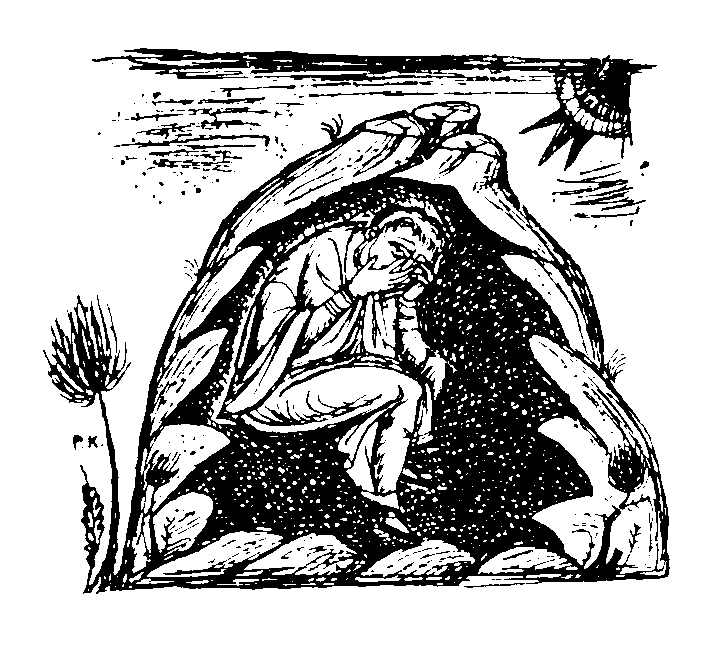
monk weeping sketch

Posted in Uncategorized | Comments Off on The Kingdom of God is within you

Acquiring the eyes of faith

21 October OS 2018 – Saturday of the 5th Week of St. Luke; St. Hilarion the Great; St. Christodoulos of Patmos; Holy Martyr Ursula of Cologne  

 The reading from the Holy Gospel today is Luke 7: 1-10.

At that time, Jesus entered into Capernaum. And a certain centurion’s servant, who was dear unto him, was sick, and ready to die. And when he heard of Jesus, he sent unto him the elders of the Jews, beseeching him that he would come and heal his servant. And when they came to Jesus, they besought him instantly, saying, That he was worthy for whom he should do this: For he loveth our nation, and he hath built us a synagogue. Then Jesus went with them. And when he was now not far from the house, the centurion sent friends to him, saying unto him, Lord, trouble not thyself: for I am not worthy that thou shouldest enter under my roof: Wherefore neither thought I myself worthy to come unto thee: but say in a word, and my servant shall be healed.  For I also am a man set under authority, having under me soldiers, and I say unto one, Go, and he goeth; and to another, Come, and he cometh; and to my servant, Do this, and he doeth it. When Jesus heard these things, he marvelled at him, and turned him about, and said unto the people that followed him, I say unto you, I have not found so great faith, no, not in Israel. And they that were sent, returning to the house, found the servant whole that had been sick.

What prevents us from having the great faith of the centurion? Here is a man who was a pagan, not a member of the Church of the Old or the New Testaments, and he had sufficient faith in the Lord Jesus that he believed that all He had to do was to speak and the servant would be healed. We the baptized, the people of the New Israel the Church, who belong to Christ through being purchased by His own blood, should we not have such complete and lively faith?

One reason we do not have such faith is that we do not ask for it!   Here is Christ, the Giver of all good gifts, waiting to give us spiritual gifts – the gift of prayer, the gift of courage in temptations, the gift of peace in the midst of troubles, and so forth – but usually we confine ourselves to asking Him to give us outward things, or we do not ask for anything at all.

Why do we not ask? This is related to a deeper reason that we lack faith: Secretly or unconsciously we have a mechanistic and deterministic view of the universe, in which things just happen according to impersonal laws or material circumstances, and we are just “stuck.” Our faith is a psychological prop, a comforting thought system, not a lived reality.  We are all closet materialists to some degree, not in our stated philosophy of life but in our hearts.

When do people usually come to real faith? The disagreeable truth is that we come to deep, profound faith, real trust in God, when something so big and terrible happens, or when so many smaller bad things happen at the same time, that our life feels out of control, and we are forced to turn to God as the last resort…or despair.   Sadly, many people today choose despair.   They call it realism, but, as Soren Kierkegaard said, one characteristic of despair is precisely that it does not know that it is despair.

Let us not wait for the “big wake-up call” but rather wake ourselves up, make earnest prostrations, and beg on our knees for absolute Faith in the One Who made us and redeemed us. Let us ask for new eyes to see the universe and this earth and the lives of the people around us and our own lives as they really are in the eyes of God:  a tiny, extremely manageable  world, where the Infinite One works His sovereign will for our salvation in the blink of an eye prior to taking us into eternity.   Now that is realism.

Glory to Thee, O Lord! Glory to Thee!

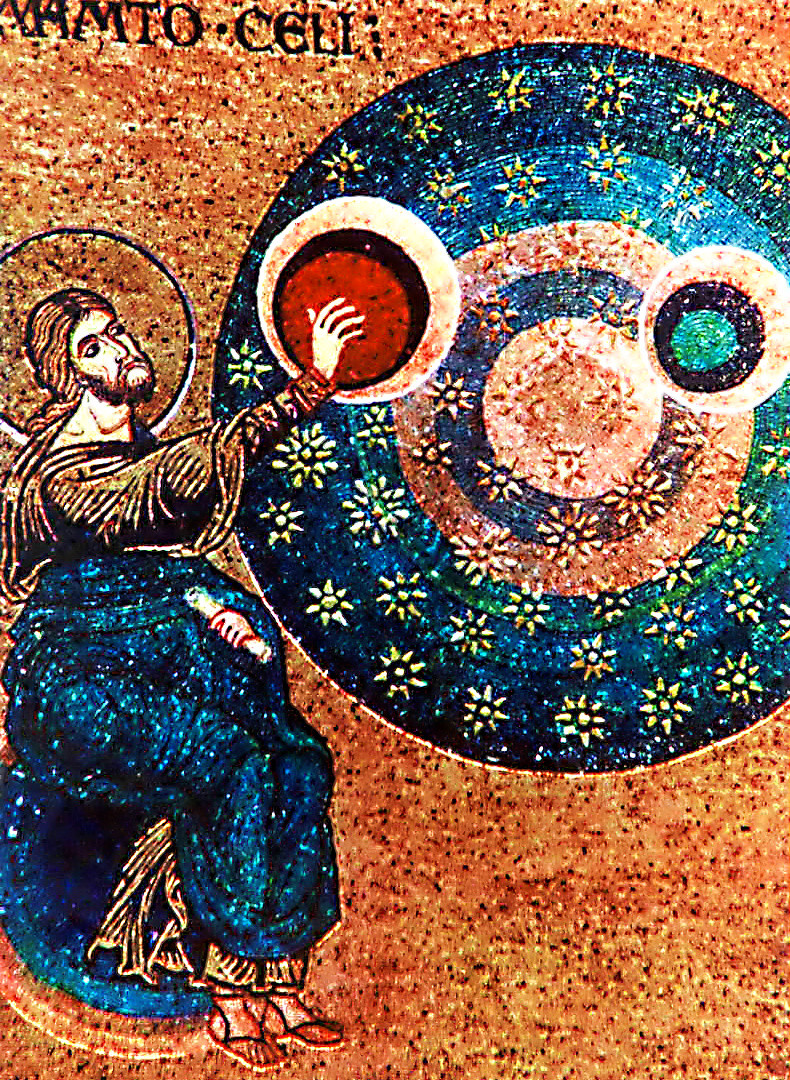
God creates the heavens mosaic


Posted in Uncategorized | Comments Off on Acquiring the eyes of faith

For righteous art Thou in all that Thou hast done for us

20 October OS 2018 – Friday of the 5th Week of St. Luke;  Holy Great Martyr Artemios; S. Gerasimos of Kephalonia    

The reading from the Holy Gospel today is Luke 10: 1-15.

After these things the Lord appointed other seventy also, and sent them two and two before his face into every city and place, whither he himself would come. Therefore said he unto them, The harvest truly is great, but the labourers are few: pray ye therefore the Lord of the harvest, that he would send forth labourers into his harvest. Go your ways: behold, I send you forth as lambs among wolves. Carry neither purse, nor scrip, nor shoes: and salute no man by the way. And into whatsoever house ye enter, first say, Peace be to this house. And if the son of peace be there, your peace shall rest upon it: if not, it shall turn to you again. And in the same house remain, eating and drinking such things as they give: for the labourer is worthy of his hire. Go not from house to house. And into whatsoever city ye enter, and they receive you, eat such things as are set before you: And heal the sick that are therein, and say unto them, The kingdom of God is come nigh unto you. But into whatsoever city ye enter, and they receive you not, go your ways out into the streets of the same, and say, Even the very dust of your city, which cleaveth on us, we do wipe off against you: notwithstanding be ye sure of this, that the kingdom of God is come nigh unto you. But I say unto you, that it shall be more tolerable in that day for Sodom, than for that city. Woe unto thee, Chorazin! woe unto thee, Bethsaida! for if the mighty works had been done in Tyre and Sidon, which have been done in you, they had a great while ago repented, sitting in sackcloth and ashes. But it shall be more tolerable for Tyre and Sidon at the judgment, than for you. And thou, Capernaum, which art exalted to heaven, shalt be thrust down to hell.

St. Theophan the Recluse comments on the ultimate fate of those who reject the apostolic preaching:

In the next world, will there be such condescension toward those who do not accept the Lord as He showed toward those living on the earth?   No, there will not be. Sending the Seventy to preach, the Lord commanded them that when they were not received, they should say in the streets: Even the very dust of your city, which cleaveth on us, we do wipe off against you: notwithstanding, be ye sure of this, that the Kingdom of God is come nigh unto you. That is, we do not need anything of yours. It is not with self-interest that we walk and preach, but to proclaim peace and the Kingdom of God unto you. If you do not want to receive this blessing, then let it be as you wish – we will go on. Thus it was commanded for the present time; but how will it be in the future? It will be more tolerable in that day for Sodom, than for that city. Therefore, unbelievers have nothing to give them hope of the Lord’s lenience. While on the earth they take their liberties, but as soon as death comes, the entire storm of God’s wrath will come down upon them. It would be a great misfortune to be as the unbelievers!   They do not even have joy on the earth, because without God and the Lord Jesus Christ, the Savior and Redeemer, even here everything is dismal and dreary. As to what will happen there, it is impossible to describe it in words or to imagine it. It would be more tolerable to be destroyed, but even that will not be given to them. Thoughts for Each Day of the Year, p. 234

Thoughts like these are very difficult for us.   It is terrible, unthinkable, that people we love – relatives, friends, even spouses and children – would be condemned for their lack of faith in Christ.   On the other hand, the alternative is even more unthinkable – that the words of Christ are not true. For if these hard words of His about the necessity of Faith and the reality of His Judgment are not true, why should any of His words be true? And if He is not the Truth, nothing and no one is, and there is no truth. And if there is no truth, life is not worth living.

The only way out of the painful state of mind caused by juxtaposing these two alternatives is complete humility and surrender to the will of God.   We have to “commit ourselves, one another, and all our life to Christ our God.” The knowledge of Who He is, the conviction that we have a Creator and a Redeemer, is by itself the source of limitless joy, a never-failing fountain of happiness for every moment of the day, if only we thought about it.   Clinging to Him, walking the narrow path with Him and to Him (for He is our constant companion on the very road to Himself) should occupy all of our mental energy for spiritual matters – why waste energy and risk getting lost by wandering off the path to indulge in theological speculation about the fate of the faithless?   They have a Creator and Redeemer, Who knows them better than we do and Who loves them better, as well.   Let Him take care of it.

In regards to those among the living whom we deeply desire to convert to the Orthodox Faith, pray for them every day – make a list, read their names, and say, “O Lord have mercy on them!”   You can also say the Trisagion Prayers and Ps. 50 for them.   When you are actively engaged in helping someone find his salvation, all these speculations about the justice of God in condemning those outside the Church, etc, fall away.   We have to do our job, and that is helping others not be condemned. This should occupy our attention sufficiently until we draw our own last breath. And we should never give up: as the great American philosopher Yogi Berra reminds us, “It ain’t over till it’s over.”

In regards to those who have died outside the Church, we can also make a list of their names, read it every day, and say, “O Lord, have mercy on them!”   We can also say the Trisagion Prayers and Psalm 50 for them, as well.

Let us cast away all of our logismoi – our dark, troubled, and confused thoughts – and let us cast ourselves into the abyss of God’s inscrutable wisdom and absolute love for mankind.   His peace, which the world cannot give, shall envelope us, calm our troubled minds, and give us the courage to confess our Faith, share it with others if they want it, and persevere to the end.

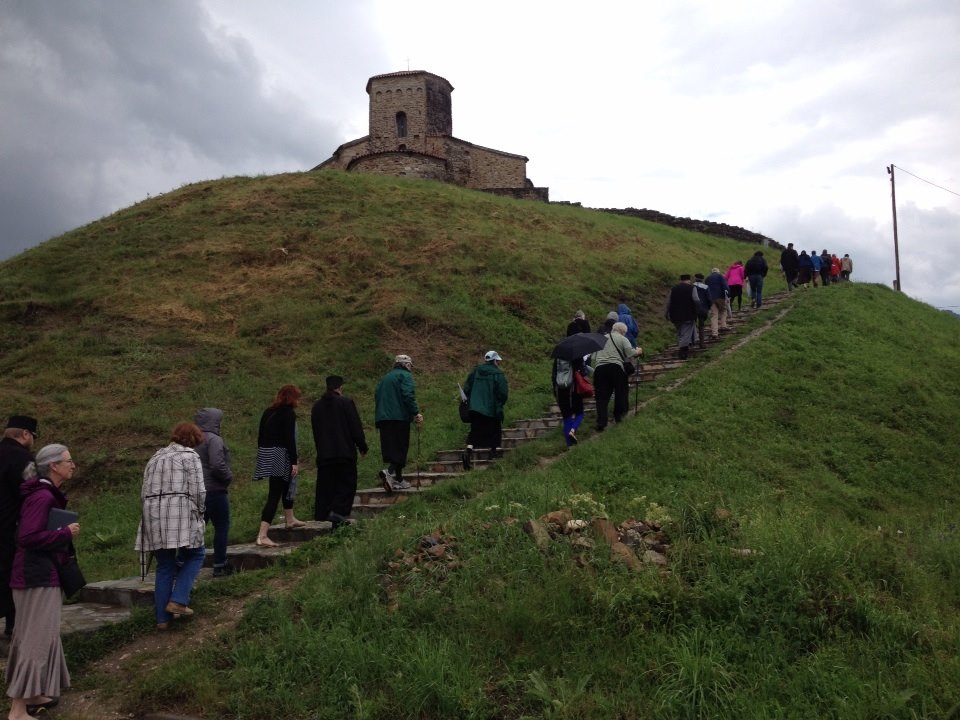
pilgrims walking up a hill to a church in Serbia

Posted in Uncategorized | Comments Off on For righteous art Thou in all that Thou hast done for us

Confessing Christ before men

17 October OS 2018 – Tuesday of the 5th Week of St. Luke; Holy Prophet Hosea, Holy Monk-Martyr Andrew of Crete, Holy Unmercenaries Cosmas and Damian of Cilicia 

In today’s Gospel, the Lord calls upon us to confess Him before men:

The Lord said to His disciples: If any man will come after me, let him deny himself, and take up his cross daily, and follow me. For whosoever will save his life shall lose it: but whosoever will lose his life for my sake, the same shall save it. For what is a man advantaged, if he gain the whole world, and lose himself, or be cast away? For whosoever shall be ashamed of me and of my words, of him shall the Son of man be ashamed, when he shall come in his own glory, and in his Father’s, and of the holy angels. But I tell you of a truth, there be some standing here, which shall not taste of death, till they see the kingdom of God. Luke 9: 23-27

If we desire to follow Christ, we have to take up our cross – daily, as St. Luke records the Lord saying – and follow Him. Part of this daily cross is not to be ashamed of Jesus Christ and His Gospel before other people, which is actually a tall order, because we are very prone to cringing before the opinion of society – we want others to like us, or at least we want to avoid conflict with them.   But if we are to be true Christians, conflict is inevitable, for the world is at war with God.

St. Theophan the Recluse laments over the fact that no one talked about God or salvation in the fashionable Russian society of his day:

Do not be ashamed to confess the Lord Jesus Christ as the Incarnate Son of God, Who redeemed us through His death on the Cross, Who through His Resurrection and Ascension opened for us the entrance into the Kingdom of Heaven. If you are ashamed, then He will be ashamed of you “…when He shall come in His own glory, and in His Father’s, and of the holy angels.” Now it ahs become fashionable in society not to talk at all about the Lord and about salvation, whereas in the beginning these precious subjects were all that people talked about. One’s talk more readily flows from the place where the heart abides. Can it really be that people’s hearts abide less with the Lord? Judging from the talk, this must be the case. Some do not know Him at all, and others are cold toward Him. Fearing encounters with such people, even those who are warm toward the Lord do not direct conversation toward Him, and the priesthood is silent. These days, discussion about the Lord and Savior and about our main concern – salvation – is excluded from the range of conversation acceptable in society. “What?” you say, “Is that really all we’re supposed to talk about? Why only about that?” It is possible to talk about anything, but it must be done in a way that is underscored by the spirit of Christ. Then it would be possible to guess whether the speaker is a Christian or pagan. Now, however, it is impossible to guess what they are, either by their talk or by their writings. Look through all the periodicals – what don’t they write about? But no one wants to make Christian conversation. Strange times! Thoughts for Each Day of the Year, pp. 231-232

In our own experience in American life, of course, we do meet people who want to “talk religion,” but usually their ideas are so inadequate, strange, or even blasphemous that it is painful to talk with them; we feel that we are casting our pearls before swine. What to do?   I think that what is left to us is the constant struggle for prayer, so that we are ready to say a good word in season when the occasion arises.   If we always are abiding in the Lord, then the people in front of us will, as St. Theophan says, be able to discern that we are Christians, and they will respond to us accordingly. It may be that people with a genuine thirsting spirit, with the fear of God, will cross our path, and that we must be ready to respond to them. May God grant!

If in our inevitable run-ins with unbelievers and freethinkers, someone says a blatant untruth about God, about the Christian faith, we simply have to say, “That is not true.” We do not have to engage in argument, but simply confess our faith: “I believe in the Holy Trinity, in Christ, in the Orthodox Faith, and in everything the Church teaches.” If they want you to explain, and you do not feel up to the task, give them your priest’s email address or telephone number.   If they are serious, they will contact him.   If they are worthy people, they will respect you for sticking to your guns when they see that you are serious.

The important thing is not to be skilled apologists but to be courageous confessors. This takes few words but much faith, with peace of heart. The world is going its way: let it go!   We must go our way. This thought should give us peace in the midst of the turmoil and spiritual barrenness of contemporary life.


Posted in Uncategorized | Comments Off on Confessing Christ before men

Love truth till it hurts

12 October OS 2018 – Thursday of the 4th Week of St. Luke;  Holy Martyrs Probus, Tarachos, and Andronikos; St. Symeon the New Theologian

In today’s Gospel, Herod exhibits the vain curiosity of those who want to “talk religion” but do not want to live according to the demands of truth:

At that time: Herod the tetrarch heard of all that was done by him: and he was perplexed, because that it was said of some, that John was risen from the dead; And of some, that Elias had appeared; and of others, that one of the old prophets was risen again. And Herod said, John have I beheaded: but who is this, of whom I hear such things? And he desired to see him. And the apostles, when they were returned, told him all that they had done. And he took them, and went aside privately into a desert place belonging to the city called Bethsaida. And the people, when they knew it, followed him: and he received them, and spake unto them of the kingdom of God, and healed them that had need of healing. – Luke 9: 7-11

St. Theophan the Recluse comments on the mindset of Herod:

Hearing about the works of Christ the Savior, Herod said, “John have I beheaded; but Who is this?” And he desired to see Him. He desired to see Him and sought an opportunity for this, but was not made worthy, because he sought not unto faith and salvation, but out of empty curiosity. Inquisitiveness is the tickling of the mind. Truth is not dear to inquisitiveness, but news is, especially sensational news. That is why it is not satisfied with the truth itself, but seeks something extraordinary in it. When it has contrived something extraordinary, it stops there and attracts other people to it.   Thoughts for Each Day of the Year, p. 227

There is a great difference between the desire for truth and empty curiosity. The desire for truth is a profound longing planted in the soul by God, and it is inseparable from the longing for justice, for the good, for doing God’s will: I seek the truth because knowing truth is a moral imperative, because remaining ignorant of truth is a sin, is displeasing to God, is a socio-pathological state which hurts my neighbor, is a destruction of my soul and my eternal destiny.   Knowing truth is what God made my mind for: it is pleasing to Him and enables me to love Him and love my neighbor as well as to attain my earthly purpose and my eternal happiness.

Pilate’s retort to Truth Incarnate when He stood before him – “What is truth?” (i.e., one cannot know the truth, truth is relative) – excuses the speaker from the task of being human.   Judas knew Who Christ was and betrayed Him. Pilate does not even get around to betraying Christ, because he does not even bother to find out Who He is.   Judas goes out with a bang, Pilate with a whimper – the result is the same.

Today everyone excuses his own and everyone else’s ignorance: no one is going to hell because, well, “He does not know any better.”   Everyone has forgotten that there is such a thing as culpable ignorance, the guilty ignorance chosen by the man who does not care to find the truth, or, having an inkling of the truth, does not want to follow it up.   The same person may be like Herod in today’s reading – he may actually enjoy “talking religion.” This usually entails his pontificating about things he knows very little about, concluding that all truth claims have more or less the same value, and that he has the moral and intellectual high ground because he is a relativist.   A sorry spectacle: A person who has made himself stupid on purpose in order to avoid the pain of intellectual, spiritual, and moral struggle. He prides himself on having a permanently open mind, but the problem with having an always-open mind is like that of having an always-open mouth: unless you close it on something, you will starve.

How can we flee the vain curiosity we see in Herod and attain the love of the truth we see in the saints?   Here are three steps we can take:

Pray earnestly for the love of the truth, for ourselves and others.   We should weep over the indifference to truth we see everywhere, for the vacuity and idiocy of 99% of contemporary thought, speech, and writing.   We need to become interior martyrs for truth, with constant suffering over the darkness of men’s minds.   We should hurt over it. We need to pray for this grace.

We need to stop being information junkies. Remember: information is not truth; it’s just stuff. Today’s information technology has enabled an entire way of life based on distraction, which is fatal to coherent thought, much less accurate rational and intuitive philosophy and theology, and therefore our first step has to lie in radically disciplining our use of the Internet.  Look at it this way: “Alright, my work may require x amount of time on the Internet. Beyond that, I will be on it x amount of time at y time of day.   I will use it to find things I need or talk to people I need to talk to, but I will not live in it.   The real world is the visible world around me and the invisible world of the soul. I will choose to spend my time in the real world whenever possible.”     The Internet is not the real world; at best it simulates the real world, and the accuracy of the simulation is questionable. It is a tool we use, not an alternate universe to move into because we do not like the world we live in.

We need to spend time reading books. I know that this sounds radical, perhaps even subversive, but I highly recommend it. Pick one good book of Orthodox spiritual reading and another good book about something real – serious history or literature or science, etc. – and put in x hours (or minutes…just get started!) reading them.

At one point in their lives, both Herod and Pilate had Truth Incarnate standing before them, and they could not see, because they did not care. Let us care to the point where it hurts and cry out to the Lord to enlighten our darkness.

Posted in Uncategorized | Comments Off on Love truth till it hurts

The remembrance of death gives birth to courage

11 October OS 2018 – Wednesday of the 4th Week of St. Luke; Holy Apostle Philip of the Seventy; S. Theophanes “the Branded,” Confessor

In today’s Gospel, the disciples have a close brush with death and experience their complete dependence on the Master:

At that time: Jesus went into a ship with his disciples: and he said unto them, Let us go over unto the other side of the lake. And they launched forth. But as they sailed he fell asleep: and there came down a storm of wind on the lake; and they were filled with water, and were in jeopardy. And they came to him, and awoke him, saying, Master, master, we perish. Then he arose, and rebuked the wind and the raging of the water: and they ceased, and there was a calm. And he said unto them, Where is your faith? And they being afraid wondered, saying one to another, What manner of man is this! for he commandeth even the winds and water, and they obey him. – Luke 8: 22-25

St. Theophan the Recluse takes the disciples’ experience as a reminder that we should daily and hourly remember death:

When they boarded the ship to sail to the other side of the lake, did the Apostles think that they would meet with a tempest and expose their lives to danger? Meanwhile, a tempest suddenly arose and they did not expect to remain alive. Such is the path of our life! You do not know how or from where danger will sweep in, capable of destroying us. Air, water, fire, beasts, man, a bird, a house – in a word, everything around us – could suddenly be transformed into a weapon for our death. From this comes a law: live in such a way that every minute you are ready to meet death, and fearlessly enter into its realm. This minute you are alive, but who knows whether you will be alive the next? Keep yourself according to this thought. Do everything you have to, according to the routines of your life, but in no way forget that you could immediately move to a land from which there is no return. Not remembering this will not postpone the appointed hour, and deliberately banishing this crucial change from your thoughts will not lessen the eternal meaning of what will happen after it. Commit your life and everything in it into God’s hands. Spend hour after hour with the thought that each hour is the last. From this the number of empty pleasures will decrease, while at death this deprivation will be immeasurably recompensed with a joy that has no equal among the joys of life. Thoughts for Each Day of the Year, pp. 226-227

Recall that all of our spiritual problems come from pride, which is essentially the primordial delusion that we are in charge of everything, the source of our own existence, and that somehow we can preserve ourselves indefinitely if only we are clever and powerful enough.   We forget that we have a Creator, that we are entirely contingent beings, and that without His upholding us in existence we would return immediately to the pit of non-being from which we came. Are you 15, 45, 75, 105 years old?   Looking back to the time of your coming into being, that number of years plus nine months is all that separates you from the realm of absolute non-existence. Now put that number of years next to the 7,000+ years of the earth’s history. Put it next to the immeasurably vast aeons of the angelic universe. Put it next to eternity.   Think about it.

One mark of the spiritual poverty of contemporary Christianity is that the most fundamental spiritual exercises known to our forebears, including the unlettered ones, have become utterly foreign to us.   One of these essential practices is the constant remembrance of death.   For the Christian, this does not produce gloom and depression but rather the opposite: joy, spiritual freedom, and hope in the life to come; not, however, without sobriety regarding one’s spiritual state and constantly striving in repentance, abiding in humble self-reproach.

The constant remembrance of death, yoked with a pure conscience, opens the inexhaustible wellspring of courage, a virtue noticeably absent from Christian life today.   Everyone grows calculating and cold, holding something back; it is rare to see the childlike, self-forgetting zeal of the martyrs and ascetics of old, to see a David dancing before the Ark or a Peter impulsively setting out to walk on the water.

Let us ask the Lord for courage and hope, and become warriors of the spirit, forgetting our absurd egotistical demands for guaranteed security, comfort, and entertainment, and setting out on the beautiful adventure of soldiers for Christ.   Remembering death at every moment, let us scorn the illusion of happiness promised by the Luciferian global elite and their technocratic hirelings to spiritual thumb-suckers, and let us freely confess our Faith, practice the virtues, and rejoice in being regarded as fools by the world.   We have nothing permanent to lose, except for an eternity in hell with Satan and his angels. We have everything to gain: eternal rejoicing at the victory banquet of our King.

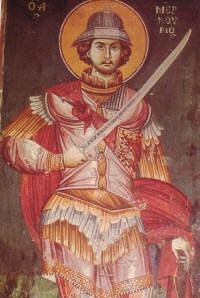
stmercurius

Posted in Uncategorized | 1 Comment

Build your house on rock

4 October OS 2018 – Wednesday of the 3rd Week of St. Luke; St. Hierotheos, Bishop of Athens 

In today’s Gospel, the Lord exhorts us to match our actions to our confession of Faith in Him:

The Lord said: And why call ye me, Lord, Lord, and do not the things which I say? Whosoever cometh to me, and heareth my sayings, and doeth them, I will shew you to whom he is like: He is like a man which built an house, and digged deep, and laid the foundation on a rock: and when the flood arose, the stream beat vehemently upon that house, and could not shake it: for it was founded upon a rock. But he that heareth, and doeth not, is like a man that without a foundation built an house upon the earth; against which the stream did beat vehemently, and immediately it fell; and the ruin of that house was great. Now when he had ended all his sayings in the audience of the people, he entered into Capernaum. Luke 6:46-7:1

If you are a sincere Orthodox Christian trying somehow to have a conscious spiritual life, these words are always hovering around you, and there is always (at least a slight) twinge of conscience.   We know we do not fulfill Our Lord’s commandments, and yet we continue to say, “Lord, Lord.”   How can we place the house of our soul more firmly on the rock of His commandments?

The first thing to remember is that we must not stop saying, “Lord, Lord,” even if we look silly doing it. We have to keep confessing our Faith in Jesus as our Lord and God. If you say, “Well, I do not want to be a hypocrite; I cannot fulfill the Lord’s commandments and therefore I give up calling Him my Lord,” you will still be a hypocrite (who is not a hypocrite?) and will have also become a coward and traitor as well.

So here we are, still crying out “Lord, Lord,” and yet imperfectly and unsteadily fulfilling His commandments. What to do? St. Theophan the Recluse, with his unerring sense of the essential, zeroes in on the problem, which is the conversion of the heart:

“Why call ye Me, Lord, Lord, and do not the things which I say?” Why do they call Him Lord, but do not do the Lord’s will – that is, why do they not acknowledge His lordship in their works? Because they only call with their tongue, and not with their heart. If their heart were to utter, “Lord, Thou art my Lord,” then complete readiness would abide therein to submit to the One Whom they confess as their Lord. But since this is not the case, their deeds do not match their tongues; whereas, deeds always match the heart. Well, what then – is there no use in calling “Lord, Lord”? No, that’s not it. But it is necessary to make the external word match the inner word, which is the feeling and disposition of the heart. Sit and reflect upon the Lord and upon yourself; what is the Lord and what are you? Think about what the Lord has done and still does for you, why you live, and how it will end. You will immediately come to the conviction that there is no other way than steadfastly to fulfill the Lord’s entire will. There is no other path for us. This conviction gives birth to a readiness to fulfill in deed what is expressed by the word “Lord.” With such readiness a need for help from above will be awakened, and from it the prayer: “Lord, Lord! Help me and give me strength to walk in Thy will.” And this call will be pleasing to the Lord.” Thoughts for Each Day of the Year, p. 221

St. Theophan here lays out a simple plan:

  1. Sit for a bit and reflect on Who God is and who you are. Think about all that He has done for you: He brought you into existence; without Him you would not exist.   He became a man and died for you.
  1. You will realize quickly that you depend on Him for everything, that you owe Him everything, and that you must do exactly what He wants at all times, or you will perish.
  1. Cry out to Him and beg Him for help to know and to do His will.

The saint concludes, “And this call will be pleasing to the Lord.” In other words, by the very act of asking Him to help us do His will, we are already doing His will. We are acknowledging His lordship over our lives, admitting our inability to do His will, showing our utter dependence on Him, and fulfilling His commandment to pray and ask Him for that which we need. We have begun to pray from the heart, which is man’s essential function, and therefore at one stroke we have begun to do God’s will in the most essential way.

If we keep at it, then little by little our actions will match our words, because now our words will be coming from the heart and therefore our own created energies are focused on what needs to be done instead of being scattered in the pursuit of myriad inessentials, and we will simultaneously and directly be invoking the power of God, and therefore His divine and uncreated energies will accomplish what our poor strength cannot do.

Here indeed is in brief a program for the Christian life.

Posted in Uncategorized | Comments Off on Build your house on rock