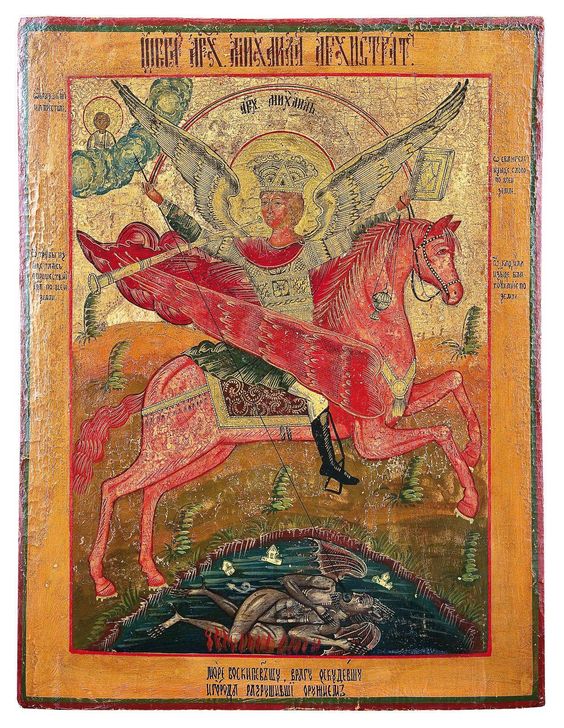
Orthodox Survival Course, Class 40: The Internet

You can listen to a podcast of this lecture at https://www.spreaker.com/user/youngfaithradio/osc-40

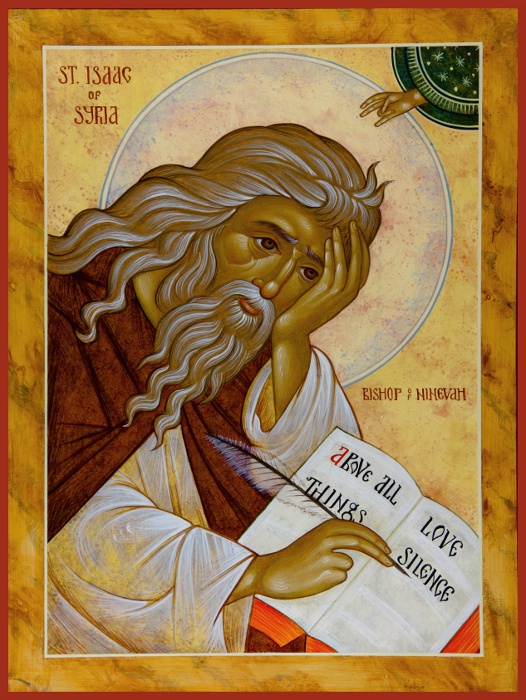
Above all things, love silence.

– St. Isaac the Syrian

Introduction: The Multi-Dimensional Chessboard

I am very bad at the game of chess, but if the chessboard be a traditional one, I can at least imagine becoming better at the game. When I see a three dimensional chessboard, however, all hope in that direction dies – there is no way I can even begin to comprehend how anyone could do this. Our subject today, the Internet, is a 3-D (or 4-D, or …) chessboard compared to the media we have been discussing – the newspapers, radio, and television. It is not simply a medium, but a means of transmitting various media – print, sound, and visual – so rapidly and so universally, that the mind simply cannot grant grasp the whole of it. And it is not only a multi-media network, but serves billions of people as their social structure, their means of engaging in friendship, their means of doing business, of obtaining information, even finding lovers and spouses… the list goes on, and it keeps growing. It is, in short, a new universe: a new stage in the organization of human society and a new stage in the way we use the human mind. And if all of this be so, and I think that very few would disagree with this assessment, is it not imperative that we arrive at an Orthodox way of viewing this thing and responding to it? For it is not simply a technology, a clever sort of tool that is indeed advanced but still rather dumb and one-dimensional, over which the ordinary user can claim mastery, but rather it is – I would venture to say, more than any previous technology, even the printing press or the automobile – a core element of immediate and continuous daily waking experience that has drastically changed the way people think, learn, feel, and work, the way they see themselves and other people, and, ultimately, they way they relate to God. By now many (most?) people do not simply use the Internet now and then to do this or that discrete and limited task. No, it has gone far beyond that. To a greater or less extent, they have begun to live inside of it.

The following lecture is neither as simple nor as linear as my previous talks, because the subject is so complex and so ramifying – many branches leading off into so many directions. I offer, then, a rambling and incomplete meditation upon, rather than an explanation of, this bewildering topic, organized under sub-topics or insights as they have occurred to me. I pray that you will find some wisdom here.

A) Is It a Tool or Is It Your World?

The original purpose of technology was to give man tools to do this or that task better or more easily than he would otherwise. When all things are in right relationship, then man, the image of God, to whom God has given dominion over other created things, invents and uses only those tools that he truly needs, when he really needs them, and in the most virtuous way possible, that is, in that way most conducive to attaining his ultimate end. The saint, the man in right relationship with God, subordinates all of his choices and activities, including his invention of tools and use of tools, to the ultimate end of man – his salvation, his union with God. One of the arguments used to support the humanistic fallacy of progressivism – the erroneous idea that the human race is getting better, advancing somehow, all the time, and that the present generation is smarter and better than all previous generations – is that ancient and medieval Christian men did not invent even a fraction of all the clever gadgets invented since the Renaissance. The obvious response, of course, is that they had better things to do. The intellectual and artistic classes of these societies were on the whole devoted to pursuing interests higher than the comparatively puerile fascinations of trying to go somewhere faster or flying through the air like birds or building gigantic metal structures or discovering ways of eking out a few more years of one’s doomed biological existence or killing ever-greater numbers of people or inventing better toilet paper. Since the Renaissance, however, as we have discussed in our classes on that period, the physical and natural sciences and their practical expression, technology, have exploded exponentially in their pursuit of the knowledge of material phenomena and the manipulation of these phenomena for the gratification of material desires, precisely because man – i.e., fallen man and his fallen tendencies – replaced God at the center of life.

Now, however, by the beginning of the 21st century, our technology has overwhelmed us – we are no longer master. Striving to make himself God, man has, rather, created this Babylonian statue of himself that he must bow down and worship. The Internet is the ultimate example of a technology that has now replaced life itself for great numbers of people. It is their world, their reality; they live inside of it. It is not simply a tool; it is a World. Inside of this artificial world of unfathomable complexity, this hall of mirrors, this incomprehensible labyrinth, there is not one but many minotaurs waiting to devour us. How do we go on functioning inside this world – and for most of us, there is no choice, or, at least, we can imagine no other – and not be devoured by the monsters inside of it?

A first step is to remind ourselves that the Internet is a tool, a potentially very useful tool, but that it is not our entire world. It is a tool, however that easily takes over one’s life to become one’s entire world. To avoid this requires understanding and disciplined action. We must understand how each of our daily activities either leads us towards or away from God, and we have to take disciplined action first to order and then to conduct our activities towards God. Of course, we have always had to do this – this hierarchical prioritizing and prudent use of one’s time according to God’s Law has always characterized the active Christian life – but now the Internet has become the 3-D chessboard of life, and therefore we must now work harder – and, most importantly, receive greater wisdom and greater power from God, and therefore must pray more – in order to deal with this new factor in the ordering and conduct of our lives.

So let us assume that we need this tool. I suppose that there are a few of us who are so circumstanced or so clever as to need it very little or not at all. Most of us, however, are stuck with the Internet, and, to be realistic – and appropriately grateful – I must say that most of us like it and that we derive real benefit from it: for example, this lecture that you can read or listen to thanks to the Internet. Let us, however, remind ourselves, first of all, that the Internet must be for us simply a tool for living and not a replacement for living. If it ceases to be servant and becomes master, and it probably will over and over again, we have to push back over and over again, and reclaim our sovereignty. Let us ask the Lord daily for the wisdom and strength so to do!

B) In the Matrix

So let us assume we are stuck with the Internet – for whatever reason we simply must use it or cannot imagine living without it or enjoy it so much we are not going to give it up. It may be the case that, as far as we can tell, the benefit demands that we take the risk. Now we know, Yes, it should function for us as “just” a tool. But in its nature, it is not “just” a tool; it is a vast, fascinating, endlessly complex and endlessly ramifying mental universe. Herein lies the rub: To use the tool, you must enter the universe that is the very nature of the tool. This is terribly inconvenient, of course – one would like to have the benefit of the tool without the potential dangers of the tool. But let us borrow some wisdom from that man of many aphorisms, Mr. G.K. Chesterton. He aptly remarks that an inconvenience is simply an adventure wrongly considered, and an adventure is an inconvenience rightly considered. Let us then consider the inconvenience of the Internet’s dangers as a daily adventure, let us remember that we are entering a deceptively familiar but in fact dangerous far country, and armed cap ά pie, so to speak, with prayer and wisdom, let us enter that strange world with sobriety and reserve, with a critical eye, our wits about us.

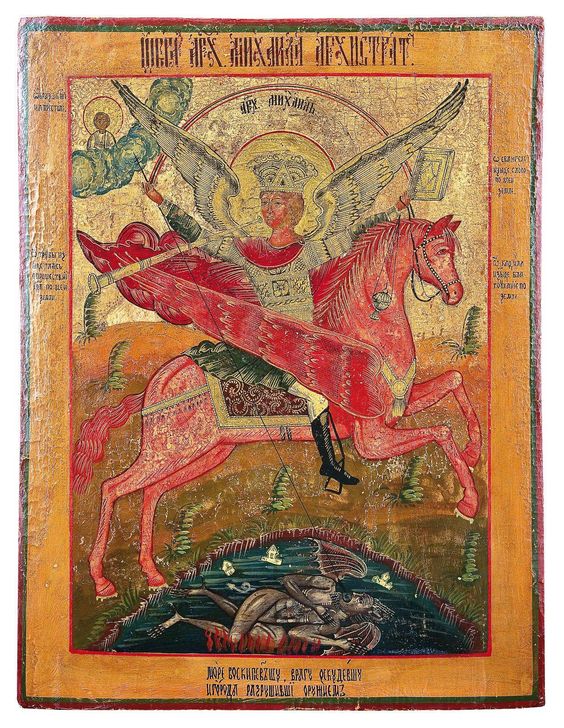
In an earlier talk, we discussed the movie The Matrix. One may take the adventures of the hero in this tale as an image of our task. He knows that the universe of the Matrix is not the real world, and that it is full of dangers, but he must enter it to accomplish his mission. While he is in the Matrix, he must constantly remember that this is not reality, this is not the real world, that he must return to the real world or the Matrix will swallow him up. This is what we have to do. We have various missions to accomplish that require our entering the matrix of the Internet: We have a school or work-related report to write that requires quick research, or a friend to send a message to, or a doctor’s appointment to make, or any number of legitimate tasks that require – or at least are made much easier by – entering the alternate universe of the Internet. We must use a little imagination and, before clicking on the little picture on the screen that forms the gateway to that world, remind ourselves that though the task may be innocuous, the means is most certainly not. We armor ourselves with the Sign of the Cross, we take up the sword of the Prayer of Jesus, we sigh a brief but earnest plea for wisdom from above. We have a mission to accomplish – let’s go in, in God’s name, do our job, in God’s name, and get out. We are entering the lair of the dragon to extract the gold within, not to have tea with the dragon. I suggest placing an icon of St. George killing the dragon near or on the device you use to enter this electronic dragon’s den, and ask the saint to protect you.

Further practical steps can include keeping track of the amount of time you spend on the Internet – do a daily reality check, and ask yourself, after this or that number of minutes or hours wandering in the Matrix, “Now, was that really necessary?” Keep an old fashioned pen and paper log, and read it at day’s end with an honest eye. This advice works, of course, only if you are looking at the Internet on a desktop or laptop computer or a tablet, and thus have to sit down, turn the gadget on, and decide to go on the ‘Net. If you are a smart phone addict, staring compulsively at that little screen countless times per hour, all of this advice is absurdly inadequate. You really just have to get rid of the thing.

C) But I’m Lonely – Social Media and Community

The Internet has provided the conditions for this vast thing within the vast thing, which we call “social media” – Facebook, Twitter, Instagram, and so forth. Instead of the town hall meeting, the family parlor, the front porch, the kitchen table, the village well, and the barn dance, we have the virtual, electronic substitute for all of the above, this chaotic, impossibly undisciplined, and artificial vortex of heartbreakingly fragmentary feeling and thought, claiming to provide social life while simultaneously isolating all of its participants within the closed visual world of the screen in front of them and a truncated mental world of retarded speech. Yet for so many people, this is in fact the only way to be in frequent contact with those with whom they share their most cherished beliefs – traditional Orthodox Christians, for example – or their dearest interests, or the tie of blood itself.

It is the same old story, of course, of the vicious cycle of technology destroying natural relationships and in the process making itself indispensable if one wants relationships at all. The automobile, for example, at least in the United States, destroyed decent public transportation and city planning on a human scale. Then, as much as one might regret it, one had to buy an automobile in order to see one’s relatives and friends, scattered about by the new system of things, and, simply, to go about one’s business. If one then complained about the automobile, there was inevitably the reproach, “Don’t be ungrateful: if you didn’t have a car, how would you do such and such…” Of course, if there were no cars, we could have gone on doing the such and such our ancestors did for millennia, only next door or down the block instead of miles away. And there are various kinds of such and such uniquely enabled by the automobile that frankly never needed to be done at all.

A friend once told me of a conversation he had with an Amish elder about their practice of not having automobiles, and not having a telephone in each family’s home, but only one shared phone for an entire local community. “It’s not that we think the technology is magically evil,” he said, “we are not superstitious about it. It’s just that if everyone had cars and phones, they would move away from each other after awhile, and we’d have no community left.” Bingo.

So here we are, at the tail end of this destructive process, with a situation in which traditional, practicing Orthodox Christians may find themselves isolated, and some kind of social media is the only way they ever get to communicate with like-minded brothers and sisters in Christ. It would be both foolish and cruel to say that these media are not a lifeline of some sort, that the relationships created or sustained thus are completely unreal, that everyone would be better off in low-tech natural isolation than high-tech artificial relationship. The reality here, however, is that the cure helps to perpetuate the disease: Since we have this means to cope with the problem, to ameliorate the symptoms of the disease, we become comfortable with mere coping and do not even try to tackle the root of the problem, the etiology of the disease, itself. How much is our isolation completely beyond our control, and how much is due to laziness or cowardice or lack of imagination or lack of prayer? Have we prayed, begged, cried out to God to get us out of our isolation and into a more natural and normal kind of community life? How much are we willing to sacrifice to live near the Church or our friends or our family? Have we tried to ask other, like-minded people, to pray and think about and tackle this problem with us? I am not prescribing only one possible course of action or condemning those who feel they cannot act. I have not entirely solved the problem for myself. I am simply asking the questions.

Of course, it is also true that strong and relatively natural communities – say, church parishes in which most everyone sees each other at least on Sundays and stays in touch the rest of the week – could use social media as a supplement to actually seeing each other, to post announcements, for example, or to have online discussions about edifying topics. Everyone has to work out a practical arrangement as close to the ideal as possible. The danger, however, is that a fairly normal parish could degenerate into a “virtual parish” in which the members feel less and less need actually to see each other in person, because, supposedly, they can do so “just as well” by social media. The priest may feel justified in not visiting someone because he exchanges Facebook messages instead, and so forth. The technology is so powerful, and it can so rapidly dehumanize our behavior without our noticing it.

Besides the effect of social media in shaping what we think of as our community, what effect does constant activity on social media have on one’s inner life? I do not participate in Twitter, Instagram, or Snapchat, or whatever else has popped up since those things came into being. A few years ago, however, I reluctantly agreed to get a Facebook account in order to distribute useful material, either my own writing or links to other articles or, occasionally, videos. Therefore, being on Facebook, I notice how most people use it. I must say that it is, for the most part, as used by most people, a self-destroying exercise in regards to the fragmentation of one’s thoughts, the trivialization of one’s concerns, and the destruction of one’s privacy. In all the activities of a man, his inner life is paramount – the most sacred, the most necessary for happiness in this life and the age to come. It will inevitably be, as he lies dying, his only possession. Constant social media activity exponentially aggravates the tendency of modern man, Americans in particular, to unabated, unceasing extraversion, to the point at which the man’s inner life ceases to exist. This, I think, is the most terrible, the most frightening result of the misuse of this technology. Indeed, as the Lord said, what can a man give in exchange for his soul?

In light of all this, what practical steps should we enjoin? One would be to smart phone users, to get rid of the thing, and if they cannot bear the thought of that, at least to turn it off for most of the day and check their messages and so forth at specific times. Treat it as a malicious, captured enemy spy you must lug about with you to guide you through enemy territory, but whom you never trust and with whom you speak or even look at as little as possible. Again, all this stuff is a tool, not the world you live in. To social media users, we could say, among other things that to be constantly posting your opinions on anything and everything is destructive to your own inner capacity for sustained and careful thought, that conversations by this means are of necessity stunted and unnatural, and that only a small circle of those close to you need see or should see dozens of photographs of you, your friends, or your family members. Be circumspect, be reserved, think before you write, write infrequently, and when you do, say something you have really thought about. Never simply react; let your anger cool and pray for guidance if you have been offended. Always speak in charity. Prefer real time with real people in person whenever possible. Do not make social media your usual way of interacting with others, unless you really live in unbreakable isolation. Prefer to do real things.

Above all, prefer reading, silence, and prayer to the unreal world of the Internet and the video screen. You have only one soul. You will answer to God for how you cultivated it.

D) The Two-Edged Sword of Access to Everything

At this point, I’d like to say something positive about the Internet: In our discussion of the newspapers, radio, and television, we pointed out how a small elite controlled public discourse by their increasingly monopolistic control of these media, to the point at which they could brainwash entire populations. Providentially, the Internet has broken this monopoly, and an enormous amount of historical and current information is now available, originating from writers of all shades of opinion and available virtually to everyone. The “tech giants,” Google, Facebook and Co, are doing their best to destroy this freedom of access to information and to the free expression of opinion, but so far the Internet has remained remarkably useful for both learning and saying things that the Anti-Christian elite would prefer not be learned or said. I do not know enough about the technology to say this from an expert standpoint, but my tentative opinion as a non-techie observer of what is going on is that it is going to be awfully difficult for one group of people to corral this beast entirely. The horse is out of the barn. With guarded optimism, I hope, trusting in God, that this entire development is designed by God’s Providence to help us retain our intellectual and spiritual freedom. May it be so.

To illustrate the power of the Internet, when used properly, to preserve and disseminate authentic knowledge, I can offer this example: I have an Orthodox friend with extremely politically incorrect, very old-fashioned opinions on all kinds of matters – religion, race, politics, medicine, you name it. He constantly searches the Internet for out-of-print works of history, philosophy, science, and so forth, old fashioned books that support his convictions, and therefore they are books which the present cultural Marxist Establishment would, one thinks, not want people to read. Yet who has preserved all of these books? Big, bad Google. Google has performed a public service of immeasurable value, scanning, storing, and making available thousands of titles of books you cannot get anywhere else, or at least not without great difficulty. And many, perhaps most, of these books contain views that are anathema to the official Google ideology. As they say, “Go figure.” I do not know how long they are going to go on doing this and how long the present collection will remain available, but I counsel everyone to go there and download everything you can that seems to be of value, especially books that present traditional Christian views of some kind on history, society, and morality. It’s pretty amazing.

And what about current events? The best advice I can give is prayerfully and carefully to look at a variety of sources from writers from different outlooks, and search especially for sites that publish longer and more serious articles that examine current events in the light of history, that exhibit real cultural literacy, and a nuanced, 360 degree view of an issue. That does not mean that the writers should have no convictions – their convictions may be very strong, and the more these convictions line up with the teaching of the Church, obviously the more you can trust the “filter” through which they view the times we live in. But we should not get on the bandwagon of this or that website or commentator as being an infallible source of some kind. Pray for discretion, read carefully, and try to discern if the writer is really interested in the truth, if he suffers over the truth, if he genuinely hates falsehood.

There are websites run by Orthodox Christians, as well as those run by people sympathetic to Orthodoxy, that offer a view of the news quite other than the mainstream media of the left or the secular right. I do not, however, in this podcast want to take the possibly controversial step of recommending this or that website over others in the realm of this touchy subject of current events, but if anyone wants to write me privately, I could make some suggestions.

Access to information is a two-edged sword, of course. Information is not the same as wisdom, or even as knowledge. An overload of undigested and misunderstood information could actually, paradoxically, make you more deluded, more ignorant, more paralyzed and hopeless than when you started. Again, discipline with prayer is the key. Use your Orthodox “filter” to discern the coherence and trustworthiness of anything you read. Try to discern the belief system that underlies the author’s or commentator’s interpretation of events. Reserve judgment, don’t overreact to bits of data that may be presented out of context or be outright untrue. And always remember that God is over all – His Providence is directing all things according to His plan. Remember, when it comes to evil, you will never get to the bottom of it all, because there is no bottom, even in Hell. So do not exhaust yourself trying to “figure it all out” when it comes to the Bad Guys in this world and their plans for us. Do not collect information in a state of fear, but in a state of hope in God, and only seek to learn enough in order to make prudent decisions to help those for whom you are really responsible.

And, once, again, love prayer, silence, and reading. Limit your Internet time, even in the pursuit of good things. There are, after all, much better things!
Posted in Uncategorized | Comments Off on Orthodox Survival Course, Class 40: The Internet

Real courage

12 July OS 2019 – Thursday of the Sixth Week of St. Matthew; Holy Martyrs Proclus and Hilarius; S. Michael Maleinos; S. Golinduc, Confessor; S. Veronica; Holy Martyrs Theodore and John of Kiev

You can listen to an audio podcast of this commentary at https://orthodoxtruth.org/uncategorized/the-problem-of-evil-and-real-courage-3/

In today’s Gospel reading, the Lord Jesus teaches the disciples that He permits the existence and intermingling of both the good and the evil during our earthly life, and how this relates to the Dread Judgment:

At that time, Jesus sent the multitude away, and went into the house: and his disciples came unto him, saying, Declare unto us the parable of the tares of the field. He answered and said unto them, He that soweth the good seed is the Son of man; The field is the world; the good seed are the children of the kingdom; but the tares are the children of the wicked one; The enemy that sowed them is the devil; the harvest is the end of the world; and the reapers are the angels. As therefore the tares are gathered and burned in the fire; so shall it be in the end of this world. The Son of man shall send forth his angels, and they shall gather out of his kingdom all things that offend, and them which do iniquity; And shall cast them into a furnace of fire: there shall be wailing and gnashing of teeth.Then shall the righteous shine forth as the sun in the kingdom of their Father. Who hath ears to hear, let him hear.Matthew 13:36-43

St. Theophan the Recluse takes this occasion to explain the role of evil in the spiritual life of the faithful:

…Thus will be carried out the division of good and evil, light and darkness. Now is the period of time in which they are mixed. It pleased the Lord to arrange that the freedom of creatures should grow and be strengthened in good through the struggle against evil. Evil is allowed, both in connection with inward freedom and outside of a person. It does not determine anything, it only tempts. One who feels a temptation must not fall, but enter into battle. He who conquers is freed from one temptation, and advances forward and upward to find a new temptation there – and so on, until the end of his life. Oh, when will we comprehend the significance of the evil which tempts us, so that we might arrange our lives according to this understanding? The strugglers are finally crowned, and pass on to the next life, where there are neither sicknesses nor sorrows, and where they become inwardly pure like angels of God, free from the sting of tempting inclinations and thoughts. This is how the triumph of light and good is being prepared, and it will be revealed in all of its glory on the last day of the world. – Thoughts for Each Day of the Year, p. 145

One of the stock arguments of atheists is the so-called problem of evil: “How can a good and all-powerful God allow evil? Either He is good but not all-powerful and therefore cannot prevent evil, or He is all-powerful but evil, since He causes or allows evil to exist.” There are several things wrong with this argument, but let us make one thing clear: Only the Christian understanding of evil allows for man’s moral freedom, for man to be a spiritual and free being capable of loving God.   No other explanation makes room for this. God does not will evil, but He allows it, so that man may choose freely to obey Him or not, and so that the existence of evil may provide the arena for man’s spiritual struggle; truly do the Fathers say that without temptations no one would be saved.  Anyone who has engaged in conscious spiritual life in an Orthodox setting understands this immediately.

Our intellects say, “Yes, now that someone has explained this to us, it is quite reasonable,” but we initially received this lofty understanding of man’s vocation through divine revelation, by grace, not by our own mental efforts. We realize that, being of divine origin, this truth is of course incomparably superior to the explanations that the fallen mind of man has created. We perceive that it gives us both peace of soul and the incentive to fight evil and to do good, and therefore not only is it intellectually satisfying but of the highest therapeutic and moral value.   Experiencing this, we ask, “Why would anyone not want to believe in the Faith?”

The answer, of course, is pride of mind, pride of will, and pride of sensuality: Fallen man wants to create his own reality, fallen man wants to disobey God’s law, and fallen man wants to indulge his passions. Even so, man has always wanted to explain evil, and therefore the finite and fallen intellect of man has constructed three basic explanations of evil: either good and evil are illusions because all distinctions are illusions, or all outcomes are determined and you have no freedom, or everything is matter, and so God, soul, mind, and will do not exist.

The Eastern religions – Hinduism, Buddhism, and their variants – say that this world is an illusion, that evil is being trapped in the illusory, material world due to some cosmic accident no one can explain, and that you need to go through various incarnations to get rid of your materiality, in order to realize that even your personal existence and the existence of a personal God are illusions (or, conversely, that you are God, which amounts to the same thing), and that once you get rid of all mental distinctions, you will be absorbed into the World Soul, totally lose your individual existence, and feel no pain. One is eerily reminded of the epitaph of the apostate Greek novelist, Nikos Kazantzakis, who claimed to have no religion at all: “I hope for nothing. I fear nothing. I am free.”

Islam – and, to the extent that they are infected by determinism, schools of Roman Catholic and Protestant thought – say that only God’s will is operative in the universe, that He is not interested in explaining anything to us, that what constitutes good and evil is not even a question open to rational discourse, and that your job is to submit without question or thought to the great Divine Steamroller, Allah, or whatever you want to call it.   Admit His total sovereignty, do not question anything, and jump onto this cosmic juggernaut before it runs over you.   On Judgment Day, all you can do is hope for the best, because you have no idea whatsoever if you have pleased the GUI (the Great Ultimate It) or not.

Materialism says that everything we experience is an accidental concourse of material stuff, and therefore nothing means anything. Eat, drink, and be merry, or seek total power over others for the thrill of it, or commit suicide, or whatever. Since mind does not exist, who cares what good or evil are, anyway, or who could offer a meaningful definition, since what the neurons in your brain invent is an accident, and what the neurons in my brain invent is another accident, and the two do not have anything to do with each other, do they?

What all three explanations have in common, ultimately, is nihilism, “nothing-ism.”   At root, all three deny Who God is, deny who man is, and deny the love of God for man.   All three, at root, are the fruit of pride, of Satan’s rebellion against the All-Good and All-Loving God Who created him, the fruit of Satan’s choice to “reign in hell rather than to serve in heaven.”   To adopt any of these three views and really live by it is to consign oneself to hell in this life, much less the next. Yet people fall very easily into these views, and only with great difficulty, and by God’s grace, do they accept the Truth. Without the miracle of grace, humankind cannot bear too much reality.

The Orthodox Church teaches us the truth, which is that God created man out of love and for love, so that man could freely choose to love God and do His holy will.   Advancing step by step from the fear of punishment to the desire for heavenly rewards to the love of God for His own sake, and thereby attaining the freedom of divine friendship, a man becomes a “god by grace,” and in the process, far from being absorbed into the Cosmic One, and far from being the helpless pawn of an inscrutable fate, he becomes more, and more truly, himself. To accomplish this, however, we must be courageous and full of hope in God’s mercy; we must open our hearts and throw ourselves into the abyss of His love, trusting Him to catch us.   We have to look evil square in the face and bravely hope in the all-loving and all-wise God, Who cares for us, Who became a man and died for us, and Who rose from the dead, giving us the hope of an everlasting life.

Kazantzakis claimed that he had no fear because he had no hope. This is not courage but the very essence of cowardice. We can choose this way – the way of nihilism – or we can go the path of the saints.   Increasingly it becomes clear, from all that is happening around us, that there is no other choice.

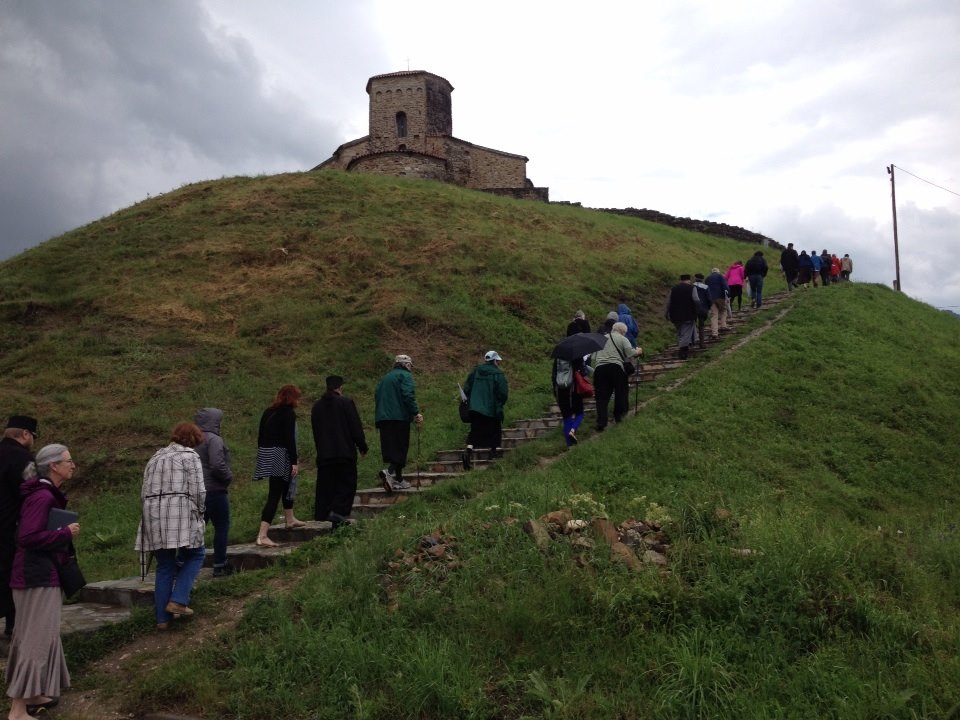
pilgrims walking up a hill to a church in Serbia
Posted in Uncategorized | Comments Off on Real courage

Growing our souls

11 July OS 2019 – Wednesday of the Sixth Week of Matthew; Holy Great-Martyr Euphemia the All-Praised; Holy Equal-to-the-Apostles Great Princess Olga

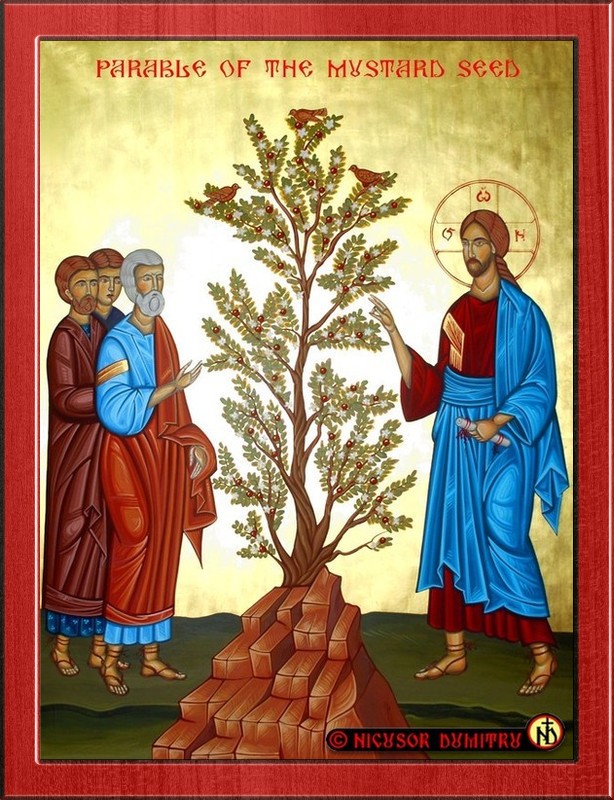
In today’s Gospel reading, the Lord Jesus tells the Parable of the Mustard Seed and the Parable of the Leaven:

The Lord spake this parable: The kingdom of heaven is like to a grain of mustard seed, which a man took, and sowed in his field: Which indeed is the least of all seeds: but when it is grown, it is the greatest among herbs, and becometh a tree, so that the birds of the air come and lodge in the branches thereof. Another parable spake he unto them; The kingdom of heaven is like unto leaven, which a woman took, and hid in three measures of meal, till the whole was leavened. All these things spake Jesus unto the multitude in parables; and without a parable spake he not unto them: That it might be fulfilled which was spoken by the prophet, saying, I will open my mouth in parables; I will utter things which have been kept secret from the foundation of the world. Then Jesus sent the multitude away, and went into the house.St. Matthew 13:31-36

St. Theophan the Recluse, commenting on Our Lord’s words, explains how we can apply the images of the mustard seed and the leaven both to the Church and to our own spiritual lives:

The Kingdom is like a grain of mustard seed and leaven. A small grain of mustard seed grows up into a large bush; leaven penetrates a whole lump of dough and makes it leavened. Here, on the one hand, is an image of the Church, which in the beginning consisted only of the Apostles and a few other people. It then spread and became more numerous, penetrating all of humanity. On the other hand, it is an image of the spiritual life revealed in every person. Its first seed is the intention and determination to be saved through pleasing God in accordance with faith in the Lord and Savior. This determination, no matter how firm, is like a tiny speck. Its movement and strength multiply and mature within its own self, and it begins to penetrate all the powers of the soul – the mind, will, and feelings – then fills them with itself, leavens them according to its spirit, and penetrates the entire constitution of the human nature – body, soul, and spirit – in which it was engendered.  – Thoughts for Each Day of the Year, p. 144

The seed, then, of spiritual life, is the “intention and determination to be saved through pleasing God in accordance with faith in the Lord and Savior.” There are three elements to this: Intention and determination to be saved, pleasing God, and faith.

We can check ourselves every day, and ask ourselves, “Do I intend to be saved, am I determined to be saved?” It cannot be a vague wish, as we would vaguely wish for someone to hand us a million dollars, though we neither think it likely nor make any efforts towards obtaining our wish. We have to intend it, choose it, set out decisively to get it, with determination. When our intention becomes unsteady or our determination weakens, we must ask the Lord to clarify our minds and strengthen our wills.

Every day we should ask ourselves, “Do I desire to please God?” and we should ask the Lord to strengthen this desire in us. It is impossible to overestimate the power of the desire to please God, to do His holy will.   Once someone is irrevocably committed to the doing of God’s will, he will receive very great power from God to do so.   The Lord will strengthen his will, and he will experience the truth of the words that with God nothing is impossible.

“Very well,” you may say, “I do intend and I do will, but weakly, and sometimes it seems like such a dry experience.  Often I approach it as though it were a Stoic self-improvement program.”  At this point we must recall the third element in the “program” St. Theophan outlines:  Faith.   We must beg with tears for Faith, which,  in addition to being the voluntary assent of the mind to divine Truth, is also – and more importantly – a free gift of God’s grace. When our will grows weak and the clarity of our intention grows blurry, let us open the Holy Gospel and start reading slowly aloud.  Let us read the Life of a saint.  Let us kneel before the holy icons and carefully, slowly, read the Akathist to Our Sweetest Lord Jesus Christ or His Most Pure Mother.  Let us confess and prepare for Holy Communion.  The sweetness of His love, the vision of His divine beauty, will once again captivate our hearts, and we will remember why we have made our act of will, and that will shall grow strong again.  We will remember the end of Faith, which is Charity – Divine Love – and, unable to forget the Beauty of that Divine Love, we will open our hearts to Faith,  and the Hope born of courage will be not barren but a fruitful act of the will.

O Lord, Who desires our salvation, make to grow the seed of Faith in our hearts!

Mustard-Seed-Icon
Posted in Uncategorized | Comments Off on Growing our souls

The granary of the heart

10 July OS 2019 AD – Tuesday of the Sixth Week of Matthew; Holy 45 Martyrs of Nicopolis; S. Antony of the Kiev Caves; Deposition of the Robe of the Lord in Moscow

In today’s Gospel, the Lord instructs the disciples on two levels: How to understand heresies and schisms in the Church, and how to understand the warfare between good and evil in the heart.

Another parable put he forth unto them, saying, The kingdom of heaven is likened unto a man which sowed good seed in his field: But while men slept, his enemy came and sowed tares among the wheat, and went his way.
But when the blade was sprung up, and brought forth fruit, then appeared the tares also. So the servants of the householder came and said unto him, Sir, didst not thou sow good seed in thy field? from whence then hath it tares? He said unto them, An enemy hath done this. The servants said unto him, Wilt thou then that we go and gather them up? But he said, Nay; lest while ye gather up the tares, ye root up also the wheat with them. Let both grow together until the harvest: and in the time of harvest I will say to the reapers, Gather ye together first the tares, and bind them in bundles to burn them: but gather the wheat into my barn.
Matthew 13: 24-30

St. Theophan the Recluse guides us into an understanding of the Lord’s words as relating to the Church and as relating to our inner life:

The good seed was sown, but the enemy came and sowed tares among the wheat. The tares in the Church are heresies and schisms, while in each of us they are bad thoughts, feelings, desires, and passions. A person accepts the good seed of the word of God, decides to live in a holy way, and begins to live in this way. When such a person falls asleep, that is, when his attention toward himself weakens, then the enemy of salvation comes and places evil ideas in him which, if not rejected at the start, ripen into desires and dispositions, introducing their own spheres of activity, which mix themselves in with good works, feelings, and thoughts. In this way, both remain together until the harvest. This harvest is repentance. The Lord sends His angels – a feeling of contrition and the fear of God – and they come in like a sickle, then burn up all the tares in the fire of painful self-condemnation. Pure wheat remains in the granary of the heart, to the joy of man, the angels, and the Most Good God worshiped in Trinity. – Thoughts for Each Day of the Year, pp. 143-144.

In the Church, the “tares” (weeds) are heresies and schisms. Today clever people have fabricated a novel teaching that the Lord’s command not to tear up the weeds means that we are not allowed to separate from the heretics, that the orthodox who separate from bishops because they are heretics thereby become schismatics, because (according to this interpretation) the orthodox must remain together with the heretics in the Church, like the wheat among the weeds, until the Dread Judgment. Therefore (according to this idea), to remain in the Church, one must continue indefinitely in communion with heretics, commemorating unrepentant heretical bishops, obeying them and receiving what purport to be sacraments from them, perhaps until the end of time. St. John Chrysostom, however, corrects this error in his 46th Homily on Matthew, which you can read online here, http://newadvent.org/fathers/200146.htm, and which you can listen to here, https://archive.org/details/parables_jesus_christ_commentary_gospel_matthew_1511_librivox/parables_03_chrysostom_128kb.mp3

The great Chrysostom here relates not only his own teaching but also the consensus of the Fathers: The Lord in this passage is not forbidding us to separate from the heretics; He is not forbidding us even from actively opposing them with non-lethal, legal methods of coercion if necessary (and if possible – not likely nowadays!). He is simply saying, “Do not shed their blood; do not slay them.”

St. Theophan, in his commentary on this passage, however, spends only one sentence – less than one sentence, only one clause – on this ecclesiological theme, which he mentions more or less in passing. His chief topic, as usual, is the spiritual life of the Christian soul. The wheat consists of our good works, feelings, and thoughts, and the tares are our bad thoughts, feelings, desires, and passions. Just as, at the end of the world, the Lord will send His angels to gather His enemies and burn them, so now, in this life, He sends His messengers – contrition and the fear of God – to burn up our evil inclinations and gather our spiritual goods – our good thoughts and habits of mind and action, our virtues – into the barn of the heart, where they are kept safe by grace and induct us into the Heavenly Kingdom, which we begin to experience by anticipation even here on earth.

St. Isaac the Syrian also connects our salvation today, in the heart, with our eternal salvation in the Kingdom that Is To Come:

…Be a persecutor of yourself, and your enemy will be driven from your proximity. Be peaceful within yourself, and heaven and earth will be at peace with you. Be diligent to enter into the treasury that is within you, and you will see the treasury of Heaven: for these are one and the same, and with one entry you will behold them both. The ladder of the Kingdom is within you, hidden in your soul. Plunge deeply within yourself, away from sin, and there you will find steps by which you will be able to ascend. – The Ascetical Homilies of St. Isaac the Syrian, Homily 2

Paradise and hell, then, both begin in this life. Let us beg the Lord for His good messengers – contrition and the fear of God – to burn up our sins and passions, and to collect our scattered thoughts into one thought – the Name of Jesus – concentrated in the granary of the heart. There we will have Paradise, both in this life and in the Age to Come.

Posted in Uncategorized | Comments Off on The granary of the heart

Being relatives to the Lord

5 July OS 2019 – Thursday of the Fifth Week of Matthew; St. Athanasios of Mt. Athos; St. Cyprian the New Martyr; St. Lampados; Uncovering of the Relics of St. Sergius of Radonezh; Holy New Righteous-Martyr Grand Duchess Elizabeth

In the daily Gospel reading assigned for today, the Lord Jesus reminds us to realize who our true relatives are:

At that time, while Jesus yet talked to the people, behold, his mother and his brethren stood without, desiring to speak with him. Then one said unto him, Behold, thy mother and thy brethren stand without, desiring to speak with thee. But he answered and said unto him that told him, Who is my mother? and who are my brethren? And he stretched forth his hand toward his disciples, and said, Behold my mother and my brethren! For whosoever shall do the will of my Father which is in heaven, the same is my brother, and sister, and mother. The same day went Jesus out of the house, and sat by the sea side. And great multitudes were gathered together unto him, so that he went into a ship, and sat; and the whole multitude stood on the shore. And he spake many things unto them in parables. Matthew 12:46-13:3

St. Theophan the Recluse, commenting on Our Lord’s words, discusses the meaning of spiritual kinship:

“For whosoever shall do the will of My Father Who is in heaven, the same is My brother, and sister, and mother (Matt. 12:50).”  By this the Lord gives us to understand that the spiritual kinship which He came to plant and raise up on the earth is not the same as fleshly kinship; although in the form of its relationships, the spiritual is identical to the fleshly.  The spiritual also contains fathers and mothers – they are those who give birth to people with the word of truth, or the Gospel, as the Apostle Paul says.  And it contains also brothers and sisters – those who are born spiritually from the same person and grow in one spirit.  The bond between [spiritual] relatives is founded on the action of grace.  It is not external, not superficial, but it is as deep and alive as the fleshly bond, only it has its place in another, much higher and more important sphere.  This is why it predominates over the fleshly and, when necessary, offers the fleshly as a sacrifice to its spiritual interests without regret, in full certainty that this sacrifice is pleasing to God and is required by Him.  – Thoughts for Each Day of the Year, p. 140

Today, as we know, the natural, or traditional, human family is under attack as never before in mainstream society, to the point at which it is the exception rather than the rule.  To see a happy family of faithful, once-married, loving father (a man) and obedient mother (a woman) with many happy, healthy children,  surrounded by an extended family of caring grandparents and other relatives is like encountering a vision from a lost world, though such families predominated in our society within living memory.   When the unhappy denizens of the present day dystopia – brainwashed, addicted, self-mutilated, fornicating, aborting, sodomizing, having children out of wedlock with various “partners,” confused about which biological sex they belong to, hooked on demonic music and demonic video, feminized men and masculinized women mentally and morally paralyzed by the basest passions and near-complete ignorance – encounter such a vision, they hardly know what they are looking at; they do not know where to place it in their understanding of reality.  The age-old normal has become unfamiliar, even disturbing.

Living as we are surrounded by such a nightmare, it may seem rather hard to us for the Lord and His saints to call us not only to be traditional families but even to surpass the natural bonds of family and place greater value on our spiritual relationships.  The truth of the matter, however, is that until we place our natural families in right order to our spiritual obligations and spiritual relationships, the natural family will continue to be lost. If God be not in first place, He shall consent to be in no place.  If we do not subordinate even our traditional, natural, and praiseworthy earthly relationships to His holy will and holy plan for man, He will not wait obediently upon our fallen will as though He were merely an accessory, a deus ex machina to swoop in and conveniently fix the messes that we make, in order for us to live contented worldly lives according to the chimerical image of a 1950’s family television show.

Where do we start? Let Orthodox people who are married and have children construct their family life on the old pattern, as best they can:  Daily family prayer, family meals, faithful Church attendance Saturday night and Sunday morning, and feast days as much as possible.  Let father and mother with their children fast according to the Church’s laws, and practice frequent confession and Holy Communion. Let families prioritize according to the Gospel:  Better to be poor and spend more time at Church and with your children, than for mother and father both to work 60 hours per week in order to afford things people do not need nor until recently even imagined that they needed.  Turn off the media input and cut out all the extraneous activities, and make your home a happy, quiet, ordered holy place.

Let the single people earnestly seek God’s holy will for their lives and use their free time to serve the Church.   The Lord will show them the way.  He knows how hard it is to find a spouse nowadays:  He would not have put them in this situation if it were not for their salvation.  The main thing is to remain courageous and full of hope, based on faith.

All of the above, though it is actually just a starting point, may seem too much to most of us, surrounded by circumstances that seem to entrap us in a vicious cycle of worldly cares and compromised principles.  But our situation is not hopeless, not at all.  For – and here is the Good News – the Orthodox Faith is not a self-help program by which we pull ourselves up by our own bootstraps.  It is the power of God working in our lives, based on the confession of the True Faith.  This power, coming by grace, is experienced directly when we put spiritual things first.  Has Orthodoxy failed us? Is it not so, rather, that we have failed Her?

When the Lord called us to “…be perfect as your heavenly Father is perfect,” He meant it.  We are failing all the time, and therefore we must live in repentance.  Yes, the force of circumstances may be such that normal, much less spiritual, life seems unattainable at times.  But let us, rather than living in alternating denial and rage, look at our circumstances straight in the eye, always tell the truth to ourselves and to others, and weep for our sins and the sins of the whole world! Let us constantly sorrow and grieve over so many souls being lost, and pray more earnestly, more energetically, more faithfully, with tears, to be delivered from the traps that surround us!   “Taste and see that the Lord is good.”  He will hear our prayer, and He will deliver us.

To support our own life of prayerful repentance and our own domestic discipline, we have the life of the Church!  St. Theophan, in the passage above, speaks movingly of that special bond felt among spiritual siblings, the faithful who are born of the same spiritual father or mother.  This is seen most clearly in the circles of the pious faithful who have been given new birth by a truly God-inspired monastic elder or eldress; how they see each other with new spiritual eyes and cherish each other.  They experience family at a whole new level, and yet – if the elder be genuine and not a cult leader – this new experience transfigures and empowers the domestic church life of their natural families and does not denigrate it.  Truly, as St. John of the Ladder writes:  God is light to the angels, angels are a light to monks, and monks are a light to men.

Most of us, however, do not have access to such a monastic figure.  We trust, however, in the grace that is in the Church.  If our parish priest is pious and God-fearing, if he preaches Orthodoxy and ministers the Holy Mysteries with godly fear, if he patiently hears our confessions and gives us traditional advice based on the Fathers, we find new birth through him, in virtue of his office, which is from God and not from man. Increasingly we need for our scattered parishes to be true spiritual families, in which the parishioners strive spiritually together, loving and helping each other.  The system under which the various parish churches are viewed only as buildings among which unaffiliated, uncommitted, and generally unsupportive Christians – whatever their outward show of piety – simply circulate to “light their candle,” and in which the clergy are merely cultic functionaries dispensing services on demand,  no longer works (if it ever really worked!).  Let us commit to our parish churches as our true families, love and respect our priests as fathers in Christ, and help one another!

Finally, we must speak of the role of the godparents.  Time is long past when the godparent relationship may be allowed simply as a social tie ritualistically sealed by an obligatory baptism service grinned and giggled through as a sentimental cute-baby event. Sacramental kinship that is exploited to cement worldly relationships and build materially advantageous social networks is not only less than what it should be, but is positively displeasing to God, as being a perversion of that which is holy.   Every prospective godfather or godmother must put spiritual things first, accept to baptize a child (or adult!) as a sacred duty, and do his best to pray for, encourage, enlighten, and edify his godchild with all fear of God and love.   If this is in place, then the social side – financial help, companionship, etc. – will flow naturally from this, with discretion. How delightful for the soul of a child, when, in addition to his natural father and mother, he has godparents whose pious example and wise words elevate his innocent soul!    All the earthly benefits they bestow – presents, outings, etc. – are transfigured by Faith.  This is a taste, for the child, of Paradise on earth.

When all is submitted to the hierarchy of goods ordained by God, all is well.  Let us take steps today, making a short list of those behaviors we do have control over and can change, and pray earnestly to the Lord to enlighten us regarding our spiritual families and our earthly families, that we may see all things in light of the Gospel, set good priorities, and experience the power of grace.

God is with us.

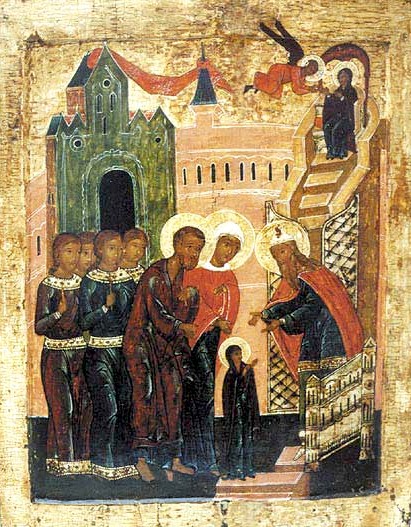
Entry_of_Virgin_Mary_(icon)
Posted in Uncategorized | Comments Off on Being relatives to the Lord

Guarding the house of the soul

4 July 2019 OS: Wednesday of the Fifth Week of St. Matthew, St. Andrew of Crete, Holy Royal Martyrs of Russia

In today’s Gospel, the Lord warns us that after we repent, we must keep up our zeal and attentiveness, or we shall fall into worse things than those we had escaped:

Then certain of the scribes and of the Pharisees answered, saying, Master, we would see a sign from thee. But he answered and said unto them, An evil and adulterous generation seeketh after a sign; and there shall no sign be given to it, but the sign of the prophet Jonas: For as Jonas was three days and three nights in the whale’s belly; so shall the Son of man be three days and three nights in the heart of the earth. The men of Nineveh shall rise in judgment with this generation, and shall condemn it: because they repented at the preaching of Jonas; and, behold, a greater than Jonas is here. The queen of the south shall rise up in the judgment with this generation, and shall condemn it: for she came from the uttermost parts of the earth to hear the wisdom of Solomon; and, behold, a greater than Solomon is here. When the unclean spirit is gone out of a man, he walketh through dry places, seeking rest, and findeth none. Then he saith, I will return into my house from whence I came out; and when he is come, he findeth it empty, swept, and garnished. Then goeth he, and taketh with himself seven other spirits more wicked than himself, and they enter in and dwell there: and the last state of that man is worse than the first. Even so shall it be also unto this wicked generation. St. Matthew 12:38-45

St. Theophan the Recluse explains how a demon can return to an Orthodox Christian from whom he has been driven out, and make him worse than he was before:

In every person who lives unrepentant in sin, there lives a demon, as if in a house, who takes charge over everything within him. When by the grace of God such a sinner comes to contrition over his sins, repents, and ceases to sin – the demon is cast out from him. At first the demon does not disturb the one who has repented because, in the beginning, there is much fervor within him which burns demons like fire and repulses them like an arrow. But then, when fervor begins to grow cold, the demon approaches from afar with its suggestions, throws in memories about former pleasures, and calls the person to them. If the penitent does not take care, his sympathy will soon pass to a desire for sin. if he does not come to his senses and return to his former state of soberness, a fall is not far off. The inclination for sin and the decision to commit it are born from desire – the inner sin is ready, and the outward sin is only waiting for a convenient occasion. When an occasion presents itself, the sin will be accomplished. Then the demon will enter again and begin to drive a person from sin to sin even faster than before. The Lord illustrated this with the story about the return of the demon into the clean, swept house.Thoughts for Each Day of the Year, pp. 139-140

St. Theophan is here writing about the case of an Orthodox Christian who has fallen into a life marked by the habitual practice of extremely serious sins – those that exclude one from Holy Communion, according to the canons – and then has repented and begun his Orthodox life afresh, but, sadly, goes back to his old, excommunicated way of life. He would not have written that the demon lives inside of the person – rather than the demon’s attacking from the outside – if this were not the case. Most of us are not in this position, but we would do well to heed Our Lord’s words and the saint’s commentary as a spur to acquire three habits of mind: sensibility – awareness – of our sinfulness, sorrow for sin, and prayerful attentiveness. If we lose or never acquire these, not only shall we not be able to fight the “small” daily sins, but also we are all quite capable of falling away so seriously that we can become the formerly swept house occupied by seven demons.

Awareness of our sinfulness – The Holy Fathers teach that the most dangerous state of soul is insensibility. We may not be committing great, obvious sins, but our general attitude is one of carelessness and spiritual lukewarmness. If we are not aware of any sinfulness on our part, we are out of touch with reality, living in a dream world. If one dies in such a condition, torment at the demonic tollhouses cannot be avoided, and the final outcome is doubtful. Only those who actively, frequently examine their consciences, see their sins of thought, word, and deed, and reproach themselves constantly, can prepare with regularity and profit for Holy Communion and therefore hope firmly to die in the grace-filled state of repentance. Sadly, insensibility is the normal state of the “mainstream,” that great mass of nominal Orthodox Christians, the realization of which fact helps us to understand Our Lord’s repeated assertions that few will be saved. Yet how simple it is to overcome this insensibility: We simply have to ask the Lord, fervently and repeatedly, to open our eyes, to enable us to acquire a lively awareness of our many daily sins of thought, word, and deed. This prayer is very pleasing to God, and He will give the grace!

Sorrow for sin – In addition to asking the Lord to open our eyes to our sins, let us implore Him to give us sorrow for sin. This sorrow is not a depressed remorse, a prideful frustration with our lack of improvement. (If this is our response to seeing our sins, this reveals to us how much pride lives within us, how much we rely only on ourselves and not on God’s gracious, all-efficacious help.) Rather, saving sorrow for sin is the bright sorrow of compunction. In this state of soul, we see the full depth, the full horror, of our sinfulness and separation from God, but simultaneously we receive the absolute, gracious assurance of His forgiveness. We grieve, mourn, and weep over our sins while at the same time experiencing joy of heart, Paradise within, an inner conviction of firm hope in our salvation. We begin to understand that God is worthy of all love for His own sake, and we receive the grace of holy zeal, the burning desire to do His holy will, not only to avoid the pains of hell and acquire the joys of heaven, but above all to please the Lord, because He is worthy of all love, and to love Him is the purpose of our existence.

Prayerful attentiveness – Even after we receive the graces of seeing our sins and acquiring holy compunction, we can still fall away, because of the changefulness of human nature. This remains true for everyone, even for Orthodox Christians who have acquired the grace of working miracles due to extreme holiness, until the very moment of death. Therefore it is critical that we be faithful to our daily prayers of morning and evening, and then, throughout the day, frequently repeat the Prayer of Jesus: “Lord Jesus Christ, Son, of God, have mercy on me a sinner!” We must beg the Lord for the grace of an attentive, sober state of mind, and not get caught up in the trivialities and passions of worldly life. Of course, we will be distracted a thousand times a day – that is normal – but then a thousand times a day we return to our Jesus Prayer. This is how a rock-like, firm state of mental and cordial (i.e. heartfelt) attention is acquired! Every time we return to attentiveness, we receive more grace! The Lord has designed us for this dynamic; it is the arena of a daily Christian life, nothing unusual. We have only to commit ourselves to it and then repeatedly force ourselves back to it. He will give us abundant grace to do this.

May Our gracious Lord ever bestow on us the grace to see our sins, acquired grace-filled compunction, and attend continually to the thoughts of our mind and the movements of our heart. Amen.

Posted in Uncategorized | Comments Off on Guarding the house of the soul

Orthodox Survival Course, Class 39: The Great Stereopticon, Session 4, Television

Introduction: With the introduction and rapid invasion of the television into nearly every American home, and then, gradually, homes throughout the world, in the late 1940’s and the 1950’s, the power that the movies gave to the global elite to brainwash entire populations increased immeasurably. Now, instead of having to leave one’s home, go to the “magic cave” of the “stereopticon,” and pay for a ticket, the average person simply sat down in his living room and with no effort and little expense absorbed the physical, psychological, intellectual, and spiritual poison of the Antichrist spirit for several hours every evening, or perhaps many hours every day, or in some cases even for the majority of his waking hours. We cannot begin to measure the destruction wrought thereby upon everyone – everyone’s mind and family, upon Church life, upon community and society. The physical destruction wrought by the criminal globalist elite during WWII – incinerating 100,000 human beings in one night in Dresden, for example – is nothing compared to it. For the spread of television enabled the elite, as never before, to destroy the soul.

Today, with Internet pornography addiction, social media addiction, and smartphone addiction destroying countless souls, worries about good old-fashioned television may seem outdated, even quaint. We’ll get around to the Internet and cellphones. But right now, in this session, let’s go back in time to Ye Olden Days of the Reign of Television, and look at this thing from the Orthodox point of view. Not only will the historical background help us, but also we have to realize that a lot of people still do spend a lot of time in front of bigger and bigger TV sets showing worse and worse content. This is especially true of the elderly and of the mothers, children, and unemployed and disabled members of poor and less educated families.

So many writers have written so much against television – so much that has never been refuted effectively by anyone – that today when we call it the Idiot Box and so forth, no one really objects. Everybody knows that this thing has made us into human beings who are significantly less intelligent and less active and less fruitful and less independent than our ancestors, has made us comparatively stupid and passive and unproductive and enslaved. Video games do indeed lessen attention span and reduce the capacity for rational thought, but television was doing it first, long before video games existed. The little screen of the smart phone is indeed a consuming goddess, but her older sister, the television set in the family room, prepared the way for the smart phone’s current career of worldwide mental and spiritual genocide.

People my age in America – the so-called Baby Boomers – are the last generation reared by parents who did not have a television when they were children. Our parents – the misnamed “Greatest Generation” – who had no idea of the great advantage they had in possessing minds not deformed by television in their formative years, eagerly embraced the new medium and rushed to buy the best television sets they could afford and watch them as much as they could, along with us, their children. And not only that, but they used the television to occupy us when they wished to be free of caring for us in order to do other things. So we are the first generation raised on the electronic babysitter, and it shows – the shallowness, selfishness, and stupidity of my generation of Americans are infamous throughout the world. We are the children of television. The societal mess we have bequeathed to our children and grandchildren is the direct result of the interior mess in our own TV-addled brains

Nothing of what I am saying is considered controversial by educated people on the right, center, or left of the political and cultural spectrum. Veterans of the television industry itself, far-left secularists, have written damning screeds against The Idiot Box for decades, and Hollywood has even made popular movies attacking it. Everyone knows what this thing has done to us. Then why do we not get rid of it? There are a lot of answers – the technology itself is physically addicting, it enables mental laziness, it relieves boredom, it satisfies vain curiosity, it caters to basic passions such as lust and anger by purveying illicit sexual imagery and unending physical violence, and on and on. I would like to offer an all-inclusive, very Orthodox answer: We don’t get rid of television because our enemy the devil has hypnotized us, using the very thing we need to get rid of. I mean that literally – we are the subjects of mass hypnosis. If you don’t think the demons want you to have a television set, just try getting rid of one you may already have – parents, relatives, and friends who come to your home and see that you are so “deprived” will offer to buy or give you one. As a friend once told me, “Never worry about buying a television set – the devil will make sure someone will give you one.”

The only answer, of course, is the simplest one: As they say, “Kill your television!” Just get rid of it. There are many other things to do with one’s time, such as prayer and reading. Frankly, it would be better to do absolutely nothing. Everyone knows this. What we lack is a firm resolve.

I know that some younger people may consider the this critique of TV per se as anachronistic. Many no longer own what could be called a television set, and many watch only selected videos on the Internet or spend all their screen time on social media. But we need to understand both what television has done to us in the past and how many of its destructive effects are still with us, some of which have now been exacerbated by the Internet and by smart phones. On the other hand, I think we can say, with cautious optimism, that video via Internet offers some genuine advantages over the old network or cable television, and that, used wisely, it may be of real help to us. We’ll leave that discussion to later, when we talk about the Internet. And I do have to admit that not only do I distribute these audio recordings on the Internet but, after some hesitation, I have agreed to film some short video talks. You can see our YouTube videos at the URL below – we’ve posted twelve so far, and I’m afraid that there are plans for many more. https://www.youtube.com/channel/UCQb5bdq0KYOcIzJl9dlUFZQ/playlists?view_as=subscriber

Now let’s get back to understanding television in the light of history while using our Orthodox lens: Let us recall that the Church’s concern is for the whole of man, not just his spiritual life as something somehow disconnected from the rest of his life. Nowadays some bishops and priests like to stick their heads in the sand, and they want to stick your heads there too: “Don’t worry about what goes on in society, just pray at home and in Church, but in society go with the flow!” One problem with that approach is that it has no precedent, for the Church has never done that. She has always been in the forefront of fighting for her children in every sphere – the spiritual, the intellectual, physical, social, political, you name it – because her care is for the whole person – soul and body – and not only for the whole person individually, but also for persons considered not as isolated individuals but as members of families, clans, and nations. She is the Mother and Teacher of the Nations, not an esoteric club for alienated misfits who want to “veg out” on some kind of private spiritual exercises. Another problem with this ostrich approach is that those who want to destroy us are not going to leave us in peace at home and in Church. The enemy is already within the gates. Nowadays it’s fight or die. There is no other choice.

So, then, our concern as the Orthodox Church being for the whole of the person, both in himself – his spirit, soul, mind, body – and as a member of a family, a community, and a historic nation – must we not subject to a severe critique anything that damages the soul and body, the family, the community, and the nation, on such a vast scale as television has done? Of course we must. So let us take a critical look at television. I cannot here say everything that is wrong with it. That would require a semester-long college course. But I would like to make a few points, and relate my critique to our Orthodox viewpoint.

Point 1: Television re-wired the brain. When the dominant visual medium was the movies, most people only watched two and a half hours per week – enough for one feature film and a few “shorts” like cartoons and newsreels. When the TV revolution overtook mass populations in the 1950’s, two things happened: 1. People were suddenly watching for many hours per week – say, at least, three hours of prime time television on weekdays, that’s fifteen hours, plus ten hours on weekends. And that is a minimum! 2. The dominant video medium technology was itself radically different. Movies are something outside of you – you really look at them. The cathode ray tube did the opposite – it projected the image into your brain. The addiction then went from only a psychological addiction to being both physical and psychological. And people’s brains became physically affected, re-wired. So many studies, after nearly 70 years of television, show that x number of hours of TV watching actually shrink the part of the brain used for reading and analytical thinking, that one must conclude, inescapably, that TV is being used to create a new kind of human being, one that cannot think for himself, that is easily manipulated by a rapid succession of incoherent visual images and non-rational sounds. As we pointed out much earlier in one of our OSC classes, the goal of the Anti-Christ elite is to “redefine what it means to be human.” Television technology has been used to advance this goal with terrible, catastrophic effectiveness. With this in mind, I cannot emphasize enough that, above all, small children should not watch television. Their neurological system is very malleable, still being formed, but by age six they are hard-wired. How do you want to hard-wire them? Every responsible parent should face this undeniable fact and make a conscientious decision. Some may argue that today’s LED technology is less dangerous than the CRT. I am not conversant in the research on this, but I think it behoves us to approach such claims with caution. I invite one or more of our listeners who may have read more on the subject to send me further information.

The Lord made our minds to know Him and to know His creation, and anything we do that really damages the mind, that we have consciously chosen and could have avoided, is a sin. Let us examine our use of the television and ask ourselves honestly where we stand in this regard, and what we need to do about it.

Point 2: Television isolated families in their homes and cut them off from their neighbors. I am from the American South, that region of our country most hated and vilified by the Antichrist New World Order, precisely because we hung on to our traditional, organic, and local cultures longer than other regions of the United States. Of course, the real old-fashioned South is a thing of the past, except in a few isolated and tiny pockets of our various, once-sovereign States, and today we have the New South, made possible by two technologies: air-conditioning and television. Air-conditioning made possible the industrialization of the South, destroying its traditional agrarian character, and it made people want to stay indoors all the time in order to escape the high temperatures and high humidity that dominate half of our year. Then, once air-conditioning drew people inside, the television hypnotized them, gluing them to their couches and keeping them inside. The formerly much-loved front porch with its big porch swing and rocking chairs, the gathering place for the extended family, the clan, and the neighborhood, that vast network of miniature public fora of American small-town and urban ethnic neighborhood life, was abandoned for the isolated and isolating cave of the darkened living room, illuminated only by the flickering light of the cathode ray tube and peopled by a few individuals who though bodily next to each other were mentally each locked in his or her own unreal world. Within one generation, the traditional social cohesion of Southern communities was weakened beyond recognition. And the South, of course, is only one, albeit a most dramatic, example. This terrible destruction of traditional social bonds was repeated everywhere television watching replaced the traditional social activities of ordinary folks’ leisure hours.

Ask yourself: How many hours – nay, how many minutes – of your week are spent talking to your neighbors? For most of us, the answer is little or none. People feel closer to some fictional character in their favorite sitcom or soap opera, or to some news anchor or talk show host, than they do to the man next door. A young fellow cannot imagine marrying the girl next door, because he has never met her. This destruction of normal social bonds, normal social psychology, is catastrophic. Our Lord commands us to love our neighbor. At one time, it was easy to say who that was – literally the folks next door. Now we have to try so hard to have semi-normal social bonds. At most, perhaps, we can feel close to our fellow parishioners once a week at Church. Outside of that, daily life is a social desert for most people. As Orthodox Christians and people trying to recover being normal human beings, we need to show an interest in, to be kind to, and ultimately to bring the Faith to the people right around us. We need to start thinking about ways to do this. Getting out of our video media cave is a start.

Point 3: Television made rapid cultural genocide possible. Cultural genocide means taking away people’s native language, folkways, arts, morals, faith, and, in sum, their very identity, and making them become someone else. Today it means being homogenized into the bland, sub-human, stupid, and meaningless identity of the new global anti-culture created by the Antichrist globalist elite. To get back to my example of the American South in the 1950’s and ’60’s: TV homogenized their minds, so that they no longer wanted to imitate old-fashioned Alabamians or Georgians like their parents and grandparents, but rather wanted to think and talk like Mr. Generic American Guy they saw on television. They even began to lose their beautiful regional accents, and everyone began to sound like Johnny Carson on the Tonight Show. But this example of the South is just that: only one example. TV has done this to people all over the world. The tiny elite that controls the medium cook up a fake identity for this or that ethnic group or nation or cultural or religious group and they get them to swallow it, to identify with it. Then they blend that identity in with some “multicultural” (i.e. monocultural) identity they have up their sleeves, to make them into “global citizens” of the One World Order. Of course, this Anti-Christ One World thing is as old as the Tower of Babel, and in modern times it goes back at least to the plans of the Illuminati and related groups in the 18th century, and at that time they used print media to advance their agenda. Later, radio and cinema made more rapid cultural homogenization possible, of course. But television put the process “on steroids,” as the saying goes – it advanced not by steps but by quantum leaps. Today, of course, we are worried about something even more radical than cultural homogenization – we now face the destruction of the human race itself, with abortion, contraception, the LGBT agenda, transgenderism, and so forth: the total disappearance of every characteristic of what it means to be human. But this disappearance process started much earlier, with the homogenization of cultures, nations, and races. And television made it possible.

True unity in the Orthodox Church is most certainly not a destruction of racial, national, and regional identities and cultures. The Apostles were sent forth to baptize the nations, not destroy them. Indeed, the Church has given birth to many nations, and under her tutelage, they have acquired quite distinctive and varied characters while yet sharing the same Faith and the same ontological bond in the Holy Mysteries, in the One Body of Christ. The destruction of these varied characters is not the goal of the Church but of those who are against the Church, not of Christ but of the Anti-Christ. Let us ask ourselves: How much of our own character, our own culture, the culture in our homes, is a product of the Faith and of organic Christian culture, and how much does it actually reflect the manufactured anti-culture of the mass media? Let’s be honest, and let’s take steps to recover our true selves.

Point 4: Television greatly increased the power of advertising. The entire advertising industry is inherently evil, because it exists to manufacture superfluous desires and therefore exacerbate sinful passions. To justify advertising, people say that it is a public service, because it puts people in touch with things they need. This, however, is ridiculous. People were able to find what they really needed without the modern advertising industry for thousands of years. The entire purpose of advertising is to create false needs, to create new desires, not point out actual, already-existing needs. Advertising existed before television, of course, but television increased its power and reach immeasurably. Remember, the goal of the AntiChrist elite is to create a “new kind of human being.” The human being created by an endless barrage of TV advertising is someone with perpetually new and ever increasing desires for things he does not need.

As Orthodox Christians, we know that spiritual life, salvation itself, is not possible if we cannot acquire the virtue of temperance, if we cannot curb our desires. Someone immersed in watching commercial television, no matter how well-intentioned, exposes himself to the constant, purposeful inflammation of the most basic illnesses of the soul, the bodily passions, along with pleonexia – greediness, the desire for superfluity, for things one does not need. In such a state, genuine spiritual life is impossible.

Point 5: Television shows and “news” reduce thought to sound-bytes and make people arrogant. Both in television fiction and “reality” shows (which themselves are fictional, because no one behaves normally when being filmed), and in television journalism – news and talk shows – sustained and careful thought is made impossible. Problems are identified and solved in two minutes or less on talk shows, in one half hour in some TV series, and one hour in others. And TV watchers acquire a certain arrogance, a certain pseudo-intellectual swagger about them. They feel very sure of themselves when they have mastered the mindless jargon of television and Internet media journalism and can mouth the latest pronouncement of their favorite talk show host or solve another person’s problems by imitating the make-believe hero of a television drama. After awhile, no one has his own personality – everyone is an imitation television character. We imitate that which we admire, and to know what you admire, ask yourself how many hours you spend watching the phony people on television and how many hours you spend reading about the Life of a Saint, or even about the life of a genuine patriotic hero, or the careful and deep thought of a great writer, or about the history of the great deeds of your own historical culture or nation? You become that which you admire by imitation. That’s the way we’re made. As Orthodox Christians, we are called upon primarily to admire and imitate Christ, the Mother of God, and the Saints, and secondarily to admire and imitate those people and those things that are best, noblest, and highest in secular culture. Is that in fact what you and I are doing on a daily basis?

A Suggestion for Reading: To convince any doubters in the audience that I am not a right-wing nutcase (well, at least not merely a right-wing nutcase), I want to recommend a book written by a secular Jewish left-wing activist named Jerry Mander. He published it in 1978, it is called Four Arguments for the Elimination of Television, and it is still considered a classic collection of arguments not simply for limiting TV watching but for eliminating television altogether – literally. Of course, he argues from his leftist-activist viewpoint and ’60’s hippie cultural critique. When he is concerned about television’s effect on religion and culture, it is all about the religions and cultures that hippies care about – Far Eastern pagan religion and rainforest savages and so forth. He pretends that the International Money Power – the IMF, World Bank, the big corporations, et al – fund only “conservative” causes and not his left-wing causes, which is of course ridiculous. But the essence of his argument – that television destroys the body, the mind, thought, culture, and religion, and that the medium is essentially irreformable – is still valid. You can find used copies all over the place for a very low cost. Also, an Orthodox Christian named George Karras wrote an article based on a summary of Mander’s arguments, and you can find it on the popular orthodoxinfo.com website: http://orthodoxinfo.com/praxis/four-arguments-for-the-elimination-of-television.aspx In one place Karras seems to indicate that he believes in evolutionism, which of course is strange, but on the whole it is an excellent article.

If we are, to a greater or lesser extent, worshippers of the goddess Television, let us cast down our idol and apply our minds and hearts to the knowledge and love of Christ our God. Amen.

Two Important Announcements

As I said above, we now have a little YouTube channel featuring short videos on the Orthodox Faith. The name of our channel is Seventy TimesSeven (we had to elide the second two words to avoid copying another channel’s name), and its purpose is to present successive series of seven short videos on seven topics of Orthodox life: Dogma, Spiritual Life, Worship, Family Life, Morality, History and Current Events, and Today’s Struggle for Orthodoxy (current events in the Orthodox world proper). Go to our playlist at https://www.youtube.com/channel/UCQb5bdq0KYOcIzJl9dlUFZQ/playlists?view_as=subscriber

Another new venture you may be interested in is the St. John of Damascus Orthodox Education Initiative, a new program sponsored by our North American eparchy of the Church of the Genuine Orthodox Christians of Greece, whose purpose is to provide online courses to Orthodox high school and middle school students whose parents are either homeschooling them, are starting a parish schooling cooperative, or who want to provide an enrichment and corrective to mainstream schooling. Read all about it at our new website: https://orthodoxlearninggoc.com/

Posted in Uncategorized | Comments Off on Orthodox Survival Course, Class 39: The Great Stereopticon, Session 4, Television

Orthodox Survival Course, Class 38: The Great Stereopticon, Session 3, the Movies, continued.

There is no nearness or kinship equal to that of the soul with God, and God with souls. He placed in the soul understanding, will, a sovereign mind. And He enthroned in the soul yet another great refinement, and made it easily moved, light-winged, indefatigable, granting it to come and go in a single instant and in thought to serve Him, when the Spirit wishes. In a word, He created it so that it might become a bride and companion of Him, as has been said: “He that is joined unto the Lord is one spirit” with the Lord (I Cor. 6:17) – from “The Teaching of St. Macarius the Great,” by I.M. Kontzevitch, Orthodox Word, Vol. 10, no. 3, July-August, 1974.

I wanted to start with this beautiful patristic wisdom about the soul to remind us of why we are talking about so many terrible and dreary things. It’s not because Orthodox Christians want to be curious about bad things – the Holy Fathers teach us not to indulge such curiosity. It’s because these bad things are already influencing us – they are already on our doorstep, in our homes, in our souls. And it is the soul that we are concerned about, the salvation of the soul, the union of the soul with God. When we read beautiful passages like the one above, we are recalled to ourselves. We remember for what we were made, and how pure and beautiful we can become. Yet we also know that we allow so many dirty influences into our lives – so much worldliness, falsehood, impurity, and degradation! The purpose of our “Survival Course” is not to wallow in the bad things, to talk about them endlessly, which is what a lot of well-meaning people do nowadays. The purpose of our course is to help us to recognize and abjure the false, the evil, and the ugly, and turn to the true, the good, and the beautiful. As it says in Psalm 33, we must “turn from evil and do good.” If we must study evil – and, sadly, we must – it is not an end in itself, but a preliminary step to doing good. To do good to others, we must cleanse our own souls first from the delusions planted in them by the world, the flesh, and the devil.

Our current topic is the world of Hollywood – cinema, the movies. Last time we pointed out how even in the “good old days” of “wholesome” movies the cinema was a mighty tool for brainwashing the masses into becoming not simply post-Christian people but even “post-human humans” through the destruction of the family, of traditional community, life, traditional morality, and so forth. Hollywood is a giant delusion machine. Once you start living in the world it portrays, you are no longer in reality – you are living in a hall of mirrors. If you are serious about your spiritual life, if you realize that to be saved you must cleanse your soul of illusion, of delusion, then you come to the conclusion that movie-watching, TV watching, etc, must be done very carefully, if at all. Frankly, our lives would be much richer if we never watched any video and used that time to read, sing, tell stories, take walks, and do a lot of other things people used to do in their spare time. Whatever enrichment comes from the screen is so little and outweighed so much by other, more traditional activities, that in the balance we would gain a great deal by abjuring the cinema and television altogether, except perhaps for serious instructional videos or good musical performances. I know, however, that most of us simply are not going to do this, and I want at least to give an Orthodox interpretation of “what’s out there” in order to help us at least be on our guard, be selective of what we watch, and be highly critical of it. In this session, I’d like to cover five topics: Subliminal messages, predictive programming, the normalization of the obscene, the brainwashing of children, the destruction of rational thought and attention span, and initiation into the occult.

A. Subliminal messages are real: Let’s return to the thought we began with tonight: Nothing is more precious than the soul, nothing more urgent than guarding the soul. Yet movies not only deliver false messages and evil and ugly images to our conscious minds, they also contain subliminal messages. I had heard about subliminal advertising as a young man in the 1970’s and early 1980’s, and we were told that it was something tried back in the 1950’s but then outlawed, and that it did not happen any more. Then one evening I was watching a movie in a theater, and at one point the projector malfunctioned and slowed down. Suddenly, instead of the movie one saw a young woman immodestly dressed, smiling seductively while holding a bag of popcorn and a soft drink. Pavlovian conditioning at work! So this is real: You really have no idea what kind of commercial or political or social engineering images or messages are being slipped into the movies you are watching, messages that are completely under the “radar screen” of your consciousness. This alone should make one highly cautious about movie-watching.

B. Predictive programming: We know that the occult global elite – the “cryptocracy” – is creating the “new humanity” that will embrace the disordered social order of the Antichrist. This institutionalized disorder is coming into being all around us. At each stage of the process, the cryptocracy acts secretly at first, but then, when they believe that the masses are ready to accept their message, they reveal what they have been up to, what they have already done to us. This gives them a malicious feeling of satisfaction (and, remember, they are demonized and therefore have the sadistic minds of demons) and also serves a practical function in the Revolution – it creates “predictive programming,” that is, it “programs” the minds of the masses to accept that this or that social change may be something unpleasant or even evil, but that it is inevitable and, therefore, though one may cheer the cinema hero who fights the evil, one sees the evil as a normal part of life, not something utterly bizarre, unthinkable, or outlandish. One accepts it as part of the “ying-yang” of an amoral universe.

One example of this “predictive programming” is the series of movies based on a character called Jason Bourne, a CIA assassin whose memory and identity have been destroyed by brainwashing, and who has been programmed to kill people upon being “activated” by certain “triggers.” The frightening reality is that the CIA had (and has?) just such a program, called MK-Ultra, which did (does?) precisely this. The mass of moviegoers watching these movies don’t really care about the horrendous social implications of such a revelation. They are just cheering on the heroes, Jason Bourne and his allies as they try to recover their real identities and atone for their past crimes by exposing the big, bad guy, the CIA. What the moviegoers don’t realize is that they are being programmed too, not to accept that the CIA are the “good guys,” but that this kind of thing, though it may be distasteful, is normal, that it is part of life.

The Matrix is probably the most paradigmatic example of predictive programming, the one that has become what is called a “cultural icon.” It depicts a future world in which super-intelligent machines have reduced all of humanity to inert, completely passive beings hooked up to serve the machines as an energy source and kept entertained by having an illusory world projected into their brains. A few people escape the “Matrix” and try to fight back, and this forms the basis of the plot. Again, even if the audience cheers those fighting the Matrix, as they cheered Jason Bourne fighting the CIA, the world depicted in the movie is normalized. It is, of course, an image of what has already been done to everyone, of the reduction of vast masses of potentially creative and intelligent – not to mention religious – people to “couch potatoes” or screen “junkies.”

Both the Bourne movies and The Matrix, and other movies like it, do identify the Cryptocracy, the evil power structure, as evil, but both do so in the context of a dualistic, ultimately meaningless and endless universe, in which the lonely hero is doomed to fight forever. There is no ultimate hope and no ultimate escape.

C. The normalization of the obscene: In earlier classes, we have talked about the concept of the obscene. The term does not necessarily denote something dirty or even negative; rather it means something so sacred or so profane that it should not be seen or spoken of in public. It is to be kept literally ob scena, “away from the stage,” whether the stage of the theater or the stage of life. The entire media machine, the entire “Great Stereopticon” we have been describing, starting with the newspapers, has done catastrophic damage to formerly Christian peoples’ understanding of the obscene. I am not speaking only of explicitly sexual subject matter, though that is included, of course. Another subject considered by the ancients to be obscene is any kind of extreme human suffering, the depiction of which was banned altogether or handled very delicately in Greek drama. Now we have thousands of movies, usually around two hours’ long, that depict human suffering – both physical and psychological – in excruciating detail, that wallow in it. This is horrible – it does not create compassion in the viewers but rather the opposite: it coarsens them. Someone else’s suffering, whether real or fictional, should never be a source of entertainment but rather should always be held in reverence. Another obscene subject was the dead human body – traditionally the body is handled with great decorum and reverence, and it is shown in public only within carefully regulated and traditional rituals. Yet now we have thousands of hours of movies and TV shows in which dead bodies are shown in every conceivable state of degradation, and examined callously by police investigators, forensic investigators, and so forth. The importance of this cannot be overemphasized – it is the breaking down of a very sacred, very ancient barrier, a transgression that is profoundly evil, that makes something “snap” inside of people, leading them to a lower level of humanity. This is no joke. And obviously the vortex of filthy language and filthy sexual behavior in the “average” movie long ago transgressed the traditional boundaries of the obscene.

All of this transgression of the boundaries of the obscene has so coarsened the “average” person that converting non-Orthodox people (or Orthodox people to repentance and conscious spiritual life) has become incalculably more difficult, for the most fundamental healthy human reactions to essential human experiences – suffering, death, language, sexual behavior – have been destroyed.

D. The brainwashing of children: In 1989, after a hiatus of many years in which they had produced no feature length animated movies, Disney Studios premiered their re-interpretation of Hans Christian Andersen’s The Little Mermaid. In Andersen’s original telling of the story, the Little Mermaid is punished for her unnatural desire to become a human being. She does not win the man she loves and becomes something neither mermaid nor woman, but a bodiless spirit floating on the wind, a fitting metaphor for someone who has rejected his God-given nature. In the Disney version, however the Little Mermaid rejects her father’s authority, rejects her nature, makes a deal with a witch to change her into a human being, and after a bit of scary trouble in order to give the story some dramatic tension, gets away with it! The message is clear: Disobey your father, deny your God-given nature, obey your passions, and thrive! Since that time, Disney has produced one movie after another featuring headstrong girls who transgress traditional boundaries and come out on top. The occult and feminist message – the message of witchcraft, of “the goddess” who is stronger than traditional patriarchal authority by means of her magical powers – could not be clearer. Normally, of course, in the “cute,” Disney style, the heroine does not hate or destroy her father, who is usually a lovable bumbler, impotent not evil – she may in fact rescue him or at least be reconciled to him. But it is clear who is in charge. And this series of beloved movies, stretching back thirty years now, seen by millions of children – and their parents, partners in crime with the studio – is only one example of the ceaseless barrage of brainwashing aimed at children seven days a week, twenty-four hours a day.

If you want your children to save their souls, you have to understand the real message of what they are watching…and take action!

E. Destruction of rational thought and attention span: Even when a two hour movie has a serious plot and rational dialogue, it disarranges one’s idea of the normal: after all, life’s problems are not solved in two hours. But increasingly we now have movies and television shows which have little or no plot or dialogue, but rather consist of very short scenes often – depending on the genre – consisting of or at least assisted by outlandish computer generated images and special effects, often only a few seconds in length, depicting some kind of violence or bizarre behavior, perhaps with a few telegraphic, disjointed utterances by the characters involved. The viewer’s mind is assaulted with a rapid, endless succession of violent, disturbing imagery, and there is simply no room for rational thought or the development of a real story or real ideas. The universe presented in these movies is not a “cosmos” – an ordered world – but a chaotic and meaningless world of disconnected, rapid sense experiences. This is part of the campaign to destroy linear, rational thinking and replace it with “thinking” in visual images and feelings, thus vastly increasing people’s susceptibility to being conditioned and manipulated.

E. Initiation into the occult: We have earlier discussed theater as an initiation into the Dionysian spirit. It’s very important to remember that all drama has a ritual character. You may think you are simply being “entertained,” but in fact you are being initiated ritually into some kind of transformative mystery, a life-changing crisis and resolution, in which “higher powers” of some kind play a part. This is true, in general, of all drama – it’s the origin and rationale of drama, as we have discussed earlier. But there are some movies – perhaps a large number – whose creators have purposely constructed in order to brainwash the audience with occult symbolism and occult messages. Sometimes this is overt, though usually it is hidden in some way, under the surface of the story. This should not surprise us, since we know that the movie industry is controlled by an anti-Christian power structure that is deeply involved in the occult. A remarkably intelligent young man, an American convert to Orthodoxy named Jay Dyer, has written two books on this subject. I’ve been asked by some of our listeners to comment on Mr. Dyer’s work, since he is very popular now with the younger “conservative” or “traditionalist” Internet audience, including many Orthodox believers.

First of all, we have to separate Dyer’s substance from his style. I would suggest that one read some of the articles on his website first, and especially the ones having little to do with movies or conspiracies or politics. Rather, read his articles on philosophy and theology, which are for the most part quite good, even, in some places, I would venture to say brilliant. In particular, for Roman Catholics considering converting to Orthodoxy, his exposition of the errors in Roman Catholic theology are extremely good.

Mr. Dyer’s style in his videos is often silly and vulgar, and in some places he uses language unacceptable for an Orthodox Christian. In street parlance, he is what is called a “shock jock,” a media personality who attracts attention through coarseness of expression. He also wastes a lot of time on silliness, but that, along with the vulgarity, is, I suppose, what appeals to a lot of people today. I venture to say that he has developed this onscreen persona to convey that he is “for real,” that he is not a fake, not a phony pseudo-intellectual snob, but a down to earth guy with a real message for the “millennial” generation that is fed up with the quite real hypocrisy and emptiness of their “Baby Boomer” parents. Unfortunately, the result is that a mature person with any refinement of mind can take Dyer either only in small doses or, if he perseveres for the sake of the often excellent content, with frequent inner revulsion at the presentation. A young Orthodox man who is a “Millennial” once tried watching him on my recommendation, and he turned the video off after five minutes, because the style was so crude.

So…what about Jay Dyer and the occult messages in the movies? I hate to tell you not to buy his two books on the subject, because that is part of his income, and one never wants to take the bread out of another man’s mouth. However, as a priest and spiritual father, I really can’t recommend that one wallow in the occult for very long. Try reading some of his articles on his website in which he demonstrates the occult nature of various “mainstream” movies, and I think you’ll get the picture (no pun intended!) after a few articles. He certainly has convinced me – not that I needed much convincing – that Hollywood is a giant cabal of occultists initiating the masses into demonic experiences and thought patterns, and, moreover, doing this in cooperation with certain agencies of the United States government. I’ll leave it at that.

Posted in Uncategorized | Comments Off on Orthodox Survival Course, Class 38: The Great Stereopticon, Session 3, the Movies, continued.

Orthodox Survival Course, Pascha 2019

Paschal Greetings, 2019: Notre Dame and the Life-Giving Spring

You can listen to a podcast of this class at https://www.spreaker.com/user/youngfaithradio/orthodox-survival-course-pascha-2019

CHRIST IS RISEN! TRULY HE IS RISEN!

Introduction: Hello, everyone. Before moving on to Class 38 of our Orthodox Survival Course, I thought Holy Pascha to be a good time to do something a little different. First of all, I want to greet everyone on this Radiant Feast of Feasts, whose joy should remind us that all of these worrisome problems and scary developments we’ve been talking about are temporary and, really, nothing, compared to God’s goodness and love for us. He has already conquered sin, the devil, death, and hell, and in Holy Baptism, He has already given us His Eternal Kingdom. Therefore, as St. Paul says in the Apostolos we read on Palm Sunday, “Rejoice, and again I say rejoice… the Lord is at hand.” We have only to be faithful for a short time, and he that endures to the end shall be saved.

I ask your forgiveness for not having sent out a new lecture since before Holy Week. As most of you know, Great and Holy Week is kind of a blur for any clergyman, and then Renewal Week/Bright Week is spent in a state of near-comatose exhaustion. But here we are, back in the saddle, at least for this week. Today, April 25th on the Orthodox calendar, is Wednesday of Thomas Week and the Feast of St. Mark the Evangelist. This coming Monday of Myrrhbearers’ Week, I’ll be going out of the country on some family business for ten days, and so I have to beg your pardon for yet another hiatus. I’m not one of those Internet celebrities that can traverse the globe talking into his smart phone (I don’t even have a smart phone) to record and send forth his wisdom urbi et orbi, so to speak, to an admiring public dying for the latest word. I have to sit here at my little wooden desk in our little wooden house in our little town of poor white folks in rural mid-America, and, with the help of morning and evening prayers and reading the Hours, and feeding my chickens, and so forth, try to say something useful every so often and hope it’s enough. I hope you don’t mind, but that’s the best I can do. If I tried to do this kind of thing on the hop, it would be junk.

As we’ve said many times, the point of our Survival Course is to construct an Orthodox lens to view history and to view our own times, in order to make prudent decisions to survive spiritually in the 21st century. Today I thought we would put the construction project on hold and actually use the lens we’ve been constructing to examine a recent event. Call it a homework exercise, like a math assignment in which you use a new formula you’ve learned to solve a sample problem, or, to use a more apt metaphor, a project in shop class to practice using a new tool the teacher has introduced. I want to talk about the fire that substantially destroyed the great Roman Catholic cathedral of the Mother of God in Paris during the week before Palm Sunday, and, in order to accompany and deepen our reflections on this portentous disaster, to meditate on the Feast of the Theotokos of the Life-Giving Spring, which we celebrated on Friday of Bright Week. Using the Orthodox lens we’ve been constructing, we may be able tentatively to approximate a useful lesson from the former and, of course, we can always securely and precisely acquire edification from the latter.

As a preliminary note, I’d like to say that I don’t want to get into the habit of discussing current events with you, for several reasons: 1. Constantly thinking about “the news” and forming opinions about it is like junk food – once you get into the habit of eating it, you don’t want what’s better for you, even though you know the real food is better. 2. The goal of our course is to see everything sub specie aeternitatis, from the point of view of eternity, to take the long view. But if we are always jumping into the stream of ongoing events, we won’t be able, after awhile, to get back onto the bank and look at the stream from that secure perspective. We’ll just flail around and eventually drown. 3. Current events are boring and tiresome, and most of the time no one knows what they really meant, anyway, till everyone alive at the time they occurred is dead. So we’ll examine a current event now and then, in order to demonstrate how to use our Orthodox lens, but only now and then. Of course, we need to be able to read “the signs of the times,” as Our Lord commanded us, but my job is to give you tools to do that, not do it for you. I don’t want to become one of those poor enslaved Internet gurus who feel constrained daily to pontificate on the latest idiotic epiphenomenon of human vanity. Also, keep in mind that one is not required to have an opinion about everything that goes on, which, besides making one look stupid, is a terrible burden, after all, isn’t it?

I. The Fire at Notre Dame – Just about everyone knows that on Monday evening of the Roman Catholic Holy Week – the last week of the Orthodox Great Lent – a great fire substantially ruined the great cathedral of Notre Dame in Paris. In light of the ongoing campaign of violence against Catholic churches in France, it would be fatuous in the extreme to accept uncritically the predictable official explanation that what happened was an accident. Everyone suspects deep down that someone committed arson here, and we know that the anti-Christian Revolutionary elite, using their well-paid agents in the soi-disant French government, will try to use the occasion to transform the ruined church into some kind of grotesque mockery of a church, an accursed fane for the ecumenistic worship of the Anti-Christ. They are talking about sticking a Mohammedan minaret on it and so forth. So the reconstructed building could end up being not only blasphemous but hideously ugly. It is their usual modus operandi – one is no longer surprised. (It’s like “9/11” – they had the “response” all ready to go before the event occurred). And “Pope Francis” and the comically effete official “Catholic bishops” in France may very well go along with, or perhaps even cheer on, the whole thing, since they are, after all, fellow travelers of the Masonic 1789 Revolution, as one can easily see in the documents of Vatican II, in their new worship, and their new theology. Well, we’ll see.

I do not propose, however, to spend our time speculating on who did this thing and what the next step in the desecration is going to be. Whether it was accident or arson, God allowed this historic disaster, it has become part of His plan for our salvation, and we can use our Orthodox survival wisdom to reflect on its meaning. We can learn from it. By now you know that I like short lists. Let us make two observations.

Observation One: The Gothic cathedral symbolizes the departure of the West from Orthodoxy.

A few keenly anti-Latin Orthodox zealots, especially those of Greek background, may feel a kind of Schadenfreude (happiness in another’s misfortune) about Notre Dame’s destruction – “You Franks plundered us back in the Crusades, and what goes around comes around,” and that sort of thing. This response, however, besides manifesting a sinful passion, is simply misplaced. The few remaining old-fashioned kind of Catholics in France, who are grieving over this terrible blow against their historic identity, are no longer effective or serious enemies as were their ancestors. It really does not do to pour salt on their wounds. On the other hand, we do not, cannot, and should not feel and think as they do about this event, because this great building dramatically, powerfully, symbolized post-Orthodox, not Orthodox, Christianity. Remember: It was fundamentally not a church, but a secular building dedicated to a powerful religious ideology that replaced the revealed Faith, an organization that killed the living organism of the Church in the Western lands. In the image evoked by Romano Guardini in The End of the Modern World, the pointed Gothic spire, in replacing the Byzantine dome, replaced the image of God coming down to man with the image of man’s finger thrusting up to heaven to pierce the heart of God – an essentially Promethean enterprise. In the words of the Roman Catholic historian Christopher Dawson, a great Gothic cathedral is no longer even a building but a machine, for it is never at rest, its structural integrity depending on the ceaseless tension of pointed arch and flying buttress. This instability, tension, and restlessness as embodied in such a breathtaking engineering marvel of surpassing – really, heartbreaking – but earthly beauty, demonstrates in stone and glass the instability, tension, and restlessness of the new, man-made theology that in the West replaced the solid, secure, and unchanging, true, revealed Faith of the Scriptures and Holy Fathers in the course of the 12th and 13th centuries, something we discussed at length in Classes Eleven through Fourteen. As you are pondering the meaning of the Notre Dame disaster, you need first of all to ponder with an Orthodox mind the deeper meaning of this great building, and I suggest that you go back and read the notes and listen to the audio recordings of these four classes.

So now, after seven centuries of the inevitable degeneration from the starting point of the anti-Orthodox revolution of the 12th and 13th centuries, this corruptible, earthly thing – the post-Orthodox synthesis of the Western High Middle Ages – has run its course. It’s done, finished. It was manmade to begin with, and, like all manmade things, it was temporary, corruptible, and doomed to die. The end of Notre Dame symbolizes the end, the last gasp of post-Orthodox Western Christian culture. It’s over with. Only Orthodoxy offers a solid foundation, a reliable spiritual architecture, so to speak, on which to build a new Christian Europe, which, after all, was never an end in itself but the byproduct of conversion to the Gospel. Our part to play as Orthodox Christians, in this drama of the destruction of Notre Dame, is to witness to our Faith, and to pray that, through the intercessions of Notre Dame – Our Lady the Mother of God – her Son, Our Lord Jesus Christ, the Lord of history, will use this occasion as a wake-up call to advance the cause of reconversion to Orthodoxy of His beloved First Daughter of the Western Church, la belle France. Through the prayers of St. Martin and All the Saints of Gaul, may this be so. Amen.

Observation Two: The destruction of Notre Dame reminds us that the Revolution of 1789 continues today.

Now let’s “fast-forward,” as they say, from Classes Eleven through Fourteen, to Classes 21 through 23, in which we discussed the French Revolution. If you have the time, I suggest you go back and study these classes through the notes and podcasts, and also read the enlightening articles by Archimandrite Luke and the Novi Stjenik sisterhood that I cite, as well as Lecture Six of Fr. Seraphim’s Survival Course. If you combine this study with the study of the High Middle Ages in Classes Eleven through Fourteen, you will have a more accurate understanding of what the destruction of Notre Dame means than all the media “experts” put together.

In France today, you don’t have a secular nationalist republican government and an effective Catholic Royalist opposition, as they had in the 19th century. What you have are phony republicans like Macron who are really just criminal agents running the government on behalf of the global Money Power, and, opposed to them, real republican nationalists like Marine Le Pen and the National Rally, and the republican rabble in the form of the “Yellow Vest” revolt, with a few powerless Catholic royalists off in the corner wishing for the good times to return. So no matter which way you look – whether you have Macron spouting the empty “ideals” of La Republique but actually serving the real criminal conspiracy behind the fraud of 1789, or Le Pen, who mistakenly but sincerely believes in some kind of French nationalism that incorporates the nonsensical republican ideology of 1789, or the Yellow Vests who are just sad, de-Christianized, materialistic proletariat angry at the criminal government for stealing their wine and cheese to give to the miserable Hagarenes, and who stupidly equate Macron with the King, whereas it was the conspiracy that employs Macron who murdered the King and created their meaningless proletarian existence to begin with – no matter which way you look today, all you have are secularists and materialists, not a principled Catholic royalist opposition with any real clout. 1789 rules the day. The destruction of Notre Dame is simply the continuation of the Masonic conspiracy of the French Revolution. We don’t need to establish which if any “conspiracy theory” is correct in order to formulate our Orthodox understanding of the meaning of this event. Demons, with or without the help of men, destroyed this great monument to the glory of pre-revolutionary France, as a continuation of the work they began in 1789.

Just keep in mind: all of this is part of the age-old drama of spiritual warfare. All of this is being used by the All-Wise God to bring about our salvation. Even the demons are forever chained by God’s sovereignty and omnipotence. Ultimately, the destruction of this building was designed or at least allowed by the Providence of God, for our salvation. We are not subject to the slavery to external forces imagined by the materialist fairy tale version of history – we are secure in the Ark of Salvation, the Church. We have nothing to fear. It is with the security, courage, and compassion born of true Faith that we should reach out to the non-Orthodox Christians shaken by this event, and wisely use the occasion to witness to Orthodoxy.

II. The Feast of the Theotokos the “Life-Giving Spring” – Eighteen days after the fire at Notre Dame, the Orthodox Church celebrated a feast of Our Lady the Mother of God, as She does on every Friday of Bright Week – the Feast of the Life-Giving Spring.

You can read the Synaxarion of this Feast here: http://orthochristian.com/93133.html I’d like to read it now, for you, though I won’t reproduce the whole thing in the notes – if you like, you can go to the link and print it for yourself.

So what do we see here? The Most Holy Theotokos gives to all successive Christian generations until now Her miraculous spring, which has worked and still does work countless miracles, in response to one act of Orthodox lovingkindness – the agape shown by the future emperor to a poor blind man. How wonderful! And how appropriate: You see, the greater miracle is not the physical healing, but the love itself, and it is that love and faith and hope in God that brings about the outward miracles, as a byproduct, you might say. It is the virtues of Faith, Hope, and Love that bring about the magnificent churches built by the kings and mighty of the earth, and not the buildings that create the virtues. The buildings come and go, as this Church of the Life Giving Spring has come and gone and come again, and been partially destroyed, but is still there, and may be rebuilt again one day in its former glory, and so forth and so on. But the humble little Spring is still there, just as the Faith of Christians under persecution is still there, even when they must flee to the “dens and caves of the earth.”

In 1955, it was God Who allowed the Turks to destroy the large church that, in the 19th century, God had used a Turkish Sultan to build. Was this not a sign from God that the venerable Ecumenical Patriarchate should turn from its recent career of self-destruction through its heresy and apostasy, and return to Orthodoxy? But, alas, this did not and still does not occur. Their eyes are closed. What new disasters await as a result? What further judgment of God hangs over them? One shudders to think. But the humble little Spring is still there, the healings still occur – Notre Dame, Our Lady, is still caring for us. Let us have recourse to prayer more fervently, that the living Spring of God’s grace may fill our hearts, and that we may become living stones in the Temple Not Made by Hands, the Body of Christ.

Buildings come and go. God remains. This is enough for us.

Christ is Risen!

Posted in Uncategorized | Comments Off on Orthodox Survival Course, Pascha 2019

Rector’s Message for May 2019

Today I posted this message at our parish website, saint-irene.com.

O great and most sacred Pascha, Christ; O Wisdom and Word and Power of God! Grant that we partake of Thee fully in the unwaning day of Thy Kingdom.

from the Paschal Canon by St. John of Damascus

When we celebrate the Resurrection of Christ, we proclaim it as the center of all history. By His Death and Resurrection, the Lord re-creates His work of Creation that was done at the beginning of the world, and He inaugurates the eternal Kingdom that will be fully manifested at the end of the world.

The curricula that dominate history education brainwash students with the idea that man’s history is a beginning-less and endless story of “progress” from ignorance and superstition into a “liberated” state of “freedom” and “prosperity” brought about by “science.” This view classes Christ’s resurrection along with countless other fabricated myths that people can believe, if they want, but which must not be allowed to interfere in the “march of history” towards a bright and unlimited future of global unity and materialistic happiness under a benevolent and all-powerful government.

A Christian stands in absolute opposition to this view of the world. God created this world to have a beginning and an end, and this world is not an end in itself. It is, rather, an arena in which man works out his salvation. Each man’s life is a short and intense race which he conducts according to Christ and in Christ – or not. The purpose of each man’s life individually, and the purpose of every event in human history, is to prepare for God’s Judgment.

Our Savior’s Resurrection is not simply a miracle that demonstrates His Divinity, though it certainly does that. It is the destruction of death, the final and totally efficacious rescue of His creation from the corruption that the devil and sin brought into the world. He has already definitively triumphed over sin, death, the devil, and hell. All that remains now is for men to unite themselves to the Risen Christ or not, to join His Body the Church or not, to fight for Him or against Him. When He returns in glory at the end of the world, to judge all the living and the dead from the beginning of the world, the only thing that will matter is that we find favor in His sight. On that day, all the empty promises of a secular salvation and man’s progress will be revealed as the lies that they are.

Today, right now, it is critical for our spiritual lives not to fall back into a worldly and anxious way of living and thinking, but rather to nourish and sustain the spiritual vision we acquired during Great Lent and Holy Week. By staying faithful to prayer and spiritual reading, we can maintain the Paschal vision of our life, by which we interpret our daily activities not as part of some meaningless struggle for existence, not as a restless, neurotic escape from being trampled by the march of “progress,” but as our advancing in hope “from glory to glory,” as we strive to arrive at the final vision of the face of our Beloved Bridegroom, Who shall reward every one of us who will have remained faithful to Him.

Christ is Risen!

+

Concerning the Resurrection

For if there is no resurrection, let us eat and drink: let us pursue a life of pleasure and enjoyment. If there is no resurrection, wherein do we  differ from the irrational brutes? If there is no resurrection, let us hold the wild beasts of the field happy who have a life free from sorrow. If there is no resurrection, neither is there any God nor Providence, but all things are driven and borne along of themselves. For observe how we see most righteous men suffering hunger and injustice and receiving no help in the present life, while sinners and unrighteous men abound in riches and every delight. And who in his senses would take this for the work of a righteous judgment or a wise providence? There must be, therefore, there must be, a resurrection. For God is just and is the rewarder of those who submit patiently to Him. Wherefore if it is the soul alone that engages in the contests of virtue, it is also the soul alone that will receive the crown. And if it were the soul alone that revels in pleasures, it would also be the soul alone that would be justly punished. But since the soul does not pursue either virtue or vice separate from the body, both together will obtain that which is their just due.

We shall therefore rise again, our souls being once more united with our bodies, now made incorruptible and having put off corruption, and we shall stand beside the awful judgment-seat of Christ: and the devil and his demons and the man that is his, that is the Antichrist and the impious and the sinful, will be given over to everlasting fire: not material fire like our fire, but such fire as God would know. But those who have done good will shine forth as the sun with the angels into life eternal, with our Lord Jesus Christ, ever seeing Him and being in His sight and deriving unceasing joy from Him, praising Him with the Father and the Holy Spirit throughout the limitless ages of ages. Amen.

– from TheExact Exposition of the Orthodox Faith by St. John of Damascus, Book IV, c. 27.

Posted in Uncategorized | Comments Off on Rector’s Message for May 2019